APE ATTACK! – a Feng Shui 2 One-Shot

Something I’m determined to do more of is post some ready-to-run one-shots here. So, here’s one that might not be quite ready to run without some system (and setting) mastery, but might give some interesting insight into the creative process. This is at a level slightly above the ‘back of a cigarette packet’ level of prep that I’d do for a convention game – I ran this at Kraken 2022, and I’m sure I’ll get to run it again.

Of note:

  • I don’t list interesting things that can happen in each fight, as recommended in the core rules. I find that if I have a complex, messy enough setting for the fight, and clear permission for the players to make shit up, they fill in the blanks well enough
  • You’ll see that the stats (and pre-rolled initiatives) for the opponents take up quite a bit of space on the page; this is deliberate, as this is what I’ll be looking at in play.
  • If this looks like a series of fight scenes held together by a paper-thin plot and some bad ape puns, you’d be right. There’s a future post coming about running Feng Shui 2 one-shots, and I’d recommend leaning in to both Robin Laws’ excellent prep advice, and the pulpy ridiculousness of the whole setting.
  • If game balance is your jam, this was for 5 players using standard FS2 archetypes. I tend to reduce down the number of opponents for all but the final battle, just because in a con game you want fights to be pretty fast (and the default for FS2 is hard-ish; so you want some easy-ish fights as well)

While you’re reading this, I should tell you about my Patreon. Patrons get access to content 7 days before they hit this site, the chance to request articles or content, and the chance to play in one-shot games, for a very reasonable backer level of £2 per month. If you like what you read, want to support the blog, and have the funds for it, please consider supporting here. Telling people about the blog, and sharing links/retweeting is much appreciated also – thanks!

Enjoy! Kudos to my “playtesters” at Kraken, and let me know if you get any play out of it!

Ape Attack!

There is an ancient battle across the junctures for control of Feng Shui sites, which give unimaginable power. From 1st-century China, to 19th century China, to modern Hong Kong, to a devastated future, time-shifting Chi Warriors fight to keep enough of these under control to keep the Chi War in a delicate balance.

You are such warriors! As the music swells up, describe your character in an action scene from the previous mission.

Scene 1 – PARIS, present day

That mission was a great success, and you’re now taking some well-earned downtime in Paris – city of Love! You’re all sat around the general area of the Eiffel tower – are you sipping coffee, or wine, or maybe visiting the attractions? Where are you in the scene?

As you relax, a loud crack sounds – and you see an eruption from the ground. It’s a portal – and from it, you see a pair of cobbled-together WWII planes, piloted by apes, fly up to the Tower, as a huge beast claws its way out of the ground – a giant ape, with a cybernetic arm! They slowly begin an assault on the Eiffel tower as tourists scream for help. Taking in the situation, you see several of the Parisiens around you remove their faces – to reveal they are actually apes in disguise! Gunfire peels out – what do you do??

Initiative Rolls

FOES1S2S3S4
Messerschmidt9131211
Giant Gorilla1291211
Apes7696
Sorcerers9610

Featured Foe – Gorilla Messerschmidts (there are two, but one is taken out at the end of the first sequence by the sorcerers)

GUNS 14 / DEF 14 / TOU 6 / SPD 8 Machinegun 11

Featured Foe – Giant Gorilla

CREATURE 14 / DEF 11 / TOU 6 / SPD 6 Ape-arms 11

Furious Wrath – if last attack missed, gains +1 Attack and +3 Damage

ATK 8 / DEF 13 / SPD 5

Mooks – At the start of the scenario, 5 Gorillas are engaging the PCs (dam 10)

After Sequence 1, 5 more Gorillas take off their gorilla masks to reveal Ancient sorcerers! (dam 9)

In the aftermath, they can take stock of what has happened – they know the Eiffel tower is a Feng Shui site, and anyone with any magical connection will know that, although that assault was unsuccessful, the Feng Shui site isn’t connected to the Dragons any more – they’ve already got hold of it!

Scene 2  – INVESTIGATION -> FIGHT!

There’s a portal to a pop-up juncture somewhere in Paris that will lead them to the site of the original assault – estimated to be Paris 1889, in the middle of the Belle Epoque, when the Eiffel Tower was being built!

EVENTUALLY, their investigations will throw up two leads – a recent circus has arrived on the outskirts of Paris with many performing chimpanzees, and men in gorilla suits – some of whom have been seen asking questions about the Eiffel tower. At the same time, a group of men in odd robes with high-pitched voices have based themselves in the luxury Art Deco Four Seasons hotel (google it) and have been hanging around the Tower.

Whichever lead they follow, there’s a fight on their hands to discover the portal(s) – there’s one in each location!

This is an all-mook fight. In order for this to work, you will have 25 mooks stationed around and  about the general area – in the circus, one PC can be fighting apes on the Dodgems while another climbs the Ferris wheel to try and catch their leader. In the Hotel, while some PCs might head up to their room there will be disguised sorcerers in the restaurant and kitchen – and even the streets outside – to fight.

FOES1S2S3S4
APEs or SORCERERs91198

APEs or SORCERERs (mooks) –

ATK 8 / DEF 13 / SPD 5 either Blast 9 or Improvised Circus Stuff 9

Scene 3 – Into the Netherworld

MONTAGE through the Netherworld to get to the Belle Epoque

Use the 13th Age Montage method for this, pointing out that multiple junctures can be crossed to get to the Belle Epoque.

Scene 4 – Belle Epoque Paris!

You need to sneak into the opening of the Eiffel Tower, and defeat the apes. As you approach, you see an exhibit from the Paris Zoo has been delivered, full of chimpanzees and monkeys clad in hilarious human clothes, juggling and having hijinx. A bespectacled man, Erik Satie, plays impressionistic music on his piano. 

Satie pauses, and acknowledges you as he continues to play

You’re too late – we have the area surrounded. Literally everyone in this exhibition is ready to seize control of the tower.

The humans dancing and watching pull off their human faces and are revealed to be monkeys. The apes in the exhibition pull off their monkey faces and are human sorcerers!

FOES1S2S3S4
KONG1213119
Furious G1010119
Grenadier1210812
Satie9131112
Gorillas101078
Sorcerers116118

Boss – KING KONG (massive gorilla)

CREATURE 17 / DEF 13 / TOU 8 / SPD 7 Ape-arms 14

Back to the Wall – if attacked by more than 1 character in a sequence, shot cost drops to 2 until the end of the sequence

FF – Furious George

SCROUNGETECH 14 / DEF 12 / TOU 7 / SPD 7 Metal bite 11

Furious Wrath – if last attack missed, gains +1 Attack and +3 Damage

FF – La Grenadier, explosives expert, ape disguised as human

SCROUNGETECH 14 / DEF 12 / TOU 7 / SPD 7 Boom-gun 11

Explosive Vest – all nearby heroes take a smackdown of 12 when the foe goes down

FF – Erik Satie, eunuch sorcerer

SORCERY 13 / DEF 13 / TOU 5 / SPD 7 Blast 10

Anti-Tech – +1 Def vs. Guns, Scroungetech and Mutant powers

Mooks

ATK 8 / DEF 13 / SPD 5

1H = 8 Gorilla flappers (Guns 10)

1H = 8 sorcereous cabals (Blast 9)
Grand Theft Auto Sandboxing

I don’t really like “sandbox” play – where a setting or location is provided with NPCs, some interactions, and the players are left to wander around finding an emergent plot. I think it’s some youthful games of Traveller where my fellow players just traded and avoided any kind of danger, but they’ve always been slow, unwieldy things where the emergent plot hasn’t been satisfying. 

While you’re reading this, I should tell you about my Patreon. Patrons get access to content 7 days before they hit this site, the chance to request articles or content, and the chance to play in one-shot games, for a very reasonable backer level of £2 per month. If you like what you read, want to support the blog, and have the funds for it, please consider supporting here. Telling people about the blog, and sharing links/retweeting is much appreciated also – thanks!

But genuine choice is a real feature of one-shots, which can easily be railroaded affairs, so I’d like to get better at them. So, for one-shots or longer-form games, I present my solution – or at least, the solution to my problem with sandboxes – the Grand Theft Auto Sandbox.

I’ve named it after GTA as that’s the first video game I encountered that looked like this, but it’s generally how open world games are structured now, and I’m sure GTA3 wasn’t the first. In it, as the world opens up, you always have a few missions on your plate, that you can follow in whatever order, some main plot and some side quests. The choice and setting makes for an entertaining game where you really feel in charge of your characters destiny. 

As it’s been developed, in games like Red Dead Redemption you have side quests that turn out to be main quests, and a few branching storylines – all immersing you in the world, and making your characters choices feel important even though they aren’t always.

What’s Wrong With Sandboxes?

Well, there’s a few things, in my experience. Some of these, to some players, may be more feature than bug, but for me they do my head in:

  • PCs, faced with a dangerous and less dangerous option, will always choose the less dangerous first
  • The sandbox often doesn’t change. Whenever you go to the town, it’s often the same location they saw before
  • Side quests are either not present, or too independent of the main plot – they’re either too tempting or not tempting enough
  • The players disagree about what to do. With too many options, it’s hard to see what to do

Building Your Sandbox

  • Have a limited, bounded location. Give some interesting-sounding adventure sites – these can just be names for now
  • Imagine an antagonist, and the plot your PCs will work against. Sketch out some possible escalations of their plan that can happen during the sandbox
  • Add a couple of neutral/antagonistic factions that aren’t the main antagonist that the players can butt up against. Work out how they feel about the other factions, and what they want
  • Prep a straightforward, action-oriented first session that introduces the main factions and locations and sets up a the next two or three options for quests

Playing Your Sandbox

  • Give two or three missions at once. Missions that aren’t picked up may stay available, or may vanish as they pursue others.
  • Steal published adventures for quests – either with or without the serial numbers filed off
  • Have some side quests ready that the players can do at any time. Maybe these have a simple twist ready that link them to the main antagonist – or maybe they don’t
  • Ask the players what they do next time at the end of the session. This way, you only have to fully prep what they’re doing next, rather than the whole shebang.
  • Lay out tracks in front as you go. You might know where you’re heading, but you might also want to play to find out – especially if you’re running a more player-driven game.
  • Occasionally, interrupt and put them on rails – especially if the antagonist reacts. If they’ve been particularly successful against them (or another faction), have the trouble come to them and them have to deal with it

So, there’s my basic principles of GTA Sandboxing. I’m going to provide some more examples later in the week of how to use this in action, and how it applies to a one-shot. If there’s any particular settings or systems you’d like to see use this method, let me know in the comments.

Into the Underhang – A Heart: The City Beneath One-Shot

I’ve had some rum luck with illness recently – a chest infection a few weeks ago, and now Covid (I’m recovering, thankfully) have meant I’ve missed two #TTRPG conventions that are genuine highlights. Owlbear and Wizard’s Staff is excellent beery fun in Leamington Spa, while Furnace is a centrepiece of the Garrison Conventions and the place that first got me into convention GMing.

While you’re reading this, I should tell you about my Patreon. Patrons get access to content 7 days before they hit this site, the chance to request articles or content, and the chance to play in one-shot games, for a very reasonable backer level of £2 per month. If you like what you read, want to support the blog, and have the funds for it, please consider supporting here. Telling people about the blog, and sharing links/retweeting is much appreciated also – thanks!

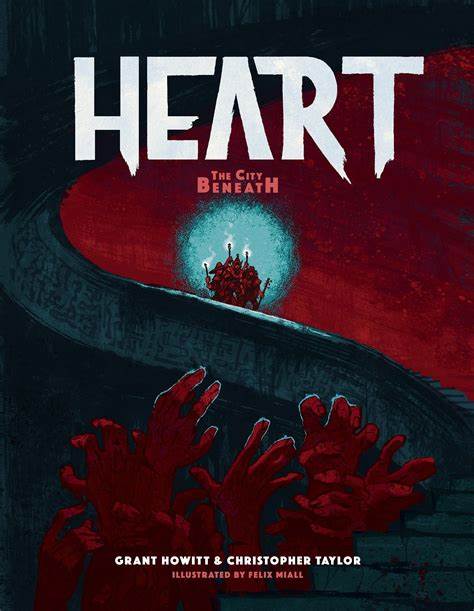
So, I’ve been left with an excess of prepped games, and no-where to run them – so I’ll be putting them out on here. First up, a game that was planned for Owlbear, for Roward Rook & Decard‘s Heart: The City Beneath. In Heart, your desperate treasure-hunters delve into the living, beating dungeon beneath the occupied city of Spire to find eldritch treasures – and themselves.

Yes, the art is all this good – as you’d expect from RRD

Full disclosure – I haven’t actually run this, although I’m sure it will get an outing soon. If you’re Heart-curious, this might give you an idea what to expect in the game. If you’re a Patron, feel free to message (on here or twitter) and I’ll send you the pregens I did for it as well, giving you a fully ready-to-run game. Also, this is based on an adventure seed in the actual book – there are loads of them in there – but fleshed-out to be runnable for a one-shot. I’ve got more to say about prep for loose-improv games like Heart and Spire, but that’s another blog post.

Into the Underhang

A Heart: The City Beneath One-Shot

Into the Underhang is an independent production by Burn After Running and is not affiliated with Rowan, Rook and Decard. It is published under the RR&D Community License. Heart is copyright Rowan, Rook and Decard. You can find out more and support these games at rowanrookanddecard.com.

Scene 1 – Derelictus

We begin in the city between the cities, a sprawling, semi-underground mirror of Spire, Derelictus. From Platform 1, where all manner of equipment can be sourced, to Platform 2, where we find ourselves now – with Ostrer, a mad researcher, is cutting you a deal.

Hang Station was built as a tourist trap; suspended over a vast subterranean sea, so that aelfir could see the captured, sleeping monster beneath, captured from the far north. Hang Station is on Tier 2 of Heart – so will need at least a couple of delves, stopping off at a waypoint on the way. He wants to get a sample of the beast’s blood – and he needs your help.

There appear to be two notable routes towards Hang Station (a Technology) – through the singing, open railways of the Vermissian Railways – maybe hoping to catch a train some of the way, or a darker, lower way, through Sump Station (a Warren) – the flooded remains of an old station now submerged. Darker, but less likely to attract attention

In Derelictus, each PC has a chance to prepare – they can try and get hold of a D6 piece of equipment for the journey, or research another route – perhaps one going through a more favourable area for them. After a skill roll each, and potential stress (always D4 at this stage, and usually to Supplies or Fortune), they must set off

Scene 2 – Delve to Tier 1

This is a delve they will take to either Sump Station, Hang Station, or another location

Route: Between Derelictus and Sump Station

Tier: 1

Domains: Technology, Warren

Stress: D4

Resistance: 10

Description: A tramp through foot-deep, the knee-deep, flooded tunnels, in fading light and with labyrinthine corridors. Occasional relics of machinery or rails puncture through the floor – and occasionally pumps still churn. It smells bad initially, then turns to a warm, cleaner smell.

Events: Jonjak and his gang of gutterkin will track the PCs from Derelictus, and attempt to jump them to find out what they are doing; a sudden overflow means they have to wade chest-deep or lower; strange fluorescent fish swim under the water and circle the PCs; a warehouse of fishmongery where Mikkel the Fish waits to serve them

Connection: Capture the glowing fish for Mikkel and he will teach you the secrets of the eddies

Route: Between Derelictus and Hang Station

Tier: 1

Domains: Technology, Occult

Stress: D4

Resistance: 10

Description: A walk along high, ruined walkways alongside the tracks which have collapsed in places; crystals line the path eventually; the smell of incense and sulphur. Damaged rope-ways line each pathway

Events: Jonjak and his gang of gutterkin will track the PCs from Derelictus, and attempt to jump them to find out what they are doing; a clattering of a passing train requires jumping out of the way – or onto it; the singing of crystals in the ceiling above as one falls and shatters

Connection: Repair the rope-ways linking to the paths

Scene 3: The Mid-Point

At this point, they have arrived, either in Sump Station or Hang Station, and have a chance for respite. Ostrer insists that they need to purchase some supplies – ropes and pulleys – but at this point you encounter the rival delvers, Protector Baram and his men.

They accost the players as they explore the haven, asking them their business and mocking them. They know that the beast has laid eggs, and can see that Ostrer wants one as well. Depending on the PC’s approach, they may suggest an alliance, or try and sabotage their equipment. Either way, he will wish them luck.

As with Scene 1, PCs may make 1 test to try and recover equipment or preparations for the further delve.

Scene 4: Into the Underhang

From their location, they need to venture deeper into the Heart, to Hang Station and the underground lake.

Route: Between Tier 1 and Hang Station

Tier: 2

Domains: Cursed, Technology

Stress: D6

Resistance: 10

Description: Trekking through walkways suspended over still lakes, or raging torrents – creaking at the wind that blows through them. The smell of tar, and then of some big, fishy beast. The crackling of magical energy from long-decayed dampers and siphons. The echoes of fellow hunters, or ghosts, around them.

Events: A crackle of energy covers the ground in front with a web of occult power that must be bypassed; the walkway shatters and falls, meaning they must form a new route; Jonjak, still tracking, ambushes them on a walkway; Baram makes his move as they approach; a ghostly engineer seeks aid in repairing conduits and walkways

Connection: Repairing the conduits will allow them to lay the ghost to rest.

Scene 5: The Harvest

They emerge onto a vast creaking observation platform, a sparkling lake below them swaying gently. A huge whale-beast has broken the surface of the water below, and a light snore echoes around the cavern – but the eggs are on the other side.

They must

  • Somehow get down to the lake. There are maintenance rowboats and rafts available, ropes and pulleys, that could be fashioned
  • Recover the eggs from the egg sac beyond the creature – they could dive in, or trick it into rolling over
  • Avoid the attentions of the rival gangs, who will attempt to ambush them

At their moment of triumph, a roar echoes through the lake – the beast has awoken, and they must escape

NPCs

Ostrer the Mad Researcher

Motivation: Find and recover the eggs of the Hang Station beast

Sensory Details: Thick, clouded goggles with no light; the smell of dusty books mixed with oil; a dirty, flapping lab coat

At the Table: Close eyes when speaking

Jonjak the Tunnel Brigand

Motivation: Find a score big enough to retire on

Sensory Details: Filthy overalls and cloak; scarred face and hands; odd limp

At the Table: Speaks with a pirate accent (Arr!)

Difficulty: 0

Resistance: 10

Protection: 1

Resources: Stolen heirlooms (D8, Taboo), Poorly-written maps (D6 Delve)

Jonjak’s Gutterkin

Motivation: Gain freedom from Jonjak, or at least more pleasant employment with him

Sensory Details: A mob of 8 or 9 gullboys and heron-girls; squawking and clambouring over one another; rusted, broken knives with alarming speed

At the Table: Look this way and that while skwarking in semi-speech

Resistance: 8

Protection: 0

Stress: Knives D6, Unreliable

Mikkel the Fish

Motivation: Serve his narcotic fishes to the discerning

Sensory Details: A scale-clad shaved gnoll with rings everywhere; stares oddly at everything; the smell of oil and tar

At the Table: Keep mouth open when not speaking

Protector Baram, Drow Rival Delver

Motivation: Be the first to recover a beast-egg for his masters

Sensory Details: The smell of cheap perfume, a shiny well-maintained leather coat, the clip of heels on ground; accompanied by a pair of cackling gnolls, Forrad and Vorrad

At the Table: Alan Rickman-esque villainy

Difficulty: Risky

Resistance: 10

Protection: 1

Stress: Whip D8 Tiring, Pistol D6 Ranged One-Shot

The Hang Station Beast

Motivation: To eat, sleep and breed

Sensory Details: A thick smell of fur, fish and sweat; blue-grey skin covered in slick water; a light, echoey snore

At the Table: Describe the ground shifting

Difficulty: Dangerous

Resistance: 10

Protection: 2

Stress: Roll over D6

Prep Techniques – Round-Up

Last year, I started writing about Prep Techniques – ways to structure your prep for a one-shot session to build a good structure for your session. One-shot and short-form play is all about having a clear structure of ideas so you’re not left floundering at the table, and these were designed to encourage that, with practical advice to turn an idea into a ready-to-run set of prep.

I contrast these with Table Techniques, which are things you do during the game that often don’t need any prep beyond creating the conditions for their deployment – Shared Narration is an example of this (well, several examples) – and I’ll be providing more examples of them over the next few months.

While you’re reading this, I should tell you about my Patreon. Patrons get access to content 7 days before they hit this site, the chance to request articles or content, and the chance to play in one-shot games, for a very reasonable backer level of £2 per month. If you like what you read, want to support the blog, and have the funds for it, please consider supporting here. Telling people about the blog, and sharing links/retweeting is much appreciated also – thanks!

There hasn’t been a full list of my Prep Techniques posts before now, so here’s a summary of what’s here. If you’re just starting prepping a one-shot and not sure what to do first, you could do worse than pick one of these and follow the method described.

Essential prep – gathering your props

The 5-Room Non-Dungeon is Johnn Four’s 5-Room Dungeon method, applied more broadly to give a series of linked scenes. This is a great place to start if you’re beginning running one-shots. I actually think it works better out of the dungeon than for dungeon games.

Three Places is a way to structure investigative, location-based play where you want your players to have genuine choices as to how they approach the problem.

Another one that’s not mine, I did a deep dive of Sly Flourish’s Return of the Lazy Dungeon Master prep method here – even if you don’t use the whole method, the list of unconnected secrets and clues is a great technique to have in your back pocket, or to go through before a session to give things for the players to discover.

Another good way to get started is to write a convention pitch for the game, and use that to focus your thoughts – guidance here. Technique also applies for writing actual convention pitches!

For a more loosely-structured game, where you expect to think on your feet, you need a bag of tricks to throw at the players. The guidance in this post is relevant for PBTA, FitD, and other similar games like Spire and Heart. It’s easy to try and go in raw with these sorts of games, but in my experience having some prep thoughts done beforehand really help to make them sing in a one-shot.

Or for a more simple structure, start by thinking about the Boss Fight and work backwards from there. There’s a couple of examples of this approach here.

I’m not saying there won’t be more Prep Techniques shared in the future, but here’s all there are for now. My focus for the next few months is two things – putting out ready-to-run one-shots for a few systems (most of which are my own con game sessions from over the summer) and Table Techniques, which will give techniques that can be done during play to add interest and excitement to your games. Let me know if there’s anything you’d like to see!

Running Games At Conventions

We are well into the RPG convention season – a big range of residential cons and one-day meetups are happening, and the schedule seems to be recovering well in the aftermath of Covid restrictions. It’s over 5 years since I first posted about running at conventions, so I thought I’d revisit this, more focussed now on the convention as a whole rather than individual games.

While you’re reading this, I should tell you about my Patreon. Patrons get access to content 7 days before they hit this site, the chance to request articles or content, and the chance to play in one-shot games, for a very reasonable backer level of £2 per month. If you like what you read, want to support the blog, and have the funds for it, please consider supporting here. Telling people about the blog, and sharing links/retweeting is much appreciated also – thanks!

I’m talking here about going beyond just running one or two games at meetups or cons, to being an actual ‘convention GM’ – running multiple games at events, and being a part of delivering the experience of conventions. If you want to do this, here are some tips.

Go To Multiple Conventions

Don’t just restrict yourself to the one meetup – explore online options, too. To get better at convention GMing, you need to practise it, so make a commitment to some conventions and book some games in. Don’t just think of the bigger face-to-face conventions (in fact, these can sometimes be frustrating to GM at) – look at online options and small local one-day cons as well. 

Play (At Least) As Much As You Run

Time was when some convention GMs would sign up to run every slot. You still see this model encouraged by some big cons – UK Games Expo offers free accommodation to GMs who complete such a punishing schedule of GMing. Running every slot is a terrible idea. Conventions shouldn’t be supporting it – I’d be happier if they had a limit on how much one person can GM. Play convention games at the same time, and use this time to research and craft how to run your games.

Run Games More Than Once

As you might think from the name of the blog, I used to just run my convention games once. I happily avoid that now – I have plastic folders filled with prep notes ready to run that I can pull out and revisit for a pickup game with minimal prep. If you’ve got pregens, consider laminating them if you want to use them again to save printing again, and buy some cheap dry wipe markers for players to use. If you’re thinking you’ll run a game multiple times, consider this in your prep and think about multiple means of resolution to keep it interesting for you as well.

One Game A Day

I’d go further than the above and say that one game per day is the standard, baseline you should be aiming for if you want to be a con GM. It’s what I try to stick to, and it helps keep all of those games fresh and perky, and you won’t lose your voice. I occasionally get carried away and make exceptions (running 6 games out of 10 at The Kraken was the result of offering additional games at the event, and even then I did duplicate some systems and prep), but I always regret it if I end up running two games in a day.

Run Parallel / Linked Games

As well as running games multiple times, you can make things easier for yourself by running the same (or similar) systems multiple times. I’ve offered, for instance, three 13th Age games before – which helped me get the system internalised really easily. You can also re-use pregens, and even if you get the same players this will be as much a feature as a bug as they get to see what another character plays like. Again, laminating these is a good move.

So, some tips for convention GMing to step up to being a regular. Conventions need GMs, and it’s great to get more people stepping up to run regularly. Is there any other advice you’d give, or concerns? Let me know.

Starting a New Campaign

Over at Patreon, one of my backers requested a post about starting a new campaign. I’m always happy to take requests from my noble backers, so here’s a step by step of what I do when I’m starting to set up a campaign or longer-form game. To give my bona fides, until 2020 I don’t think I’d ever run what I’d consider a successful campaign game – but the advent of lockdown, and a dive into online gaming, has changed that. I’m currently running an ongoing D&D game, a Star Trek Adventures game (where we are skirting around the Shackleton Expanse campaign), and in the process of pulling together a One Ring game. So – what do I do to start with, when I’m about to launch a campaign?

While you’re reading this, I should tell you about my Patreon. Patrons get access to content 7 days before they hit this site, the chance to request articles or content, and the chance to play in one-shot games, for a very reasonable backer level of £2 per month. If you like what you read, want to support the blog, and have the funds for it, please consider supporting here. Telling people about the blog, and sharing links/retweeting is much appreciated also – thanks!

  1. Set the Scope

Firstly, think about how long the campaign is going to last, and agree with your group. I’d strongly recommend splitting a longer campaign into seasons of max 8-12 sessions in order to keep things fresh, and I’d consider starting with even fewer sessions than that. Having a defined end point will stop your campaign from fizzling out, and keep everyone in the game and focussed.

Based on how often your group meets, work out how long real-time this will last for – and make sure you’re up for that. If you meet once a month and want to run a 12-session campaign, that’s a year’s worth of gaming for the group! If you’re weekly, 12 sessions is still 3 months of play. Make sure that you – and your players – are clear about that commitment and happy with it.

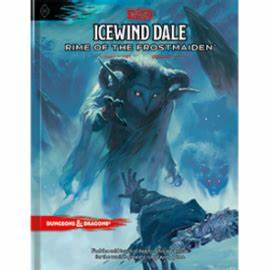
Of course, you might have an in-game end in mind – for my D&D campaign, we’re running through Rime of the Frostmaiden; that campaign finishes when they’ve brought the sun back to Icewind Dale and defeated Auril the Frostmaiden. Even with that, I’ve worked out that with 2 sessions at each level of character, this is about 20 sessions. I’d planned a mid-season break after 10, but as it happens we ended up cancelling some sessions anyway, so we’re good to go with the second part of it.

  1. Get the Big Picture

The approach to this stage varies a little depending on whether you’re plotting your own campaign or running something pre-written. In either case, though, you will sketch out the broad picture of how you expect the campaign to play out.

If you’re rolling your own, a great tool to use (taken from Dungeon World) is Fronts. Consider your campaign’s big bad, and sketch out some steps that it might take. Sly Flourish also has a discussion of using this for D&D that streamlines the process a bit.

Having a campaign finale in mind helps – even if your Roll20 presentation isn’t up to much

If you’re using a published adventure, this is when you need to skim read the whole thing. If you’re running something popular (like a D&D campaign) it’s also well worth googling it to see if folks like Sly Flourish or Justin Alexander have notes on how to run it. There will be some of these on here soon as my ‘Deep Dive’ series extends – currently I’ve got Rime of the Frostmaiden Chapter 1, Shadows over Bogenhafen, and the first Vaesen adventure compendium A Wicked Secret to write up. 

Once you’ve got this, sketch out how the sessions might look – for instance, I expected for Rime we’d probably hit one of the Ten-Towns quests per session, along with some additional personal stuff, for the first 6 sessions before hitting Chapter 2 and the more open-ended part of the game. As it happens in a couple of sessions we doubled up adventures, but we were able to mesh some of the scenarios into the PC backstories anyway (for a session-by-session report written by one of my players – and ongoing – check out Fandomlife’s blog here).

Running published campaigns requires slightly different prep to rolling your own

If the start of your campaign is going to branch off and be more of a sandbox, think about how you’ll structure this. I’m a big fan of getting players to decide what they’ll do next time at the end of a session, so I can focus on those bits for the following session. Also, think about how long you’re prepared to let them play in the sandbox – is there an element in your Front, or a lead you can drop, that will force them to leave and stop them wanting to talk to every NPC and find every secret?

  1. Imagine Some Specifics

Once you’ve got your big picture, you could run right away, but now I like to start thinking about specific scenes, encounters, locations, and NPCs that might come up. These can be just sketches to start with, but by having a file ready to note these in before the session zero, you can add to it. For example, in a campaign of Legend of the Five Rings I ran a couple of years ago, I had a few scenes in mind before chargen started – but when one of the PCs had a morbid fear of dogs, of course the bandits were led by a dog-faced demon who took an instant dislike to them. 

With a published adventure, you might want to think about a few NPCs using the 7-3-1 technique if they are likely to recur or be important – I’ve got a wizard lined up for the next couple of sessions who I sketched out a personality for right at the start – or how some encounters might play out in the first few sessions. This isn’t unlike the Bag of Tricks prep technique I’ve used for one-shots – it gives you some go-to scenes and moments that you’ll be able to use later in the campaign.

  1. Session Zero

At this point, you’re ready to get the players involved. My personal agenda for a session zero covers Content / Chargen / Play, but sometimes fitting in all of these can be tricky. If character generation is something that will be dreary to all sit round and do together, get your players to come to the table with something lightly sketched out, and do a bit of in-character bonding in that first session instead. Absolutely would recommend the final part though – getting a bit of play in makes it all worthwhile!

For Content, you want to discuss any safety tools you’ll be using, as well as invite your players to contribute to Lines and Veils and Tone – again, The Gauntlet has an excellent blog on all of this. Alongside this, you want to cover housekeeping – how often you meet, who brings the snacks, what to do if you can’t make it, that sort of thing. For my games I generally have a hard rule that if 3 players and the GM can make it, we play – and we’ll work out a way for the others to catch up later. This does fall down a bit if I can’t make a session, but it gives a bit of insulation against having a run of cancellations.

For the Play bit, just a half-hour encounter is fine – but I’d go with something action-y that involves rolling the dice instead of something roleplay-focussed. Start them around a camp, and have some goblins attack, and then the goblins tell them about the problems in the area. Getting some dice rolled makes the session zero fun, and starts to build momentum for the game proper.

  1. Session-By-Session

Now you can run it! For me, I’m never more than a session ahead of where the party is up to, and I prep in between sessions – I can’t imagine doing it any other way. I’ve blogged before about session prep for campaigns being like for one-shots, but to summarise – I’d recommend making each session a coherent episode if you can, even going so far as to give it a name. 

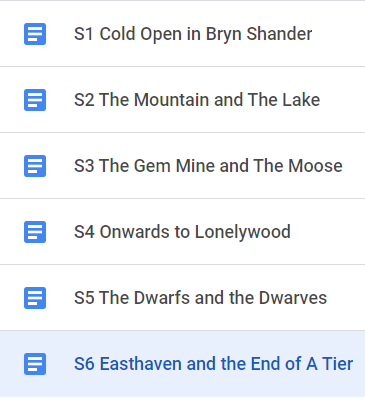
6 sessions of prep files – complete with corny titles

In my prep, each session gets a Google doc, and follows a fairly similar format, which is either a scene-by-scene breakdown followed by NPC notes, or a Sly Flourish Lazy DM set of notes. I’ve found that for my own prep, I like a defined scene-by-scene breakdown, but for published games that I’m running the Sly Flourish technique works best. I think this helps me to break down components and be a bit more prepared for players going in different directions – whereas with my own games I’m already able to do that without any help.

I’m conscious of my own practice as well (or at least try to be) – and one of the things I’m trying to work on is more memorable NPCs – so at the moment I make sure there’s a few ‘tells’ for each one in my prep notes to make sure I put the effort in to try and do this.

Be sure at the end of each session to get some feedback – either as Stars and Wishes (now rebranded to Spangles and Wangles by my Friday group) or a more informal method, and be prepared to tweak where the campaign is going if needed. I’d also recommend having some ongoing contact with your players, whether about the game or not, between sessions – it helps to keep momentum, which is one of the main things you need to keep a campaign going.

So, step by step campaign planning! I’ll try and get a couple of examples down too, and as always happy to accept Patreon post requests! Let me know in the comments if you’d like to see more.

Don’t Just Have Fun – actually useful advice for new DMs/GMs

Over on twitter, there was some discussion recently about advice for people taking their first steps to DMing – on the lines that “just have fun!” is really terrible advice, advocating for an end product without giving any guidance on how to get there. So, putting my money where my mouth is, here are five actually useful tips for running your first game.

Because this post is probably not aimed at my patrons, this is going out to Patreon subscribers and regular blog readers at the same time. Of course the best way to become a better DM is to become a patreon backer – where you’ll instantly become much more skilled at every aspect of TTRPG play. For £2 a month you get access to (most) posts 7 days before release, and get to bask in the warm glow of supporting Burn After Running!

Run What You Know

Pick a system to run that you’ve already experienced as a player. If you’re in a D&D campaign, and think “I’d like to try running Cyberpunk Red” – or another game you haven’t played, then great! It’s good to diversify systems and settings – but run some D&D first. Knowing the rules (or feeling like you have to know them) takes up processing power at the table – if you’ve played before, a lot of these will be internalised already, so you can watch the table and worry about other stuff! So run what you know, at least to start with – whether that’s D&D or whatever system you’ve been introduced to.

Use Published Scenarios

Want to run D&D for the first time? You could do a lot worse than run through one of the Starter Sets or the Essentials Kit – and in any case, you’ll make it easier for a first time to use a published adventure. Both options are good, and there are some great starting short adventures for a few systems out there. Like getting your head around the rules, having the plot worked out for an adventure will give you one less thing to worry about. There are even some on this blog!

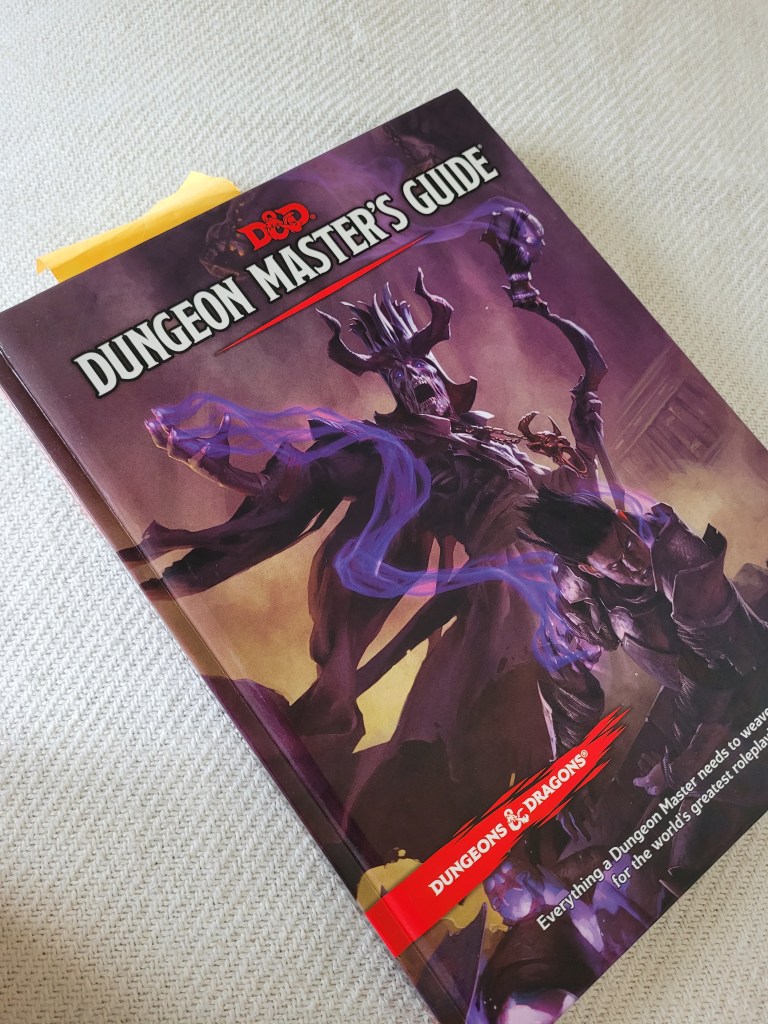
This book does contain some actually useful advice too!

Run for 2-4 sessions

Running one-shots is hard, as is maintaining (or committing) to a long campaign. Take away some of the time pressure by pitching to run for 3 sessions or so – you don’t have to worry as much about pacing, and you can take feedback and do any tweaking you need to between sessions. A lot of published adventures will run to this length anyway, so you can use them – but feel free to cut out stuff if you want to as well – you don’t have to run as the scenario author intended.

Don’t Bother With Character Creation

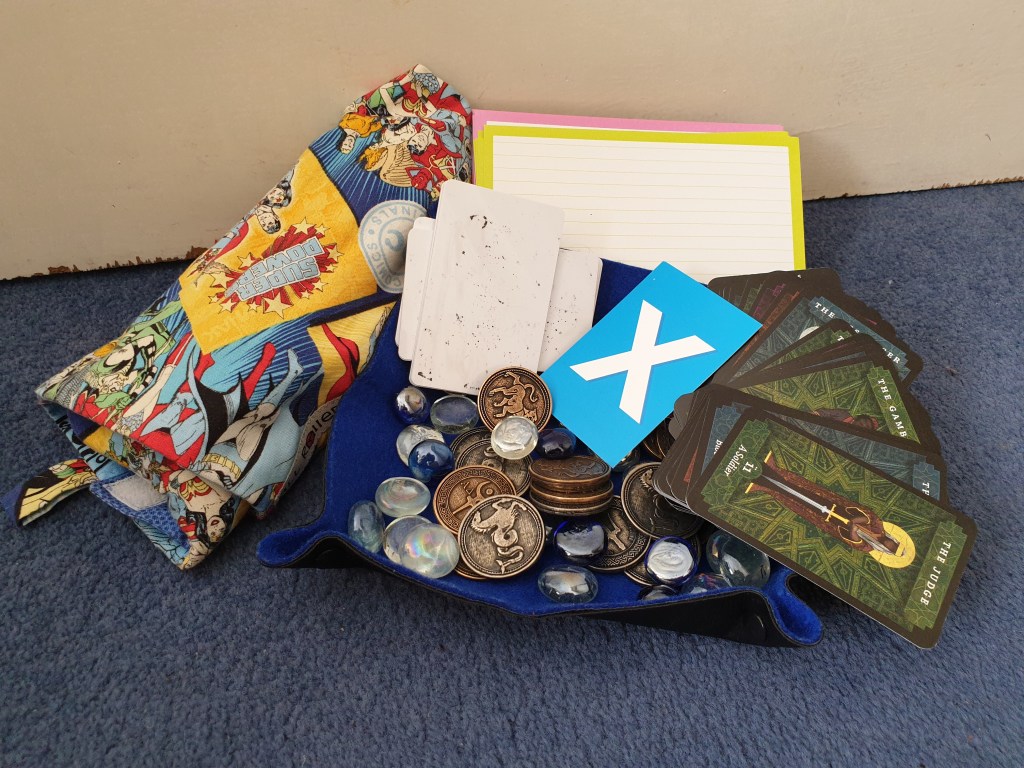
For a full campaign, you’ll want a session zero where you share expectations and the players create their characters. For your first time, you’ll find it easier at the table if you get some pregens together and just dive in. This means you’ll have a better idea of what the PCs can do, and also means you’ll be actually running the game straightaway. Of course, you still want to have some basic safety tools like an X-Card or trigger warnings for any potentially upsetting stuff at the start – but don’t spend a session making characters, just dive in.

Get Feedback

End each session with a quick stars and wishes session and ask your players what they want more or less of. Having a quick debrief like this will help you to zoom out and see what the session was like, and also allow your player to show you appreciation for running it. It’s easy when DMing to only notice when things go wrong, and your players should be able to help show you how much fun they had! (If your players are mean to you after you’ve just run a session for them, get new players. Seriously.)

So, some actually useful advice for new GMs… I mean, above all, do just have fun, but the above might make it easier to have it! Let me know in the comments if there’s anything I’ve missed!

Alternative Spelunking – Different Ways to Dungeoncrawl

Exploring a dungeon – whether it’s an actual cave filled with goblins, an abandoned space station, or a defunct arcology filled with deathtraps – is a staple of TTRPG games. The usual presentation is a map you can describe to your players, which offers choice  but not much in the way of a narrative arc. 

While you’re reading this, I should tell you about my Patreon. Patrons get access to content 7 days before they hit this site, the chance to request articles or content, and the chance to play in one-shot games, for a very reasonable backer level of £2 per month. If you like what you read, want to support the blog, and have the funds for it, please consider supporting here. Telling people about the blog, and sharing links/retweeting is much appreciated also – thanks!

But are there other ways to cover dungeon crawling? Well, yes, with varying degrees of narrative freedom. Once you start to mush up location- and encounter-based play, you end up with plenty of options to make interesting and engaging one-shot structures. Here are three of them.

Point Crawl

Instead of thinking of your dungeon as a rigidly- defined series of rooms, think of it as set pieces separated by an assortment of corridors and interstitial areas. The Five-Room Dungeon is a good model for this, and it means the place doesn’t literally have five rooms, too. Or, for an even tighter design, draw up Three Places building to a climax.

Make the linking sections interesting by throwing in some optional, but interesting, flavour encounters that supply background or foreshadowing – carvings on the walls showing former inhabitants, wandering monsters or ghosts that can dispense clues, hidden stashes of treasure trapped. For a one-shot this also means you can choose which of these optional bits to include, helping with pacing.

Journey Challenge

Sometimes, we go into a dungeon with a clear goal and set piece to work towards – to disrupt the ritual, to slay the dragon, to rescue the princess. Having half-way set pieces doesn’t really work, and skipping straight to the end doesn’t make the location exciting or allow for any foreshadowing.

So, structure your dungeon like a skill challenge – use some of the variant rules here or here, or work out your own for the system you’re using. It pays to have definitive consequences for failure mapped out in advance, so there are some stakes for the skill rolls – and in a fantasy setting, think about what spells can do (auto-success? Require an Arcana roll? Grant permission to use an alternate skill?). Pace the journey through the dungeon using the skill challenge, and then finish with your big set-piece encounter.

Montage

Sometimes, the journey through the dungeon is even less important, or you want to hand over more narrative control to the players. A 13th Age-style montage is a great way to cover this – you decide on an obstacle facing the players, and the first player describes how it’s overcome and the next obstacle, until everyone has had their turn. This can lead to some truly epic explorations, and it works well with dungeons that have a really clear theme and concept that players can share and develop. 

Some groups are less keen on this player-led narration – although this is my default when I’m running 13th Age. You can build up their comfort level, if you want to, using some of the techniques listed here.

So, three ways to free dungeons from the restrictions of location-based play. Of course, these work just as well for space stations, or steampunk-era cities, or haunted forests – let me know if you use one or more of these techniques in the comments!

Seeing the Light – Running Illuminated by LUMEN one-shots

LUMEN, developed by Spencer Campbell of Gila RPGs, is a rules framework for action TTRPGs that’s inspired a veritable horde of games based on its core system. Well, strictly speaking, LIGHT was the first game, and the SRD came later, but you get what I mean. Its combination of fast-play action and easy-to-spin system make it a really fantastic convention game, and I thought I’d put down some tips for making sure a one-shot really hits the right buttons.
While you’re reading this, I should tell you about my Patreon. Patrons get access to content 7 days before they hit this site, the chance to request articles or content, and the chance to play in one-shot games, for a very reasonable backer level of £2 per month. If you like what you read, want to support the blog, and have the funds for it, please consider supporting here. Telling people about the blog, and sharing links/retweeting is much appreciated also – thanks!

I ran Gunfucks at North Star recently, and am planning on running LIGHT and Deathless soon. Gunfucks is a Borderlands-riffed shooter-looter (I’ll share my prep notes in the next post), while LIGHT feels sort-of-Destiny, and Deathless is a Highlander-style immortal warrior battles game. If all of these seem high-action and pretty frenetic, that’s the sort of play that LUMEN leans towards – and it’s useful in general to think of them emulating video games as their source material, as you’ll see later.

It’s All About the Fights

LUMEN isn’t quite a game with a combat system and nothing else (and that’s not a dig – I’m a huge fan of Sentinel Comics, Marvel Heroic, and even Feng Shui 2 that largely subsist on set piece action scenes) – but it is built towards big, powerful heroes fighting set piece battles, and most of the rules support this.

With this in mind, fight scenes with some attention and planning made to them pay off well. Make sure that your fights take place in Dangerous Places – so the battlefield has lots of things to interact with that either side can turn to their advantage. It’s also worth thinking of fights in terms of goals and victory conditions, rather than everyone fighting to the death.

Because the resolution mechanic is relatively simple, encourage and model your players to describe their actions cinematically – because success criteria (the highest dice rolled) is out in the open, they should be able to follow the start description -> roll dice -> describe success or failure pretty smoothly.

Gunfucks has a cool idea (which I’ll be stealing for other games) where in the GM’s turn there’s a battlefield shift – something changes each turn to make the fight interesting. Easy ways to do this in LUMEN games is to shift some range bands, or introduce some more hazards. It can also move some enemies or call in reinforcements – which you might need, as balancing combat isn’t as straightforward as you might think.

It’s Not All About the Fights

It’s easy to think that LUMEN games don’t really have a system for skill checks – but they absolutely do, with the Approaches rolls functioning just as well for investigative or social conflict. A simple skill challenge where the party need to get a total of 5 successes across the rolls will work fine, with them taking consequences for each 1-4 roll.

But, as combat can be pretty frenetic with dice-rolling and power-checking, it works just as well to have interludes between fights that are just free roleplaying. This will add depth to the game, and by prepping some interesting NPCs with conflicting goals (a good approach is the 7-3-1 method) you can have some good scenery-chewing interludes. In play, LUMEN often feels like a video game – and these are the cut scenes that provide a break from the relentless shooting and fighting.

In all of these games, PCs are high-powered badasses, so don’t be afraid to make the stakes big – the safety or otherwise of a country or a planet could rest on their shoulders. Enemies, likewise, should be dangerous, and give them plans and motivations the players can riff off. A pre-game relationship building exercise where you work out bonds between the PCs would help in a one-shot to encourage inter-PC dialogue, even if it’s a simple one like this

Practicalities

There’s a few practical tips at the table that can help prep and delivery. For starters, you can afford to really throw enemies at your players. For games with 5 or 6 players, you can be prepared to give lots of low-level enemies for them to defeat before they can get to the big bad, or you risk fights being over very quickly. As long as your mooks only do 1 or 2 Harm you’ll be fine – quite a few of the classes can resist 1 Harm anyway, and if they’ve got 1 Health they’ll go down in one hit anyway.

Many LUMEN games have both Health and some sort of power resource – in Gunfucks its Bullets, for instance. Having counters to represent this really helps at the table – I favour poker chips for health, as it’s pretty visible in one stack to you and the other players how much the other PCs have left.

I touched on it earlier, but these games also really benefit from getting PC narration in. They’re not just rules-light but very setting-light as well – a lot of depth will come from the table, and 5-6 imaginations are better than one for this. So use the techniques here to help develop player narration and give the setting – and scenes – some depth.

Have you played or run any LUMEN games? Any recommendations for what I should try next? Let me know in the comments.

Future Imperfect – Why Sci-Fi One-Shots are Hard, and What to Do About It

In a week’s time, I’ll be at North Star – a science fiction TTRPG convention. It fills an excellent role in the con calendar, because sci-fi is underrepresented in convention gaming – and it’s easy to see why. It’s got some issues that you just don’t get with fantasy, or even horror, gaming – and the lack of a clear industry leader to hang your expectations around (like D&D or Call of Cthulhu) is just one of them. Sci-fi one shots can be hard to get prepped – and hard to sell to players – here’s why, and what to do about it.

While you’re reading this, I should tell you about my Patreon. Patrons get access to content 7 days before they hit this site, the chance to request articles or content, and the chance to play in one-shot games, for a very reasonable backer level of £2 per month. If you like what you read, want to support the blog, and have the funds for it, please consider supporting here. Telling people about the blog, and sharing links/retweeting is much appreciated also – thanks!

What in the universe is the setting?

In fantasy, you’ve got an easily-referenced source material that everyone understands – a mixed group of ne’er do wells exploring underground areas for treasure. Even when a fantasy setting is quite different to this (e.g. Glorantha) it is easily explained by listing the differences between it and D&Desque fantasy (e.g. talking ducks, lots more cows).

Sci-fi doesn’t have this central reference point. It can be pulpy or gritty, lethal or safe – and it can literally mean anything. Communicating setting and tone is really important – if you’re running a sci-fi genre that isn’t well-known, you should be really explicit about this both in your con pitch and your prep. Go over it at the start of the session as well (briefly!) and cut it to the basic details. Players need to know if they can charge into a group of stormtroopers like in Star Wars, or if they’ll be shot to pieces, like in Traveller.

An alternative, of course, is to run in an established universe that you can expect players to relate to. If you do this, though, remember that not everyone will know all the references you do. At a con, I’d say you can rely on players knowing the broad brush strokes of Star Trek, Star Wars, Warhammer 40K, and maybe Doctor Who as key sci-fi tropes. Any more than that, you’d better be prepared to be explicit. I’ve had people try to explain Blake’s Seven to me more times than I care to remember, and I’m still none the wiser.

One approach is to use an IP you’d hope players are familiar with

Build Your Sandbox with Walls

The other challenge is the sheer scope of sci-fi play. In a one-shot, you want to decide early on in your prep what the geographical scope of play is – a single city, a single planet, a system, a cluster? This, again, needs to be really explicit – while you might want a picaresque jaunt across a few fantastic locations, consider how much depth you can provide to each of them. I’ve run effective one-shots on a single planet (although if you do this, stick some stuff in for the pilot PC to do), as well as in a single city. You might not need all the setting you have – just pick the good bits.

Plot is Still Plot

Similarly, the wide open nature of sci-fi themes can be daunting. Look back to your first step, and consider what kind of game your one-shot is, and how you can promote this. Daydreaming cool scenes and sticking them together works well – for example, for Snowblind, I knew I wanted a Wampa fight and a Tauntaun chase – so I fitted the rest of the plot around them. They also don’t need to be that complicated – exploring a “derelict” orbital structure that turns out to have a deadly alien / rogue AI in it is popular because it’s a good one-shot format – remember the adage (from I think Robin Laws) that in RPGs, cliché is a  good thing.

Adding NPCs to give background to the universe helps

In terms of structuring your adventure, point-crawls are often great ways to build sci-fi one-shots – 5 Room Non-Dungeons and Three Places are also good approaches. Remember to have engaging NPCs – and a good trick is to have the NPCs hint at the broader scope of the game. Your Star Trek one-shot might be all about the Neutral Zone and tangling with Romulans, so having a subplot NPC who’s an Orion pirate or a Klingon captain shows that there’s lots more going on in the universe.

So, three things that are hard about science fiction one-shots; if you’re reading this on the blog, I’ll just be setting off back from Sheffield after North Star – there’s a fair crack I’ll have more to say about this. What successes (or challenges) have you had with science fiction gaming? Be sure to let me know in the comments.