Fearless Defenders – a One-Shot Structure

Our heroes are at a remote location, filled with cheerful and innocent NPCs. An army approaches, sure to overrun said location – unless our heroes can stop them! From Seven Samurai to Zulu, it’s a classic plot for fiction – and a great plot for a one-shot. The mixture of fight scenes, roleplaying opportunities, and player agency make it a winner. Here’s how to prep it.

While you’re reading this, I should tell you about my Patreon. Patrons get access to content 7 days before they hit this site, the chance to request articles or content, and the chance to play in one-shot games, for a very reasonable backer level of £2 per month. If you like what you read, want to support the blog, and have the funds for it, please consider supporting here. Telling people about the blog, and sharing links/retweeting is much appreciated also – thanks!

The Place

The place needs to be remote enough that defending it falls to the heroes, not any conventional militia or army. Or, there is an army, but it won’t arrive for several days – if the PCs can hold off the attack until then, the place will be saved. Alternatively, perhaps help won’t come even if it could – the local lord has rebelled against the tyrannical king, or the planet is in a neutral zone stopping a fleet from arriving.

It needs to have enough NPCs to give it a face – make them sympathetic, and as always – three is a good number. Making one of them a sympathiser or a coward is a good move, as this will create complications later – try not to make it the obvious one.
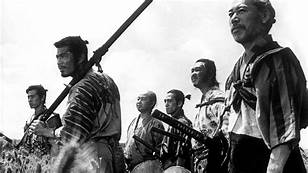
Seven Samurai – well, six of them at least

The Enemy

Although the enemy should be implacable and overwhelming for the place, try and give it a human face that the PCs can interact with – even if it’s a sinister necromancer leading the army of zombies! Be specific about why they want to overrun this Place in particular – do they have a history here, or is it strategically important – why? 

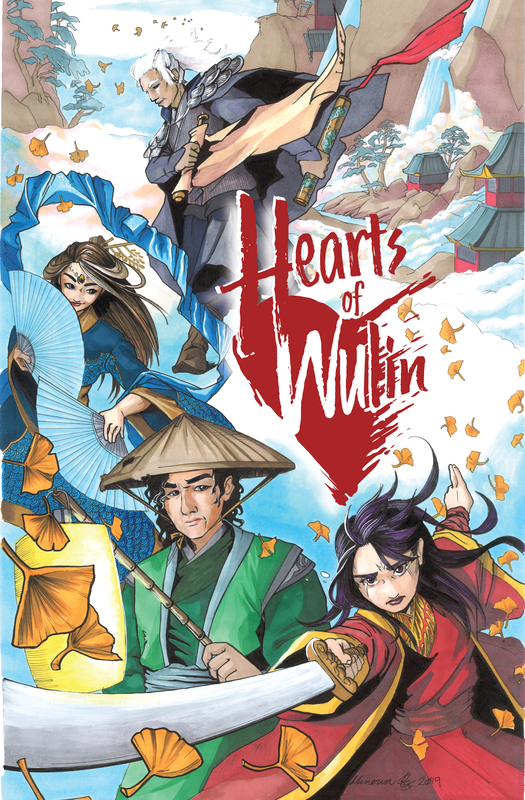
Alternatively, make your enemy leader have beef with one or more of the PCs; a past enemy, or an ally of a past enemy, will add some drama to the situation. Look at Auntie Wu’s Tea House, a one-shot for Hearts of Wulin, for some examples of upping the melodrama in a wuxia setting.

Initial Scene – The Threat is Revealed

You want to start your game with an exciting scene where the threat, and the timeline, is revealed. Maybe an encounter with a wounded villager, or an attack by scouts of the enemy, happens – generally, I’d make this lead into a simple fight for a one-shot, particularly for a con game – you need the ‘training combat’ for players who haven’t played the system before so they get an idea of how the system works without too much jeopardy, so you can go harder later on.

Zulu is another classic model in film. Bonus points if you get your players to sing.

After this scene, they should know that the advancing force is coming – and they have a short period of time to prepare or retreat. Establish that the force is overwhelming, even if this combat is itself easy, and that retreat should not be an option.

Middle Scenes – Training Montages etc

Once the threat is revealed, the adventure can open out for the players – present them with a number of options to prepare for the attack, and be open to other suggestions.

  • They can attempt to negotiate allies or additional reinforcements. Having one or more neutral, and difficult-to-please factions around in the area helps with this – and the players can always split up to negotiate separately with them. Some might ask for a simple favour, while some might need some roleplaying to convince them to help – try to keep these short mini-quests, resolved with a few skill rolls, to keep things moving. Allies that refuse to help might join the opposition forces!
  • They can prepare defences. The usual problem solving advice of “any reasonable plan” applies here – a successful check can give a one-off bonus in the battle is how I’d play it unless you’ve got a system with a better approach embedded.
  • They can spy on the enemy. Sneaking into the enemy camp is totally a thing they can do – to find their attack plans or even disrupt their preparations. Again, this can be resolved by zooming out or using some infiltration system, especially if the whole party isn’t doing this.
  • They can rally the defenders. This includes training montages for the villagers, and can be handled as above. If you’ve planned a betrayal or retreat, they could try and win that NPC round as well, or you can use this scene to foreshadow their betrayal.
  • They can deal with the opposition doing any of the above! To keep the pace going and add to the sense of peril, the enemy may send a scout to attack – a mid-preparation combat can keep things interesting. Maybe they send goblins in with fire-pots to set some houses on fire. Or enrage a bear to storm the walls through magic. Or bribe some pirates to blockade the starport. Either way, this provides a good prelude for the final scene.

Final Scene – The Big Fight

Once the preparations are done – or not – and the enemy’s attack has been dealt with, it’s time for the big finale. You need to give some thought to how you’ll resolve this. While some games have excellent mass battle rules (Savage Worlds for instance has one that’s really good for this), you may also want to look at another meta-resolution method from here or here.

You can make this more epic by pacing sequences of challenges with individual challenges for the PCs – prep a few of these that you can throw in, and maybe they can influence the overall battle as well. Don’t shy away from having a relatively involved challenge here – this is meant to be the big finale – and equally have lots of stuff ready to throw into the mix to keep things moving.

If the betrayal hasn’t happened already, after the first round of fighting is a good time for it to kick in – zoom in on individual PCs and allow them to deal with this (or not) before it turns the tide. Make sure the interaction with the enemy’s human face is there as well – have him spit words at the PCs as he’s fighting to encourage some roleplay in the course of this.

There you have it. Have you used a similar structure in your one-shot games? Are there any published adventures you’ve seen that do this well? Let me know in the comments.
Split the Party

“Don’t split the party!” is a classic refrain from the early days of D&D that still holds a surprising amount of traction. It’s also absolute rubbish; your games will be much more fun if the group separates and gets back together during the course of an adventure. This is especially true in investigative games like Vaesen or Call of Cthulhu – but even in your classic F20 game it can lead to much richer play. Here’s why.

While you’re reading this, I should tell you about my Patreon. Patrons get access to content 7 days before they hit this site, the chance to request articles or content, and the chance to play in one-shot games, for a very reasonable backer level of £2 per month. If you like what you read, want to support the blog, and have the funds for it, please consider supporting here. Telling people about the blog, and sharing links/retweeting is much appreciated also – thanks!

More Content!

If you’ve got two potential leads out from a scene, why go to each in turn? Send a couple of PCs to talk to the old woman, while the others poke around in the merchants’ quarter. By cutting between them, you get a nice contrast, and it’s easier to be an audience for the other pair when things are being resolved by the others. Things move quicker with fewer PCs on the scene, too.

In-party roleplaying in action

More (In-Party) Roleplaying!

Four PCs in the same place, talking to someone – they might talk to each other, but the focus of their investigation is going to get more of their time. Two PCs in the same place, it’s much more natural for them to talk to one another – and it will happen more. This is especially true online, where a conversation between more than two people needs structural help to avoid talking over each other. 

Mix up the pairings a few times, and you’ll soon get some neat character interactions going. If you’re doing this in a very trad game, or as a one-shot, you might want to lay the groundwork for this with some in-party setup questions.

More Verisimilitude!

Another cliche from the early days of roleplaying is the Cthulhu investigator team – six men with shotguns showing up in the suburban street to talk to the little old lady about her neighbours. In genre fiction, it’s very rare that the whole ensemble cast go together to resolve a problem – this is reserved for the finale (and maybe the start of the episode). 

If you’re looking at a one-shot structure like the Ur-Plot, it could be as simple as the middle bits are with the party separate – you’ll end up with a grabbier plot, that’ll move faster and cover more in-party chat – all for the good!

How To Make It Happen

First, let’s make sure we’ve got the conditions for this to happen. You need to banish any sort of adversarial “the-GM-is-out-to-get-us” mentality from your players – which means, try and not give them the obvious potential risks from splitting up. Eventually, you probably want to throw that ambush – and the subsequent rescue – but to start with you probably just want peril to be the consequences, not actual character death.

Keeping the PCs in contact – with cell phones or the fantasy equivalent – should also make them more comfortable splitting up. Eventually, you want to remove these and cut them off, but that will only be effective as a change from the norm, so keep that in reserve for the first couple of times.

You can also put a timer on it – if there’s only 3 hours until the next killing has been foretold, and there’s two temples to search for the anti-ritual, there’s a big incentive to split up and cover both places. 

Getting Into Trouble

I’m certainly not advocating that when the party is split up it should be peril-free; the scenes should be exciting and dangerous, or what’s the point of them. But the peril doesn’t have to be combat. Skill checks or challenges (even longer-term ones) work just as well with 2 players as with 5, so plan some of these for big payoffs. 

There’s a knack to getting spotlight right with this – you don’t want one group making a single Persuade check while the other has some multi-layered challenge to resolve their scene – but you can always give the successful Persuaders something else to do.

And, combat doesn’t have to be off the table. Balance it carefully, and make sure there’s an objective behind it – one group getting ambushed or captured and having to be rescued makes for great drama. In games with tight combat design (like D&D), 2-PC combat does some really interesting/weird things sometimes, which can make it exciting and dangerous even if you adjust the opposition’s level challenge.

For any action-based challenges while the PCs are split up, and even for investigative scenes, smash cut between the two groups frequently – try to aim for cliffhangers, even if minor ones. Techniques like this keep the momentum going, and help players be good audiences for their other group – which spares you having to do an awkward roleplaying scene later where they tell each other what they’ve just found out. It’s unnecessary – they already know – so encourage them to cut to the analysis of their discoveries, not the reporting.

Even in the Dungeon…

A lot of this advice has been focussed on investigative games, but I should say it all applies just as much to more traditional fantasy games. How often do parties in F20 games send the rogue first to scout out the next room, and how often do they actually get separated? Take that as the consequence of a failed perception or find traps roll, and you’ve got an extra layer to your dungeoneering.

Have you ever split the party? Are your players reluctant to do so, or do they just need a bit of a push? Let me know in the comments.

Combat Clues

Often in one-shots, you see two broad types of trad TTRPG game – an investigation-heavy game, and an action- (or combat-) heavy game. Both have their pros and cons – in an investigation game you often get to interact with the setting a lot, have more roleplaying opportunities with NPCs, and have the satisfaction of solving a puzzle – but pace can slow as the most cautious player tries to leverage as much information as possible before proceeding. Likewise, a combat-heavy game rarely suffers from too little pace – but the breakneck speed can leave players wondering what the purpose was of rolling all those dice.

While you’re reading this, I should tell you about my Patreon. Patrons get access to content 7 days before they hit this site, the chance to request articles or content, and the chance to play in one-shot games, for a very reasonable backer level of £2 per month. If you like what you read, want to support the blog, and have the funds for it, please consider supporting here. Telling people about the blog, and sharing links/retweeting is much appreciated also – thanks!

A solution to both sides of this problem is to incorporate Combat Clues into your one-shots. They are clues that are discovered during a combat, skill challenge, extended task, or other perilous encounter – and they don’t replace the clues you have in the game, but they add to them.

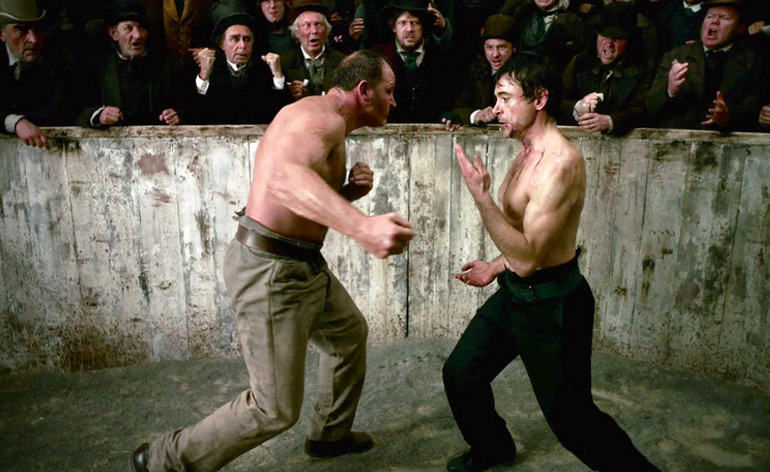
RDJ’s Sherlock Holmes is the kind of investigative game I like to run – here he’s definitely finding out some combat clues

Why Combat Clues?

For reasons that are probably apparent to regular readers, I’m a fan of the action-heavy one-shot – I cut my teeth at conventions running 13th Age, which has only the lightest suggestion of an out-of-combat game system, and often use the Feng Shui 2 “Three Fights” adventure structure. But the issues suggested above are real problems – often a trail of clues is needed to make the session have narrative sense, and you’re faced with the option of interspersing combat with slower investigative scenes, or just making them find things out straight away. 

I also don’t like the post-fight interrogation scene – it never really plays out satisfactorily, and you end up with your ‘heroic’ PCs threatening the goblin with torture or worse as you frantically work out a reason why they won’t tell the entire plot to them at this point.

The other issue is that combat takes a long time in most games. If you’ve a 3-hour session of 13th Age, you’ll get two, maybe three fights in it – and maybe a montage – but you’re not going to have time for a lengthy roleplaying scene as well. Likewise, if you’ve got a murder mystery with 4 suspects, after the PCs talk to / encounter each one you’ll be struggling for time to get the action in to keep the player at the table who came for that (that’s usually me, by the way) to get it.

They also give fights a reason. I’ve written before about adding a ‘why’ to fights, and how effective this is – it’ll turn your combat-heavy tactical game into an epic exploration and mystery with multiple (well, more than one) layers of plot.

How To Prep Them?

The first step – and fair credit to Sly Flourish’s excellent Lazy DM’s Guide for this – is to dissociate your clues from locations and places. Just write a big list of what the players need to find out in the session. Ones where they need to find them to move the plot along, underline or put in a different colour or something – they’ll definitely find these, so you want to make these easy to find. We’ll call these Plot Clues – they can find these out in locations around the fight, or (if they don’t discover them through roleplay or skill checks) in combat.

Think too about clues that, while not necessary to advance the plot, will make the adventure more survivable, or give the PCs an edge in combat or a similar action scene. For example, the Living Statues are vulnerable to bludgeoning damage and resistant to slashing and piercing, to pick a fairly dull D&D-style one. Or that there are murder holes above the main chamber where goblins lair to drop oil on attackers (that can be avoided by canny PCs). Or that there’s a secret door to the crypt that bypasses the aforementioned statues. 

We’ll call these Boost Clues, and they make ideal combat clues – you can discover them in fights, in action scenes, or along the way as regular clues. Make a note next to each of them how they can be discovered; maybe the statues have dents and depressions on their armour, but no signs of stabbing or slashing wounds; maybe they can notice the ground-floor goblins glancing upwards and cackling as they raise their shields to advance, and that they avoid certain positions in the chamber. Or they may notice something in an earlier fight that benefits them later – the goblin sergeant has a sketch map that shows where the secret door is, or when he runs away he seems to vanish into thin air when he gets to the guard chamber.

Don’t push these – some just won’t work to find out in combat. You need a balance of combat clues and regular clues anyway. But just adding a few will make your combats deeper and more interesting, and add depth to your one-shots without adding extra time (or, conversely, make your investigative scenario more action-packed).

How To Use Them

At the table, armed with my list of clues and a few ideas about how to reveal them, I’ll try to be liberal in throwing them out there. Usually, this will happen at the end of the round – it’s an easy marker of time, and a good way to remember to do it (and, in 13th Age, to advance the Escalation Die – something I also always forget to do).

If Boost Clues aren’t revealed, or aren’t interpreted correctly, it doesn’t matter – they can just hang about in limbo. Plot Clues, though, probably need to be thrown at players if they miss them during combat. Don’t worry about being obvious with these, although allow the players to feel like they discover them due to their actions – that is, it’s better for them to find a map or a note than to have an NPC appear and tell them the answer. It’s always better to do this.

So, Combat Clues – how have you used them in your game? Have they been successful, or do your group prefer a clean break between investigation and action? Let me know in the comments.

Auntie Wu’s Tea House – a Hearts of Wulin One-Shot

Hearts of Wulin is Gauntlet Publishing’s PBTA game of wuxia melodrama – swords, romance, and, crucially, inner conflict. A lot of the APs available (and there are loads on the Gauntlet’s YouTube channel) focus on campaign play – so I sketched out a one-shot and ran it twice. Once face-to-face, at Revelation, and once online at Virtual Grogmeet 2022.

While you’re reading this, I should tell you about my Patreon. Patrons get access to content 7 days before they hit this site, the chance to request articles or content, and the chance to play in one-shot games, for a very reasonable backer level of £2 per month. If you like what you read, want to support the blog, and have the funds for it, please consider supporting here. Telling people about the blog, and sharing links/retweeting is much appreciated also – thanks!

Revelation is a PBTA con (report here), so I was assuming some relative knowledge of these kind of games – so we did character generation at the table, exactly as in the book. The notes below assume this. For Virtual Grogmeet, I couldn’t be as sure (and indeed, I had one player entirely new to PBTA) – so, inspired by the Avatar: Legends adventure book, sketched out some pregens.

Entanglements are the Bonds / Hx / whatever of Hearts of Wulin, and they’re absolutely key to getting the sorts of games it generates – in play I think the plot was about 40% external forces, and 60% players pursuing them. They’re really cleverly designed – you get a few to pick from for each playbook, and everyone gets one “general” and one “romantic” one. Each one has one PC and one NPC in it. They took a bit of time at Revelation, so for the second play-through, I sketched them out – picking the NPC but allowing the players to choose which PC they wanted in it.

For example, one of the PCs, Eagle Sentinel, an Aware (Travelling Teacher), had the following Entanglements:

  • I love Wu Chao (Aunti Wu’s ward), who I have overlooked too long; now they love [PC]
  • I suspect my friend [PC]’s parent is the villain White Fang Chu

They could, of course, swap the PC and NPC positions in these. This worked really well to get everyone on the same page quickly, and they always lead to excellent play. One tip if you’ve only got 3 players (which I had for both games) is to read the familial ties loosely – siblings need not be related, parents need be parents in name only – since you’ll have quite a tight web of romance. For Virtual Grogmeet, I used the Gauntlet’s excellent Character Keeper, and just let them roll their own dice.

So, below are my prep notes – I hope these are useful if you want to run it yourselves, or at least it helps for those “how exactly do you prep PBTA?” questions.

Auntie Wu’s Tea House

A One-Shot for Hearts of Wulin

Nestled in an isolated pass, the only route through the World’s Edge Mountains for miles, Auntie Wu’s has been a staple of the Wulin world. Warriors come to meet, drink tea, and … occasionally… to fight. But now, with the Army of the North massing behind the World’s Edge, you’ve been sent to persuade Auntie Wu and her household to withdraw – for surely the Army will overrun her. Will she listen to her? Will you obey your orders? Who among the encroaching army do you know already, and why did you not expect to fall in love with them again?

PCs & Setup

Follow the usual procedure after creation (no extra moves yet)

  • Go round and introduce their PC’s look and style
  • Go round and do Entanglements 1 each. Make a note of any new NPCs – the others can be on the table with their descriptions. Note that each Entanglement must involve 1 PC and 1 NPC
  • Choose a Bond with 1 of the characters in each Entanglement

In the opening scenes, get any extra NPCs on screen ASAP.

TWO PCs (A and B) have been sent from Magistrate Chen with a message for Auntie Wu – the army is already engaged on the Eastern Front, and they should fall back. Auntie Wu should evacuate her tea house and flee.

A – Why have you been trusted with this mission, and B – why are you reluctant to carry it through?

TWO PCs (C and D) have just escaped from capture in the Army of the North, and have been creeping up to safety

A – How did you escape from this mighty army, and B – what is their greatest weakness?

Opening Scenes 

In both of these make sure to bring in any additional NPCs from Entanglements as soon as possible – 

We begin with A and B as they settle in at the tea house and are brought soup. They can see the tea house shift into the evening, as baiju and beer is brought out, and Stone Ox Wu approaches them

Will you share your mission immediately, or wait and enjoy the hospitality of the evening?

Stone Ox Wu approaches them and asks their business – he then asks them to drink with him! This could well be an Impress move, or perhaps a Hearts and Minds if they stake their mission straightaway

Meanwhile, C and D are approaching from the North, climbing through the mountains. As they move through the quiet village towards Auntie Wu’s, they are not alone – there are soldiers here, carrying weapons and fire sticks. It seems that they are interrupting an ambush!

Do you alert the inhabitants or take out the ambushers yourself

As the ambush strikes, the tea house roof is (probably) set on fire – an Overcome move to tackle. Hordes of soldiers provide more than enough for some PCs to Deal with Troops, and they are led by Peerless Falcon and/or Sergeant Cheng and any other NPCs who could conceivably be with the Army of the North

Middle Scenes

After a period of respite,

  • The PCs could get aid from the Bandits, led by Number One Sword – could he help to protect, or shelter the villagers
  • They may want to seek help – or wisdom – from Harmonious Jade in his monastery
  • Both of these could provide allies 
  • They could investigate and try and sabotage the advancing army. The outer camps are run by Sergeant Cheng who has them in good order but could be convinced
  • Encourage them to also pursue their Entanglements, and remember to trigger Inner Conflict when appropriate

Possible additional “bangs” for these scenes include

  • Auntie Wu / another NPC has fallen ill! She needs herbs from the gardens at the foothills – near the army’s camps… or maybe Harmonious Jade can help her
  • Constable Cheng arrives, angry at A and B for failing to carry out their orders – why has the village not been evacuated?
  • Betrayal is discovered! A guest left an army seal, and a map of the grounds has been found on a messenger. Should they be punished or sent as a message?

Finale

The likely end point is a pitched battle – try and pair PCs off with potential scenes individually, including rallying the peasant army (Impress would be the move for this), fighting various NPCs or Troops, or dealing with betrayal

Possible Finale Bangs include

  • An ally (Number One Sword / Wu Chao / Stone Ox Wu) switches sides – for reasons established in previous narrative – can they be convinced of their error or punished?
  • Fire sticks! The houses around the Tea House are on fire! Villagers panic and rush to save their belongings instead of defending against the army
  • Any remaining Entanglement NPCs show up and cause trouble

NPCs

Auntie Wu, middle aged proprietor – wants only for things to stay the same, her tea house to be safe, and her daughters to be happily married off

Hunchbacked, carries a tray of tea or a walking stick

Sensory: The smell of jasmine, a calming influence

Schtick – crouch low and hunchbacked and nestle your hands around an imaginary cup of tea

Wu Chao, Auntie Wu’s neice – wants to escape her Aunt’s clutches and seek adventure – which probably doesn’t involve being married

Beautiful, porcelain-skinned, fights with flowing robes

Sensory: Serene and quiet, with a twinkle in her eye

Schtick: Winks conspiratorially at anyone (e.g. the PCs) who might be fun

Number One Sword – chief of the World’s Edge bandits, wants his tribe to be safe and money and riches

Bearded, powerful, wields a curved blade with symbols down its length

Sensory: Shouts orders as he appears suddenly, smells of sweat and booze

Schtick: Sit up straight and shout slightly at all times

Peerless Falcon – Captain of the Army of the North, charged with capturing the pass

SCALE 2 FIGHTER

Slender, armored, glowing – wields a pair of curved knives which he also throws

Schtick: Pauses for thought before replying slowly

Sergeant Cheng – a junior officer in the Army of the North

Stout, careful, taciturn. Wields a curved halberd. Is not entirely convinced of the Army’s cause.

Schtick: Looks worried and plays with his moustache

Stone Ox Wu, Auntie Wu’s son- wants to protect the Tea House at all costs

Huge, bald-headed, angry – wields a massive hammer

Schtick: Bellows and drinks Baiju from a glass whenever he can

Harmonious Jade – monk who lives in the World’s Edge mountains, whose monastery is famously neutral

SCALE 2 FIGHTER

Tall, portly, laughing – quick to smile. Fights unarmed

Schtick: Laughs and giggles at all times

Constable Cheng – imperious busybody constable who just likes to check on order

Fights with a staff

Schtick: Looks down on everyone and everything

If It All Goes Quiet…

Use these options at any time when it looks like there’s nothing going on, or if the PCs are reluctant to engage

Men with Knives!

  • A group of bandits/audacious soldiers have snuck into the camp to steal what they can before the serious looters arrive – have a PC discover them and them be offered a share of the loot

Big Blade Huang

  • A warrior of audacious skill visits the tea house; he has no interest in defending it, seeing beating an army as beneath him
  • Trigger the Deal With Misunderstanding move on p110 of the book (nb this is also where the Deal With Grief move is, which you’ll need if someone wanders off)

Avalanche!

  • The army’s explosives have triggered an avalanche to crush the tea house – can they get the villagers to safety?

Alas, poor Rolf: A Deep Dive of  Mistaken Identity from The Enemy Within, Part 2

As I talked about here, I’m committing to only reviewing RPG products I’ve actually used – so, run or played – and in Part 1 I talked about how I ran and adapted the first part of the classic WFRP Enemy Within campaign. In this part, I’m going to more generally review the adventure, and see what gems we can steal for our own games from it. It’s in Enemy in Shadows, and is available from Cubicle 7 here.

While you’re reading this, I should tell you about my Patreon. Patrons get access to content 7 days before they hit this site, the chance to request articles or content, and the chance to play in one-shot games, for a very reasonable backer level of £2 per month. If you like what you read, want to support the blog, and have the funds for it, please consider supporting here. Telling people about the blog, and sharing links/retweeting is much appreciated also – thanks!

As with Part 1, below is full of spoilers – if you’re still wanting to play it “fresh,” 35+ years after it was first published, you might want to look away now!

Overall, I think this is an excellent adventure, with a few quirks which come from (a) its being written in another age, and (b) being designed to be the opening act of an enormous campaign. It pulls the PCs together well, with an quirky hook that gets them to travel to Altdorf, and then to Bogenhafen, and leave them at a loose end with a reason to stick together and a lot of potential threads to pick up.

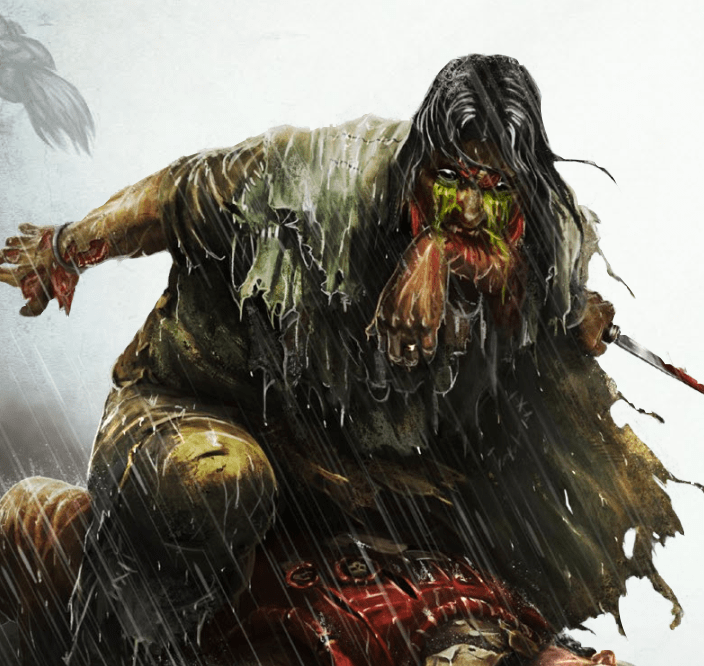
Poor old Rolf Hurtsiss has seen better days

The art is consistently fantastic, and the writing manages to tread a tightrope and be both evocative and laugh-out-loud funny at times. In particular, the NPCs are sketched really well, and the character of the places you visit – from the Coach and Horses Inn, to Altdorf, to Weissbruck – really comes across.

Everyone has a name

The first ‘monster’ you meet on the road – the mutant Rolf Hurtsis – is an old acquaintance of one of the characters; but even after this, every character is drawn with a past, and every one is named. The rest of the mutant band – led by Knud – all have names (I made them call out to one another as the PCs – as expected – slaughtered them). Nobody appears on the scene without having a richer and fuller life outside the story they are in, and the world is richer for it; the road warden is tracking down his sister on the road to Altdorf, for example. And, even more so…

Everyone has character

The NPCs are so well drawn in here, it’s worth taking the time to give them some character at the table. I jotted down some of the 7-3-1 technique for each one, although that sometimes led me to “now what does Josef talk like again?” moments, it made their interactions – which are at the centre of this adventure – more interesting.

Playing online, there are a few tricks to make characters stand out. The first is to show their picture (and every NPC in the adventure has great art) when you talk as them – I used “Show to Players” with Handouts on Roll20, but there are lower tech versions like sharing a screen if you’re running without VTT. The second is to overact terribly. I exhausted my limited repertoire of accents after two sessions, but it does help to have Josef talk like a pirate king (Hans Pflaster, the aforementioned roadwarden – was Jason Isaac’s Marshall Zhukov from Death of Stalin, and just as short-tempered) to get a sense of versimilitude. That said…

It can be a bit Carry On

There’s an element of farce to the central conceit – and several of the key scenes – that might take some careful running. There are times when your players might be tempted to back out – when they follow Josef to the pub in Bogenhafen, and it’s quickly obvious they’re in a very dangerous place – so I think setting the tone is important. 

There’s a lot of Long Game Foreshadowing

I’ve never run a game before where I dropped a rumour in the first session that foreshadows Empire in Ruins, the fifth instalment of the campaign that sits maybe 40-50 sessions away. I’ll deal with if they remember the (false as it turns out) rumour then if and when it occurs. I took the approach of, whenever the book gave me a page of rumours, liberally spreading them out to my players, without showing them which were immediately relevant and which were flavour. This seemed to work well, and they’ve not led to too many red herrings yet.

It’s a bit Bait and Switch

Your group may vary with this – but I’d like to think that my players were under no illusions, when they found their lookalike body, that they weren’t actually going to collect 10,000 Crowns. By the time they get to Bogenhafen, and almost everyone they’ve ever associated with has turned up dead, more cautious players might be forgiven for being wary about heading to collect the inheritance. I presented this as if there weren’t many options – and in any case, it couldn’t be more dangerous than that dockside pub in Altdorf, right?

In Summary

It’s great. It’s not really like anything I’ve run before in a fantasy setting, and indeed it stands alone in terms of where its encounters come from. There’s no monsters to fight, or wilderness areas – it’s an entirely urban adventure, really – with a few interludes on canals or roads, but still well within reach of the Roadwardens. Given that it manages to still be terrifying even when in the midst of supposed safety, I’d recommend it to anyone – although tell your GM you’ve read this first so they can switch it up with the Grognard Boxes!

Have you played or run Mistaken Identity? What did you think of it? Let me know in the comments!

The Third Pillar – Fixing Exploration

In this previous post, I talked about the first two “pillars” of D&D – and by association TTRPGs generally – combat and roleplaying. I’ve put a whole post into the third one, exploration, for a simple reason – I don’t think that we do exploration very well. That is, I don’t think TTRPGs do it very well, and I think there’s a lack of clarity about what it actually is.

While you’re reading this, I should tell you about my Patreon. Patrons get access to content 7 days before they hit this site, the chance to request articles or content, and the chance to play in one-shot games, for a very reasonable backer level. If you like what you read, want to support the blog, and have the funds for it, please consider supporting here. Telling people about the blog, and sharing links/retweeting is much appreciated also – thanks!

I’m going to describe why exploration is tricky, then try to suggest some ways to make it better. 

Why is exploration hard?

  • It’s not explained well. Looking at the Exploration section of the 5e DMG, there’s two pages covering travel time outdoors, tracking (mainly DCs), visibility, noticing other creatures, and a bit about “special travel pace” to calculate daily travel times if your movement rate gets adjusted (by a spell, for instance). Setting to one side that these are all ‘wilderness adventures’ things, there’s not a lot of rules to sit alongside this. These don’t seem to be rules for exploration – more rules for travelling a long way.
  • It’s not supported by rules. Exploring a dungeon involves crawling from room to room and having encounters. Exploring wilderness (once you’ve worked out your special travel pace) involves walking across a map – and maybe encountering monsters or NPCs. Exploring a new city involves walking around talking to NPCs. All of the excitement in these situations comes from the other two pillars – combat or roleplay. Generally (and there are a few notable exceptions), exploration in itself isn’t rules-supported.
  • It’s not clear what it is. The player’s handbook gives some examples about Exploration being “the give and take of the players describing what they want to do, and the Dungeon Master telling them what happens as a result.” (PHB, p8) – this sounds an awful lot like the entire gaming experience – or Apocalypse Worlds’ roleplay as a conversation – do these things not happen during combat or roleplay?
  • It relies on a traditional GM vs. players model of narrative control. This control has since been shifted in so many games, and in so many play cultures, that the “wander around and find out” type of exploration now feels dull and lifeless to many of us. If I’m planning a wilderness expedition, I’m much more likely to use a 13th Age-style montage or ask my players for descriptive details with Paint The Scene questions than I am to feed information myself.
Dark forests should be scary by themselves, without needing combat or roleplaying as well

Categorizing exploration

Word lovers, look away now. I’m going to posit that exploration is too generic a term, so I’m going to create some portmanteau’s to split it into useful categories. I’m going to argue that exploration is primarily about transfer of information – that is, finding stuff out. This can happen in a few ways.

  • Placeploration is background learning. This can be utterly rubbish, learning what happened 200 years ago (the “Adventure Background” bit we all used to skip over before the actual adventure) – or it can be a brilliant piece of versimilitude. It can foreshadow future events, or provide details of what’s going on in the world’s metaplot. Basically, learning anything that isn’t usable this session falls into this category.
    • It takes a few days to cross the forest, and you find the lumber camps abandoned and empty. Make me an Intuition check (succeeds) – looks like they packed up in a hurry, and there are indistinct boots and tracks that look like goblins around here. After you’ve recovered the crown, you could come back here and look into that.
  • Plotsploration is directly relevant secrets and clues for the current plot. By exploring the dungeon, the city or the world you uncover secrets and clues that either bring you closer to the confrontation, or provide an advantage in it. This works best as a drip-drip of information, and can happen during, as well as in between, combat and roleplaying scenes.
    • This room is clearly a prison. There’s chains and manacles on the walls where prisoners must have been held, but no sign of the Prince. Closer inspection of the manacles reveals they’ve been unlocked, and there are a couple of broken lockpicks on the floor nearby – a picklock did this, and not a particularly good one at that.
  • Perilsploration is less about information transfer and more about crossing a barrier. You’ve got to walk across Mirkwood to get to tell the elves, and it’s going to be dangerous. These places should be dangerous even if they didn’t have combat or roleplaying in, so sometimes you might have to create a skill challenge in order to model it. Games that do this well already, saving you this time, are The One Ring, Trophy, 13th Age (montages can be switched to any system, the rules are so straightforward), Ironsworn, Mouse Guard, and a lot of the PBTA games. These are good frameworks to get some placesploration in as well, as your players try to overcome the barrier.
    • The signal tower is three days away, and you’ve only got two. We’ve got a skill check each – probably at DC 15 unless you try something exceptional – to try and get there in time, and you’ll need at least 3 successes to get there in time. What  are you rolling?

Once you’ve got exploration split into these categories, it’s easier to incorporate it into your game – think about each instance you have in your prep, and whether its a barrier, current info, or future info – and spread out your clues appropriately. I’ll pull together some examples in a future post – in the meantime, what other fixes do you have for exploration? Or are you happy with it as it’s presented in TTRPGs generally? Let me know in the comments.

Rime of the Frostmaiden – Prelude One-Shot: Into the Snow

I’m running D&D again. This time, I’ve got hold of a crew of 4 players, a mixture of veterans and newcomers, to run through Icewind Dale: Rime of the Frostmaiden. I’ll be blogging here about how I’m adapting it, tweaking it, and approaches to it (worth noting if you’re interested that Sly Flourish has already done a great job of this here – I’m not going to duplicate his work!)

While you’re reading this, I should tell you about my Patreon. Patrons get access to content 7 days before they hit this site, the chance to request articles or content, and the chance to play in one-shot games, for a very reasonable backer level. If you like what you read, want to support the blog, and have the funds for it, please consider supporting here. Telling people about the blog, and sharing links/retweeting is much appreciated also – thanks!

One of my players is brand new to roleplaying. So, instead of expecting him to dive into character creation and commit to a long campaign, I thought I’d run a one-shot with pregens to set the scene. This is set in Ten Towns, in the same place as the game, foreshadows some of the content, and gets everyone on the same page about tone. It’s an idea I’ve heard Simon Burley, esteemed designer of Golden Heroes, talk about as his default campaign starter (he calls it a “Session Minus One”) and I’ve never done it before. 

It’s first level, to keep everything simple, and is a fairly linear progression, although all of the encounters have a few ways to resolve them. Most of the opposition arrives in waves, which is a good trick for balancing 1st level fights – they can be really swingy when one blow can knock out a player or opponent, so having not everyone attack at once means you can adjust the level of challenge on the fly a bit. It’s balanced for 3 1st level PCs – just add or subtract bandits or undead if you have more or fewer.

It went great – and we’re now one session into the actual campaign! In a couple of months I hope to follow this up with a ‘review’ of the first chapter, Ten Towns, based on actual play. Inspired by Fear of a Black Dragon, I’m trying to limit my reviews to products or adventures I’ve actually played or run, because I think this is most useful – although I appreciate not all reviewers can do this, and if everyone did there wouldn’t be many reviews around! There’s a place for reviews-after-reading as well, they just do different things.

But, I digress. Here is the adventure, presented exactly as my prep notes looked for it – let me know if you use it here or on Twitter @milnermaths !

Into the Snow

A Rime of the Frostmaiden prelude adventure (3 x 1st level PCs)

You live in the far north, beyond the Spine of the World, in the desolate icy realms of Ten-Towns. For the past two years, Icewind Dale has been stuck in an endless winter – every night, strange lights appear, and every night lasts forever as the sun fails to rise. Trapped forever in glacial ice, you eke out a precarious living.

As we open we see you trudge across an open snowfield, a heavily laden sled pulled by two huskies, Gore and Chew. It’s three hours since you set off from Easthaven, one of the more prosperous towns, and you carry on your sled beer, mead, and supplies for Caer Dineval. Caer Dineval has been without beer for two weeks now – you can’t imagine their pain.

  • Describe your character – what are they carrying, how are they walking alongside the sled

But the going has been hard. 9 hours this would normally take, but the snow has come in and you fear a blizzard is coming. As you cross an ice floe, you notice the dogs startle – and the wind threatens to tip your sled over.

  • Ask the PCs what they are doing to prevent the tip. Generally it might be a Survival (Wisdom) check, but they could use other skills as well. At least half (rounded down) need to make it – if they fail, they are overwhelmed when the raiders attack and suffer disadvantage on Initiative checks

Scene 1 – Raiders in the Ice

Out of the snow and ice appear shadows, and the barking of dogs – you are under attack!

There are 4 raiders (bandits), but only 2 attack – and 2 rough huskies (mastiffs). As they fight, each round they see the snow get thicker – and as they flee / are defeated, they notice the sled has been raided.

0 failures – they have grabbed some of the supplies, and a prized bottle of Calishite brandy, charged with delivery to the Caer Dineval castle by your patron

1 failure – as above, but a couple of barrels of mead have gone as well

2 failures – all the supplies are taken

3 failures – one of the huskies has been dragged off as well

As the storm momentarily clears, they can attempt to make sense and give chase.

A Survival (Wisdom) check DC 15 will reveal that the storm is only briefly abated, and they had better follow the tracks now – they lead towards some rough hills which might also offer some shelter

A History or Investigation DC 11 check shows the men to be natives of Icewind Dale, clad in rough winter clothes – accustomed to living in the wilds, but not themselves Rheged Nomads

Scene 2 – The Chwingas

As they follow the tracks, they make their way towards the hills. Strange black crystals occasionally jut from the horizon – DC 15 Arcana to reveal it is Chardalyn, a magical material found only in Icewind Dale.

But the storm gets worse. Ask for DC 10 Survival checks to avoid becoming Exhausted – and then DC 10 Perception to notice a shelter ahead. 

A group of 6-inch-tall animated dolls, about 5 of them, are dancing around a fire

DC 15 Arcana or History to reveal these are Chwingas – tiny fey folk who can be helpful if charmed.

They mimic the characters, then ask them to dance – an appropriate skill check must be made (at DC 12) to receive a charm from each of them.

They award these charms in order: Charm of Vitality Charm of Heroism Charm of Bounty

The PCs can rest while the storm rages around them, and when it passes there are no signs of tracks. The Chwingas, however, can indicate the way their raiders went – up a narrow path to a hill cave

Scene 3 – The Hill Cave

With the mastiffs caged up outside, they can see the tiny cave as they approach – a group Stealth check DC 10 is enough to gain entry. They see the 4 raiders, and a teenaged girl, Varana. She is clad in wispy clothes despite the biting cold and seeks no trouble.

They can try and recapture their stuff, and this is an easy fight – the bandits will only fight to ⅓ of their hp – so 3 hp or less- before surrendering. Then, they tell them the story

Varana was a sacrifice, one of the lottery chosen by the Children of Auril, a cult who seek to end the endless night. She escaped, with her friends, three months ago. They move around a lot, looking for shelter. She clearly has some sort of magical power – as if the frost won’t touch her as she has escaped the Frostmaiden’s clutches – so she protects her friends.

They cover their tracks with the blizzards that follow Varana around… the PCs didn’t leave any tracks here, did they? (At that, they hear the howl of the dogs from outside, and a splash of blood – and the cult death squad attacks)

The cult death squad is an instrument of icy doom – a goliath zombie and a pair of skeletons crash through, while another 4 skeletons attack the following round

As they defeat (or are defeated by) the death squad, they find Varana is gone. They can trudge back to Caer Dineval with their recovered loot.

Prep Techniques: The Boss Monster

Good antagonist design isn’t just essential for good TTRPG sessions, it can be something you base your whole session on – even if it’s a convention one-shot. I’m going to look at a method to build a session outwards from an antagonist, including looking at some rules tweaks that you might want to put in if your system isn’t as great at supporting solo monsters.

While you’re reading this, I should tell you about my Patreon. Patrons get access to content 7 days before they hit this site, the chance to request articles or content, and the chance to play in one-shot games, for a very reasonable backer level. If you like what you read, want to support the blog, and have the funds for it, please consider supporting here. Telling people about the blog, and sharing links/retweeting is much appreciated also – thanks!

In previous Prep Techniques posts, I’ve looked at 5-Room Dungeons, Sly Flourish’s Method, Three Places, Con Pitches and a Bag of Tricks. Here, I’m going to talk about using an antagonist as a starting point for your one-shot or session. This turns traditional adventure prep on its head – and gives you a stock of prep material that should let you run a flexible session, with multiple routes to take down the antagonist.

First, the Fluff

Let’s talk about the boss’s background first. Who is he and what’s his plan? What does he want to do, why is it terrible, and why can’t the PCs ignore it? A good starting point is one or more of the PCs – can you link them to their backstory to make the players care about the antagonist? If you’re in an ongoing campaign, think about linking him with previous sessions, or foreshadowing future plans.

Your boss should be tough fight, even if they’re on their own. Clever plots or schemes from the players should have the option of getting to them without his supporters – and they should still be a challenge then. So think about levels of power – they need to be a threat!

They aren’t going to be alone though, so have between 1 and 3 lieutenants – minor monsters that support him, who can be a challenge with support themselves. These lieutenants should be distinct in terms of powers and personalities from the boss – if the boss is an archmage, make his lieutenants warlords or combat monsters.

Antagonist-based plotting is a staple of superhero gaming, but it can also be used for any TTRPG genre

Plan for the PCs to deal with a lieutenant first, maybe even as the hook to discover the boss’ plans. Also, think about what their weakness is – even if it’s a tendency to monologue – and a way the PCs can find this out and use it to their advantage.

Next, the Crunch

To have a truly effective boss in a fight, you might need to bend or break your game’s action economy. In D&D, consider using Matt Colville’s excellent Villain Actions hack, so your boss can act multiple times a round – and in another system consider giving them 2 or more actions each round. If you don’t feel like doing this, or your boss has multiple attacks already, consider spreading them out across the round – you want to keep the spotlight on them during the fight, rather than it feeling like the PCs have all the actions.

They also need to be hard to kill. This might mean just more hp, or some sort of special rule. I’m a fan of Feng Shui 2’s boss rule – when they would go down, roll 1d6, and you need to get an odd result to actually defeat them. It adds a level of jeopardy and pressure to a fight and distinguishes them from lesser enemies.

As you’ve got the lieutenants sorted, almost any boss should have a numberless supply of minions – these can be added to any encounters liberally to balance to the right level of challenge you desire. With minions, I like them to sometimes be much easier to defeat than normal – don’t be afraid to send your 5th level PCs up against hordes of kobolds – often with the boss’ supporting powers they might be a challenge, and usually some PCs will still want to deal with the minions.

Third, the Adventure

Now, you want to think about some key scenes. I’d recommend having a starting scene fully prepped, where they learn about the boss’ plans in some way – maybe a fight with some minions, or one of the lieutenants. And think about mid-scenes, where they might take down a lieutenant or learn the boss’ weakness. By combining lieutenants and minions in a few different ways, you can have some options for different opposition they could face along the way.

You’ll want around 3 locations along the way that could lead to the showdown, and some things that could happen to the environment there. Some of these – or some of the lieutenants – can lend themselves to non-combat challenges (if you’re looking for rules to support these, try here or here) – that you can steer towards. Make some plans for the final confrontation – this needs to be a showcase fight scene, so bear in mind the advice here for building it.

So far, your adventure prep will look a bit like this list… next week, I’ll post up some examples for a few different systems!

BOSS PROFILE

Name:

Goal & why the PCs care:

“Secret” weakness:

Description:

Lieutenants (1-3):

Mid-range Antagonists:

Minions:

Locations:

Potential non-combat challenges:

2022’s New Game Resolutions

As we come to the end of the year, I think it’s always worth reviewing how you’re getting on with the hobby, and thinking about where you’re heading with it. For me, 2021 was pretty similar to 2020 – a lot more online play, with the odd face to face game at conventions later in the year. But my gaming is still dominated by regular online groups, and this is all good – there’s lots of stuff I’m excited to continue with next year.

While you’re reading this, I should tell you about my Patreon. Patrons get access to content 7 days before they hit this site, the chance to request articles or content, and the chance to play in one-shot games, for a very reasonable backer level. If you like what you read, want to support the blog, and have the funds for it, please consider supporting here.

Organisation / This Blog

I’m going to try and get more ad hoc games up – one-shots or 3 / 4 session mini-campaigns – with groups set up just for the one off. I started a Supers One-Shot club halfway through the year, and though we’ve hit some scheduling difficulties recently, it’s been great to try out some games with a supportive group.

Keep your eyes peeled in the new year for dates for Burn After Playing, which will (finally) start up – one-shots with Patreon priority on topics covered in the blog. Growing Patreon is also a priority so I can get some art and design stuff for the blog (maybe even…. T Shirts and Mugs? How stylish would we all look?!) – so feel free to spread the word. While I’m clear on wanting the blog to be publicly open – so the vast majority of core content will be just offered as early access to Patrons – I’ve got a few ideas for Patreon exclusives, including sharing my prep notes and pregens for con games ready-to-run. 

The other priority with the blog is to start some youtubing – I’ve not quite got this idea finalised in my head, but thinking of a mixture of recordings of one-shots (without some of the filler you often get in streamed RPGs – straight to the action, paced like a con one-shot), live prep sessions, and maybe even interviews with other con GMs. I’m open to ideas at the moment – what would be useful for you?

Gaming – Long-Form

There’s a few campaigns that I’ve got bubbling under I’d like to get run, and some of them are below

The Enemy Within – after spending a lot of 2021 running WFRP one-shots, I’d like to finally tackle this beast. Even with the remixed Cubicle 7 edition, I think I’d want to edit it a bit to keep the pace to my tastes, and I’m not sure if I’ve got a group for it yet, but I’d like to get another ‘classic’ campaign under my belt. Would definitely run in ‘seasons’ per each of the books.

The One Ring 2e – The One Ring was my entry drug into online GMing, and when the new edition hits print, I’ve the regular Tuesday group primed to play through some of 2nd ed. I ran a one-shot megamix of the starter set at Grogmeet recently, and the new rules really work from what I can see. Will probably take one of the 1st ed adventure cycles and run it through – I’m a bit unconvinced by The Darkening of Mirkwood as it might be a bit too long … and slow-build… for our tastes.

13th Age Glorantha – Amazingly, I haven’t run any 13th Age at all this year. I’d like to give 13G a proper run, 1st to 10th level, seeing our heroes grow to world-shaking power. The limiting factors are my lack of knowledge of Gloranthan lore, and my lack of enthusiasm to learn any Gloranthan lore. Glorantha will vary though, right? It’s mostly ducks and cows anyway.

D&D – I’ve got an itch to run some D&D, and maybe even one of the big hardback campaigns. I know Curse of Strahd gets all the praise, but I’ve currently torn between Rime of the Frostmaiden and Wild Beyond the Witchlight. This involves finding a group for it – although I’ve got one keen player already – and if I’m running D&D online I want players on the same page as me about what kind of fun we’re having – which I might elaborate on in a later post.

Gaming – Short-Form

My “bubble list” of games I want to run one-shots of includes Soulbound, Pathfinder 2 (that’s what reviewing a good adventure does to you), Trail of Cthulhu (I’ve somehow never run a Gumshoe game), and Wanderhome – or at least something using Belonging Outside Belonging, the diceless PBTA-adjacent collaborative system.

There’s a few other new games that I’d like a sampler of a one-shot before running any longer – from Lex Arcana (Roman occult investigators with a funky dice system that might be great) and Ironclaw (incredibly I’ve never run this anthropomorphic fantasy system) to Hearts of Wulin and some more PBTA games.

I’d also like to give Feng Shui 2’s new adventures published through the subscription system a good run out, and finally get some Heart and Spire one-shots to the table. There seems to be a lot of good stuff coming out of itch at the moment, and I should get some of them put on – maybe these are options for Burn After Playing as well.

As always, this list might well change before January ends, such is the hobby. What are your 2022 want-to-do’s in roleplaying? And, as above, let me know what sort of Patreon benefits you’d like to see – whether you’re a patron or not.

One-Shot Reviews: Threshold of Knowledge for Pathfinder 2nd Edition

It’s been a while since I’ve done a review of a product, but here we are. For a change, over the next few reviews I’m going to look at (ideally) freely-available one-shot adventures, with a focus on unpicking and adapting them for other settings and systems. 

While you’re reading this, I should tell you about my Patreon. Patrons get access to content 7 days before they hit this site, the chance to request articles or content, and the chance to play in one-shot games, for a very reasonable backer level. If you like what you read, want to support the blog, and have the funds for it, please consider supporting here.

I’m normally of the view that a review is much more valuable if you’ve played the product. With that in mind, I’ve neither run nor played Threshold of Knowledge – yet, and have only played Pathfinder 2nd Edition once in a playtest demo once. It’s available as a free download here, if you missed picking it up on Free RPG Day.

In these reviews, apart from an overview of the product, we’ll look at the structure, and how it works for a one-shot – with an eye towards running for new people. I’ve tried to keep this relatively spoiler-free in case you end up playing it – but I’ve not been too careful, so you might want to stop reading now if you plan on playing this.

The Product

Threshold of Knowledge is 16 pages, with a page of maps, and 5 pregenerated 1st-level characters. It’s set around the Magaambya magic school in Pathfinder’s Mwangi Expanse region, which makes it feel different and cool – Mwangi is a diverse and exciting land, and where a huge magic school is based – which features heavily. The art is, as you’d expect from Paizo, lovely.

You’ll need your PF2 books close to hand to run this – monsters aren’t given stats if they’re already in the Bestiary, and in one case you’ll need to flip between two pages of it (or, obviously, work out what Weak Sea Devil stats are in advance – it’s a shame the book doesn’t do this, although obviously it allows them to cram more in.)

In terms of the plot, there’s a bit of fetching-and-carrying and a chase across town before the PCs need to explore a mini-dungeon and rescue their teacher. The encounters in the dungeon are a good mix of straight-up fights and avoidable monsters, and I’d be happy to run this for a group – many of the adversaries can be negotiated with, tricked, or (in the case of the crocodile Jubo) snuck past while he dozes. Each individual encounter feels well-thought-out and flexible, which compensates for it being entirely linear.

The Structure

The structure of the adventure is, as I’ve said, a straight line. You chase a dwarf across town (sequence of skill checks), get sent to do some fishing (more open-ended skill checks), and then have a fight and a bit of puzzling to find the way to the dungeon. Once there, it’s a straight line of rooms – sort of a 5 room dungeon, although there are only actually 4 rooms and there’s not too much of a twist or trick in it. 

I’ve said before that I’ve got no problem with a linear series of scenes, and I think ToK manages to make each individual bit interesting enough to avoid it – although I’ll know more after I’ve run it. There’s also quite a lot in this – I can imagine this taking two session easily, especially accounting for PF2’s far-from-quick combat learning curve.

One thing stands out about the combat encounters as you run through them – every one has a different approach you can take. Even the first encounter, as much a training-level fight as anything, has a chance for a Nature check to pick up a clue that can help in the fight. Other encounters have different options – one can be negotiated with, another can be snuck past, and the final confrontation is really more about stopping a ritual than defeating the creature – so either approach will work. 

One thing that I was surprised at, doing the maths for the encounters, is how they were all Low- or Moderate-challenge in terms of PF2’s encounter building. When I run it I’d be tempted to beef up the final confrontation a bit to add a bit of jeopardy – I’ll resist sharing spoilers but an additional level 1 Creature (say, like the one two rooms earlier) will make that final fight a bit more dangerous.

The Fluff

I’m a big fan of what Paizo have done with the Pathfinder setting, and especially with the Mwangi expanse, and there’s a lot to like in the presentation of this adventure that grounds it in the setting. You’re students at a magical school, to begin with (which seems to be the current fantasy trend, and the adventure very much shines with the city of Nantambu – you get a real sense of the magical school’s influence around the city, and some neat mechanical things reinforce this.

To start, you get magical items right away here – a bubbling scale that lets you breathe water, and earn other rewards as you go on. This is something I need to put more of in my 1st-level one-shots, and fantasy one-shots generally – the reward factor of getting something useful and magical is great for players and brings them into the setting. 

The pregens are good in terms of roleplaying prep – they feel like actual con pregens for their fluff. There’s background on their life before joining the academy and how they feel about a couple of the other pregens (I might make these bonds questions, where they can decide who they trust most and worry about most from the group, and why, if I was running for an experienced group). In short, the ideal amount of backstory from a traditional game perspective. Their rules write-ups are okay, too, if not perfect – I’d want a handout for what e.g. the elixirs of life and alchemist’s fires that some of them carry do, as well as spell descriptions. There’s a couple of new spells to go with the three new minor magical items as well.

In Summary

I really like this as a one-shot, and as I get more curious about PF2 I’d like to get it to the table. The skill checks – training fight – puzzle – mini-dungeon structure works well, and I’ll certainly be borrowing that. Although a few branching points would be nice, the alternate-approaches for each encounter is textbook. I’d go so far as to say you could learn a lot about one-shot prep just by reading this.