What Ho, Jeeves! – Three Gaming Things from Jeeves and Wooster

In the latest in an occasional series of TTRPG tips from films, TV, and books, I’m looking at PG Wodehouse’s humorous novels charting the misadventures of Bertie Wooster and his unflappable valet, Jeeves. This was inspired by a trip to a second hand bookshop and a purchase of Aunts Aren’t Gentlemen, the last book Wodehouse completed, and barely a novel, really – 45,000 words that you can polish off in an afternoon. It’s light prose, tripping wordplay, and has some TTRPG advice hidden within – whether we’re playing something lighthearted, or not.
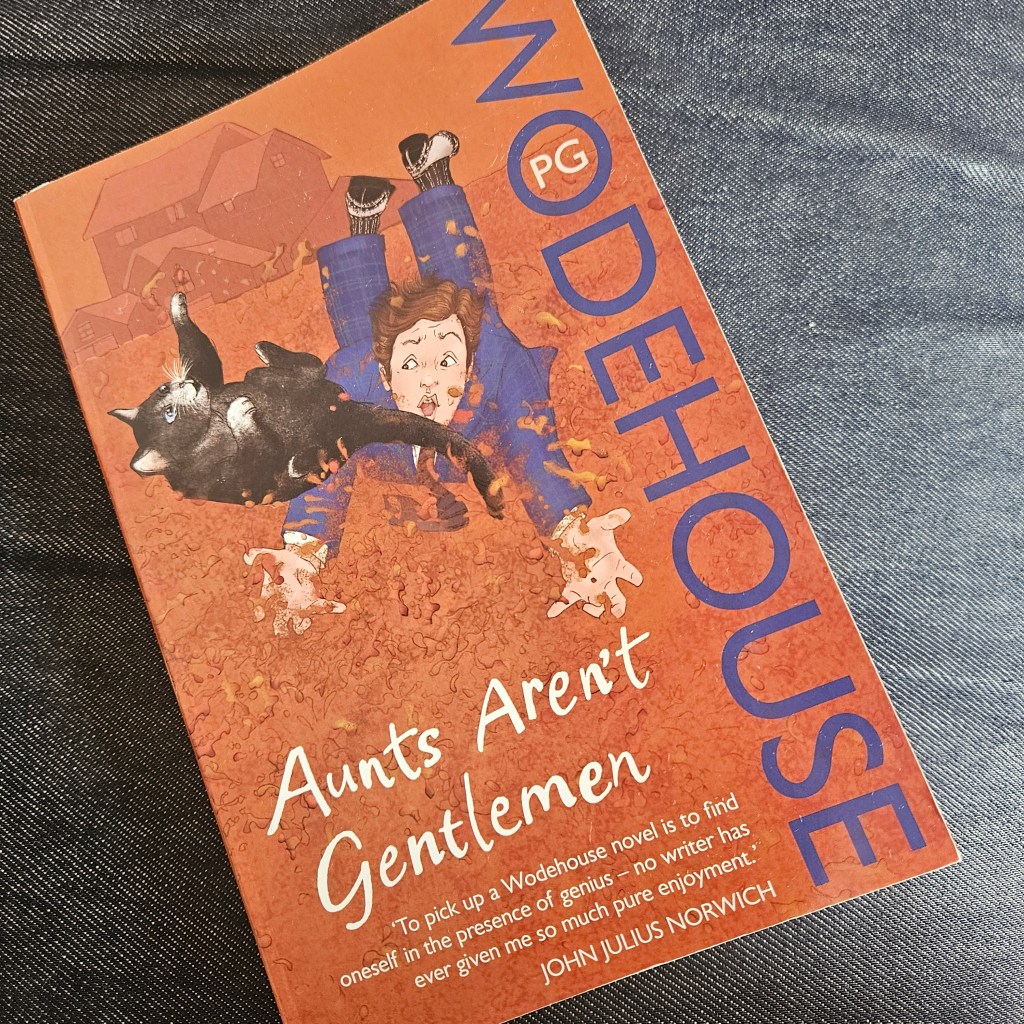
If you’re unfamiliar, PG Wodehouse’s series, written throughout the 20th century and set in sort of the same era, follow the misadventures of Bertie Wooster, a happy-go-lucky aristocrat, and his unflappable valet Jeeves. Their adventures often involve becoming engaged to marry by accident, stealing cats by accident, getting involved in hair-brained schemes, and wriggling out of said schemes. Through it all Wooster, the narrator, is hapless but lovable. Jeeves is inscrutable but brilliant, and often effects a solution to the problems faced. I’m not sure if it ever went outside of the UK, but if you’d rather watch it than read it, there’s an excellent TV adaptation with Hugh Laurie and Stephen Fry that you can no doubt find loads of clips of on TikTok and while away an afternoon getting the gist.

While you’re reading this, I should tell you about my Patreon. Patrons get access to content 7 days before they hit this site, and the chance to request articles or content, for a very reasonable backer level of £2 per month. If you like what you read, want to support the blog, and have the funds for it, please consider supporting here. Telling people about the blog, and sharing links/retweeting is much appreciated also – thanks!

Continue reading →

Proper Espionage – Three Gaming Things from The Spy Who Came In From the Cold

I read this through a gaming link; Malcolm Craig, game designer and actual cold war expert, rates this as the best background to the Cold City RPG (or at least, he did when we interviewed him for the Smart Party). So, months later, I’ve finally read it – and it’s a cracking read, a classic John le Carre that manages to convey very well the setting of shifting allegiances and bureaucratic machinations of a (fictionalised) 1970s operation.

Claire Bloom and Richard Burton in the film, which I haven’t seen but I bet isn’t as good as the book

While you’re reading this, I should tell you about my Patreon. Patrons get access to content 7 days before they hit this site, and the chance to request articles or content, for a very reasonable backer level of £2 per month. If you like what you read, want to support the blog, and have the funds for it, please consider supporting here. Telling people about the blog, and sharing links/retweeting is much appreciated also – thanks!

Continue reading →

Become the Beast: Three Gaming Things from Grendel

Grendel is a 1971 novel by John Gardner, a retelling of the Beowulf myth from the point of view of the monster. It’s excellent, but if you’ve picked it up thinking “ooh, I like axes and fighting monsters, and it’s a fantasy masterwork – this’ll be a rip-roaring read!” you may be somewhat surprised, and possibly disappointed. It’s a bit literary, as Gardner uses the myth to explore existentialism; in his own words, “What happened in Grendel was that I got the idea of presenting the Beowulf monster as Jean-Paul Sartre, and everything that Grendel says Sartre in one mood or another has said.”

While you’re reading this, I should tell you about my Patreon. Patrons get access to content 7 days before they hit this site, the chance to request articles or content, and the chance to play in one-shot games, for a very reasonable backer level of £2 per month. If you like what you read, want to support the blog, and have the funds for it, please consider supporting here. Telling people about the blog, and sharing links/retweeting is much appreciated also – thanks!

Continue reading →

The Owls Are Not What They Seem – Three Gaming Things from Twin Peaks

Following David Lynch’s passing, I’ve started rewatching the first season of Twin Peaks. It’s excellent, and I’d recommend it to everyone (I mean, watch the first ep – it’s possible you’ll hate it, in which case don’t watch any more). And, as you’d expect from something that casts such a long shadow in media, there’s a lot of stuff in there that made me think about gaming, and lessons we can learn from it. If you like this, I’ve done this before with the 1931 Todd Browning Dracula film – check that out as well.

Kyle MacLachlan as Dale Cooper – solving the murder isn’t actually what it’s about

While you’re reading this, I should tell you about my Patreon. Patrons get access to content 7 days before they hit this site, the chance to request articles or content, and the chance to play in one-shot games, for a very reasonable backer level of £2 per month. If you like what you read, want to support the blog, and have the funds for it, please consider supporting here. Telling people about the blog, and sharing links/retweeting is much appreciated also – thanks!

Continue reading →

“I never drink… wine…” – Three Gaming Things from Dracula (1931)

Last week, I watched the classic Todd Browning 1931 Dracula film. It’s Bela Lugosi’s career-defining masterpiece, and without doubt a horror classic. Dated, of course, and it shows its origins as the film of a play of a book a little too obviously. It’s definitely imperfect to a modern viewer like me, which means it’s ideal to mine for TTRPG advice! So here’s three things in Dracula that we can use in our games, horror or otherwise.

While you’re reading this, I should tell you about my Patreon. Patrons get access to content 7 days before they hit this site, the chance to request articles or content, and the chance to play in one-shot games, for a very reasonable backer level of £2 per month. If you like what you read, want to support the blog, and have the funds for it, please consider supporting here. Telling people about the blog, and sharing links/retweeting is much appreciated also – thanks!

Continue reading →