Well, that’s it. I volunteered at a summer residential this past week, and offered to run a D&D game as one of the daily activity group options participants could sign up for. I think my experiences have some salient tips for running D&D for kids, running for new players, and making all of that fun, so here goes…
What I did…
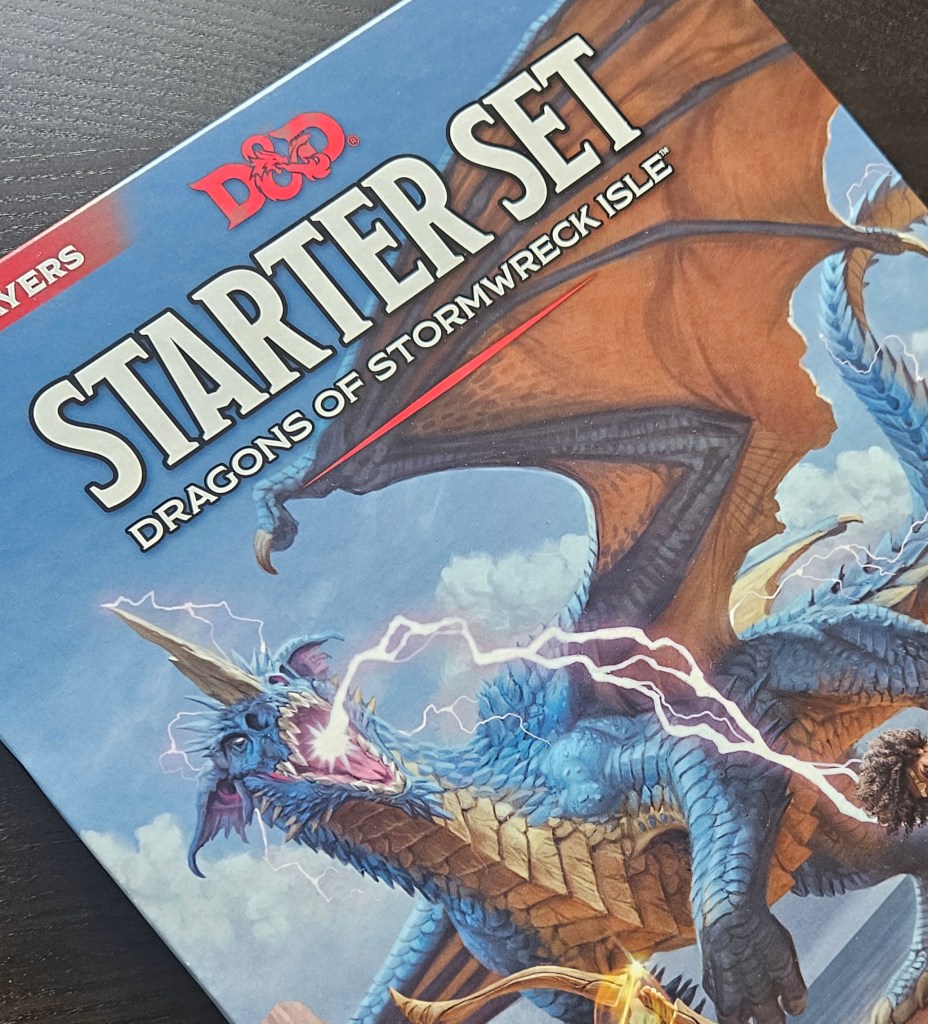
So, let me share the format. 5 players (we started with 6 but one had to drop out half-way through the first session), 5 daily sessions, 1 hour 15 minutes each. So, 6 hours 15 minutes in total – so we had to get through stuff quickly. Previously, I’ve rolled my own stuff for this, but I didn’t get a chance and so went with Dragons of Stormwreck Isle, one of the three 2014 D&D Starter Sets – spoilers ahead for that, if spoilers for an adventure published in 2022 bother you. We got through it all with some mild surgery on some of the plot points. Here’s what I learned…
While you’re reading this, I should tell you about my Patreon. Patrons get access to content 7 days before they hit this site, and the chance to request articles or content, for a very reasonable backer level of £2 per month. If you like what you read, want to support the blog, and have the funds for it, please consider supporting here. Telling people about the blog, and sharing links/retweeting is much appreciated also – thanks!
Nobody Cares About 2014 / 2024 Editions
One player had a pregen already for 2024, on D&D Beyond on their phone. The rest of my pregens, and the adventure, were for the 2014 edition. It didn’t matter. Okay, this was for mostly new-ish players, but I think this stands with most groups actually – it’s not so much backwards compatibility, as they’re just near enough the same game. Sly Flourish has written about this before – running a game with a mishmash of 2014, 2024, Tales of the Valiant, and Level Up 5e without too much difficulty. It’s fine.
You’ll Need Some Cabaret GMing
So running for 13-17 year olds, most of whom haven’t played before (or only played once a year ago), you need to be realistic about how it’ll go. People get tired, people need the rules taught, you’ll get some odd ideas. Magical transcendental flow TTRPG gaming this was not. But, to be fair, I’ve had much worse games with adults. But bring the energy (especially on a residential) – give those NPCs some funny voices! Celebrate crits and failures! Narrate outcomes expansively! Play to the gallery!
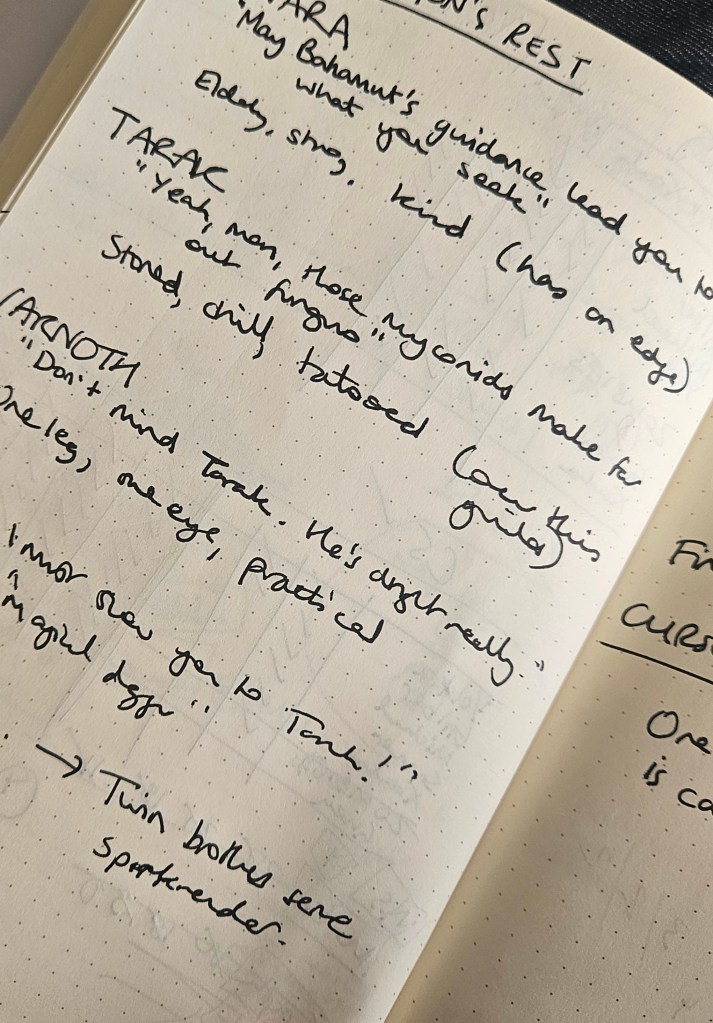
Fair warning – you might also need to block the odd weird decision. There were a few attempts to betray the party that we had to remind them they’d agreed not to do. You might also need to call them to order -”stop stacking the dice and listen” – so do this. Gaming always works best if you solve out-of-game problems (players not listening) with out-of-game solutions (asking players to listen).
For New Players, 1st Level is Best
Excuse me while I say what I always say about D&D at low levels… for new players, first level is ideal. It’s much less complicated than, say, 3rd – where a lot of D&D veterans suggest starting, when character options start to kick in. And many of the rules they are engaging with will be the same.
There’s also far fewer suboptimal choices – if the wizard wants to attack with their shortsword, it’ll be fine. They just don’t have as many hit points as the fighter – but, well, nobody’s got many hit points. Which is also great – you get genuine peril in 1st level D&D5e! We had three instances of players going to 0hp – in each case the druid got to them and healed them before they started making death saves, but there was a genuine sense of jeopardy and something on the line.
Oh, Wait, Stormwreck Isle…
This is a really good starter set. And a really good model for an introductory (Level 1-3) sort of romp. You arrive at an isolated island (fighting or running away from some zombies on the beach), get offered two quests, do one, level up, do the other (with opposition scaled for 2nd level), then the NPC gives you the final quest where you actually get to fight a dragon.
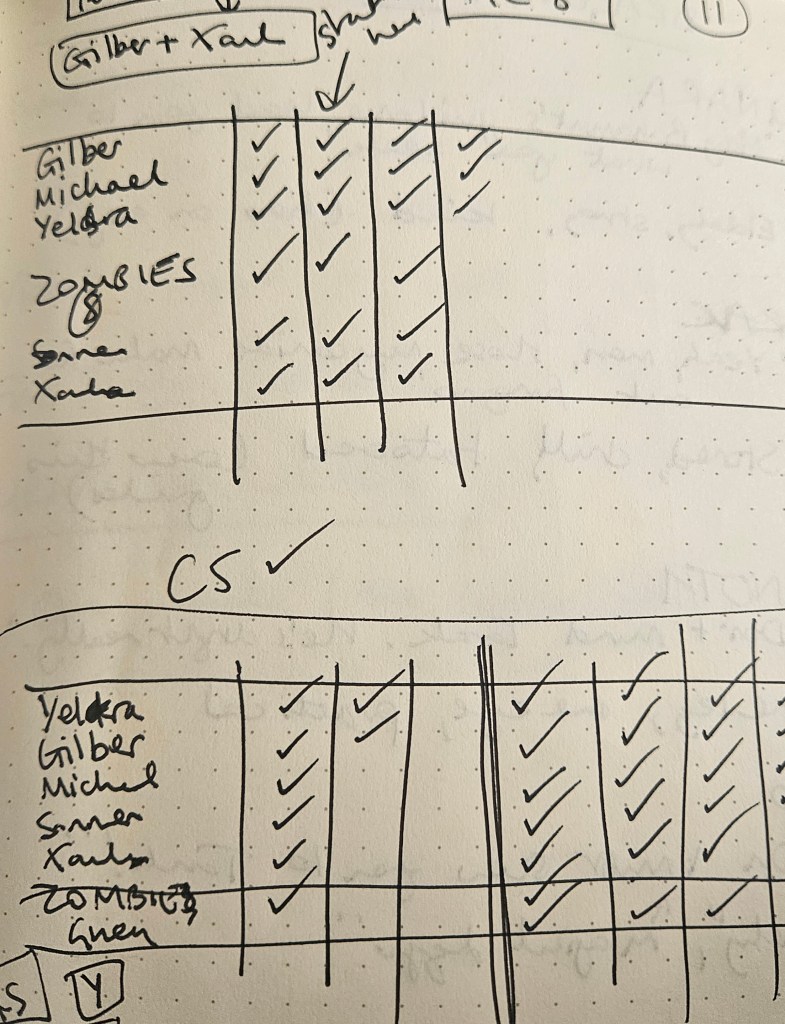
The two initial quests are little dungeon/adventure locations full of flavour and action. A shipwreck full of zombies with a harpy in the crows nest, and a myconid cave affected by a curse. There’s a bit more than 6 hours of adventure here – the adventure base, Dragon’s Rest, has lots of interesting kobold NPCs, there’s some optional encounters around the island, and I cut a fair bit of the opposition out of Seagrow Caves (the myconid lair) to fit my timing.
Speaking of timing, we managed sorting out pregens and the zombie fight in the first session, took two sessions over the Wreck of the Compass Rose (the zombie ship / harpy lair), one session for the myconid caves and one for the final adventure. Certainly each adventure could comfortably be a 3-4 hour session if your tastes run less to speed-running than mine. At a more leisurely pace this could easily be a full 4-session mini-campaign.
So, you can (and should!) run D&D for kids. Have you done it? What worked and what didn’t?


[…] I ran D&D for 5 teenagers – and survived @ Burn After Running: RPG One-Shots – As someone who has been running weekly games for a rotating cast of teens since 2012, including online for a time during lockdown, this post is pretty accurate. […]
LikeLike