Burn After Reviewing

I said something on Twitter yesterday that sparked some debate – and, twitter being twitter, I didn’t quite get the full message of it across, so I’m posting it here as well. This post, because it feeds into a current debate, is going out on Patreon and the public blog at the same time – don’t worry, Patreons, you’ll be getting more early access content soon!

While you’re reading this, I should tell you about my Patreon. Patrons get access to content 7 days before they hit this site, the chance to request articles or content, and the chance to play in one-shot games, for a very reasonable backer level. If you like what you read, want to support the blog, and have the funds for it, please consider supporting here. Telling people about the blog, and sharing links/retweeting is much appreciated also – thanks!

I’ve always been a bit ambivalent about putting reviews on here – at the start, they were really a way to muse on one-shots with a clear framework – but I can’t deny they’re popular. Even looking at 2021’s stats, my 6th highest hit was for a review posted in, er, 2020. There’s a D&D effect in that, too – but it’s the same whenever I post one. They are also relatively easy to write, because I’ve never been too thorough in them – certainly easier than writing an adventure or a set of advice on a specific game – and always get a fair number of hits straightaway.

That said, this isn’t a review site. First up, I only ever review things I like – I’ve no interest in being a critic, and there’s enough good stuff out there that I don’t feel the need to talk about the bad. I’ve received exactly one review copy of anything in my life – and I’ve not reviewed it yet. I’ve stuck reviews into a format that is deliberately incomplete – I’m interested in what I’d do with the product as a one-shot, not covering all the content but a broad-brush impression. So after some thinking, I’m changing how review posts work on Burn After Running.

After Play Only

Film critic Barry Norman, who used to watch the films before he reviewed them

Henceforth, I’m only going to post ‘reviews’ of products I’ve played (as a GM or player). Most of my reviews have been like this anyway (for example, this one of Agon) but a fair few haven’t (see Ravnica, Theros, or Starfinder – although I’ve since played all three of those products). I’m going to try and put some focus on the play experience – what could be gleaned from the game that was surprising even after a read-through, which will of course cover some – but not all – of the content of the product.

But I’ll also be looking at how I ran it, or how it felt as a player. Where I’ve written a one-shot for the game, I’ll share that one-shot. If it’s a published adventure, I usually write up notes as part of my prep, and if you’re a Patreon, you’re welcome to get access to those as well on request. If I twisted some rules or encounters around, I’ll put that in as well. 

This also means some completeness (well, even more) will be sacrificed. If you want a thorough review of the content of the book, informed by years of gaming experience and from a thorough read-through, these won’t be it. Instead I’d direct you to Reviews from R’luyeh if you want words, or Bud’s RPG Review if Youtube is your bag – other content creators are available too.

Does This Mean Less Reviews?

Food critic Jay Rayner, who generally eats the food at the restaurant before he reviews it

Well, no. I think a consequence of this is that when I’ve run something, I’ll most likely (assuming it wasn’t a disaster) put up a post about it. In essence I’ll be merging the “Review” posts and the “How to run X” posts, which will hopefully make it a bit easier to cover more games here.

So, for example, I’m nearing completion of the ‘prelude’ to Shadows Over Bogenhafen with my regular group, so expect a write-up of Mistaken Identity soon – there’s some really clever stuff in the design of this adventure that I didn’t realise until I saw it at the table, and I have made a few significant changes as well. 

I’ve run through all of Vaesen’s A Wicked Secret series of mysteries, and I have strong views on which of them make great (and not so great) candidates for running. I’ve got con games of Masks and Hearts of Wulin coming up this weekend, and I expect to share notes and thoughts on those as well – Masks in particular I’m trying a double-table crossover campaign, so we’ll see how that plays out!

Can You Review After A One-Shot?

Yes. While some games might really sing in a longer-form game, so much more is revealed even from 2 hours at the table, that you can see how that would roll out. Some of these will be one-shot reviews – this still lets me comment on the important bit, which is what I changed and what I would change in the future.

On that note, I’ve not run nearly enough one-shots yet – we seem, though, to be moving out of the liminal post-pandemic zone into one where people might actually meet up and play games more, so expect more to come. If you’re a Patron and would like a one-shot of something I’ve talked about, message me and we’ll try to sort something out!

Rime of the Frostmaiden – Prelude One-Shot: Into the Snow

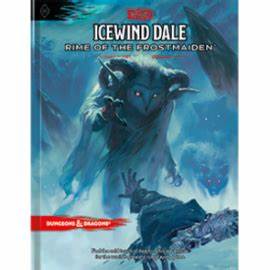
I’m running D&D again. This time, I’ve got hold of a crew of 4 players, a mixture of veterans and newcomers, to run through Icewind Dale: Rime of the Frostmaiden. I’ll be blogging here about how I’m adapting it, tweaking it, and approaches to it (worth noting if you’re interested that Sly Flourish has already done a great job of this here – I’m not going to duplicate his work!)

While you’re reading this, I should tell you about my Patreon. Patrons get access to content 7 days before they hit this site, the chance to request articles or content, and the chance to play in one-shot games, for a very reasonable backer level. If you like what you read, want to support the blog, and have the funds for it, please consider supporting here. Telling people about the blog, and sharing links/retweeting is much appreciated also – thanks!

One of my players is brand new to roleplaying. So, instead of expecting him to dive into character creation and commit to a long campaign, I thought I’d run a one-shot with pregens to set the scene. This is set in Ten Towns, in the same place as the game, foreshadows some of the content, and gets everyone on the same page about tone. It’s an idea I’ve heard Simon Burley, esteemed designer of Golden Heroes, talk about as his default campaign starter (he calls it a “Session Minus One”) and I’ve never done it before. 

It’s first level, to keep everything simple, and is a fairly linear progression, although all of the encounters have a few ways to resolve them. Most of the opposition arrives in waves, which is a good trick for balancing 1st level fights – they can be really swingy when one blow can knock out a player or opponent, so having not everyone attack at once means you can adjust the level of challenge on the fly a bit. It’s balanced for 3 1st level PCs – just add or subtract bandits or undead if you have more or fewer.

It went great – and we’re now one session into the actual campaign! In a couple of months I hope to follow this up with a ‘review’ of the first chapter, Ten Towns, based on actual play. Inspired by Fear of a Black Dragon, I’m trying to limit my reviews to products or adventures I’ve actually played or run, because I think this is most useful – although I appreciate not all reviewers can do this, and if everyone did there wouldn’t be many reviews around! There’s a place for reviews-after-reading as well, they just do different things.

But, I digress. Here is the adventure, presented exactly as my prep notes looked for it – let me know if you use it here or on Twitter @milnermaths !

Into the Snow

A Rime of the Frostmaiden prelude adventure (3 x 1st level PCs)

You live in the far north, beyond the Spine of the World, in the desolate icy realms of Ten-Towns. For the past two years, Icewind Dale has been stuck in an endless winter – every night, strange lights appear, and every night lasts forever as the sun fails to rise. Trapped forever in glacial ice, you eke out a precarious living.

As we open we see you trudge across an open snowfield, a heavily laden sled pulled by two huskies, Gore and Chew. It’s three hours since you set off from Easthaven, one of the more prosperous towns, and you carry on your sled beer, mead, and supplies for Caer Dineval. Caer Dineval has been without beer for two weeks now – you can’t imagine their pain.

  • Describe your character – what are they carrying, how are they walking alongside the sled

But the going has been hard. 9 hours this would normally take, but the snow has come in and you fear a blizzard is coming. As you cross an ice floe, you notice the dogs startle – and the wind threatens to tip your sled over.

  • Ask the PCs what they are doing to prevent the tip. Generally it might be a Survival (Wisdom) check, but they could use other skills as well. At least half (rounded down) need to make it – if they fail, they are overwhelmed when the raiders attack and suffer disadvantage on Initiative checks

Scene 1 – Raiders in the Ice

Out of the snow and ice appear shadows, and the barking of dogs – you are under attack!

There are 4 raiders (bandits), but only 2 attack – and 2 rough huskies (mastiffs). As they fight, each round they see the snow get thicker – and as they flee / are defeated, they notice the sled has been raided.

0 failures – they have grabbed some of the supplies, and a prized bottle of Calishite brandy, charged with delivery to the Caer Dineval castle by your patron

1 failure – as above, but a couple of barrels of mead have gone as well

2 failures – all the supplies are taken

3 failures – one of the huskies has been dragged off as well

As the storm momentarily clears, they can attempt to make sense and give chase.

A Survival (Wisdom) check DC 15 will reveal that the storm is only briefly abated, and they had better follow the tracks now – they lead towards some rough hills which might also offer some shelter

A History or Investigation DC 11 check shows the men to be natives of Icewind Dale, clad in rough winter clothes – accustomed to living in the wilds, but not themselves Rheged Nomads

Scene 2 – The Chwingas

As they follow the tracks, they make their way towards the hills. Strange black crystals occasionally jut from the horizon – DC 15 Arcana to reveal it is Chardalyn, a magical material found only in Icewind Dale.

But the storm gets worse. Ask for DC 10 Survival checks to avoid becoming Exhausted – and then DC 10 Perception to notice a shelter ahead. 

A group of 6-inch-tall animated dolls, about 5 of them, are dancing around a fire

DC 15 Arcana or History to reveal these are Chwingas – tiny fey folk who can be helpful if charmed.

They mimic the characters, then ask them to dance – an appropriate skill check must be made (at DC 12) to receive a charm from each of them.

They award these charms in order: Charm of Vitality Charm of Heroism Charm of Bounty

The PCs can rest while the storm rages around them, and when it passes there are no signs of tracks. The Chwingas, however, can indicate the way their raiders went – up a narrow path to a hill cave

Scene 3 – The Hill Cave

With the mastiffs caged up outside, they can see the tiny cave as they approach – a group Stealth check DC 10 is enough to gain entry. They see the 4 raiders, and a teenaged girl, Varana. She is clad in wispy clothes despite the biting cold and seeks no trouble.

They can try and recapture their stuff, and this is an easy fight – the bandits will only fight to ⅓ of their hp – so 3 hp or less- before surrendering. Then, they tell them the story

Varana was a sacrifice, one of the lottery chosen by the Children of Auril, a cult who seek to end the endless night. She escaped, with her friends, three months ago. They move around a lot, looking for shelter. She clearly has some sort of magical power – as if the frost won’t touch her as she has escaped the Frostmaiden’s clutches – so she protects her friends.

They cover their tracks with the blizzards that follow Varana around… the PCs didn’t leave any tracks here, did they? (At that, they hear the howl of the dogs from outside, and a splash of blood – and the cult death squad attacks)

The cult death squad is an instrument of icy doom – a goliath zombie and a pair of skeletons crash through, while another 4 skeletons attack the following round

As they defeat (or are defeated by) the death squad, they find Varana is gone. They can trudge back to Caer Dineval with their recovered loot.

Prep Techniques: Boss Monster Examples

Here, I talked about building scenarios around antagonists. I’m going to give a couple of examples of that sort of prep, as scenario sketches. I’d want a bit more personalisation if I was going to run these myself, but I would probably do that while loading up Roll20 for them.

While you’re reading this, I should tell you about my Patreon. Patrons get access to content 7 days before they hit this site, the chance to request articles or content, and the chance to play in one-shot games, for a very reasonable backer level. If you like what you read, want to support the blog, and have the funds for it, please consider supporting here. Telling people about the blog, and sharing links/retweeting is much appreciated also – thanks!

D&D, 3rd level – PITGURAT THE BLADE, ORC WARCHIEF

3rd level is the sweet spot for a lot of 5e D&D play, but it can be tricky to fit in a big damn hero encounter to it – so here’s one. A quick check of Xanathar’s suggests that 4 x level 3 characters should be soloing a CR 3 legendary monster, so let’s start with Pitgurat as a CR 2 Eye of Gruumsh and level him up using Matt Colville’s Villain Actions – making hit CR 2 legendary, but he won’t be encountered alone. He’s looking for sacrifices to complete some big evil ritual to bring ruin to the human settlement, and he’s enlisted the help of the thieve’s guild to help him – which is probably how the PCs learn of his schemes.

Here’s his boss profile

Name: Pitgurat the Blade, orc ritualist and cult leader

Goal & why the PCs care: His ritual will spread Gruumsh’s corruption and destroy the town of Greendale.

Secret weakness: He has a terrible rage when slighted, and will stop at nothing to pursue imagined slights (to tie this down as an actual weakness, this means that if the PCs can spread the word about him, he’ll track them down himself – meaning they can face him on his terms, instead of in his caves with hordes of cultists.

Description: An ambitious Eye of Gruumsh, Pitgurat’s war chief and lover was killed by adventurers from the town of Greendale three years ago. Since then, he’s gathered what’s left of the tribe, and enlisted the help of some humans, to try and enact a ritual to destroy Greendale forever. 

Lieutenants (1-3): Althadore the sly, leader of the thieves’ guild – knows Pitgurat’s weakness, and has been kept in the dark about the wholescale destruction of the town – he just wants the town council disposed of and Greendale corrupted (he’s a bandit captain in terms of stats); Yaradoth, Pitgurat’s lieutenant – a towering, one-eyed Orog who’s fiercely defensive of Pitgurat.

Mid-range Antagonists: Orcs, of course – most of Pitgurat’s tribe bear significant scars and injuries from the adventurer’s attacks. 

Minions: The thieve’s guild, human bandits, have thrown in their lot with Pitgurat as well. The orcs keep some goblin servants around too, to do their dirty work and help with Pitgurat’s rituals

Locations: The sprawling warehouses of the thieves guild, converted to a makeshift altar of Gruumsh as a show of faith with Pitgurat; the dark forests around Greendale where sacrifices for the ritual are abducted from merchants and traders; the orc caves, with a central ritual chamber.

Potential non-combat challenges: Opening scene – Althadore’s men try and burn down a tavern with the PCs in it to deter any interference. Navigating the trap-filled orc caves (I’d run this as a skill challenge / montage thing, not doing individual trap nonsense).

Star Trek Adventures – Captain Gazzad of the “Orion Space Navy”

Let’s go for a change of setting now, with an orion pirate and trickster suitable for an original series-era game of Trek. He’s set a planet up as a trap for the next Federation starship of do-gooders to arrive, with the aim of capturing a Constitution-class vessel (the PCs’ own).

Here’s his boss profile:

Name: Captain Ullad Gazzad, orion pirate and trickster

Goal & why the PCs care: To capture a Federation starship

Secret weakness: Gazzad is a sucker for a pretty face. He’s set up the resort on this planet to be the ideal retreat for a Federation captain, but it’s a little too sleazy for starfleet.

Description: Gazzad has rebuilt the settlement of Novaris on Erickron IV as the ideal pleasure planet, and presented himself as a prophet and wanderer. His crew are concealed among the staff of the resort, and he has sent an SOS – they’ve discovered volcanic activity in the caves around the resort, and need it to be made safe – or them evacuated. Of course, he’s faked the volcanic signals, and plans to trap the Captain and senior crew down there and then take over the starship.

Lieutenants: Bazzal Thor is an allied b, who’s got a cruiser in a nearby orbit for when the Captain is dealt with. He trusts Gazzad little, but knows a good scam when he sees one. Litoral is a native of Erickron IV who’s in on the deal – he presents Gazzad as his brother (a tricorder scan reveals this is unlikely) to allay any suspicions.

Mid-range Antagonists: The crew of Thor’s vessel – who try to beam aboard as a boarding action. Gazzad has several Orion crewmembers around Novaris who will help him, too.

Minions: The volcanic activity in the mines is fake, but the Erickronian Tunnel Worms – six foot long carnivorous scavengers – are very real, and will attack when the PCs are trying to escape the caves and race to their ship.

Locations: In orbit around Erickron, where sensors are weakened due to the planet’s unusual geology; the resort of Novaris, where Orions have set up the natives to provide the ultimate shore leave; the caves near Novaris, with passages rigged to blow and dangerous tunnel worms.

Potential non-combat challenges: Investigate and find out that the resort is full of Orions; navigate and escape the caves; the likely finale of starship combat with the Orion cruiser isn’t exactly non-combat, but it’s at a different scale so we’ll include it.

So, two examples of boss monster prep in action. Let me know if you’ve used the technique – or one like it – yourself.

Prep Techniques: The Boss Monster

Good antagonist design isn’t just essential for good TTRPG sessions, it can be something you base your whole session on – even if it’s a convention one-shot. I’m going to look at a method to build a session outwards from an antagonist, including looking at some rules tweaks that you might want to put in if your system isn’t as great at supporting solo monsters.

While you’re reading this, I should tell you about my Patreon. Patrons get access to content 7 days before they hit this site, the chance to request articles or content, and the chance to play in one-shot games, for a very reasonable backer level. If you like what you read, want to support the blog, and have the funds for it, please consider supporting here. Telling people about the blog, and sharing links/retweeting is much appreciated also – thanks!

In previous Prep Techniques posts, I’ve looked at 5-Room Dungeons, Sly Flourish’s Method, Three Places, Con Pitches and a Bag of Tricks. Here, I’m going to talk about using an antagonist as a starting point for your one-shot or session. This turns traditional adventure prep on its head – and gives you a stock of prep material that should let you run a flexible session, with multiple routes to take down the antagonist.

First, the Fluff

Let’s talk about the boss’s background first. Who is he and what’s his plan? What does he want to do, why is it terrible, and why can’t the PCs ignore it? A good starting point is one or more of the PCs – can you link them to their backstory to make the players care about the antagonist? If you’re in an ongoing campaign, think about linking him with previous sessions, or foreshadowing future plans.

Your boss should be tough fight, even if they’re on their own. Clever plots or schemes from the players should have the option of getting to them without his supporters – and they should still be a challenge then. So think about levels of power – they need to be a threat!

They aren’t going to be alone though, so have between 1 and 3 lieutenants – minor monsters that support him, who can be a challenge with support themselves. These lieutenants should be distinct in terms of powers and personalities from the boss – if the boss is an archmage, make his lieutenants warlords or combat monsters.

Antagonist-based plotting is a staple of superhero gaming, but it can also be used for any TTRPG genre

Plan for the PCs to deal with a lieutenant first, maybe even as the hook to discover the boss’ plans. Also, think about what their weakness is – even if it’s a tendency to monologue – and a way the PCs can find this out and use it to their advantage.

Next, the Crunch

To have a truly effective boss in a fight, you might need to bend or break your game’s action economy. In D&D, consider using Matt Colville’s excellent Villain Actions hack, so your boss can act multiple times a round – and in another system consider giving them 2 or more actions each round. If you don’t feel like doing this, or your boss has multiple attacks already, consider spreading them out across the round – you want to keep the spotlight on them during the fight, rather than it feeling like the PCs have all the actions.

They also need to be hard to kill. This might mean just more hp, or some sort of special rule. I’m a fan of Feng Shui 2’s boss rule – when they would go down, roll 1d6, and you need to get an odd result to actually defeat them. It adds a level of jeopardy and pressure to a fight and distinguishes them from lesser enemies.

As you’ve got the lieutenants sorted, almost any boss should have a numberless supply of minions – these can be added to any encounters liberally to balance to the right level of challenge you desire. With minions, I like them to sometimes be much easier to defeat than normal – don’t be afraid to send your 5th level PCs up against hordes of kobolds – often with the boss’ supporting powers they might be a challenge, and usually some PCs will still want to deal with the minions.

Third, the Adventure

Now, you want to think about some key scenes. I’d recommend having a starting scene fully prepped, where they learn about the boss’ plans in some way – maybe a fight with some minions, or one of the lieutenants. And think about mid-scenes, where they might take down a lieutenant or learn the boss’ weakness. By combining lieutenants and minions in a few different ways, you can have some options for different opposition they could face along the way.

You’ll want around 3 locations along the way that could lead to the showdown, and some things that could happen to the environment there. Some of these – or some of the lieutenants – can lend themselves to non-combat challenges (if you’re looking for rules to support these, try here or here) – that you can steer towards. Make some plans for the final confrontation – this needs to be a showcase fight scene, so bear in mind the advice here for building it.

So far, your adventure prep will look a bit like this list… next week, I’ll post up some examples for a few different systems!

BOSS PROFILE

Name:

Goal & why the PCs care:

“Secret” weakness:

Description:

Lieutenants (1-3):

Mid-range Antagonists:

Minions:

Locations:

Potential non-combat challenges:

Stars and Wishes – because Feedback is Hard

If I can point to one technique that’s changed my play through 2021, it’s getting regular feedback after sessions using a technique called Stars and Wishes. It’s become part of the end-of-session routines both for campaign play and especially for one-shots, and I can honestly say it’s made for a better experience every time.

While you’re reading this, I should tell you about my Patreon. Patrons get access to content 7 days before they hit this site, the chance to request articles or content, and the chance to play in one-shot games, for a very reasonable backer level. If you like what you read, want to support the blog, and have the funds for it, please consider supporting here. Telling people about the blog, and sharing links/retweeting is much appreciated also – thanks!

Great Technique, So-So Name

Yes, it sounds like middle-management speak. Or, to those of us working in education, like “What Went Well / Even Better If” and a million useless feedback strategies used to make teachers feel busy when having no impact. I grabbed it from The Gauntlet, where it used to be called Roses and Thorns – which in some ways sounds even worse. The shift to Stars and Wishes was to make its purpose more explicit, and I can see that.

I should say that the link above shows a few different ways to use it – like everything, there’s more than one way to skin a cat. But here I’ll show how I use it.

What is it?

Stars – At the end of the session, everyone gives some highlights – moments or techniques that they enjoyed. For me, these can be really flexible, but they often include a mixture of

  • Appreciation for the GMs prep work – if running online, and especially if they’ve taught the system e.g. for a one-shot
  • Key moments of roleplay from the other players, or ways the plot twisted – this is more common in PBTA / FITD games
  • Memorable scenes and situations – “I really liked the fight with the Dianoga as we tried to hack the reactor…” / “That skill challenge worked really well” / “I loved the scene between X and Y’s PCs”

Wishes – Everyone also gives some wishes, which can either be things they weren’t too keen on, or things they’d like to see more of. Again, the line between these is often a bit blurry – especially in a one-shot.

  • Requests for more of some things – “I’d like to see more of the Klingon Captain soon, he feels like he should be recurring.”
  • Rules that didn’t quite flow or sit right – sometimes even rulings. These are usually raised by the GM about their own rulings!
  • Structural requests – we had “I’d quite like to fight a bit more,” once in a D&D game

Why it works

Predicated on all of this are some fundamental beliefs I have about how RPGs work – that the GM is as much a player as the rest of the table, and that we all share responsibility for the fun. The GM also does stars and wishes, and their feedback is as equally valid as everyone else’s – it can be as much about player engagement and approaches as their own prep (often, my wishes are about my own prep though – it’s very easy to over-analyse).

If you’re reading this and think you don’t agree with those beliefs, I’ll admit, Stars and Wishes might not be for you. But even if you’re running at a con – I’d ask you to try and get feedback after a session. It’s really difficult sometimes to judge what goes well with players at the table, especially over video chat, and any feedback can certainly help you to improve.

It also provides a good end for a one-shot. Running con games online often leads to a dive in energy at the end – you spend 3 hours in a high-energy game with strangers, and then drop out and back into the real world. At a face to face con, there’s the interstitial bar chat and banter around the venue where you can talk about games and reflect on how it went – but online there isn’t. Stars and Wishes gives you the chance to reflect, and also to thank and engage with your fellow players!

So, have you tried this or similar techniques for feedback? Let me know in the comments!

D&D, My Way

As I’ve blogged before, one of my 2022 gaming plans is to run a ‘proper’ game of D&D – one of the big campaigns, or an Adventurer’s League series. I did this in 2020, managing to get up to about 10th level of the Eberron AL series of adventures, and I’ve got a pretty good idea of what my flavour of D&D would look like if I did it again. 

I’ve played enough different games now to know that D&D, while an excellent game, isn’t always to my tastes. So here are the things I’d do to run D&D, my way.

While you’re reading this, I should tell you about my Patreon. Patrons get access to content 7 days before they hit this site, the chance to request articles or content, and the chance to play in one-shot games, for a very reasonable backer level. If you like what you read, want to support the blog, and have the funds for it, please consider supporting here.

Milestone, and Frequent, Leveling

I don’t have time to level up every 4 sessions, nor to track XP. We’ll level up when the game demands it, and it’ll probably be every 2 sessions at the slowest – I could easily be persuaded by 1 level a session. This gives the players new toys to play with quickly, and stops the game being samey in gameplay, which is a risk with D&D. It also makes campaign length manageable – 4-12 session seasons are my normal campaign length these days, with a chance to go back and revisit if needed.

Zoom in, Zoom out

There’ll be liberal use of montages for long journeys and ongoing scenes. PCs schmoozing at an important party? We don’t need to play out every moment of it, we’ll just zoom into the important NPC conversations. There are games that do journeys and travel well – for me, D&D is not one of them – so we’ll cut to the chase. Likewise, state intent and then roleplay a bit, make a roll, is how we’ll do social conflict.

No Shopping, No Encumbrance

Encumbrance is another idea we don’t need, as is lengthy equipment lists. PCs in my D&D have an adventurer’s kit of common useful items for their travels – if they want something that we think is a stretch, they can always make a skill check to see if they’ve got it. Likewise we’ll not spend any time roleplaying encounters with shopkeepers – you do your shopping off-table, and we only zoom in (as above) on the exciting stuff.

Player Ownership of Backgrounds

You’re playing a snow elf? Cool, you get to define as much as you want about snow elves in this world. You used to serve with the Imperial Navy? Cool, tell me about how they recruit new sailors. As long as I can spin it into any plot that I might have for the game, players are free to negotiate their backgrounds as part of their characters at the table.

One note, though – this happens in play. I don’t want anyone showing up with 500 words of backstory for their 1st level character – we can’t collaborate if we do that. It comes out at the table, so any ideas you might have need to be held onto lightly.

Begrudgingly, Grids

I’ve gone on record before to say that grids, maps and minis aren’t necessary, even for games like Pathfinder that pretend they are, but I’ll be using battle maps. I’m running online, so this isn’t really any extra prep, and – having played a sorcerer in a recent Theros run – without them you really lose some of the options for PCs (and monsters) when they hit area-effect attacks and movement around the battlefield.

I’ll not be using dynamic lighting though – I find it both unreasonably fiddly and complex not knowing what the players can see, but also weirdly making it feel a lot more like a mini skirmish game instead of an RPG – without really adding anything. I’ll begrudgingly use Fog of War if it means I can have one map for a big location, but that’s about it.

No Dungeon Expeditions

Yeah, we’ll go to dangerous underground locations, but we’ll be in and out in the day. I don’t think D&D supports the “try and camp in an empty room” jeopardy (at least not in 5th ed – this was a bigger deal in the OSR days) – and it screws with the fight economy. So we’ll just not do it – other games like Torchbearer and Trophy handle this a lot better anyway. This means some dungeons and adventure locations will be mixed up to remove non-essential rooms and encounters – we’ll fill those with…

Montages and Skill Challenges

13th Age-style Montages will let us cut some of the less essential bits out when we zoom out of the adventure, while still adding some epicness to the world. Likewise, some stuff we’ll handle with Skill Challenges, either using the 4e system or one of these here or here. The standard 5e Group Skill Check rules aren’t too bad, either, and they’re often underused, so we’ll have plenty of that.

Alternate Plot and Subplot

Given that we’re levelling every 2 sessions, we’ll aim to alternate between a big metaplot session and a more character-driven side quest once we get going. This won’t always fit in the narrative of the adventure I’m running, but where it does I’ve found it gives a really good balance in game between often quite railroady big plot sessions, and more flexible character-driven sessions. These might still be pretty linear, but they’ll be taken from player requests so will allow us to get more done.

Moar Magic Items

Despite my dislike for equipment tracking, I want to make magic items a bigger deal. I think I often forget about them as rewards, and when I was running the AL campaign some of the rewards were a big stingy, so I want to make them a feature even if they mean I have to adjust some of the opposition to balance them. They’re a key cool bit of D&D that I haven’t focussed on enough in the past, so I need to make more of them.

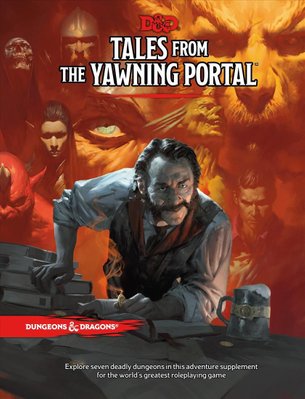
So, that’s how I’d run D&D my way. Anything you’d add, or think I’m being controversial about? I’m still musing on what to run, and who for – I’ve only got one player confirmed, so shout up if you’re interested! Currently thinking Rime of the Frostmaiden or Curse of Strahd, but could be persuaded by Witchlight as well – if you’ve got and recommendations, let me have them! I need to have a proper look at Tales from the Yawning Portal, too – I think that might break my no multi-day dungeoning rule, but it’s a way to cover a lot of classic adventures in turn. Saltmarsh may be a better option. As I said, I need recommendations!

2022’s New Game Resolutions

As we come to the end of the year, I think it’s always worth reviewing how you’re getting on with the hobby, and thinking about where you’re heading with it. For me, 2021 was pretty similar to 2020 – a lot more online play, with the odd face to face game at conventions later in the year. But my gaming is still dominated by regular online groups, and this is all good – there’s lots of stuff I’m excited to continue with next year.

While you’re reading this, I should tell you about my Patreon. Patrons get access to content 7 days before they hit this site, the chance to request articles or content, and the chance to play in one-shot games, for a very reasonable backer level. If you like what you read, want to support the blog, and have the funds for it, please consider supporting here.

Organisation / This Blog

I’m going to try and get more ad hoc games up – one-shots or 3 / 4 session mini-campaigns – with groups set up just for the one off. I started a Supers One-Shot club halfway through the year, and though we’ve hit some scheduling difficulties recently, it’s been great to try out some games with a supportive group.

Keep your eyes peeled in the new year for dates for Burn After Playing, which will (finally) start up – one-shots with Patreon priority on topics covered in the blog. Growing Patreon is also a priority so I can get some art and design stuff for the blog (maybe even…. T Shirts and Mugs? How stylish would we all look?!) – so feel free to spread the word. While I’m clear on wanting the blog to be publicly open – so the vast majority of core content will be just offered as early access to Patrons – I’ve got a few ideas for Patreon exclusives, including sharing my prep notes and pregens for con games ready-to-run. 

The other priority with the blog is to start some youtubing – I’ve not quite got this idea finalised in my head, but thinking of a mixture of recordings of one-shots (without some of the filler you often get in streamed RPGs – straight to the action, paced like a con one-shot), live prep sessions, and maybe even interviews with other con GMs. I’m open to ideas at the moment – what would be useful for you?

Gaming – Long-Form

There’s a few campaigns that I’ve got bubbling under I’d like to get run, and some of them are below

The Enemy Within – after spending a lot of 2021 running WFRP one-shots, I’d like to finally tackle this beast. Even with the remixed Cubicle 7 edition, I think I’d want to edit it a bit to keep the pace to my tastes, and I’m not sure if I’ve got a group for it yet, but I’d like to get another ‘classic’ campaign under my belt. Would definitely run in ‘seasons’ per each of the books.

The One Ring 2e – The One Ring was my entry drug into online GMing, and when the new edition hits print, I’ve the regular Tuesday group primed to play through some of 2nd ed. I ran a one-shot megamix of the starter set at Grogmeet recently, and the new rules really work from what I can see. Will probably take one of the 1st ed adventure cycles and run it through – I’m a bit unconvinced by The Darkening of Mirkwood as it might be a bit too long … and slow-build… for our tastes.

13th Age Glorantha – Amazingly, I haven’t run any 13th Age at all this year. I’d like to give 13G a proper run, 1st to 10th level, seeing our heroes grow to world-shaking power. The limiting factors are my lack of knowledge of Gloranthan lore, and my lack of enthusiasm to learn any Gloranthan lore. Glorantha will vary though, right? It’s mostly ducks and cows anyway.

D&D – I’ve got an itch to run some D&D, and maybe even one of the big hardback campaigns. I know Curse of Strahd gets all the praise, but I’ve currently torn between Rime of the Frostmaiden and Wild Beyond the Witchlight. This involves finding a group for it – although I’ve got one keen player already – and if I’m running D&D online I want players on the same page as me about what kind of fun we’re having – which I might elaborate on in a later post.

Gaming – Short-Form

My “bubble list” of games I want to run one-shots of includes Soulbound, Pathfinder 2 (that’s what reviewing a good adventure does to you), Trail of Cthulhu (I’ve somehow never run a Gumshoe game), and Wanderhome – or at least something using Belonging Outside Belonging, the diceless PBTA-adjacent collaborative system.

There’s a few other new games that I’d like a sampler of a one-shot before running any longer – from Lex Arcana (Roman occult investigators with a funky dice system that might be great) and Ironclaw (incredibly I’ve never run this anthropomorphic fantasy system) to Hearts of Wulin and some more PBTA games.

I’d also like to give Feng Shui 2’s new adventures published through the subscription system a good run out, and finally get some Heart and Spire one-shots to the table. There seems to be a lot of good stuff coming out of itch at the moment, and I should get some of them put on – maybe these are options for Burn After Playing as well.

As always, this list might well change before January ends, such is the hobby. What are your 2022 want-to-do’s in roleplaying? And, as above, let me know what sort of Patreon benefits you’d like to see – whether you’re a patron or not.

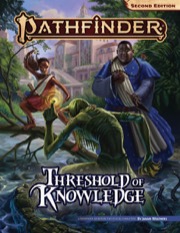
One-Shot Reviews: Threshold of Knowledge for Pathfinder 2nd Edition

It’s been a while since I’ve done a review of a product, but here we are. For a change, over the next few reviews I’m going to look at (ideally) freely-available one-shot adventures, with a focus on unpicking and adapting them for other settings and systems. 

While you’re reading this, I should tell you about my Patreon. Patrons get access to content 7 days before they hit this site, the chance to request articles or content, and the chance to play in one-shot games, for a very reasonable backer level. If you like what you read, want to support the blog, and have the funds for it, please consider supporting here.

I’m normally of the view that a review is much more valuable if you’ve played the product. With that in mind, I’ve neither run nor played Threshold of Knowledge – yet, and have only played Pathfinder 2nd Edition once in a playtest demo once. It’s available as a free download here, if you missed picking it up on Free RPG Day.

In these reviews, apart from an overview of the product, we’ll look at the structure, and how it works for a one-shot – with an eye towards running for new people. I’ve tried to keep this relatively spoiler-free in case you end up playing it – but I’ve not been too careful, so you might want to stop reading now if you plan on playing this.

The Product

Threshold of Knowledge is 16 pages, with a page of maps, and 5 pregenerated 1st-level characters. It’s set around the Magaambya magic school in Pathfinder’s Mwangi Expanse region, which makes it feel different and cool – Mwangi is a diverse and exciting land, and where a huge magic school is based – which features heavily. The art is, as you’d expect from Paizo, lovely.

You’ll need your PF2 books close to hand to run this – monsters aren’t given stats if they’re already in the Bestiary, and in one case you’ll need to flip between two pages of it (or, obviously, work out what Weak Sea Devil stats are in advance – it’s a shame the book doesn’t do this, although obviously it allows them to cram more in.)

In terms of the plot, there’s a bit of fetching-and-carrying and a chase across town before the PCs need to explore a mini-dungeon and rescue their teacher. The encounters in the dungeon are a good mix of straight-up fights and avoidable monsters, and I’d be happy to run this for a group – many of the adversaries can be negotiated with, tricked, or (in the case of the crocodile Jubo) snuck past while he dozes. Each individual encounter feels well-thought-out and flexible, which compensates for it being entirely linear.

The Structure

The structure of the adventure is, as I’ve said, a straight line. You chase a dwarf across town (sequence of skill checks), get sent to do some fishing (more open-ended skill checks), and then have a fight and a bit of puzzling to find the way to the dungeon. Once there, it’s a straight line of rooms – sort of a 5 room dungeon, although there are only actually 4 rooms and there’s not too much of a twist or trick in it. 

I’ve said before that I’ve got no problem with a linear series of scenes, and I think ToK manages to make each individual bit interesting enough to avoid it – although I’ll know more after I’ve run it. There’s also quite a lot in this – I can imagine this taking two session easily, especially accounting for PF2’s far-from-quick combat learning curve.

One thing stands out about the combat encounters as you run through them – every one has a different approach you can take. Even the first encounter, as much a training-level fight as anything, has a chance for a Nature check to pick up a clue that can help in the fight. Other encounters have different options – one can be negotiated with, another can be snuck past, and the final confrontation is really more about stopping a ritual than defeating the creature – so either approach will work. 

One thing that I was surprised at, doing the maths for the encounters, is how they were all Low- or Moderate-challenge in terms of PF2’s encounter building. When I run it I’d be tempted to beef up the final confrontation a bit to add a bit of jeopardy – I’ll resist sharing spoilers but an additional level 1 Creature (say, like the one two rooms earlier) will make that final fight a bit more dangerous.

The Fluff

I’m a big fan of what Paizo have done with the Pathfinder setting, and especially with the Mwangi expanse, and there’s a lot to like in the presentation of this adventure that grounds it in the setting. You’re students at a magical school, to begin with (which seems to be the current fantasy trend, and the adventure very much shines with the city of Nantambu – you get a real sense of the magical school’s influence around the city, and some neat mechanical things reinforce this.

To start, you get magical items right away here – a bubbling scale that lets you breathe water, and earn other rewards as you go on. This is something I need to put more of in my 1st-level one-shots, and fantasy one-shots generally – the reward factor of getting something useful and magical is great for players and brings them into the setting. 

The pregens are good in terms of roleplaying prep – they feel like actual con pregens for their fluff. There’s background on their life before joining the academy and how they feel about a couple of the other pregens (I might make these bonds questions, where they can decide who they trust most and worry about most from the group, and why, if I was running for an experienced group). In short, the ideal amount of backstory from a traditional game perspective. Their rules write-ups are okay, too, if not perfect – I’d want a handout for what e.g. the elixirs of life and alchemist’s fires that some of them carry do, as well as spell descriptions. There’s a couple of new spells to go with the three new minor magical items as well.

In Summary

I really like this as a one-shot, and as I get more curious about PF2 I’d like to get it to the table. The skill checks – training fight – puzzle – mini-dungeon structure works well, and I’ll certainly be borrowing that. Although a few branching points would be nice, the alternate-approaches for each encounter is textbook. I’d go so far as to say you could learn a lot about one-shot prep just by reading this.

Prep Techniques: A Bag of Tricks

In earlier prep technique posts, I’ve talked about 5 Room Dungeons, Sly Flourish’s method, using 3 Places, and starting with a con pitch. Most of those are focussed toward more traditional GM-prepped games – where you have a clear idea of the scenes and sequence of play the players will encounter in game. Today I’m going to share a technique I’ve been using to prep for Blades in the Dark, John Harper’s game of steampunk heists in a cursed city. 

While you’re reading this, I should tell you about my Patreon. Patrons get access to content 7 days before they hit this site, the chance to request articles or content, and the chance to play in one-shot games, for a very reasonable backer level. If you like what you read, want to support the blog, and have the funds for it, please consider supporting here. In addition, for this post, Patrons have access to my prep notes for the two sessions of Blades play that inspired this post – so they can see it in action!

With Blades (and other less GM-led games, including a lot of PBTA games – although some of those have other prep processes) – you don’t really know where the PCs are going to go. You prep a score, and some things that might happen in it – and then roll with the punches and dice rolls of the players. This can be intimidating if you’re used to a more traditional setup – and indeed, I’ve shown here how a more traditional setup can work with Blades as a one-shot – but it can really sing if you’ve done your prep to be ready to respond to players in a few different ways.

The idea behind this technique is to produce a bag of stuff that can be used during the session to keep it ticking along, in systems that do some (but not all) of the improv heavy lifting for you.

What’s This For?

In the examples below, I’ll be talking about Blades, and this definitely works for mission-based Forged in the Dark games. Some PBTA games like Masks and Monster of the Week have similar approaches – MOTW has a mystery countdown and a monster, and Masks needs your Supervillain statted up – and I think it generally works for more directly-plotted PBTA games. 

If I was running, for example, Thirsty Sword Lesbians, Monsterhearts, or Apocalypse World as a one-shot, I’d definitely use this – because I’d want a strong inciting incident and a finite stage of locations for the action. In an ongoing campaign, I might be less constrained by the first step below, but I’d probably use the same process described below for Locations and Characters and Moments for each session.

Think About the Score

Disclaimer: in any post about how to prep a John Harper game, the first advice is – do what John Harper tells you to do. This is right there in the book, but it is a bit hidden away on p188 in the GM Actions section. Maybe it’s not hidden away – but I’d run Blades a few times before reading it.

In it, you need to consider the mission you’re offering the players – it has a structure of things to think about, like the target location, some secrets to be discovered, an obvious and non obvious approach vector – but nothing too concrete. Often the first scene – where a faction offers the score – is the only fully-prepped scene in the session, and this is where this tends to come out.

To tell the truth, sometimes I follow this process, and sometimes I just write a con pitch-style overview for the score. Generally the secrets and factions come out through the rest of the process.

One or Two Locations, Plenty of Characters

You’ll need to think about the main location where you expect play to take place, and you’ll need a cast of characters for the PCs to interact with. Generally I’ll try and prep more NPCs than I need so I can throw extra ones in when needed – and in an ongoing game those leftover characters will just reappear later. I use something like the Gauntlet’s 7-3-1 technique for this, and 7 is a good number total for these things.

In particular, having a way to portray NPCs at the table is really useful to make them more interesting – it’s only at the am-dram level, we’re not Critical Role – but it really helps to model a little bit of in-character dialogue from the players as well.

Moments

Moments are your Batman Utility-Belt of cool descriptions – including shark-repellant spray!

Moments is an idea lifted directly from Trophy – I think – although other Gauntlet games feature them now, and they’re a great idea. Basically, they’re background, system and setting neutral-ish things that happen to reinforce the tone and style of the game. If that sounds too fancy, these were what I had for an Infirmary raid score in Blades a few weeks ago:

  • A scream from a nearby room as a pair of drunken Billhooks play a deadly game of amateur surgery on one another and come running out
  • A covered body that appears to still be breathing
  • A neatly arranged table of surgical tools and chemicals
  • A panicked orderly desperately trying to ignore the chaos around them
  • Rows and rows of Bluecoats setting up to raid the Skovlanders

They don’t have to be amazingly original or interesting, but they help you to come up with something that gives the locations and setting more verisimilitude as you play without requiring boxed-text style prep.

So, with a score/opening scene, some locations and characters, and a few moments, you should be good to go. Extras to consider are – if you haven’t already covered them in the score prep – what sort of twists could arrive to complicate matters, and what secrets about their target could be revealed. Usually when I use this method, these come out organically from the locations and characters as I think about their motivations. What other prep techniques have you used for FITD / PBTA / other more loosely controlled systems?

Release The Trolls – How to Run Vaesen One-Shots (or Campaigns)

Vaesen is Free League’s game of folk horror investigation, where 19th century Scandinavian investigators explore the conflicts between humanity and the Vaesen – supernatural creatures like werewolves, ghosts, and fairies. It uses the Year Zero Engine, and for me this fits the game really well – and it has a structure to its investigations that make it great for one-shots or episodic campaigns. There’s even a follow-up Kickstarter running at the moment (well, depending on when you read this) to bring the game to Britain and Ireland.

While you’re reading this, I should tell you about my Patreon. Patrons get access to content 7 days before they hit this site, the chance to request articles or content, and the chance to play in one-shot games, for a very reasonable backer level. If you like what you read, want to support the blog, and have the funds for it, please consider supporting here.

Each mission, you’re called out to somewhere, and travel there to try and resolve the conflict of the area. This gives a great Town-A-Week structure to Vaesen, and I really enjoy running it – even though investigative games aren’t always my bag. Here are my four top tips for making it sing:

Prep the Structure

Firstly, Vaesen has a whole chapter dedicated to Mystery design. This is absolute gold, and I’d recommend reading – or even following along – with this to create your first mystery. That’s what I followed when I designed the Haunted Mill introductory scenario, and it works well. Like Tales From The Loop, Vaesen assumes a Three Places style of prep – where players are free to explore nodes as a countdown continues, leading up to a final confrontation.

One word of warning – the published adventures (in the core book and A Wicked Secret – don’t always follow this structure. By all means run them as a way in, but they play around a bit with the prep advice – so don’t rely on them as models.

Nail Your Places

If you’re starting from scratch with your prep, you might be wise to think about your confrontation first – how can the conflict with the Vaesen be resolved? – and then think about where that could happen. From that, you can think of your core places in the town. I’d suggest that usually, you want something like this

  • A place where the regular townspeople meet and ill-informed gossip can be had (a PUB, if you like)
  • A place where the ‘traditional’/modern view of the Vaesen is represented (this is often a CHURCH, but it could be a factory or a work camp)
  • A place where the old ways are kept, and the Vaesen are respected (a SPOOKY PLACE, maybe on the outskirts of the town)

As long as you have those three, you’ll probably have enough to feed the players clues to lead to the confrontation. One thing I’ve noticed in play (at least among my group) is that a pub is expected – make sure to consider what excitement and clues visiting the tavern can bring, even if it’s not a major location. On a practical note, the investigators need somewhere to stay, and it’s usually best if this is a place of relative safety – several of the rules kick in to recover conditions here, and it lets you pull no punches in other confrontations. 

Add Friends, Enemies, and Frenemies

Your Vaesen will almost certainly need allies – either humans wrapped up in its worship like a cult, or actual products of the Vaesen – a confrontation against a lone monster is rarely exciting without some other parties to contend with. For most Vaesen it’s relatively easy to give them some agents in the town – and remember that any one with Enchant can Command Animal, so don’t rule out packs of wild dogs or the odd bear to contend with.

When I prep Mysteries, I think it’s good to have some actual conflict during the investigation – ideally fairly early – and often this will be with the Vaesen’s agents, rather than the Vaesen itself. Plan for this and put it into your Countdown, and throw it at them early.

In a town, you’ll likely have quite a few NPCs to detail – and portray at the table. Painting them with broad brush strokes, or just giving each of them one distinctive feature to portray, will help them to stand out to your players and make the investigation more role-play based. 

Countdown Fast And Early

Each mystery has at least one countdown which is the Vaesen’s (or another faction’s) reaction to the investigators showing up in the town. This is the device that adds urgency to the game and prevents turtling, so go hard and fast with this. I like to trigger the first countdown within half an hour (game time) of the PCs arrival, and often almost as soon as they pitch up. Starting with a bang forces investigation and exploration, and reinforces the danger the community is under.

So, my top tips for running Vaesen – either as a one-shot or an ongoing campaign. Have any of you tried it, as a player or GM? Anything you’d add?