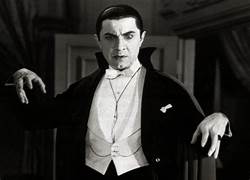
Last week, I watched the classic Todd Browning 1931 Dracula film. It’s Bela Lugosi’s career-defining masterpiece, and without doubt a horror classic. Dated, of course, and it shows its origins as the film of a play of a book a little too obviously. It’s definitely imperfect to a modern viewer like me, which means it’s ideal to mine for TTRPG advice! So here’s three things in Dracula that we can use in our games, horror or otherwise.
While you’re reading this, I should tell you about my Patreon. Patrons get access to content 7 days before they hit this site, the chance to request articles or content, and the chance to play in one-shot games, for a very reasonable backer level of £2 per month. If you like what you read, want to support the blog, and have the funds for it, please consider supporting here. Telling people about the blog, and sharing links/retweeting is much appreciated also – thanks!
Who’s The Protagonist Again?

For an awful lot of the film, it’s unclear who we’re meant to be rooting for. Dracula obviously dominates (Lugosi will do that), but Dwight Frye’s optimistic and cheerful, and latterly manic and obsessive, Renfield, looks like the main protagonist for an awful lot of the film. Some of this is probably 1930s sensibilities for a longer introductory part of the film, and the (dare I say) blandness of Van Helsing, Seward, and the other characters next to the two of them – but it’s something we can use in TTRPGs too.
Never decide who your star is. If, like me, you’re fond of spotlight sessions in campaigns (“I’ll write this for the dwarf / the chief engineer”), you’ll be familiar with the experience that often a different PC has their chance to shine in these episodes. You never know who will be the star of the show in a one-shot either, so sit easy with this and don’t be concerned if one PC ends up being the hero of the story – we gravitate to this kind of fiction anyway, so it makes sense. Which brings me to…
Lean Into Lovable NPCs
Apart from Dracula and Renfield, you’d be forgiven for thinking that Charles K. Gerrard’s cock-er-nee hospital porter, Martin, is a main character, too. In truth, he’s a supporting character that gets a lot more screen time (adaptation of a play probably) – he’s the favourite shopkeeper NPC!

There’s some deliberate design here which works really well at a TTRPG table – why use a new NPC when an old one will do? So every time your investigators head to the hospital, let them deal with Martin, and have him grow into a bigger deal for them. It’s the Chief O’Brien effect, but at the game table. I could say something about a corny accent being a sure-fire way to make your players love an NPC, too, but that’s hit and miss.
Don’t Hide The Main Thing
Look, Dracula is a movie about a vampire called Dracula. We know it, and from very early on in the film (where the Transylvanian peasants basically say to Renfield “don’t go to Castle Dracula, the Count is a vampire!”) the main characters in the film know it, too. The horror isn’t in a forced discovery that the Count is a vampire, it’s what to do about it, and trying to prove it beyond reasonable doubt. Even with this, it’s spelled out to the viewer that he doesn’t have a reflection in a mirror, and demonstrated several times, before they try to confront him – he’s there staring them in the face with his weirdly lit eyes (make mind control obvious is another great TTRPG tip!)
So at the game table, don’t try to make the obvious ambiguous. If there’s a werewolf on the loose, have the full moon and the torn apart bodies be an obvious lead – the investigation and adventure is what to do with it, and how to survive it. This goes for a lot of investigative games – trigger an antagonist response early on, and don’t worry about showing your hand – the players need to know their characters are in genuine peril to impel them to action.
So, there’s three things from Dracula – it’s a good watch, really, although there’s some obvious janky bits in a film that’s 93 years old. And nobody can pick up a wine glass more menacingly than Bela Lugosi. What other films have you seen with lessons for the gaming table? Let me know in the comments.
 Burn After Running: RPG One-Shots
[…] about gaming, and lessons we can learn from it. If you like this, I’ve done this before with the 1931 Todd Browning Dracula film – check that out as […]
LikeLike