Enter the Animus: Lessons from Assassin’s Creed

I’ve just finished a run through of the videogame Assassin’s Creed: Mirage, having a great time running, jumping, and stabbing through 9th century Baghdad as I uncovered a sinister conspiracy of “Templars” and, mostly, stabbed them all. It’s a great series of games that I’ve loved since it started – and it’s got loads of juicy stuff in it for TTRPG GMs to steal.
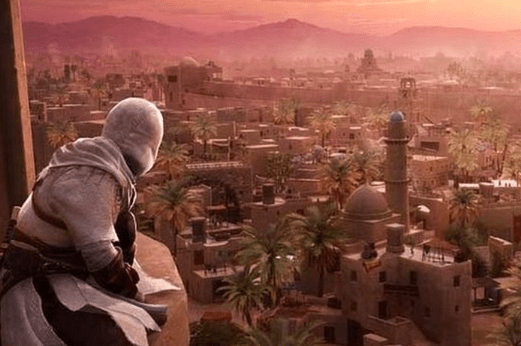
So, here’s a few things we can borrow from the Assassin’s Creed games. For this, I’m sticking to the more action-oriented ones, which Mirage harks back to – think Black Flag, Syndicate, and Unity – rather than Shadows, Origins, Odyssey, or Valhalla – which are much closer to actual RPGs.

While you’re reading this, I should tell you about my Patreon. Patrons get access to content 7 days before they hit this site, the chance to request articles or content, and the chance to play in one-shot games, for a very reasonable backer level of £2/$3 per month. If you like what you read, want to support the blog, and have the funds for it, please consider supporting here. Telling people about the blog, and sharing links/retweeting is much appreciated also – thanks!

Continue reading →
2d6 × 100 Random Words – Getting the Most out of Random Generators

I’ve been thinking a lot about the early stages of adventure prep recently. Planning for Unconventional GMs one-shots often ends up with us agreeing on a system we want to showcase – but, then what? Sometimes I’ll scout around for a usable one-shot, but (1) running your own stuff is always smoother, and (2) our channel’s agreed parameters – <2 hour one-shots – sometimes makes this extra difficult.

Quite a few times I’ve been left staring into space at, for example, the Index Card RPG, or Star Trek Adventures 2nd edition. With a concept and an idea I can run with it to pull a structure together, but a blank slate is hard.

So I’ve been looking a lot at random generators. Whether it’s ones for specific systems, or generic “create an adventure” ones, I’ve started to use these much more. And, really, they work. I prepped Ghost Mountain for ICRPG entirely off a set of Plotlib’s random tables. Ironsworn was almost entirely procedurally generated from the book (a rare case where some zoomed in stuff was random, too, using their Delve supplement).

While you’re reading this, I should tell you about my Patreon. Patrons get access to content 7 days before they hit this site, the chance to request articles or content, and the chance to play in one-shot games, for a very reasonable backer level of £2 per month. If you like what you read, want to support the blog, and have the funds for it, please consider supporting here. Telling people about the blog, and sharing links/retweeting is much appreciated also – thanks!

Continue reading →
The Downtime Sandwich – a one-shot structure for Forged in the Dark games

There’s a number of games, we’re often told, that really don’t do one-shots well. Often this is because of complexity, or a detailed (and unnecessary) background setting, all things that a skilled one-shot GM can work around. But with Blades in the Dark and other Forged in the Dark (FITD) games, where there’s a structure of play that involves player-led downtime that’s essential to the system – well, you might have a point.

I’ve been thinking about this for a while. I’ve run plenty of FITD one-shots, usually just ignoring the downtime rules – and they’ve worked perfectly fine. I’ve even hacked downtime to try and do two full-length scores in a single session. It’s tight – and it comes from a time when convention sessions were a little longer. I’ve been left with the nagging feeling that I’m not offering a proper showcase of what the game is about. 

While you’re reading this, I should tell you about my Patreon. Patrons get access to content 7 days before they hit this site, the chance to request articles or content, and the chance to play in one-shot games, for a very reasonable backer level of £2 per month. If you like what you read, want to support the blog, and have the funds for it, please consider supporting here. Telling people about the blog, and sharing links/retweeting is much appreciated also – thanks!

Continue reading →

Five Room Dungeon Hacks, Part Two – Twisters

I’ve blogged before about the 5-Room Dungeon here, and why its structure needs a bit of help sometimes to make it really shine in one-shots. I’ve been thinking about it more lately – inspired by this post which talks about 5RDs being scene sequences instead of locations. That post was talking about location-based design… but I’m interested in scene-based design as well. So what can we do to hack 5RDs a bit more flexible and epic? We started by introducing Multiples – but now, we’re going to talk Twisters.

Not like this…

While you’re reading this, I should tell you about my Patreon. Patrons get access to content 7 days before they hit this site, the chance to request articles or content, and the chance to play in one-shot games, for a very reasonable backer level of £2 per month. If you like what you read, want to support the blog, and have the funds for it, please consider supporting here. Telling people about the blog, and sharing links/retweeting is much appreciated also – thanks!

Continue reading →

Five Room Dungeon Hacks, Part One – Multiples

I’ve blogged before about the 5-Room Dungeon here, and why its structure needs a bit of help sometimes to make it really shine in one-shots. I’ve been thinking about it more lately – inspired by this post which talks about 5RDs being scene sequences instead of locations. That post was talking about location-based design… but I’m interested in scene-based design as well. So what can we do to hack 5RDs a bit more flexible and epic?

While you’re reading this, I should tell you about my Patreon. Patrons get access to content 7 days before they hit this site, the chance to request articles or content, and the chance to play in one-shot games, for a very reasonable backer level of £2 per month. If you like what you read, want to support the blog, and have the funds for it, please consider supporting here. Telling people about the blog, and sharing links/retweeting is much appreciated also – thanks!

Continue reading →

2024 Retrospective – Five of the Best

Readers, 2024 has been a good year for the blog – both in terms of me keeping to a (fairly) consistent posting schedule of weekly-ish, and in terms of raw stats. When I started this I was sure I wouldn’t look at visitor stats, but you quickly begin to pay them some mind – and 2024 already has a +54% increase on Views so far. And the help of numerous Patreon supporters, of course, helps pay hosting fees and keep me churning out content!

What’s this from? Well, see previous comment about posting more regularly; and also, as Unconventional GMs has developed, there’s been a useful synergy in producing two kinds of content. There’s more to be done there, I’m sure, but it’s helped me keep my gaming mojo warm throughout the year, even through holiday seasons when it can be hard to get a group together. I’m hopeful that the gaming community’s adoption of BlueSky will make it easier to promote things like this, as well.

While you’re reading this, I should tell you about my Patreon. Patrons get access to content 7 days before they hit this site, the chance to request articles or content, and the chance to play in one-shot games, for a very reasonable backer level of £2 per month. If you like what you read, want to support the blog, and have the funds for it, please consider supporting here. Telling people about the blog, and sharing links/retweeting is much appreciated also – thanks!

Continue reading →

No Such Thing As An Overshare – Breaking down Player and Character Knowledge

We can play TTRPG games better now. We don’t need to take a player aside into another room to share some secret knowledge with them. We don’t need to roll in secret behind a screen. Our players can happily separate player and character knowledge, without taking advantage – and enjoy both sides of the curtain. 

We don’t need to pass notes at the table any more.

So, given that player and character knowledge is often useful to know at the same time (and we’re comfortable with author and actor stance being occupied simultaneously) – why not break down some more barriers? Here are some ideas that I’ve gathered and tried

While you’re reading this, I should tell you about my Patreon. Patrons get access to content 7 days before they hit this site, the chance to request articles or content, and the chance to play in one-shot games, for a very reasonable backer level of £2 per month. If you like what you read, want to support the blog, and have the funds for it, please consider supporting here. Telling people about the blog, and sharing links/retweeting is much appreciated also – thanks!

Continue reading →

Prep Technique: The Solo RPG

You can’t escape that there’s been a massive rise in Solo RPGs over the past few years. A glance at itch.io makes it look like the industry is drowning in solo journaling games, and there’s a whole culture of youtubers and streamers who play solo and share their thoughts and approaches. 

It’s true, it can feel a bit awkward to start with. But if you’re ignoring this part of the hobby, even if (like me) you’d much rather play with a group, I think you’re missing out. In fact, solo RPGs can be a huge part of your prep arsenal, giving benefit to your group play.

While you’re reading this, I should tell you about my Patreon. Patrons get access to content 7 days before they hit this site, the chance to request articles or content, and the chance to play in one-shot games, for a very reasonable backer level of £2 per month. If you like what you read, want to support the blog, and have the funds for it, please consider supporting here. Telling people about the blog, and sharing links/retweeting is much appreciated also – thanks!

I’m going to talk about three ways Solo RPGs can help you prep for group play, and then go through what you might use for them.

Continue reading →

“I never drink… wine…” – Three Gaming Things from Dracula (1931)

Last week, I watched the classic Todd Browning 1931 Dracula film. It’s Bela Lugosi’s career-defining masterpiece, and without doubt a horror classic. Dated, of course, and it shows its origins as the film of a play of a book a little too obviously. It’s definitely imperfect to a modern viewer like me, which means it’s ideal to mine for TTRPG advice! So here’s three things in Dracula that we can use in our games, horror or otherwise.

While you’re reading this, I should tell you about my Patreon. Patrons get access to content 7 days before they hit this site, the chance to request articles or content, and the chance to play in one-shot games, for a very reasonable backer level of £2 per month. If you like what you read, want to support the blog, and have the funds for it, please consider supporting here. Telling people about the blog, and sharing links/retweeting is much appreciated also – thanks!

Continue reading →

Prep Matters – how much I do, and why zero-prep is wrong

There’s been a bit of chatter on the #TTRPG internet again about zero-prep games, and whether this is a misnomer, a false claim, or even harmful to the hobby. So, in an attempt to clarify what some people are saying, I’d like to talk you through an example of prep for a convention game that I’ve got coming up.

While you’re reading this, I should tell you about my Patreon. Patrons get access to content 7 days before they hit this site, the chance to request articles or content, and the chance to play in one-shot games, for a very reasonable backer level of £2 per month. If you like what you read, want to support the blog, and have the funds for it, please consider supporting here. Telling people about the blog, and sharing links/retweeting is much appreciated also – thanks!

Continue reading →