A staple of the TTRPG adventures I grew up on (mostly from Dungeon magazine) was the rumour table. Before venturing out of the safety of the town to explore the dangerous area (usually a dungeon, obviously), PCs could ask around and get some useful clues about what was going on. Usually, this table contained a mixture of true, false, and almost-true rumours – and which rumour was heard was entirely random.
While you’re reading this, I should tell you about my Patreon. Patrons get access to content 7 days before they hit this site, the chance to request articles or content, and the chance to play in one-shot games, for a very reasonable backer level. If you like what you read, want to support the blog, and have the funds for it, please consider supporting here.
I like this idea – a random table is a good way to abstract an evening spent asking around the tavern before the mission. It prevents over-preparation if you have a finite number of rolls on it – and I also like the jeopardy of potentially hearing a false rumour, and the confusion that could cause.
But I’m not as keen on it being entirely random, or the pay-off for a false rumour not being clear. If PCs expect every rumour to be true, they’ll feel cheated when they act on a false one – and similarly, once they realise some are false, they’ll be reluctant to act on actually true rumours in case they turn out to be incorrect.
So, here’s a proposed solution, which I came up with while messing around with my notes for the a potential DM’s Guild submission
The Rumour Check
When you ask around the town for details of the dangerous place, or research such a place in the town records, make a skill check for an appropriate social or research skill. On a success, roll 1d6 on the Rumour Table; on a failure, roll 1d12.
On the Rumour Table, entries 1-6 are filled with TRUE rumours about the place; entries 7-12 are filled with FALSE, HALF-TRUE, or USELESS rumours. It’s worth considering, particularly with the 7-12 entries, whether your rumours will at or subtract from the fun – dire warnings and instructions to, e.g., stay away from the pit traps – are likely to lead to over-cautious players. Try and make them a call to do things in the site rather than not do them.
Why is this an improvement? Well, on a failed roll, the player (and his PC) knows he hasn’t been successful. Maybe he’s chanced upon the town drunk who previously was claiming to be a high elf heir, or the book he’s found is full or lurid, unlikely, or patently false information. Nevertheless, the information gleaned might still be true – there’s a choice to be made as to whether to act on it, knowing it could be false. A successful roll gets rightly rewarded, and the players can be relatively confident that rumour is true.
Of course, you could always roll 1d4 or 1d8 on a 1-8 table, if you’re stuck for ideas – but coming up with 12 is an interesting thought exercise in grounding your dungeon in the rest of the world – what have people heard about it? What has happened before?
Here’s an example, for the freely-available Tomb of the Serpent Kings adventure (which is designed as an intro to OSR-style adventuring, and is excellent – well worth a read even if you never run it).
Result (d6/d12)
Rumour
1
Tombs of that age were often built with a false tomb to deter robbers – the real treasures lie deeper (true)
2
Tombs like this often show mechanical traps near their entrance to deter robbers – in particular anywhere that people don’t travel down, so look out for locked doors and check them for traps (true)
3
You might want to pack some holy water and symbols of St Cuthbert – or take a cleric with you – one thing you find in tombs is undead, and I’ve heard of them stalking around the tomb (true)
4
Rumours are the serpent people who built the tomb had fell magics, and could even keep themselves alive beyond death – there might still be undead serpent people down there – and who knows what they would make of this world? (true)
5
The caves near to the tomb had some raids a few years back – weird fungus-covered goblins, who disappeared as soon as some adventurers sorted them out (true)
6
Some adventurers did come and plan to raid the tomb last year, and never returned – either they got too scared to come back to town, or there’s something or someone in those tombs (true)
7
There’s an underground chasm near those ruins – who knows what monsters might haunt those depths? (while true, this is of no use)
8
If there’s one thing serpent people were scared of, it was fire – they can’t approach a burning torch, so I’ve heard (false, and certainly dangerous)
9
There’s a stone golem somewhere down there – disturb the tomb and it’ll wander the world and seek revenge for its snake-masters! (true-ish, but the stone guardian can’t escape)
10
We ran an old wizard out of town twenty years ago for necromancy – no doubt he now lairs in the tomb in the hills (false)
11
There’s snakes around the hills and in the tomb. Luckily, I’ve got some antidote here – 2gp for a bottle, it’ll sting a bit going down but should help to pass the poison (false, and of course the antidote is cheap liquor cut with boot polish)
12
The whole tomb is cursed – if you stay in there on the full moon, you’ll see the snake-men walk out of it and never return (false)
I’ll be using this the next time I write up a dungeony adventure – let me know what you think in the comments or at @milnermaths.
Previously on this blog I’ve talked about 5-Room Dungeons, Three Places, and Sly Flourish’s Lazy Dungeon Master method. Today I’m going to showcase another technique, which is my starting point for convention one-shots, but can be applied easily to any TTRPG session. It’s more of a pre-drinks technique rather than the actual prep pub crawl, but it’s a good way to go from a blank slate to a sketched-out session – and then you can get the beers in.
While you’re reading this, I should tell you about my Patreon. Patrons get access to content 7 days before they hit this site, the chance to request articles or content, and the chance to play in one-shot games, for a very reasonable backer level. If you like what you read, want to support the blog, and have the funds for it, please consider supporting here.
What’s a Con Pitch?
At a convention, you’d write a snappy pitch for your game to entice players to sign up for it; this is either printed out on a sign-up sheet (maybe with some nice art to draw punters in) or posted online so that prospective players know what to sign up for. Like the blurb on the back of a book, it should sell the session and promise excitement and fun! As an example, here’s my pitch for a game of Sentinel Comics at the Owlbear & Wizards Staff convention that’s coming up:
In this terrifying issue, Ray Manta has hatched a devious plan to hold Freedom City to ransom, by kidnapping the hapless Mayor Thomas at the opening of Freedom City Aqualand. After dealing with the aftermath of his kidnapping, the heroes have to track down Ray Manta to his secret underwater base, find him, and battle him and his aquatic friends to save the mayor.
I also include a bit about what the system is, if there’s any PVP, etc – but that’s not relevant here. Writing this pitch is almost the very first thing that I do to prep for a con game – before pregens or scenes. Why? Because it focusses my thoughts into a simple specification for the session. I write this, then come back to it and make a session out of it – starting from this makes prep much more manageable!
What Do You Want From This? – Start with Goals
To get your con pitch ready, start by working out what you want to get out of it. If it’s a con game, you might want to showcase a system or a setting – what are the elements of that that you’d like to foreground?
If it’s for an ongoing campaign game, you might already have an idea of the next logical session that will follow on (in a sandbox game, ask your players at the end of each session what they do next and work from that). Or you might want to highlight or introduce an enemy or setting element they haven’t seen yet. Or highlight a PC; in a recent series of Star Trek Adventures I loosely modelled the first four sessions on spotlighting each of the PCs in turn.
In either case, you might also want to use a cool monster – by starting with an opponent, the rest can be fitted around it. For the purpose of an example, I’m going to pitch a D&D adventure set in Theros – the Greek-ish Magic setting they’ve recently put out (if you’re interested in Theros, as well as my review, check out this character primer and this supplement from Tim Gray – the first one in particular is invaluable for character creation). There’s a bunch of cool new monsters in it, but I’d like to run a one-shot featuring the Hundred-Handed Ones – giants surrounded by floating arms that serve as artisans and have beef with the archons. So let’s start from that point – we want them to fight a Hundred-Handed One at the climax of the adventure.
Notes, Notes, Notes
Before you write your pitch, you might need to fill in some details. For instance, if you’re running D&D or 13th Age, what level the PCs are is important (I’m completely not above reskinning stats to balance against the PCs, as in the 1st-level owlbear antagonist here). For a one-shot, you might work backwards based on your antagonist to work out the level you want your PCs to be – and then you can fill in some more potential opponents. Look at this post about fight rosters for inspiration – and my mantra is that fights are always easy or hard, never medium.
If you have that decided, look at any advice the game has for balancing fights and think about appropriate antagonists, and also exciting action scenes and interesting NPCs. Hold lightly onto these ideas – not all of them will make it, and you certainly won’t put them in your pitch, but it’ll get you in the right brain space to begin to have an idea of the shape of the session.
Look at the setting as well – both in terms of history and events, and what sort of terrain the session will be set in. A useful technique for me is to write down ten components you could put into it – ten might seem like a lot, but it’s in the stretching and uncomfortable thinking that you’ll get your best ideas. Again, not all of these will actually be used, but they give you a good framework.
Thinking about our Theros one-shot, a Hundred-Handed One is CR 15, so a quick eyeball of levels indicates 5 heroes should be at about level 11 or so for a big climactic fight with one and some minions. It’s Theros, so the Gods are everywhere, so let’s have Purphoros, God of the Forge, involved as well – this giant has stolen part of his forge, and seeks to remake the Archons work (which, inconveniently for many heroes, includes many of the cities of Theros) by his own hand in revenge. He’s taken over a Volcano Temple (map in the Theros supplement) and corrupted the priests and guardians to worship him.
Theros contains suggested monsters for Purphoros, so let’s have some CR4 Oreads (fire nymphs) to trick the party, and maybe a pair of CR5 Fire Elementals that can be tricked or bypassed. I like the idea of a four-armed hill giant guarding the entrance, too – should be a nice easy warm-up fight with some terrified cultists to start the session with. A bit more daydreaming, and my list of 10 components looks like this:
Battling a hundred-handed giant in the bowels of a volcano-forge
Riddling with corrupted fire nymphs through the temple innards
Geseros, the flame-haired priest of Purphoros with a brass arm who entreats the players for help
A treacherous climb through lava floes to the temple
The forge’s steam-filled cooling system flooding corridors with scalding water
A six-armed hill giant and his four-armed ogre companion who guard the temple for the Hundred-Handed One
Terrified smiths of Purphoros that must be rescured or calmed
A volcano being stoked to erupt and flatten a city – allowing the giant to remake it in their image
A pair of pun-obsessed satyrs, the last explorers to visit the temple, who can offer hints of the terrors within
A reassuring/terrifying intervention by Purphoros if the giant is defeated.
Write Your Pitch
Now, in less than 100 words, pitch your scenario. Start with a grabby opener – say what the key idea of the session is, and make it exciting! Go big with what the stakes are and what the PCs might face. Using questions is a good idea as well – Can you survive the treacherous Akorosian Sea? Will you defeat the mighty Kraken?
Oh, and give it a title – even if it’s a session in an ongoing game, session titles make them exciting and episodic, and give a hook to. If in doubt, just name it after a location – (Adjective) (Exciting Place) of (Noun) is as good a model as any.
Here’s our finished pitch for our Theros one-shot
The Doom-Forge of Purphoros
Purphoros, God of the Forge, calls for aid! His volcano-temple has been desecrated by an ancient, hundred-handed giant, who seeks to reform the city below in his own deadly image. Can you race up the lava floes, battling the corrupted forge-creatures and evading their deadly traps, to prevent the eruption? Or will you fall to Alekto, the Hundred-Handed One, renegade smith of the Archons? A D&D one-shot for five 11th level PCs.
What Next?
Next, wait. Leave the pitch at least overnight – and possibly for much longer, conventions often need games to be confirmed well in advance – and then flesh out the adventure using whatever more detailed prep technique you have. Let me know if you want me to develop the Doom-Forge into a full adventure – and maybe even run it for patrons – in the comments or on twitter @milnermaths.
Ages ago, I started blogging about One Hour One Shots – a chance to get the gist of what a TTRPG was in just an hour, rather than needing a whole session of 3-4. I reviewed some, and even had one published (for free) as a demo scenario for Hunters of Alexandria. My thinking has moved on a bit since then.
While you’re reading this, I should tell you about my Patreon. Patrons get access to content 7 days before they hit this site, the chance to request articles or content, and the chance to play in one-shot games, for a very reasonable backer level. If you like what you read, want to support the blog, and have the funds for it, please consider supporting here.
These days, the proliferation of online gaming means most of us are getting used to 2-3 hour long sessions as the norm; and, to be frank, when I get back to face to face gaming I’d be happy sticking with this length as the norm. Good online play is tighter; you tend to get as much done in 2-3 hours as you do in 4-5 hours face to face by minimising cross-chat.
And, while this is going on, Wizards of the Coast appear to be embracing the idea. A lot of 1st level adventures being published now present a series of mini-quests – each taking about an hour to play through – and I’m all in favour of this. The Essentials Box has a series of mini-quests that the PCs pick up in whatever order they want, and Rime of the Frostmaiden begins with a short quest in each of the towns where the action starts.
I’m going to explore drawing these mini-plots out to a full one-shot length in the next few blog posts, coving pulling a one-shot out of a published adventure – starting with expanding a shorter scenario into a full one-shot session.
Rime of the Frostmaiden: Unsure Footing
We’ll start with Unsure Footing, available at the link here from Wizard’s Stay In And Game promotion (under the D&D Celebration 2020 Header). It’s a starter adventure for Rime of the Frostmaiden, so it’s all frozen cursed north, but it also has lots of talking animals in, which is right up my street. It’s actually designed to be four 1-hour adventures where the PCs can complete up to 4 of them, but for this example we’ll just look at Unsure Footing, the first mini-quest they can do.
Fig. 1 – Unsure Footing Basic Structure
Summarising the plot as written, it looks like Fig. 1. The PCs are rescued from an avalanche by some awakened animals, and introduced to a talking walrus called Mother Tusk, who asks them to help her by rescuing some otters who have not returned. They track the otters to find them in a cave full of ice slides pursued by wolves, who they fight. They then have to try to warm up and survive the frozen trek back to safety with the otters. It’s designed to take about an hour.
To begin with, let’s look at what can be fleshed out easily here – the Avalanche scene at the start is a very quick, and peril-free, encounter – let’s make a bit more of that. While it sounds like an exciting scene, an awakened muskrat appears immediately and guides them to safety – there’s no need for the dice to hit the table at all, much less any actual peril.
And an arctic survival challenge to return isn’t much of a finale for a one-shot; the wolves fight could be, but I’m not sure if even on ice slides a fight with a few wolves is big enough. When you rescue the otters, they mention that they were running away from an owlbear, so let’s have him appear at the exit to the caves and a final fight with him. One big bad in D&D is often swingy (and let’s not worry about owlbears being CR 3 for our 1st level party for now), so let’s give him some minions – maybe a flock of evil owls who herald him.
Hacking the avalanche, we can have the muskrat ride to the rescue after a few rounds of avalanche peril – firstly requiring Acrobatics, Athletics, or Survival checks from everybody (keep these relatively easy at DC 8 for now) to avoid taking 1d4 damage from the buffeting snow, and then have a warm-up fight on the shifting snows for a couple of rounds. To foreshadow the ‘big bad,’ we’ll have a flock of owls attack them – at CR 0 they won’t be too much of a threat, but the need to make a skill check each round to maintain footing will be the real challenge. Again, this is more of a warm-up fight, but let’s have 5 owls attack – they can only do 1hp damage a round, so the avalanche is more of a threat than them.
Have the muskrat appear and rescue them on the third round no matter what, and take them to Mother Tusk, where – it is a one-shot after all – they get a slap-up meal of whatever awakened animals can muster and have a Long Rest so they’re all ready for the adventure proper. Not only does the walrus tell them about her otters, but speaks of a terrifying owlbear who has been stalking them, in a pretty-obvious foreshadowing of the big bad. Maybe she even talks of the flock of owls as his heralds.
They can track the otters, find them, and fight the wolves as normal – this is a really cool scene – and let’s have some clues available – the wolves seek to sacrifice the otters to the owlbear to appease them, leaving room for them to join forces when the owlbear attacks.
The ‘getting warmed up in the cave’ bit, I can take or leave. I think the point is meant to be to reinforce how deadly the environment is, but it reads a bit attritional to me – and they’ve got to have a tough fight after this, so I’d be loathe to give my PCs any exhaustion at this stage. I think I’d probably have, depending on the group, one of the below options
The “Trad” Option – getting warmed up and out of the ice slide cave is a skill challenge, 5 successes before 3 failures on a DC 10 check of an appropriate skill. On a success they make it out and can compose themselves before the fight – give everyone inspiration. On a failure, they still make it out but are tired and drained – they’ll have disadvantage on all rolls for the first round (including initiative)
The “Story” Option – ask the players to montage how they escape – maybe finding another route through the ice caves, encountering other creatures, and making inventive ways to climb up and get warm. You can use the 13th Age Montage system, or just go round and ask for mini-scenes.
And then let’s add a fight with the “owlbear.” Let’s reskin the owlbear as a CR 1 Brown Bear, but with Beak instead of Bite and darkvision. A quick calculation shows that having 6 CR 0 Owls with him should make for an encounter just between Hard and Deadly for 5 PCs, and if they have the wolves helping them we could beef up the number of owls a bit.
And there you are – a con-length one-shot from a short mini-encounter. In the next post I’ll dig into ways to do this more generally from mini-adventures (including looking at one for WFRP instead of D&D) and how this can work.
I’ve blogged before about the importance of a strong start in your one-shots, and a good way to achieve that is to start in medias res – in the midst of the action.
While you’re reading this, I should tell you about my Patreon. Patrons get access to content 7 days before they hit this site, the chance to request articles or content, and the chance to play in one-shot games, for a very reasonable backer level. If you like what you read, want to support the blog, and have the funds for it, please consider supporting here.
In Medias Res as a term was coined by Horace in his Ars Poetica, when he pointed out that Homer’s games of D&D he was running down the Parthenon didn’t start ab ovo – with the dragon hatching from the egg – but right in the middle of a pitched battle against orcs. Or something like that. What it means for us is a reliable way to get dice rolling within the first twenty minutes – and get the pace tripping along right from the start.
So, here are 5 In Medias Res’s to get your one-shots off to a bang.
The Previous-Quest-Maguffin
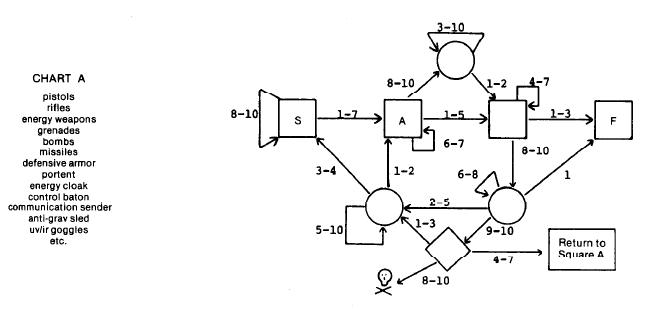
Gamma World’s famous flow-chart – more fun to look at than play through, in my experience
Begin at the end of the last adventure – where they find a fantastical item that spurs them on to the main quest. A good chance for an ‘easy’ section of dungeoning – a ‘training level’ – to get the item, and then some problem solving / roleplay to interpret the item and pick up the trail.
Credit to Dirk the Dice of The Grognard Files who did this in a memorable Gamma World one-shot that I’ve shamelessly stolen (both here, and in other con games) – in that game we used the infamous artifact flowchart to decipher the mission.
Trapped in the Tomb
Don’t just start at the door to the dungeon, have the party on the wrong side of it as the trap triggers and the door closes behind them. You might want to have another peril activate at the same time, just to lay it on thick that they need to find a way out – as well as whatever they came here for in the first place.
Note that if you’re doing this you’ll need some NPCs or other roleplaying opportunities in the tomb/dungeon/derelict space station in order to make this more interesting – so throw in a chatty mummy/off-message AI/reactivated golem for the PCs to interact with and help/hinder them as well.
The Contest
You don’t think just anyone gets to represent the king while plundering the treasures of the forgotten jungles? No, every year you must compete for the privilege against the nations most foolhardy heroes. Feel free to have some of the failed contestants travel over there anyway as a rival adventuring party – that the PCs will eventually have to save and/or fight.
In terms of pacing, don’t make the contest too long, or it might become the focal point of the whole session – a few skill checks or a simple combat should be enough. Last year I started a Legend of the 5 Rings campaign with each PC describing the gift they’d brought for the daimyo they’d appeared to serve, and then make a skill check for how successful their gift had been – and one bushi’s terrible sake became a recurring theme for the whole campaign.
In Medias Res-ervoir Dogs
The heist (dungeon crawl, assassination, saving the city, etc…) went wrong – or at least drew a lot of heat. Now they’re on the run, trying to escape and fix things. A good way to start with a chase scene – either using the RPGs chase mechanics or just some opposed skill checks or a fight.
This is a good example of a fight with a clear objective – and an opportunity to intersperse the scene with flashbacks of the actual job they’re running from. Note that in Reservoir Dogs they just lie low and chew scenery at each other – diverge from the film in your game and have them carry out the even bigger score that will make things right, hunt down the contact who betrayed them, or finally get the jewels back.
Zombies Attack!
Wherever the PCs are at the start (tavern, castle, space station, etc…) is suddenly subject to an invasion. A recent session of Deadlands I played in started with zombies crawling through the saloon floor, and it’s a well tested method for starting with a bang.
As with Trapped in the Tomb, you’ll need to make sure there’s a few NPCs for the PCs to interact with during the session so it’s not just a string of fights, but having the call to action be an actual invasion is a classic trope. See here for more ideas about managing invasions – you might want to think about what weakness of the attackers can be exploited, and how they can find it, for instance.
So, five ways to start your one-shot with a bang – what other ways have you seen a one-shot started? Let me know in the comments.
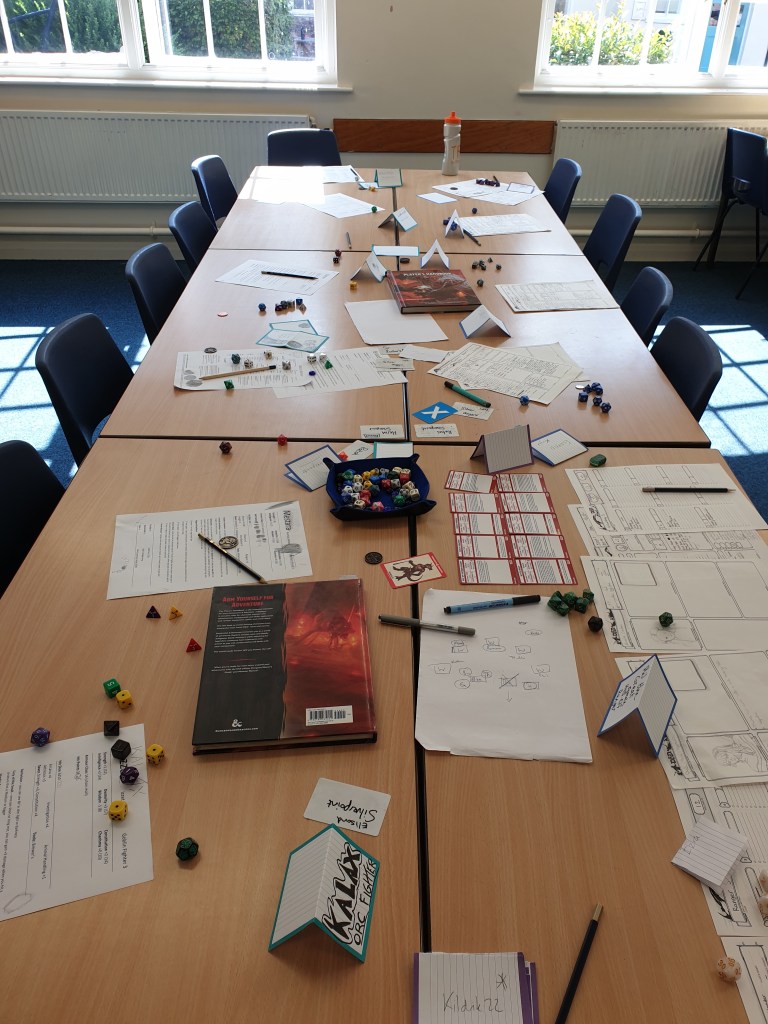
Looking on the horizon to the tentative return of in-person conventions, it’s worth talking about how to be a good player at a convention. As I’ve said before, in order to run good one-shots, the best thing you can do is play lots of them, and I certainly try to have a 50% running / 50% playing in my campaign and one-shot play (current 2021 figures show a 49%/51% running/playing split, which I can live with!)
While you’re reading this, I should tell you about my Patreon. Patrons get access to content 7 days before they hit this site, the chance to request articles or content, and the chance to play in one-shot games, for a very reasonable backer level. If you like what you read, want to support the blog, and have the funds for it, please consider supporting here.
A convention is a great opportunity to experience different GMing styles, see a system in action, and consider how you would run a similar game – and it’s great to try to be the best players we can be. So, here goes – my top 5 tips to be a great player in a one-shot TTRPG.
Be Prepared
Standard stuff here: arrive on time, talk to the other players, introduce yourself and them, try to make the start of the game as smooth as it can be. I know GMs should do this as well, but your GM has the next three hours to worry about as well, so cut them some slack if they don’t remember everything – pick up the slack.
Don’t rely on the DM to bring all those dice!
Bring pencils, dice, that sort of thing. Be helpful about suggesting breaks – it can be difficult to read the energy of the table if you’re GMing. In terms of rules, if you’re familiar, feel free to suggest – but remember it’s the GMs game. If there’s a fumble for a ruling, or a need to look stuff up – volunteer to do it, or if you’ve a suggested fix, suggest it – you can help to keep the pace flowing. If you know the system, you can always volunteer to track initiative or do any of those little housekeeping things that come up sometimes.
Be a Good Plot-Hook Doggo
I went through a six month period of running a lot of Warhammer Fantasy Roleplay 4e (WHFRP) at cons when it first came out. I always included a rat catcher in the pregens, as a nod to a classic WFRP trope – they begin play with a “small but vicious dog.” I didn’t realise until I started running, but that dog was a godsend. Any time the players needed a nudge in the direction of plot, their dog would run off – often after real or imagined sausages (lean into the tropes, everyone).
And as a player, you should be that dog. Tilt for likely plot hooks – don’t turtle, and pull your fellow PCs with you. Presented with a hook, your job is to wolf it down and try and swallow the fishing line, and don’t hold back. Pursue where you think the plot is aggressively, and you’ll help everyone at the table.
Play Up
“Playing Up” is a concept from LARP about supporting other players by giving them cool opportunities to shine. You ask the other character questions, try to give them opportunities to show their character off, make the spotlight time for them.
One of the hardest things to encourage as a con GM is speaking in character – take this on-board and help to encourage it. Rather than comment on what your character sees, ask another PC about it. Do the same in combat, too – speak while doing your action in-character to make your spotlight shine, and suggest tactics in-character (if it’s that sort of game).
Have A Shtick
Similar to this, it helps to have a “shtick” for your PC – pick up on a roleplaying quirk like you would an NPC and lean into it a little. It’s unlikely to be annoying over the three hours as long as you keep pointing towards the plot, and it will encourage everyone else to bring something to the game as well.
Standard improv advice says, incidentally, to always do the obvious thing unless you’ve got an obviously better idea – so do this. Orcs burst through the door – attack them! Your other players can be the voices of reason – be prepared to tilt at windmills.
Show You’re Having Fun
Listen actively – especially if online, smile and nod, and help to bring some energy to the table. Look, I know at F2F cons this can be difficult on the second or third day, when sleep deprivation and the energy of running games and drinking beer hits – but you’ve been there as a GM when the table looks back at you like they’d rather be asleep. Help you GM out by showing enthusiasm and responding positively to his ideas, especially at the start. GMing at cons is hard – the best of us get nervous about it at the time. So help them out by being the best player you can be.
There you go, five tips to be a better player. What would you add to this? Let me know in the comments or at @milnermaths.
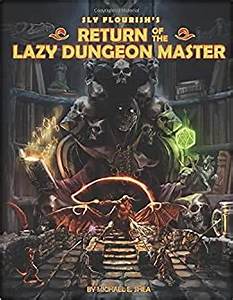
For the next of my series of Prep Techniques, which so far includes 5 Room Dungeons and Three Places, I’m going to multiclass into a review. Return of the Lazy Dungeon Master, by SlyFlourish, is a 96-page guide to session, and campaign, prep – with lots more besides.
While you’re reading this, I should tell you about my Patreon. Patrons get access to content 7 days before they hit this site, the chance to request articles or content, and the chance to play in one-shot games, for a very reasonable backer level. If you like what you read, want to support the blog, and have the funds for it, please consider supporting here.
It’s a great method for session prep – and it wouldn’t be fair for me to try and abbreviate it here. Mike talks a lot of sense, and I think I agree with him about almost everything (he’s not a fan of Skill Challenges, and that’s where we disagree!) You can hear him on the Smart Party interview here, or check out his YouTube channel (which has got some great walkthroughs of prep, including of D&D published adventures). He’s an active blogger, and the blog complements the book well with lots of examples of it in practice.
The Fluff
First up, the title is a little broader than it implies with the “Dungeon Master” term. While it’s true this method has its origins in D&D, and the examples through the book prep a D&D session, it’s broadly applicable to any RPG and genre. I ran a Legends of the 5 Rings campaign using this method for every session (and the campaign approaches here), and I’m sure it would be relevant to any genre or style.
In fact, a lot of the core ideas point towards running a more narrative game, and so this prep method is eminently suitable for this. In particular, the Secrets and Clues section is a great way to think about your game without holding onto ideas too tightly – his prep method gives a broad canvas for the session to take place on, which PBTA and FITD games need.
The Crunch
It presents an 8-step method for session prep, starting with considering the characters, and moving all the way towards magic item rewards. Further sections of the book dismantle this list, and trim it down as far as 3 steps, depending on time available and other ideas.
As a bare minimum, your 3-step prep is a Strong Start (an action or exciting scene – could be, but not always, a fight) – some Secrets and Clues (ten things that the PCs discover – not tied to locations, NPCs or scenes) – and three or more Fantastic Locations (exciting places that will feature in the adventure). Additional steps add more background and flavour, and all are designed to be efficient in terms of fun at the table compared to prep time.
There’s also guidance on building campaigns (using Dungeon World-style Fronts) and about linking ongoing sessions as well – but the Secrets and Clues sections really is the brilliant idea at the core of this. By separating knowledge discovery from specific encounters, the GM (DM?) can be liberal with information and have them appear where players want to go.
The One-Shot
The prep style described here is very suitable for a one-shot, although I’d adapt a few stages. The first step – where you consider the characters and their skills and abilities – is similar to starting with pregens, building them and having them in mind – and for me I like to have a clear idea of not just my starting scene but also what my ending will look like – for a one-shot I think it’s important to end on a high, too.
There’s great advice about improvising NPCs, and adding more narrative stuff to play, that are particularly relevant to one-shot play – having a good hook to hang your NPC portrayal on, and allowing players to own some of their triumphs, is a great technique for a con game.
In short, I can’t really recommend this enough – and I’d urge you to try it out for whatever system or game you’re running. I’ve not really looked at the previous book (the Lazy Dungeon Master) – but I think it is distinct, and this review has made me dig it out and take a look – so I’d recommend much of his work.
In the previous post, I talked about planning your battles in terms of the enemies you face. I’m going to talk about the setting of the battle now – both in terms of where it fits into your plot and the actual battlefield.
While you’re reading this, I should tell you about my Patreon. Patrons get access to content 7 days before they hit this site, the chance to request articles or content, and the chance to play in one-shot games, for a very reasonable backer level. If you like what you read, want to support the blog, and have the funds for it, please consider supporting here.
I’m going to talk about three things you can mix up to make your fights more dynamic – objectives, terrain, and traps – and give some options you can pick from for each of these. In most cases, less is more – you don’t need more than one or two of these options in each fight to make it interesting, and too many will slow the fight down. In lots of cases, these will make it a more challenging fight for the PCs, too – so you might need to bear that in mind when planning your opposition.
The default fight objective in TTRPGs can often be “kill all these monsters” – and while this is simple and has clear victory conditions, it’s not the most interesting in terms of interacting with your environment – optimal strategy is usually to just avoid dangerous areas of the map and engage you opponents as quickly as you can. Better to think about where the fight fits into the narrative of the game and pick from one of these for at least one of the fights in the session:
Escort an NPC to safety – you just need to get a trusted NPC across the map. Give them an action if you like, so they can draw trouble to the PCs by trying to ineffectively attack themselves.
Steal an item from an opponent. The caves may be crawling with goblins – but you just need to get the shaman’s headdress and get out again. If the players want to stealth through instead of fighting, I’d use a skill challenge.
Traverse the area – maybe all the PCs need to do is get across the map in one piece. Their opposition may be very numerous, but they don’t have to defeat them all.
Hold the line – the PCs need to defend a defensible position. Again, if there’s cover and support, they can survive a slightly tougher opposition. Of course, this can be inverted – have them assault a position themselves.
There are plenty more options – for more ideas, look to skirmish board/minis games scenarios, who are often really inventive with what the PCs have to do – and provide mechanical support which you can adapt for your game. Video games, too, often have interesting mission objectives you can use.
Terrain
How many fights in TTRPGs basically take place in featureless arenas? Or, worse, neat dungeon corridors? Mix it up by including some terrain types, and either force or encourage the PCs to interact with them
Strew the battlefield with “difficult” terrain that hampers movement. If you have a possible path or clearing in it, this gives a place for the opposition to defend – and of course missile combat will be more effective in this fight if the PCs can’t engage enemies as quickly as before
Provide cover in open spaces, and have enemies use it. Once the PCs notice that the goblins are hiding behind the columns, they’re likely to start using them too.
Choke points – bridges over rivers or chasms, or routes through otherwise impassable terrain – allow a part of the battlefield to become more important, and give some level of tactics to the fight
Higher and lower ground. Put archers on the top of inaccessible columns, forcing the players to climb them or try and snipe them from below. Place the NPC that needs rescuing at the foot of a pit so they have to fight their way back out. Height advantage makes your battles more dynamic and interesting.
You can check your rules system of choice for rules for each of these – most trad TTRPGs betray their wargaming origins in covering this pretty well – but feel free to just busk them for the scenario. A simple bonus or penalty to attacks or defence can go a long way to providing flavour.
Traps
I’m not a huge fan of the isolated trap, the random pit in a dungeon that is either a slight inconvenience or an arbitrary fatality – but put those traps in a dynamic environment like a battlefield and I’m much more interested.
Pit traps can, of course, litter the floor – and the opposition will usually know where they are. Arrow tripwires, too, can be used – make sure you allow players a chance to survey the battlefield once one triggers (maybe a good use for a Perception check?) so they can discover them, rather than have them at the mercy of these with nothing they can do about them.
Random terrain elements that are active – maybe that pit of lava belches poisonous gas at the end of every round, or one of the columns collapses at random as the temple shakes itself apart. Again, offer clues as to what their nature is and allow PCs to mitigate their effects through careful play.
Man-made terrain and traps – trenches and other siege defences – show that the opposition have been planning for this.
Sources of Inspiration
I’ve talked already about using board games and video games as inspiration sources, but there are a few TTRPG products that add to this.
A lot of D&D4e scenarios have excellent battle design, as you’d expect for a game that put a lot of effort into making fights fun. Lots of these adapt well, but in particular Dungeon Delve – a series of mini-adventures for a range of levels – has lots that can be stolen and adapted
For a less map-driven example, the 13th Age Battle Scenes offer a similar set of mini-adventures based around (usually) three fights, designed to offer a dynamic challenge.
If you want some sci-fi examples, the Wrath and Glory adventures Bloody Gates and On The Wings of Valkyries offer examples of how a battlefield-based adventure can be run and made less map-reliant. Presenting a battle as a sequence of linked scenes is a great approach – see in particular how clearing the minefield is presented in Bloody Gates.
For another genre approach, the encounter building advice in Sentinel Comics Roleplaying Game is excellent – thinking in terms of environments, challenges, and opponents – most of whom are Minions or Lieutenants – gives some excellent advice for building dynamic encounters, some of which inspired these posts.
I’m sure I’ve missed some off – so let me know what else you’d say is good battle-building advice.
Particularly in one-shots, building battles is a bit of an art. Most crunchy games include some guidance on balancing encounters (and those that don’t should), but I’ve found some general principles that will improve almost any fighting encounter that you have. In Part Two we’ll look at the battlefield itself, but in this post we’ll look at your opponents.
For this post I’ve given examples based around 5th edition D&D, because it has guidance for balancing encounters in the DMG that is both thorough, and also a bit misleading – but the same principles apply to other games.
While you’re reading this, I should tell you about my Patreon. Patrons get access to content 7 days before they hit this site, the chance to request articles or content, and the chance to play in one-shot games, for a very reasonable backer level. If you like what you read, want to support the blog, and have the funds for it, please consider supporting here.
Balancing Your Opposition
I’ve said this a few times on the blog already, but I’ll say it again – fights, especially in one-shots, should be easy or hard – not “medium.” An easy fight at the start of a session to help everyone learn the rules is a fine thing, or an opportunity for the players to show how awesome they are, but a ‘medium difficulty’ fight is, generally, weak. If you play D&D or Pathfinder, the majority of the fights you’ll find in published scenarios are at this level – just cut some of them out and beef up the ones that are left to make it at least “hard” by whatever difficulty metric they give.
The reason that games often give a ‘medium’ difficulty level is about attrition. The classic D&D resource management game is that you will gradually use resources through the adventuring day, meaning a selection of averagely difficult fights will wear you down and provide a tactical challenge. I don’t really agree with this approach, even in long-term play – a few big battles are better than lots of middling ones, and I think resource management like this is overrated.
You Need More Than You Think
One opponent per PC is an absolute minimum if you want an exciting battle. There’s tricks and ways to make a fight against one big opponent work, which I might talk about in a later post – but if you’re looking for an exciting fight, you probably want the number of opponents to be between 1.5 and 3 times the number of PCs.
How do you do a big fight against, e.g., a dragon then? Simple, just add in some low-level supporters. If you’ve got 4 6th level D&D characters, a “hard” fight can be a Young White Dragon (CR 6) and 5 or 6 Scouts (CR ½) – the scouts won’t be as big a threat as the dragon, but they’ll still harry and whittle away at the party’s resources ensuring that they won’t just be able to mob the dragon from the start. It’s easy in D&D to fall into the trap to think that low CR monsters aren’t suitable for mid- or high-level parties, but they absolutely are – which brings us to…
Minions, Mooks, and Hordes
Big fight scenes need a big cast – which means more enemies
If you’re going to have lots of opponents without swamping the PCs, some of those opponents might have to be quite low-level. A group of low-level minions is an excellent set of opponents to add to a challenging fight. They’ll draw the PCs’ fire, get between them and the main opponents, and give the players a chance to show their awesomeness by going down easily.
If you’re worried that there might be too many, give some thought to morale options – maybe once their leader is killed they’ll run off into the hills, or half of them hang back as they attack in waves. With lots of opponents you have a few ways to pace battles you can use depending on how it’s going – make it logical, and don’t hold back, but you don’t have to have them all charge in at once.
Make Them Individual
Give your opponents identifying traits, names, or other characteristics. On a VTT, it’s easy to drop name labels on to each of your mooks – it feels much cooler when the goblins they pick off have names. Otherwise, even just listing a characteristic of each of them – this one has one eye, this one is overweight and limping –helps it to feel like a TTRPG instead of a video game. Generally, I’d not recommend altering any of their game statistics for this – keep it simple for yourself – but you can use it in their descriptions.
Another more general way to improve individuality is to reskin monsters liberally. Bestiaries will act like they’ve gone to loads of trouble to make monsters individual, but it’s so easy to reskin monsters to make similar opponents. Need stats for Big Baz, the slow-moving henchman of the chief bandit for your bandit encounter? Baz is a zombie with no undead traits. A low-level evil sorcerer can easily be a reskinned Sea Hag with his claws a magical bolt and the Horrific Appearance a fear spell.
And one of D&D’s great secrets is page 274 of the DMG, the “Building a Monster” section, that lets you design monsters from the ground up – also perfect if you want a slightly stronger monster to lead a pack of them – just go to the next level up and increase its CR.
Putting it All Together – An Example
With this in mind, let’s set up the personnel of encounters for a D&D one-shot, exploring a group of goblins who’ve hidden in a cave and are harrying villagers. I’ll be talking about the “3 Fights” one-shot structure in a later post, but you can probably grasp the basic idea of it from the name, so for our three encounters – balanced for a 2nd level party of 5 PCs – we’ve got:
Fight 1 – The Guards (at the entrance, or patrolling) – a DMG “easy” fight, although we’ve gone a little over budget – it’s likely the PCs will get some sort of surprise on them, and they’ll be fighting them fresh, so this should be straightforward for them.
Even for an easy encounter, having enough 5 opponents will still mean that they’ll have to think about who they engage, and if they can afford to protect a ranged-based character or wizard.
Fight 2 – The Kennels – this is a “hard” fight, and again it’s a little over budget – we’ll have the worg hang back for the first round, and only arrive to defend its pups in round 2.
More opponents this time, and a big beast that they might want to join forces to handle – but by arriving on Round 2, they’ll already be engaged with the hounds and goblins. Depending on how the PCs are looking at this stage, we have some tactical options to balance this – we could always throw everyone in at once, or have the goblins hang back in cover and fire arrows at the party.
Fight 3 – The Boss Fight – this is a DMG “deadly” fight – we want to try to engineer that the PCs are pretty healed up and ready for this fight, which shouldn’t be too much of a problem as it’ll be the climactic battle of the one-shot
1 Goblin Tribe Leader (a Hobgoblin – CR ½), 1 Goblin Champion (a non-undead Zombie – CR ¼), 3 Goblins (CR ¼), 4 Goblin Rabble (stats as Bandits) (CR 1/8)
Nine opponents make this fight challenging, and the Rabble/Bandits and the Champion can get between the big boss and the goblins who can pick players off with missile weapons – while the bandits will be quickly dealt with, this will pace the fight so that they still have to face the main opponents – the leader and the champion.
So, now that we’ve looked at building our opposition, the next post will deal with locating this in the session – both in terms of plotting, and in terms of the actual physical battlefield.
Last time in this series, I talked about using 5-Room Dungeons to structure your sessions or one-shots. Today, I’m going to discuss something I’m calling 3 Places. I first read about this on The Alexandrian’s blog about Node-Based design, and it is also featured in a lot of Free League’s scenario advice for Tales from the Loop and Vaesen. I used it myself in The Goblins and the Pie Shop, my reimagining of the orc and pie “scenario” for 1st level D&D.
While you’re reading this, I should tell you about my Patreon. Patrons get access to content 7 days before they hit this site, the chance to request articles or content, and the chance to play in one-shot games, for a very reasonable backer level. If you like what you read, want to support the blog, and have the funds for it, please consider supporting here.
This structure gives limited autonomy to the players while making prep manageable, and works well for investigative games where you want the players to uncover a mystery or secret before a final confrontation. It works less well if you’ve got a more straightforwardly linear plot in mind, or if you want the players to encounter set pieces in order.
Overview
In this structure, the PCs are investigating an area – a town, a wilderness region, even a dungeon – which has three key places relevant to the scenario. They can explore 1, 2, or all 3 of these to lead to a final confrontation.
Each of the three places contains clues not only to the final confrontation, but also to the other two places. At the start of the session, an inciting incident (an action scene) will point them towards one or more of these places. They can then be explored in whatever order the players want, before finally hitting the final confrontation.
In general, the more information they gather from the three places, the better an idea they have what’s going on and how to tackle it – but don’t worry too much about encouraging or planning for this. They might decide to explore all three, or after one or two they might decide they know enough to move to the finale.
Example
Let’s start with a classic fantasy example, and one that isn’t always easy to translate to play – a beast is stalking the farms hereabouts, and the players are asked to investigate it. I’m thinking a dire wolf or hell-touched bear or something, and I’ve decided it’s going to be normally immume to normal weapons – so that nearby inhabitants can’t just raise a militia to flush it out.
Inciting Incident – the players are ambushed by desperate bandits (a training fight – a way to learn the system while they are easily despatched). When questioned, they are trappers from the forest who’ve had to resort to banditry because a beast now stalks their lands. Their camp was attacked head-on by it, and they worry their wounded are still there in hiding – the abandoned trappers camp location. When they proceed to the nearest village, they are asked to investigate the beast – there is a old wise woman in the forest who might be able to help locate it
Place 1 – At the abandoned trappers camp they find desperate, wounded trappers who – once found in their hiding place, and suitably healed – can tell them the beast came out of nowhere, and they can find tracks leading to the perilous caves where it (presumably) lairs. The signs of its attack are all around – including a tree nearby where it rubbed some of its fur off, which glistens grey in the sunlight. Their weapons and arrows did not seem to harm it – maybe the old wise woman could help prepare a blessing?
Place 2 – At the old wise woman’s hut, they must first convince the suspicious hermit they mean her no harm. She will augur the ways of the forest, and identify the beast – a vast wolf, impervious to wood and steel. She can produce an ungeant meaning they can harm it, but she’ll need some of its fur. She can see it in the perilous caves as well and direct the PCs towards there.
Place 3 – At the perilous caves, they can sneak in and find enough fur to make the ungeant, but the area is guarded by lesson wolves who they must drive off.
Finale – Armed with the ungeant, they can track and ambush the beast – either in the perilous caves, or by laying a trap for it where they know it stalks. Although now they can injure it, it will still be a challenging fight to defeat the beast.
Notice that any of the three places can lead to any others, and that they players can take multiple routes through it. There are a few core clues – that its not able to be hurt by normal weapons, and that its fur can be used to make the ungeant – but these can be discovered in a few different ways.
Advantages of This Approach
One of the big advantages of this approach is that you can modify the pace to suit your time slot. Particularly in a convention game, this is really useful – I’ve blogged before about having a collapsible dungeon, but it’s even easier if you have these key places. It also makes setting an adventure in a city or town much easier – in the Goblins and the Pie Shop, the PCs wander between the town, the pie shop, and the forest pretty much at will – which is especially useful in a low-level scenario where one bad fight can knock some players out a bit.
I find this approach relatively easy to adjust on the fly, as well. If the players spend much longer than expected at the trappers camp, it’s easy to make the wise woman more helpful and volunteer her information sooner. If they show now interest at all in the wise woman, you can share the info about needing the ungeant from one of the trappers – or even have the beast attack, and show them they can’t harm it.
Things to Consider
It’s generally a good idea to have something exciting to do at each of the locations – either a fight, a social scene, or skill challenge / exploration (with skill checks and twists ready if they fail). In the example above, there’s one of each of these at each location. The wolf guardians are a floating encounter that can be dropped in wherever needed if the PCs need slowing down or reminding of the danger of the situation – likewise, having some genre-appropriate “men with guns” to appear if the pace is slowing is a good idea.
You also need to provide some motivation and time pressure for this. Whether this is by an actual countdown of what will happen if they dawdle, or just an obvious implication – that the beast will continue to attack cattle, and eventually the village itself – this will provide the motivation to decide quickly which locations to go to.
For more ideas, the whole of the Alexandrian’s node-based design posts are the foundational work on this. Have you used a similar technique to plot out adventures? Look out for more Prep Techniques later in June!
Today, I’m going to share with you my prep notes for a complete Vaesen Mystery, “The Haunted Mill,” which I ran at the weekend. I’ve pondered converting it into the ‘official’ adventure format – but I thought I’d leave it as is and hope it’s playable enough for you to use, deconstruct, and look at.
While you’re reading this, I should tell you about my Patreon. Patrons get access to content 7 days before they hit this site, the chance to request articles or content, and the chance to play in one-shot games, for a very reasonable backer level. If you like what you read, want to support the blog, and have the funds for it, please consider supporting here.
Vaesen is a Year Zero Engine game – as this was the first session with an established group, I did a combination Session Zero / First Session with an introduction/chargen session (most players drafted out their PCs ahead of time, but then we did Relationships and shared our histories with each other to get some hooks within the party). The “Session 0” bit was the CATS intro I did for the game, and the “Session 1” bit is the Mystery proper – all told it was a 3 hour session with 5 players, with about an hour for the Session 0 and 2 hours for the mystery – although we started with their arrival in Sandham.
One change I made on the fly – I’d expected one of the players to pick up a priest – essential for the solution to the Vaesen problem – and when they didn’t I had to introduce a wheezing vicar, Father Niklas, who could breathe into the bellows.
Session 0 – Preparations
CATS is an idea I first heard about on The Gauntlet and is a really good way to get everyone on the same page about genre and expectations.
Concept – In Vaesen you play investigators and monster hunters in 19th century Sweden. You’ve all got the Sight – meaning you can see Vaesen and their signs – and are known as Thursday’s Children. You’ve inherited a castle in Uppsala and receive letters inviting you to investigate strange goings on – almost always caused by Vaesen, evil spirits from folklore. As Sweden becomes industrialised, the old ways get forgotten, and the Vaesen become more desperate. Each episode you’ll venture into a town, investigate the goings-on, and hopefully defeat the Vaesen.
Aim – To play our characters investigating and solving problems, and explore the dichotomy of the old ways vs. the industrial revolution. Combat usually isn’t the solution – all Vaesen have a way to banish them, which you need to research and investigate – and also find out what’s going on. Each Mystery has a human element in it as well. We’ll run this as a pilot session and if we like it, commit to like 6 (?)
Tone – Generally serious, with moments of pathos. Our PCs will be playing it straight, although we may have moments of grim humour. Episodic – think of it as a TV series with each mystery one episode, although they might be multi-session as well.
Subject Matter – This is a horror game, and does have a fear mechanic, although no long-term psychological damage in particular. We’ll have an X Card, open Table, and Lines and Veils – feel free to share them now. Mine are sexual assault – on or off camera.
Go round and everyone introduce their PC
Go round and everyone do Relationships with other PCs – the three with their Archetype and one of their own invention.
Sandham Mill
Episode 1 – The Haunted Mill
Primary Conflict – Rolf Lunstrom has taken over the flour mill at Sandham. He’s renovated it extensively, including taking out the water wheel and building a steam engine to power it. The three fairies – Pippi, Kikki, and Mikki – who have lived in the mill and blessed the flour have not approved of this, and so have begun to menace the builders and workers by pretending it is haunted.
Secondary Conflict – Lundstrom has sacked most of the workers who used to work in the mill, bringing in his own men from Uppsala to carry out the renovations. The noisy steam engine had already angered many of the villagers, and now the mill is haunted most are refusing to work there
Misdeed – a carpenter, Pontuss Zweck, was disturbed by “ghosts” while working on the renovations and fell to his death. Aron, his brother, was with him and now the men are refusing to work on the mill until something is done.
Location – Sandham is a small, formerly idyllic village sitting amidst fields of wheat and corn. It is early spring, and the first shoots are visible – but there is a belch of steam and soot visible. It has one tavern – the Sheaf of Wheat – and an old, tumbledown church
Atmosphere – Sandham is an old, old town. It is quiet and beautiful, but whenever there are signs of industry, it is dirty and cursed.
Central Clues
The mill isn’t haunted. It’s fairies who have lived there for centuries. There are tiny footprints in the flour of the granary basement, and the vents of the window blinds show tiny handprints.
The three fairies live in the old water wheel, but range all under and about the mill. This can be found if the water wheel is investigated – but it is not obvious it is their lair, and they can only be banished when they are in it.
The fairies can be killed by consecrated air being blown into their lair while they are there. This can be researched in the Town Hall libraries, as a threat that was once made to them by Knut, the old mill owner
There are old bellows in the pub fire, and one of the regulars is a lay preacher if the PCs do not have a man of God among them.
Peripheral Clues
Rolf Lundstrom claims his grandparents lived here, but they only had a holiday home in the village. He’s hated by the townsfolk for bringing in his own labour to work on their mill (Investigation in the pub, or Manipulation with one of the NPCs)
The fairies have lived here for centuries – they claim to bless the flour, but really they meant that inspectors and others who sought to buy the mill would be put off (Learning in the records in the Town Hall, Investigation around the water wheel)
Old Tobias was meant to run the mill’s books – he now finds he can’t even work there, after Rolf wanted his wife to keep books (Manipulation with Tobias or Marta, Investigation/Learning at the mill records)
Tobias talks to the fairies (the “ghosts”) sometimes – they help him, and they know what’s right for Sandham (Manipulation after they have won his trust, Stealth to follow him to the mill wheel at night, Vigilance to notice the tiny glasses he carries around with him for whisky)
There have been several attempts to buy the mill since Knut Sandham passed away, but each potential purchaser pulled out after visiting the site (and being menaced by the Fairies). Rolf and his wife purchased it without even visiting the town, based on a recommendation from a friend.
Countdown
Marta get ambushed by fairy dust while poking around in the mill (maybe trying to sort the paperwork out) – she suffers terrible visions of the mill burning down, and is hysterical
Rolf begins to keep vigil around the mill after Marta’s fright. He is Enchanted – the mill shrouds itself in thick fog, and he is struck mute (Fear 1)
Tobias tells the fairies about the characters. They are, one by one, cursed – the rats rush out of the basement and attack, while Christian symbols shatter in their wake
Catastrophe – Marta, driven mad by visions, attacks Rolf, and in defending himself he kills her. Driven mad by grief, he leaves Sandham, and the villagers take over the mill again.
Place 1 – The Old Mill
Dusty, sooty, floury – with half-completed refurbishments all around. There are footprints, but also tiny signs of scuffles – rats, maybe, although not moving in groups. The blinds blow and crack in the wind. The new engine has been placed and tested, and Rolf is keen to start it up again. The grain basement is behind locked doors, and the lock has been broken (by the fairies) to keep people out.
Force can open the basement door. Inside sacks of old grain, they can see tiny footprints around the old mill workings – of tiny people, not rats
Stealth if it is dark may let them fully investigate without being disturbed.
The offices are at the side of the mill workings. Learning can discover that the mill’s books are very profitable, and that in the past a number of purchasers have pulled out after having viewed the property – the mill appears to have been derelict for the last three years, although the mill wheel shows signs of being turned and there is flour in the basement. MARTA can be encountered here.
The minute that it is clear the PCs are poking around, a Pippi will blow Fairy Dust at the leader (7 vs. Observation or suffer terrifying Visions of the mill haunted by the dead mill workers of hundreds of years)
Place 2 – The Sheaf of Wheat
A warm, cozy place – the wood fire kept roasting by people taking turns blowing on the old bellows. Everyone is dour and sleepy, though, and many are drunk since they have no work at the mill yet.
ARON is drinking his cares away since he saw PONTUSS die before his eyes. He will tell his story, but he’ll tell it loudly to the whole tavern, so that Tobias will creep away and tell the fairies to be ready for them unless they can Manipulate him to tell them quietly.
A sudden shadow fell on them – that must have been the ghost – and he fell from the scaffold. He doesn’t think it was the floor that killed him, but the terror in his eyes was real – Rolf Lundstrom called for a doctor straight away, and they took the body away for insurance purposes – he fears he will walk the mill again ‘ere the funeral is done properly!
TOBIAS may also be here. He is cagy about the mill, but will admit that they did turn it while it was vacant – the water wheel worked well enough, and until “that man” arrived they’ve always been a successful village. Now, the mill is just rewarding them for messing with it. He will tell them the mill records are in the Town Hall if pressed, but he’ll come with them to watch them.
Place 3 – The Town Hall
A crumbling building that mainly hides the records from hundreds of years of Sandham as a settlement.
Researching the mill’s history requires a Learning check – they learn that it has been almost supernaturally successful, and Knut Sandham, the last owner, kept it in his family for centuries. Only a terrible accident while visiting family in Uppsala meant that his estate had to sell it.
Once they have concluded that it is Fairies they need to research, it is easier to find. If they challenge Tobias about this, he will attempt to cosh them if appropriate, or go to get help from the fairies if they are not vulnerable. If he’s got their help, he’ll lure them into the town’s secret spaces in the basement, where a horde of rats will overwhelm them as he locks them in.
In the basement, they find the details of how to banish them – which Knut threatened them with several times (when they nearly burned down the tavern, for instance) – a bellows blown into their lair, while they are in it, that has been blessed by a holy man.
With further successes, they also discover papers that indicate the mill will pass into ownership of the common people of the town if it is left unoccupied by three years – explaining why Old Tobias is so keen to keep it empty.
Confrontation – Taking on the Fairies
Any reasonable plan, or just going and causing trouble at the mill, will lure out the Fairies, where they must engage them until they flee into their hiding place below the basement where the bellows can be engaged.
They must engage with all three of them if they are to get them to flee. Treat them as one opponent as they are a group. They get a Fast and a Slow action, and will dodge if they can.
PIPPI, KIKKI, and MIKKI, Fairies of the mill
Use the same stats as for Fairies in the Core Book – one stat block for all 3 of them,


 Burn After Running: RPG One-Shots