For a hobby with a lot of techniques and ideas to master, we’re terribly short of advice books. Aside from a wealth of excellent blogs, there’s really only the occasional book that looks at how to start GMing. The chapters in RPG books can be variable at best, and there’s a lot to the craft of GMing.
One of the best blogs out there for GM advice is The Alexandrian, and Justin Alexander has focussed a lot of his thoughts from there, and expanded on them, to release “So You Want to be a Game Master?” – a book focused on taking you right from the beginning of prep to running successful games.
The ENnies have come and gone, with much discussion and reaction to them. Overall, while awards things like this are a matter of fashions, taste, and similar subjective feelings, they’re better than nothing – and I’m sure the impact of them is felt by the winners and nominees. And this year, I think they’re a really great overview of the breadth and variety in the hobby – winners and nominees from a range of play styles, approaches, and sizes.
While you’re reading this, I should tell you about my Patreon. Patrons get access to content 7 days before they hit this site, the chance to request articles or content, and the chance to play in one-shot games, for a very reasonable backer level of £2 per month. If you like what you read, want to support the blog, and have the funds for it, please consider supporting here. Telling people about the blog, and sharing links/retweeting is much appreciated also – thanks!
So, here’s what I think of some of the winners. I’ve restricted myself, as usual, to products I’ve actually used at the table in play, and stuck to winners fo brevity – so here goes:
Journeys Through The Radiant Citadel absolutely deserves it’s Silver Best Adventure – it’s probably the best product I’ve seen for 5e D&D, a selection of adventures with a lightly-sketched setting attached to each one, easily one-shotted, easily adaptable, clever structures but still approachable to run. Each adventure is set on a mini-setting inspired by diverse real-world cultures, and this really showcases how different D&D can be.
Many of the settings make me want to run whole sequences of games in them. All excellent, here’s hoping for more of this, either from Wizards or third parties. I’ve run two of the adventures as one-shots at conventions and they play really well.
It won’t surprise you that I’m a big fan of Brindlewood Bay – I’ve run a few one-shots, reviewed it here and blogged about adapting to a one-shot format here. The Brindlewood mystery system is one of the most innovative developments I’ve seen in the last few years, and it’s set to change a lot of approaches to mysteries in a way that’s really to my tastes.
Similarly, Trophy is well deserving of it’s best game silver – it’s actually two games, and the narrative steps it takes (adding a smattering of extra rules to Cthulhu Dark to make it more of a ‘game’) lead to reliable play at the table. I’ve run a two-session Trophy Gold game and a few one-shots of Trophy Dark. Also, more games, like Trophy Dark, designed for one-shot play with options for ongoing, please. They’re excellent.
Avatar: Legends is an interesting one. I ran a campaign of this, blogged about it here, and while it was fun, I’m not sure if we really clicked with the rules. Or, more specifically, the combat rules. The rest of the game was excellent, values-led PBTA, and each character’s balance track really worked to bring the drama. But the combat system felt a bit too fiddly for what it provided. We might have missed something, and I’d definitely try it again with a few tweaks to my approach, but I felt like I might have missed it – any ideas gratefully received!
I’ve played a few sessions of Wildsea, and the writing is indeed great. It’s a setting that deserves lots of attention, being really interesting and definitely original (I played a beverage specialist, essential on any tree-sailing ship).
But for me the real winner, and one of the games I’m most excited about overall, is Fabula Ultima. Fantastic that this has won Gold for Best Game, from a relatively small production company who’ve taken a genre and produced an excellent resource. The rules (adapted from Ryuutama) emulate JRPGs like Final Fantasy really well, and play fast and fun. It’s also got the single best quickstart I’ve ever seen, with scenes gradually unlocking bits of the character sheet as it teaches the rules – great work and a model for how to run new games at conventions, too.
So, the ENnies – lots to love in these games, and a really healthy sign for the hobby that we’re so diverse and varied. And while obviously Seth Skorkowsky isn’t a podcast, and Swords of the Serpentine isn’t a supplement, they’re both really good, so who cares? Owlbear plushies all round!
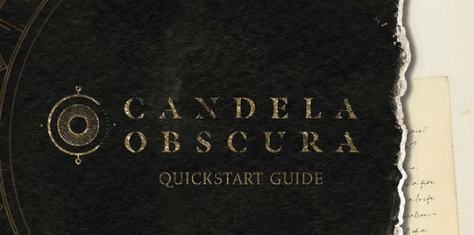
You’ve heard of Critical Role, right? In the wake of the OGL fiasco, they’ve started diversifying – leading to Darrington Press, their publishing arm, putting out Candela Obscura, an occulty trindie-ish narrative game with some interesting DNA. It’s got a fantasy steampunk setting, mechanics that are a drift from Forged in the Dark (FITD), an adventure structure that tips a hat to Vaesen, and a free, high-production value, quickstart you can get here.
There was a flurry of commentary about it on release, about how they’d failed to acknowledge their FITD base (now addressed in a later release), about how loose some of the rules were (I mean, it is a quickstart), and how this will either alienate CR fans or open up a great doorway to more narrative games for them.
While you’re reading this, I should tell you about my Patreon. Patrons get access to content 7 days before they hit this site, the chance to request articles or content, and the chance to play in one-shot games, for a very reasonable backer level of £2 per month. If you like what you read, want to support the blog, and have the funds for it, please consider supporting here. Telling people about the blog, and sharing links/retweeting is much appreciated also – thanks!
But to really judge a game, you’ve got to play it – so I did. And you can watch it soon, on Unconventional GMs – so keep an eye out for that. I ran the quickstart in just over 2 hours with 4 players, and it was – I think I’d speak for everyone – more fun than we expected. So here’s my play-informed review of the quickstart.
The Setting Is Great
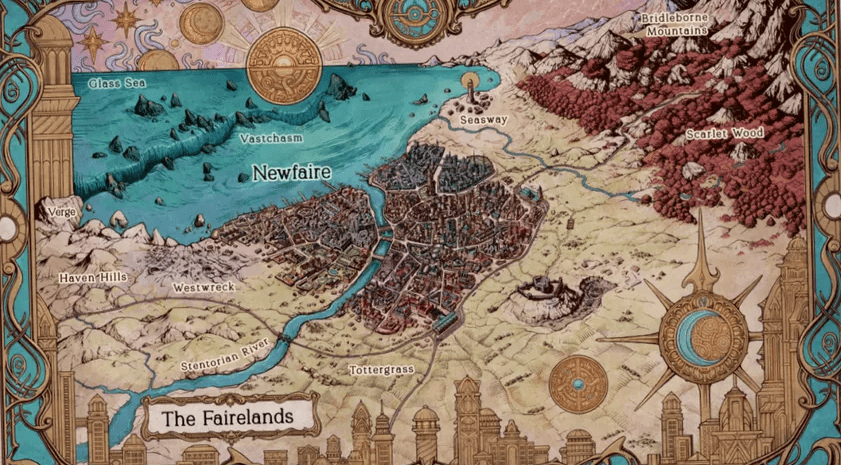
Fantasy steampunk stuff, in the shadow of a recent war, gives plenty of scope for exciting occult stuff to investigate. The titular organisation you work for deals with occult threats, so you’ll be sent to resolve them, and there are a couple of rival/enemy organisations that fit together nicely. There’s a big city on top of the monster-infested ruins of the previous civilisation, some other locales to investigate with towns and villages and stuff, and a good mixture of detail and speculation.
There’s also an edge of oppression, with the church, the state, and in particular the police force – the Periphery – very much cast as enemies of the people. I like this, and to be honest even if all it does it put off the “keep politics out of games” mob, that’s a win for me. All in all, there’s loads going on in the setting, and it’s got loads of “PCs do this” ideas in it to make it easy to think up adventures for.
The System is Decent – and Feels Different to FITD
There’s quite a few tweaks and drifts from classic Blades to keep you on your toes – my concern running it was defaulting to rules from Blades (particularly as my group had all played and run a lot of Blades). You have Gilded Dice, Resistances, and Drives which can all be spent to boost – this felt like it might be one too many extra resources, but in play it worked fine.
The damage system felt good – Marks accumulate in different areas and turn into Scars on the fourth Mark – although it didn’t give as much peril as I’d like – maybe I was a bit soft on them in not doing more than one Mark at a time. Maybe this’ll be revisited in the full rules.
All in all, it felt like it might be better for a short run or one-shot (it’s probably, whisper it, better than standard FITD for a one-shot) – although, again, we’re playing with the quickstart so there may be many more options in the full book.
The Adventure Presentation is Terrible
We played through Dressed to Kill, the quickstart adventure, and this was the strangest part of the game. Its presentation has a really strange approach that makes running it significantly harder than it needs to be. The adventure itself is great in terms of concept, plot and structure – and leads to a satisfying showdown, but it often came up short in terms of what it supplies to GM to help actually run it.
The adventure is presented as a sequence of broad, open scenes, with a “Reveal” in each one they need to find to progress to the next one. While the overall sequence is linear, the scenes are open-ended and offer a lot of player choice as to how to pursue them – I’m all for this kind of structure in a one-shot, and each scene has a good combination of hook-riddled NPCs to get some juicy roleplay going.
However, in this flexible presentation, they don’t make it easy. When you arrive at the village of Mordant Springs, the investigation is very much like a Vaesen setting – there’s multiple places they can visit, and several clues they can find in multiple places. Because this is presented as paragraphs of text, though, it’s quite hard to parse what these options are without making your own notes, or where each one could lead. GM guidance is often quite passive, “use a clue below or make up your own…” or offering “opportunities” for them to meet NPCs without a clear idea of what those NPCs might do or offer. And don’t get me started on the NPC (one they’re likely to interact with) with no name. Telling the GM they say “you don’t need to know my name” is insufficient, adventure writers – what is their name? Why won’t they tell them? What’s their deal anyway?
It’s all workable, and I made a few notes (Patrons let me know if you want a copy and I’ll send it out to you) – but for a quickstart that presumably will have CR fans new to running more narrative games reading it, it’s not terribly helpful. A more structured approach would have been easier to grab I think, or alternatively a wholly looser kind of thing where the mystery is presented much more like it would be in a FITD game.
I think it stands up because the overall quality of the adventure shines through, but I do worry this is how they plan to present all their adventures, and they’re designed to be read, not GMed. We’ll see, I guess – if Darrington Press are reading this, please reconsider!
Overall I’m really excited to see Candela come out, and like I said, it played well. Merging some of the narrative / trad approaches is something I’m really into, and I’m excited to see more games embrace this. If you want to see it in action, there’ll be a link here when Unconventional GMs goes live with it. In the meantime, what do you make of it? And are there any other trindie classics you’d like to hear about here?
I’ve managed to get another new game to the table this week – Soulbound: Age of Sigmar, Cubicle 7’s RPG of the Games Workshop fantasy reboot. For a wargame-inspired game, it’s a surprisingly loose-limbed high fantasy game, and one session down I think it makes a great convention game. Here’s why…
While you’re reading this, I should tell you about my Patreon. Patrons get access to content 7 days before they hit this site, the chance to request articles or content, and the chance to play in one-shot games, for a very reasonable backer level of £2 per month. If you like what you read, want to support the blog, and have the funds for it, please consider supporting here. Telling people about the blog, and sharing links/retweeting is much appreciated also – thanks!
Superheroes with Swords
This is proper high fantasy. You’re powerful heroes, and because your group is soulbound, you get tokens you can use to cheat death which you keep as a group. Every PC has at least 1 Mettle, which you can spend to get an extra action in a round, or boost your attack significantly – and PCs are properly high powered while still being pretty simple to play and run.
You Don’t Need to Sweat The Lore
As you’d expect from a GW property, there is a significant amount of lore you could delve into. But there’s no need, really. Chaos was all risen, it’s been sort of beaten back a bit, you’re heroes trying to finish the job. There’s monsters, chaos, undead everywhere, and you just need to do the right thing and kill them. We’ve seen this approach work really well in 13th Age Glorantha, where setting it in a more ballsy era means you don’t have to worry about history so much.
It’s a Zonal, Freewheeling Combat System
No minis. I repeat, no minis. It has a loose zonal combat system which I guess you could use a map and counters for, if you had them already – but it’s straightforward enough for theatre of the mind to work just as well. Simple rules for dangerous terrain are easy to implement, and combat is fast and fun with both sides potentially hitting hard.
There’s great one-shots out there
As well as the Starter Set, there’s also a couple of free RPG adventures. I ran Trouble Brewing, which while not free, is an excellent convention adventure. It’s worth giving the published adventures a read for how they structure and build combat encounters, too – you can really hit the PCs hard, and the terrain rules add a lot of options. So, will I run Soulbound at conventions again? Strong yes! I’m looking at a Tzeentch-themed thing for Seven Hills 2023: Change, which as it happens is open for registrations if you’re near to Sheffield – or even if you aren’t.
As I talked about here, I’m committing to only reviewing RPG products I’ve actually used – so, run or played – and in Part 1 I talked about how I ran and adapted the second half of the first part of the classic WFRP Enemy Within campaign. If you’re interested in the first half of the first part, you’ll want to look at my deep dive of Mistaken Identity here and here. In this part, I’m going to more generally review the adventure, and see what gems we can steal for our own games from it. It’s in Enemy in Shadows, and is available from Cubicle 7 here.
While you’re reading this, I should tell you about my Patreon. Patrons get access to content 7 days before they hit this site, the chance to request articles or content, and the chance to play in one-shot games, for a very reasonable backer level of £2 per month. If you like what you read, want to support the blog, and have the funds for it, please consider supporting here. Telling people about the blog, and sharing links/retweeting is much appreciated also – thanks!
As with Part 1, below is full of spoilers – if you’re still wanting to play it “fresh,” 35+ years after it was first published, you might want to look away now!
This is, as you’d expect, a well presented adventure – and generally organised well to run it. I did find it a bit of an ovelarge sandbox to work with – as the adventure basically gives you access to the entire city to ask around – but every other section was relatively simple to parse and deliver at the table.
Chasing after an escaped three-legged goblin is a decent adventure hook, if it does take most of the first session to get to it
There Are Some Old-School Roadblocks
There’s a couple of structural things that stood out for me that I altered. The whole investigation segment relies on the PCs, after lengthy legwork, hitting a brick wall, and Magerius telling them everything that they’ve been trying to find out. This is weak, and I let my players have a shot at sneaking into the council meeting themselves to find out first hand – a shot that they singularly failed to succeed at, but a shot nonetheless.
Similarly, when they disturb the Cult of Ranald, as written there’s a weird no-roll-to-prevent bit about being ambushed and tied up, which again is weak, and entirely unnecessary – the Cult are ideal allies later in the adventure. So, again, I took this out. The summoning circle in the sewers has an undetectable (and unopenable) secret door, and an odd roadblock to find where in the city it actually is, which I wasn’t able to find a way around – other than by making sure they had plenty of other leads to pursue when they got back to the surface.
There’s the odd other bit – like the goblin escaping with no roll possible to stop him – I can live with that as a plot necessity to kick the adventure off – but there are points where this adventure shows its age a bit. Indeed, the scene-by-scene progression which started in Mistaken Identity when they were literally point-crawling (or sometimes pub-crawling) along a sequence of encounters makes the loose sandboxing of the exploration segment sit oddly.
Great NPCs – While They Last
As with Mistaken Identity, there’s some great NPCs in here, sketched out well and fun to play at the table. This feels like a living, breathing world; except that many of those NPCs don’t breathe for too long after the PCs meet them. It’s a slight exaggeration to say that everyone dies shortly after encountering the players… but almost everyone does, which gives a grimdark edge that isn’t far from farce at the table. I tried to make sure that some plot-adjacent NPCs survived, just to give some continuity from game to game, but didn’t always manage.
Friedrich Magerius, a deus ex machina clue machine (deceased, obviously)
A Good Sewer Dungeon!
It’s a cliche now, but fighting rats in the sewers really is fun. There’s a plot reason for the sewers to be dangerous (the council has stopped the watch going there so they don’t find their summoning circle), and the sewers feel genuinely alien and weird – while still very close to the city, which as already established, is plenty dangerous enough on its own.
Fighting a man-sized rat while knee-deep in effluent felt really desperate and dangerous at the table, in part because of the shadow of the disease rules hanging over the players. And encountering the Cult of Ranald’s cellar – and in fact the summoning circle – reinforced that the PCs were very close to the hustling, bustling, dangerous city above them.
Why Stay in Bogenhafen?
Given that Mistaken Identity ends with the PCs being nearly killed by a witch hunter and then saved by a ravening demon of Tzeentch, it’s not entirely clear why they’d want to stick around or poke their heads up investigating stuff around the town. While my players responded well to the expectation that the adventure’s name is Shadows Over Bogenhafen, not Shadows over Weissbruck, there was a bit of dissonance reported from them, with some commenting that even Altdorf felt safer. And they were really scared in Altdorf.
Overall, it’s a good adventure that has just about stood the test of time. I didn’t make as much use of the Grognard Boxes as I did in Mistaken Identity, mainly because they didn’t seem to address the problems I saw in the ways I wanted to, but it ran smoothly and came to a satisfying conclusion. We’ll be revisiting Death on the Reik next year, with a plan to do the whole adventure – so look forward to those write-ups!
Have you run or played Shadows Over Bogenhafen? Let me know your thoughts in the comments.
Shadows Over Bogenhafen is the second half of the Enemy Within campaign for Warhammer Fantasy Roleplay, and follows Mistaken Identity – which I looked at here and here. In the latest iteration of the campaign, the two are folded together as Enemy in Shadows. Enemy Within has a reputation as one of the “great” RPG campaigns, so I played through it with my Tuesday group – you can get hold of it from Cubicle 7 here.
While you’re reading this, I should tell you about my Patreon. Patrons get access to content 7 days before they hit this site, the chance to request articles or content, and the chance to play in one-shot games, for a very reasonable backer level of £2 per month. If you like what you read, want to support the blog, and have the funds for it, please consider supporting here. Telling people about the blog, and sharing links/retweeting is much appreciated also – thanks!
I’ll start by giving you a session-by-session breakdown of how it went, and any alterations I made to the adventure as published. In part 2, I’ll discuss my overall impressions of the adventure. With my Tuesday group, part of our play culture is to share Stars and Wishes at the end of each session, so I’ve folded in some feedback from a player perspective here as well. Expect spoilers – so look away now if you don’t want plot reveals from a 35+ year old adventure!
Synopsis
I ran Shadows Over Bogenhafen over 5 sessions, immediately following the run of Mistaken Identity (5 sessions) – this included a session for character generation and learning the system, and a one-shot when a player was missing, so all told it was 8 sessions of play. We do tend to aggressively pursue plot threads and keep the game going in my Tuesday group (no game suffers from too much pace, as one player is wont to say) – so you might expect it to take a bit longer with a slower pace.
Session 1 – What Happens in The Schaffenfest…
Following a hook I laid in the previous adventure from the Enemy in Shadows Companion, the PCs went to the Schaffenfest and wandered around trying to find Dieter Rundmann, bumping into various NPCs and being given clues and rumours as to what was going on. Eventually, they find themselves at the circus and agree to track the three-legged goblin into the sewers, in one of the all-time-classic adventure hooks.
I picked out an NPC for each player based on their background and interest, and selected rumours and hints that were actually relevant for this. The Schaffenfest supplies a lot of plot-unrelated trouble to get into, and I did tighten it up a bit with a mission to get them where they needed to go. I introduced a witch hunter as a side NPC at the fair who I failed to give proper importance to later on – I think the players wanted him to be a bigger deal than he turned out to be, but you live and learn.
Session 2 – Under Bogenhafen
They went into the sewers, disturbed some rats, fast-talked their way into the Cult of Ranald, fought a giant rat, and discovered a summoning circle. As expected, a demon appeared, that they fought, before running away to the surface. At some point, they found a dwarf’s body, and the bones of the three-legged goblin. Upon their return, they were assured that the goblin had been found at the docks and dealt with – despite their protestations.
This mini-dungeon sewer-crawl was actually a lot of fun! I ignored the Cult of Ranald advice in the book to have them knocked out and captured (a no-save fun-ruiner) to allow the halfling thief to blather his way into making them allies – a source of information they turned to later in the adventure. The demon fight was a bit of a damp squid with WFRP’s swingy combat swinging in the PC’s favour – the giant rat was more dangerous!
Session 3 – Chasing Shadows
Upon their return, the PCs embarked on a mammoth investigate-a-thon around Bogenhafen. They gradually uncovered the conspiracy in an action-light session that wasn’t really my best work as a GM. It ended with them being invited to dinner with the Guild leader to allay their concerns and a long list of clues that they were just starting to piece together.
The adventure has far, far, more information than even I shared with the players, and a lot more “verisimilitude-clues” than “story-clues” – that is, lots of hints and rumours that add more colour than plot direction. At a different point in the story this might have been fine, but in the context of “there’s a massive ritual about to be done in 2 days time” it fell a bit flat.
Session 4 – The Countdown Begins
After dining with Magirius, who reassured them that all of their solid evidence was merely coincidence, they continued their investigations. Resolving to sneak into the meeting of the Council that Magerius was attending, the fickle winds of WFRP dice rolling led to their discovery in the gardens and a brutal fight and a near-TPK – only Fate points spared their blushes. As they recuperated in a nearby pub, Magerius told them that they were right, and in fact a massive ritual was expected to be carried out – and begged them to stop it!
After the previous session, I shifted my prep notes to use Sly Flourish’s Lazy DM method for structure, and this helped me keep the pace up a lot. Dieter showed up at the start, trying to question them for smuggling, which was a good way to remind them they still hadn’t tied up that original quest and start with a bit of action. A defeat in combat was what we all needed after a few lucky fights, and it felt much more WFRP – and a good emergent story structure to be nearly killed just before the finale.
Session 5 – The Ritual
After finding Magerius dead, and framed for his murder – the least of their worries at this point – they raced to find the location of the ritual and eventually – after the Wizard had discovered some hidden knowledge (hidden in the magic chapter of the rulebook) managed to save the day and disrupt the ritual, saving the town. After which, they resolved to leave forthwith – and a hasty sailing back to Weissbruck, dreaming of a crawl between the three pubs.
As a finale to the adventure, this worked well – the initial scene and chase through the streets pursued by the guards went well, and added a sense of urgency that kept through a pacy finale. As with a lot of the adventure, while stopping a chaos cult ritual is a bit of a cliche, it’s a cliche because in part of this adventure, so we’ve got to forgive it that.
So – five sessions to save Bogenhafen. In part two, I’ll talk about overall impressions, and any big changes I made – or wished I’d made – to the adventure.
I’ve just picked up (from kickstarter) Rowan Rook and Deckard’s SIN – a fantastic supplement for the SPIRE RPG, where every page seems to have plot hooks and gameable material leaping off it. It got me thinking about what a really good RPG supplement looks like. For these purposes, I think a supplement should have a bit of everything – some player-facing stuff, maybe new rules, new setting material and background – but most importantly, tons of stuff that can be dropped into an ongoing campaign or inspire a one-shot.
While you’re reading this, I should tell you about my Patreon. Patrons get access to content 7 days before they hit this site, the chance to request articles or content, and the chance to play in one-shot games, for a very reasonable backer level of £2 per month. If you like what you read, want to support the blog, and have the funds for it, please consider supporting here. Telling people about the blog, and sharing links/retweeting is much appreciated also – thanks!
SIN hits the jackpot on all of these – but I won’t be talking about it yet, in accordance with my review policy, because I haven’t actually used it in play yet. So instead, here are 4 supplements – I’ve tried to restrict myself to things nominally in print at least (although getting physical copies of one of these might be a challenge!) – that are top-drawer and have seen action at my table recently.
Strongholds of Resistance (for FFG’s Star Wars: Age of Rebellion)
This is the one you might struggle to find in print. It’s worth it though – a selection of planets, a selection of rebel bases (including, of course, Echo Base on Hoth), three new player species (including the squid-faced Quarren as featured in the Mandalorian) and some equipment and options. What makes this stand out are the planets and bases – they are all dripping with gameable content, and even include a “what if this base is discovered / falls” section. The bases all have maps which can be used here, or even transplanted to another setting or system.
This book entirely inspired Snowblind, a one-shot around Echo Base, which is linked here.
This is absolute gold. It kicks off with the Demonologist class, which has three very different options (if you’re familiar with the 13th Age Druid, it’s similar to that in that the role in the party can be anything depending on what you pick). There’s a great section on gamemastering demons, and then “Six Hell Holes” – adventure locations at different levels of challenge full of demons. Explicitly designed to be dropped into the game anywhere, this would be useful for any kind of fantasy game. 13th Age products somehow manage to make even their fluff easily usable in other games, and this doesn’t disappoint.
I’ve thrown stuff from this into 13th Age one-shots (although not for a while – I haven’t run 13th Age for too long!), including adding a melee-focussed demonologist as a pregen.
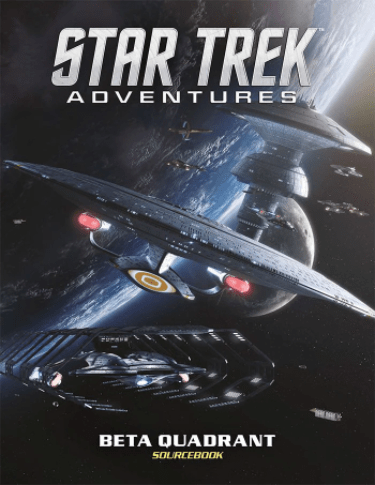
For those with limited Star Trek knowledge, the Beta Quadrant is probably what you’re expecting if you think Trek – the baddies are Romulans and (depending on the era) Klingons, you’ve got Orions and (my favourite) Gorn rolling around – it’s a wild frontier region of space, ripe for exploration yet still bucking up against other civilisations in the form of the Romulan Neutral Zone. Apart from details of each of these civilisations and some new player species, there’s some extra starships, and some adventure locations. The Briar Patch and the Shackleton Expanse (although for the latter you might want to get the bigger – and more adventure-led – book of the same name) are full of danger and peril.
Overall it’s just a great starter region for Star Trek, where the core book is a bit limited by offering any era of play. If you’re running Original Series or Next Generation, this is your essential next purchase.
I used this a lot in the first season of my ongoing Star Trek Adventures campaign, where they tussled along the Neutral Zone with a recurring Romulan Captain.
Starter Set (for Warhammer Fantasy Roleplay 4th edition)
Is it cheating to put a starter set in here? Not in this case. Apart from the usual pregens, dice and an excellent adventure (Doing the Rounds), the 64-page Guide to Ubersreik is what sets this apart. Full details of the city, with adventure hooks in every location, both dripping in flavour and instantly gameable. Add to this that fully half of the Adventure Book is given over to single-page short adventures, this is the perfect primer for both what WFRP is all about, and how to make a city breathe and sing.
My WFRP one-shots have all been set in and around Ubersreik – there’s just enough material in here to expand one or more of them into a satisfying game.
So, what fantastic supplements can you recommend? Link them in the comments.
As I talked about here, I’m committing to only reviewing RPG products I’ve actually used – so, run or played – and in Part 1 I talked about how I ran and adapted the first part of the classic WFRP Enemy Within campaign. In this part, I’m going to more generally review the adventure, and see what gems we can steal for our own games from it. It’s in Enemy in Shadows, and is available from Cubicle 7 here.
While you’re reading this, I should tell you about my Patreon. Patrons get access to content 7 days before they hit this site, the chance to request articles or content, and the chance to play in one-shot games, for a very reasonable backer level of £2 per month. If you like what you read, want to support the blog, and have the funds for it, please consider supporting here. Telling people about the blog, and sharing links/retweeting is much appreciated also – thanks!
As with Part 1, below is full of spoilers – if you’re still wanting to play it “fresh,” 35+ years after it was first published, you might want to look away now!
Overall, I think this is an excellent adventure, with a few quirks which come from (a) its being written in another age, and (b) being designed to be the opening act of an enormous campaign. It pulls the PCs together well, with an quirky hook that gets them to travel to Altdorf, and then to Bogenhafen, and leave them at a loose end with a reason to stick together and a lot of potential threads to pick up.
Poor old Rolf Hurtsiss has seen better days
The art is consistently fantastic, and the writing manages to tread a tightrope and be both evocative and laugh-out-loud funny at times. In particular, the NPCs are sketched really well, and the character of the places you visit – from the Coach and Horses Inn, to Altdorf, to Weissbruck – really comes across.
Everyone has a name
The first ‘monster’ you meet on the road – the mutant Rolf Hurtsis – is an old acquaintance of one of the characters; but even after this, every character is drawn with a past, and every one is named. The rest of the mutant band – led by Knud – all have names (I made them call out to one another as the PCs – as expected – slaughtered them). Nobody appears on the scene without having a richer and fuller life outside the story they are in, and the world is richer for it; the road warden is tracking down his sister on the road to Altdorf, for example. And, even more so…
Everyone has character
The NPCs are so well drawn in here, it’s worth taking the time to give them some character at the table. I jotted down some of the 7-3-1 technique for each one, although that sometimes led me to “now what does Josef talk like again?” moments, it made their interactions – which are at the centre of this adventure – more interesting.
Playing online, there are a few tricks to make characters stand out. The first is to show their picture (and every NPC in the adventure has great art) when you talk as them – I used “Show to Players” with Handouts on Roll20, but there are lower tech versions like sharing a screen if you’re running without VTT. The second is to overact terribly. I exhausted my limited repertoire of accents after two sessions, but it does help to have Josef talk like a pirate king (Hans Pflaster, the aforementioned roadwarden – was Jason Isaac’s Marshall Zhukov from Death of Stalin, and just as short-tempered) to get a sense of versimilitude. That said…
It can be a bit Carry On
There’s an element of farce to the central conceit – and several of the key scenes – that might take some careful running. There are times when your players might be tempted to back out – when they follow Josef to the pub in Bogenhafen, and it’s quickly obvious they’re in a very dangerous place – so I think setting the tone is important.
There’s a lot of Long Game Foreshadowing
I’ve never run a game before where I dropped a rumour in the first session that foreshadows Empire in Ruins, the fifth instalment of the campaign that sits maybe 40-50 sessions away. I’ll deal with if they remember the (false as it turns out) rumour then if and when it occurs. I took the approach of, whenever the book gave me a page of rumours, liberally spreading them out to my players, without showing them which were immediately relevant and which were flavour. This seemed to work well, and they’ve not led to too many red herrings yet.
It’s a bit Bait and Switch
Your group may vary with this – but I’d like to think that my players were under no illusions, when they found their lookalike body, that they weren’t actually going to collect 10,000 Crowns. By the time they get to Bogenhafen, and almost everyone they’ve ever associated with has turned up dead, more cautious players might be forgiven for being wary about heading to collect the inheritance. I presented this as if there weren’t many options – and in any case, it couldn’t be more dangerous than that dockside pub in Altdorf, right?
In Summary
It’s great. It’s not really like anything I’ve run before in a fantasy setting, and indeed it stands alone in terms of where its encounters come from. There’s no monsters to fight, or wilderness areas – it’s an entirely urban adventure, really – with a few interludes on canals or roads, but still well within reach of the Roadwardens. Given that it manages to still be terrifying even when in the midst of supposed safety, I’d recommend it to anyone – although tell your GM you’ve read this first so they can switch it up with the Grognard Boxes!
Have you played or run Mistaken Identity? What did you think of it? Let me know in the comments!
Mistaken Identity is the initial adventure from the Enemy Within campaign for Warhammer Fantasy Roleplay, and acts as a prelude to Shadows Over Bogenhafen, the first adventure proper. In the latest iteration of the campaign, the two are folded together as Enemy In Shadows. Enemy Within has a reputation as one of the “great” RPG campaigns, so I played it through with my Tuesday group – you can get hold of it from Cubicle 7 here.
The first of many mutants in this adventure / campaign, and a former associate of our thief.
While you’re reading this, I should tell you about my Patreon. Patrons get access to content 7 days before they hit this site, the chance to request articles or content, and the chance to play in one-shot games, for a very reasonable backer level of £2 per month. If you like what you read, want to support the blog, and have the funds for it, please consider supporting here. Telling people about the blog, and sharing links/retweeting is much appreciated also – thanks!
In this first part I’ll give you a session-by-session breakdown of how I ran it, including what I changed from the published adventure. In Part Two, I’ll summarise what worked well, and what worked less well – and suggest what can be taken from it for other games. There are, of course, a huge number of spoilers below – if you’re still wanting to play it “fresh,” 35+ years after it was first published, you might want to look away now!
Synopsis
I ran Mistaken Identity over 5 online sessions of between 2 and 3 hours for 4 PCs, with the first session including character generation. The adventure as written has some very useful “Grognard Boxes,” ways to alter the adventure if your players are familiar with it already. I used them to just pick from if it looked more interesting – especially in the first session.
The adventure as written has chapters that are roughly one session long (if you play with a fair lick of pace) – and I’ve written them up below, along with the names I gave each session as part of my prep notes. If Patrons would like sight of my actual prep notes, feel free to get in touch – although I find the writing up of them is more useful to me than reading them, if that makes sense – the process of creating them revises and solidifies the game in my head. I used Roll20 (which has a bit of a fiddly WFRP interface for improving PCs, but it’s too late now for us to switch) and Google Meet for A/V, if people are interested in those things.
You’ll note as you read this that I have a crew of absolutely top-drawer players. In this, my regular Tuesday group, plots are aggressively pursued and roleplay opportunities are harvested from even the least interesting scenes. Situations like one PC not knowing a secret the other three are keeping from them (the player knows, obviously) are handled maturely and leaned into for maximum roleplaying fun – your mileage may vary, obviously – but it’s worth invested in play culture at the table if you want to be able to engage with an adventure like this that’s full of unresolved secrets and bait-and-switches.
Session 1 – The Coach and Horses
After character generation and session zero stuff, they montaged talking to some NPCs at the Coach and Horses and then fought a daemon summoned by one of the patrons.
I completely ditched the structure of the first session in the adventure, which is the coldest of cold opens – some gambling (out of budget for almost all starting characters as written), some meeting strangers who don’t like them – the only action is if and when they catch the gambler cheating. Oh, and we did chargen by the rules – and ended up with human nun, smuggler, and wizard’s apprentice, and a halfling thief.
I quite liked the NPC Phillipe Descartes, so didn’t want him to be an enemy, so had him merely regale them with tales in his outrageous Brettonian accent. Each PC got a single short scene where they made a skill check (usually Gossip) to impress an NPC, and then received 1 or 2 of the rumours supplied. We cut from PC to PC as they did this, before I triggered “The Rival Magus” from the Grognard Box and had a daemon appear.
After they’d fought the demon, of course, they were basically an adventuring party, and we’d got to know the interface and basic rules in session 1. All this took maybe an hour of play after characters were done – it’s my favoured approach for a session zero to get a bit of play in at the end to whet everyone’s appetite.
Session 2 – The Road to Altdorf
They fought a mutant, went further down the road, fought some more mutants, and discovered the adventure’s hook – a body looking identical to one of the PCs, with a will to collect from Bogenhafen and a signed affidavit that the bearer is indeed the long lost nobleman, and instructions to claim his inheritance in Bogenhafen.
I pretty much ran this as described – the players made it more interesting by three of them being in on the identity theft, but keeping it quiet from the fourth – a nun of Myrmidia – as they expected she’d not be in favour. Instead, they told her that Othelbert the apprentice actually was Kastor Leiberung, just travelling undercover to Bogenhafen – and swore her to secrecy.
Session 3 – Welcome to Altdorf
After a confusing encounter with some strangers, and surviving a theft attempt, they caught up with Josef – a boatman and old acquaintance who just happened to be going to Bogenhafen – and went with him on a very dangerous bar crawl. It becomes very obvious that everyone they meet at the moment seems to end up dead very quickly – and they see a shadowy figure tracking them.
I added in a quick chase scene at the start with some pickpockets for two reasons – firstly, to start with some action, and secondly to give a big of the ‘dangerous big city’ vibe. This happened at the same time as the Emperor’s procession, which the module stressed is important later. As they’d all been travelling to Altdorf, they each had a scene where they resolved that – the nun resolved to continue travelling in Myrmidia’s name, the halfling went to his uncle’s pie shop and made contact, the wizard’s apprentice tried to enrol at the university. These gave a bit more verisimilitude and allowed the players to drop their previous lives a bit as they seemed committed to be adventurers now.
The bar crawl I ran as written, with the halfling thief enthusiastically joining in with Brandy Bounce and them using their wits to navigate the situation. The whole bar scene is a great set piece – as they realised just how much danger they were in – and balanced off nicely by several of their NPCs being found dead the next morning.
Session 4 – Come Drown With Me
We were a player down, so with the finale approaching, I ran a fill-in session of Come Drown With Me from One Shots of the Reikland – the three remaining players survived a zombie attack and re-sealed the tomb of Kurgon Three-Eyes while they travelled down the Weissbruck Canal. Testament to how dangerous Altdorf felt that a potential zombie apocalypse was a welcome light relief.
The character art in the adventure is brilliantly evocative – e.g. this portrait of Maria Braund, the highwaywoman who I used as an extra link to the follow-up adventure
Session 5 – No Mister Lieberung, I Expect You To Die
After meeting a highwaywoman and agreeing to do her a favour on the canal, they went onwards to Weissbruck, where they tangled with their pursuer. Evading him, they went on to Bogenhafen – where they realised they’d inherited a setup meant to catch a cultist, and neither the inheritance nor the title were true. As a horrific beast appeared to ‘save’ them in the nick of time, they were left pondering what to do next – luckily, the Schaffenfest is in Bogenhafen, and they had an assortment of plot hooks leading them there!
Maria Braund, the highwaywoman, is from the Enemy in Shadows Companion, and I added her in to give a hanging plot hook to the Schaffenfest for when they arrived – the start of the session also had them avoid a robbery from their fellow riverfolk, who’d heard one of them was a nobleman in disguise. I had Adolfus smoke some distinctive cigarettes so they could tell he’d been around the pubs with them, and he fled when they confronted him and they fought his heavies.
The final scene, while a bit deus ex machina (daemonium ex machina?) is another great set piece – as they watch through the windows the splashes of blood, before finding the body of their pursuer ripped apart.
In Part Two, I’ll summarise what stood out about the adventure, what didn’t work as well, and what tricks and components of it we can steal for future one-shot (or campaign) play. Questions or feedback as always are welcome to @milnermaths on twitter.
Conventions are great. A chance to play games with like-minded people, and to spend time with too much drink, too much food, and not enough sleep. Back in the day, “Con Reports” used to be a thing – forums would fill up with people’s reports of the games they’d played, the fun they’d had, what they had for lunch and how much it cost (the lunch, not the convention – I kid you not). You don’t see them much anymore, but after going to Revelation – the sixth annual(ish) Powered by the Apocalypse convention in Sheffield, I thought I’d write down some thoughts.
While you’re reading this, I should tell you about my Patreon. Patrons get access to content 7 days before they hit this site, the chance to request articles or content, and the chance to play in one-shot games, for a very reasonable backer level. If you like what you read, want to support the blog, and have the funds for it, please consider supporting here. Telling people about the blog, and sharing links/retweeting is much appreciated also – thanks!
Revelation is a weekend event where all the games are Powered by the Apocalypse (PBTA), Forged in the Dark (FITD), or related derivations. After some pushing the organisers, I got confirmation that e.g. Spire, Heart, Belonging Outside Belonging and similar games would work fine – basically, if it’s been informed by the sort of gameplay that PBTA engenders, it’s good to go. Which means, you get a tight range of games, and a group of players that dig shared narrative. Running PBTA at Revelation is less of a risk than at some other cons – less of a risk that the players will plan or turtle, or not want to just play to find out. Of course, after making a fuss about what games were allowed, I ran two ‘classic’ PBTA systems.
This year was about 25-30 punters, five slots, and a mixture of single-session and multiple-slot games. I’m not usually a fan of multi-slot con games as it reduces the choice for everyone, but I can grudgingly agree that at Revelation it makes sense so you can see PBTA/FITD games over a longer period. And I can’t talk, since I’ve run double-slotters a few times at them. Like all the Garrison cons, it’s all about the games – there are no seminars or other events, so the norm is to play in every slot – I like this, play is the centre of the hobby and the most important thing we do. We should be going to conventions to play, and conventions should be putting play at the centre of everything.
I ran a double-slot two-table cross-universe game of Masks with my co-MC Neil, and a single-slot game of Hearts of Wulin. I also played City of Mist in a single-slot game. I’ve split my thoughts into con practicalities (no lunch prices, sorry) and games thoughts, so here goes:
Practicalities
Cons are great, and venue matters. The Garrison hotel is almost the perfect place for an RPG convention, such that a few minor changes were noticed – no standing lights in the cells, for instance, and some confusion over the Saturday finish times. That said, I still love running in the cells, and I’m sure at other venues I’ll notice how much better the acoustics are in your own little nook (even if what you gain in audio is sometimes sacrificed in visual in the dim lighting).
Sharing a room at a con is great. I’ve become a bit of a solo con-goer in recent years, but I shared a room, which made a much more convivial (although perhaps more boozy and less sleep-filled) weekend. I might have convinced myself back towards it. It was also handy for Masks prep as we could sketch out plans over breakfast.
See comment re lighting above – the print on some PBTA playbook sheets is tiny! Print them out A3 in future for a convention, or make your own simplified ones. Similarly, I should have folded my Masks sheets before distributing – if you don’t the booklet for moves starts with the Adult Moves, which you aren’t going to be using.
Games
PBTA is varied and diverse! Even disregarding FITD and the other splits, I played three very different games over the course of the weekend in terms of structure of play and player experience, what’s expected of players, etc. City of Mist is, as far as I can tell, pretty close to a trad game – with just enough flexibility in the tags for different approaches and player-driven spontaneity. Hearts of Wulin is entirely at-the-table; my prep was only a backdrop to the melodrama that unfolded. Masks sat somewhere in the middle, but some of that was the necessary structure for us to run parallel games across universes.
Multi-table games work, and are a lot of fun. They do rely on the two GMs being comfortable with about the same amount of prep work though, and luckily we were (both of us have also run ‘vanilla’ Masks quite a bit too). We had two parallel universes being combined (the All Star Society and the All Star League) and the teenage heroes (All Star Juniors/Juniorz) having to save the day. At the midpoint – the end of the first session, a failed merge of the universes meant two players swapped tables – and there was more player exchanging to come. The villains of one universe were the hero mentors of the other – it all sounds complicated until you realise we just ripped off Crisis on Infinite Earths. All great fun, and good to push the boat out for a showcase game.
Fewer players isn’t always best. Because of a drop-out I had 3 players for Hearts of Wulin, and I think it would have been cleaner with 4 – certainly, the Entanglements were head-scratchy as everyone had to be linked to everyone else. Everyone filling them out at the table was harder than I thought, too – I’m tweaking my prep to run it again at Virtual Grogmeet, and I’ll pre-populate some of them with NPCs to help.
So, there are my Revelation thoughts. Why did con reports fade away? If you’ve got any ideas, let me know below – and if you’d like to hear more about any of the games let me know in the comments.