An Abbey, a Village, some Monks – Review: Rosewood Abbey

Scope used to be a big deal in TTRPGs. The Generic Universal Roleplay system (GURPS) proudly boasts “with GURPS, you can be anything you want,” and there’s still plenty of energy for 5e-based products trying to ride high on mastery of a known system. But I’m much more interested these days in the opposite. Games where the scope is so tight that the game provides a clear consistent experience. Games where everyone is likely to play the same kind of character, and do the same sort of thing.

It’s a tidy looking book, with neat layout and design

Even D&D has gone this way – big hardback campaigns like Curse of Strahd and Rime of the Frostmaiden provide cultural reference points among groups – how did you defeat Strahd? What did you do in Bryn Shander? Did you help the gnome mind flayers in their spelljamming vessel? (Possible spoilers there, I guess). And smaller, indie games have also tended to be successful when they’ve limited their scope to one approach, and hew closely to it.

Rosewood Abbey, from Kalum from the Rolistes podcast, is very tight in scope, and very good. You can’t be anything you want. You can be a friar, at a specific abbey, at the foot of the Alps between the 12th and 13th centuries. You can explore the abbey, you can go into the village nearby – you won’t be going any further. You’ll investigate mysteries that, despite their potential for supernatural origins – and other NPCs being sure that they are – have mundane solutions.

While you’re reading this, I should tell you about my Patreon. Patrons get access to content 7 days before they hit this site, the chance to request articles or content, and the chance to play in one-shot games, for a very reasonable backer level of £2 per month. If you like what you read, want to support the blog, and have the funds for it, please consider supporting here. Telling people about the blog, and sharing links/retweeting is much appreciated also – thanks!

Continue reading →

Guest Post: Wearing the Mask(s), by Neil Gow

A first for the blog today – a guest post, by esteemed friend of the Burn, Neil Gow! He’s written below about setting up a one-shot of Masks, the ultimate game of teenage superheroes Powered by the Apocalypse. Neil’s a fantastic PBTA GM – I did a multi-table Masks game last year with him – and as a player in the game he’s writing about, can confirm how well it all slotted together. Check out more PBTA posts on here too!

A Short Game of Masks: Getting It Right

I love a good game of Masks – it’s easily the most satisfying superhero game I have played, understanding that the really important parts of any superteam are not the ‘What’ of an encounter, but the ‘Why’ – emotions, relationships and complications are far more important than how many feet someone is knocked back. Sadly, the traditional short one-shot of Masks tends to deliver half of that experience. You get the build up of some awesome interplay, but rarely any pay off. So, when I had the chance to run a double-slotter (a ‘long shot’ if you will…) of the game at the Revelation convention in Sheffield, I was determined to make it count! So, how did I prepare?

While you’re reading this, I should tell you about my Patreon. Patrons get access to content 7 days before they hit this site, the chance to request articles or content, and the chance to play in one-shot games, for a very reasonable backer level of £2 per month. If you like what you read, want to support the blog, and have the funds for it, please consider supporting here. Telling people about the blog, and sharing links/retweeting is much appreciated also – thanks!

Continue reading →

Drifting Systems – Not Quite A Hack

I’m thinking about some game ideas for next year, and here are a few I’m pondering. I don’t really get the urge to properly hack games, as there are just too many games still to play, but I do like the idea of a quick shift in emphasis to give a game a different feel. Here are three that I’m pondering where I think a slight tweak in emphasis would change the game in a positive – or at least interesting – way. 

While you’re reading this, I should tell you about my Patreon. Patrons get access to content 7 days before they hit this site, the chance to request articles or content, and the chance to play in one-shot games, for a very reasonable backer level of £2 per month. If you like what you read, want to support the blog, and have the funds for it, please consider supporting here. Telling people about the blog, and sharing links/retweeting is much appreciated also – thanks!

Continue reading →

RPG Resurrection! – Games from my Past

We’re in a golden age for TTRPG releases – there’s so much out there, and something for everyone’s developing tastes. With kickstarter and other crowdfunders making it easier to get games out, it’s inevitable that someone like me who chases after the new shiny things will end up letting some games drop unjustly. Here are four of my games that were formative to me (most predate this blog) – and what I like about them. Should I get them back to the convention table, maybe in 2024? Let’s see…

Continue reading →

Unconventional Mysteries – One-Shot Carved From Brindlewood Games

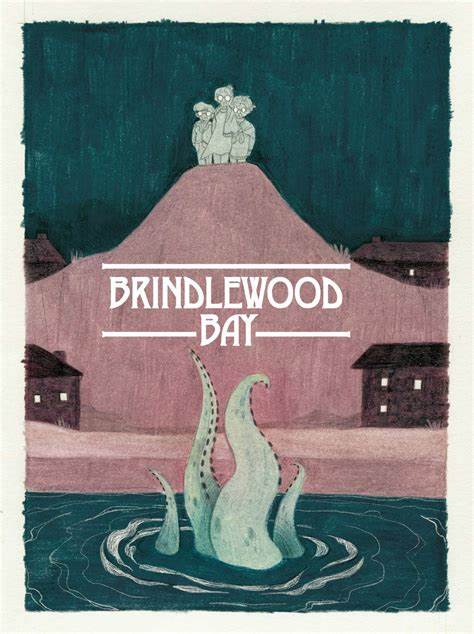
I hope you’re all familiar with a new subset of PBTA games, the Carved From Brindlewood (CfB) stable. These, all from the Gauntlet, involve player-created clue interpretation and offer something genuinely different to investigative games. Through the game, you collect Clues (often open-ended and with multiple interpretations, like “a diary mentioning forbidden love,” or “a sequence of numbers in an unusual place.”) The players then try to interpret these to provide a previously-unknown solution to the Mystery. They’re fantastic games, if you enjoy that sort of premise, and offer a new perspective on the investigative genre. 

While you’re reading this, I should tell you about my Patreon. Patrons get access to content 7 days before they hit this site, the chance to request articles or content, and the chance to play in one-shot games, for a very reasonable backer level of £2 per month. If you like what you read, want to support the blog, and have the funds for it, please consider supporting here. Telling people about the blog, and sharing links/retweeting is much appreciated also – thanks!

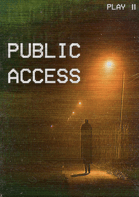
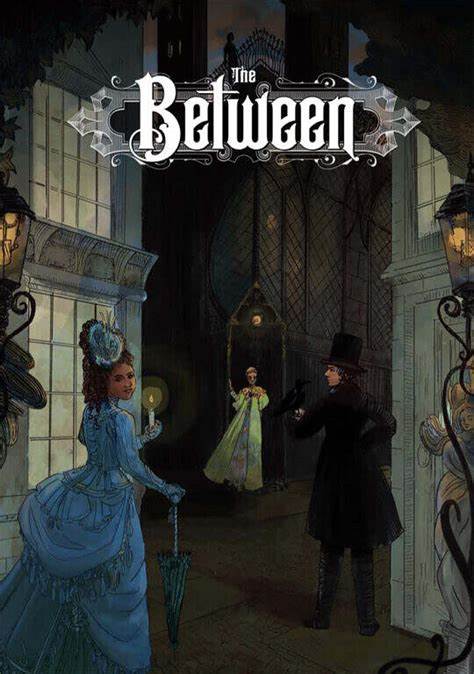
There’s Brindlewood Bay, where you play elderly mavens in the titular town, investigating murders and gradually revealing a sinister cult. I reviewed Brindlewood Bay here, if you want to hear what I thought of it when I player the pre-kickstarter version. Following that The Between is a bit more baroque – you’re monster hunters in Victorian London solving cases and pursuing a mastermind. And most recently, Public Access, where your young investigators explore creepypasta urban legends on the trail of a vanished cable TV station. All of them are excellent, and all are hard-wired for campaign play of 4-8 sessions. 

But, as regular readers will know, I’m firmly of the opinion that you can run anything as a one-shot – and I’ve brought these to several conventions and run in single-sessions slots. They do take a bit of tweaking to get right – so here are my thoughts on running these as one-shots.

Be Up-Front About The Game

Firstly, you need to advertise carefully. In these games the mystery solution comes from the players, so you need to advertise that so that there are no surprised players who are expecting a more traditional experience. Some players butt up hard against creating their own solution to the mystery, and you need to make sure in the con pitch you’ve been explicit.

I’d also share that it’s a specifically one-shot experience, and it’ll likely feel like the pilot episode of a show – they shouldn’t expect everything to be resolved necessarily. Manage expectations and be clear that as much narration is in the hands of the players as you – and you should be fine.

Do the Regular Chargen and Prep

Even in a 3-hour slot, I’d advise going through the inter-player bits of character generation at the table. I get players to pick Playbooks (The Between) or Special Moves (Public Access or Brindlewood Bay) ahead of time if I can, but do the bits where they describe one another’s cosy place / corner of the house at the table. It can feel like this is eating into playing time, but it’ll mean you can hit the ground running well when you start. Think of it as time invested, and it’ll give your players lots to do with each other once you begin play.

Adjust Complexity

A mystery or question with Complexity 4 or 5, with one clear question to answer,  is about right for a one-shot session. It gives them a good shot at resolution and means they can gather enough clues quickly. If the mystery you’re running has a higher Complexity, just change it – you’ll alter the focus of it a little, but nothing will break. 

Think About Structure

In Brindlewood Bay, you can just play through a mystery as normal. For Public Access / The Between, I’d suggest the following:

short Day phase / Night phase / Day Phase (start by answering the question)

Start the first Day Phase in late afternoon and give the players just enough time to pursue a few leads before it’s dusk and they have to plan their Night phase. Assuming they aren’t watching an Odyssey tape (in Public Access), the Night phase can be primarily investigative, and should give them enough clues to try and answer the question the following Day – they might or might not be able to resolve it – if needed just montage them taking the action needed. If you have time for another Night Phase, by all means do it – but don’t try and squeeze it into ten minutes if that’s all the time you have.

As an aside, and even when you’re not running these as one-shots, I still like to pace the Day Phase pretty tightly. It’s up to the players to pursue leads and choose where they go, but that doesn’t mean they have unlimited time. About one short investigation / move for the morning and afternoon is about right, and as GM you can certainly cut to other scenes once a Clue is discovered. 

Use the Starter Mysteries – or Don’t

All the games come with a mystery that it’s recommended you start with. These provide a great intro into a short campaign and are nice and straightforward to run, but for a one-shot feel free to run different ones. You might need to think about how the players might split up or what approaches they might take to make it work, and some Mysteries have gated strings of Questions that won’t fit into a one-shot in a satisfactory way, but I’d be flexible with this after you’ve first run Dad Overboard / The House on Escondido Street / The St James’s Street Ghost. They’re all great ways to teach the game (and it’s very appreciated that the games offer these) but after you’ve tried them once you can always try something else.

Show Them All The Stuff – But Don’t Use All The Stuff

Mysteries have been designed to have plenty of NPCs to interact with. Try to bring these onto the stage fairly early on, but don’t worry if your players don’t end up interacting with them. The way the game works, they don’t need to talk to the nosy neighbour, or the families relative – all of them are just floating clue dispensers for the long list of options that you can dole out to solve the mystery. Aim instead to give a few exciting / obvious options for investigation, and make the players feel like whatever they pick they’ll find stuff out – which is, in fairness, exactly how the game works.

So, I’m still planning on bringing some more of these to conventions in the future – and there are more Carved From Brindlewood games in the works that look exciting. Have you tried running these games in a one-shot setting? What worked or didn’t work?

A Change Is As Good As A Rest – Reflections on 7 Hills 2023

Last weekend I was at 7 Hills, the TTRPG convention I co-run. It was, from my point of view anyway, excellent. Before the event both myself and Jag (my fellow organiser) had I think been musing over whether it was worthwhile continuing, and separately had decided that unless it was a “Hell, Yeah” we might need to lay the con down. It was emphatically a Hell Yeah from both of us, and we’ll be returning in 2024. In fact, we’re even looking at a Virtual Seven Hills in 2023 – all details on the website above.

While you’re reading this, I should tell you about my Patreon. Patrons get access to content 7 days before they hit this site, the chance to request articles or content, and the chance to play in one-shot games, for a very reasonable backer level of £2 per month. If you like what you read, want to support the blog, and have the funds for it, please consider supporting here. Telling people about the blog, and sharing links/retweeting is much appreciated also – thanks!

7 Hills is themed, with all games loosely (sometimes very loosely) linked to the theme, and this year’s was Change – which seemed to be suitably flexible to provide an inspiration push without holding GMs back. It’s also, like all conventions based in the Garrison Hotel, all about games – there isn’t anything to do apart from play games, and that’s by design. Each slot, everyone is playing – we have the odd trader (All Rolled Up were there this year, and we’re looking at some longer-term links with them too) but the main focus is, as it should be, play.

The first thing to reflect on is that running 2 games as well as organising the con is probably one too many. Or at least, I could have run 2 games using the same system – that would have made it more manageable. I went into the con with the least prep for my two games I’ve done for a while – and although they went well (more on that later) it wasn’t my best work. I’ll try to run both of them again, and post them on here, but they definitely need some fleshing out. So, here’s some things I learned from games run and played – a mixture of reflections and reviews

Urban Jungle is a Solid System

It’s an unusual setting, to be sure – anthropomorphic noir, where animals run around doing gangster stuff in a range of easily-recognisable American city parallels (I went for New Orleans-inspired Bellegarde for my game).The system does a clever trick of making non-combat characters effective, and the whole thing felt suitably dark and moody. As with everything, putting animals in makes it accessible – nobody worried about how to engage with noir or if their characters were doing the right thing in genre – hat tip to my player with the moody lion accountant!

I’ll be running this out at conventions in the future too, and if you want to see more of the system in action, check out Round About Midnight, a ready-made adventure for it from when I ran it before.

Soulbound is a Really Solid System

I’ve blogged before about Age of Sigmar: Soulbound, the high fantasy superhero opposite to WFRP, and I ran it again at Seven Hills with a self-penned adventure – and it really pops. A simple 3 fight structure, an investigation montage borrowed from 13th Age, and a straightforward plot made this a fun one-shot, and it’s certainly a game I’ll come back to again and again.

Ironsworn: Starforged Has More Potential Than I Thought

I’m a big fan of Shawn Tompkin’s Ironsworn, and although I backed Starforged, there seemed to be too much of it going on for me to wrap my head properly around it. It’s a solo-ish system that also allows for group collaborative or guided (with a GM) play, and its sandbox oracle creation stuff really sang in the game that we played. I need to get back to both Ironsworn and this game and give it a proper run out – there’s some balancing I need to get my head around about progress tracks, but I think I need to just suck it and see what happens. Either way, a nice game that fits into the “narratively crunchy” end just where I like it.

PBTA Games Need Tighter Sandboxing

I played Root (really excellent system, and, yes, more animals) – I really liked the gameplay, but some of the structure of the one-shot left me puzzled. In Root the default structure is that you come to a Clearing (the woodland settlements of the game) and encounter a number of multi-layered conflicts, which you can then interact with in a few different ways to resolve. Each Clearing has 3 or more conflicts, and multiple ways to interact with them. While this made for open, free-styling play, I’d have preferred a tighter sandbox for the one-shot. In our game, we went off in about three different directions, and met (or heard about) a wide array of NPCs that led to a bit of analysis paralysis from us. 

This wasn’t a fault of the GM, who was great at bringing action and building to a climax (and when we forced it to kick off a bit, ran with the punches well) – but a tweak to the structure would have helped, maybe by reducing the number of NPCs or the complexities of the Clearing’s conflicts, or starting with more of an implied focus on one of the conflicts. 

Ways to do this? Well, I’m a fan of Agon’s islands approach of “Do you do this, or this, or something else?” – and also the Apocalypse World one-shot starter of “You’re tied to a chair – who did this to you?”. Either way, starting with a bit more direct peril would have helped to get us on the same page from the start.

Pendragon Remains A Classic

I’ve yet to run Pendragon, somehow, at conventions, but have played more and more of it recently. It’s just a very easy game to get solid one-shot play out of – all the PCs have a means to adventure together and a clear mission, there’s lots of roleplaying juices to flow with your squires and the various other knights you find, and combat is brutal and swingy enough to have genuine peril in it. Our game ended in a near-TPK (with the survivors joining the evil fae spirits) and it was all genuine great fun. I need to get this to the table soon.

So, a successful convention – and if you’re up for Seven Hills 2024, or even Virtual Seven Hills, let me know and check out the website.

Playing The Apocalypse – being a better player in PBTA games

Last weekend, I was at Revelation – possibly the world’s only PBTA face to face con. It’s in Sheffield, UK, and I’d recommend it to anyone who wants to get a big dose of PBTA or PBTA-adjacent gaming (games of FITD and similar drifts are allowed). It got me thinking on best practices for playing these games, which often take a bit of a shift in mindset to get right. There’s tons of GM/MC advice around, but I think these games – particularly the factiony / PvP ones – need a shift in mindset from everyone at the table, and so here are my player top tips

While you’re reading this, I should tell you about my Patreon. Patrons get access to content 7 days before they hit this site, the chance to request articles or content, and the chance to play in one-shot games, for a very reasonable backer level of £2 per month. If you like what you read, want to support the blog, and have the funds for it, please consider supporting here. Telling people about the blog, and sharing links/retweeting is much appreciated also – thanks!

Talk Hard

If you’re having a ‘proper conversation’ with a PC, or NPC, try to push it towards a move. What are you really trying to get out of them, and how can you get it? It’s fine to remind the GM what you’re shooting at, or to negotiate with them for what you’re going for, but in PBTA the split between roleplaying/talking scenes and action/combat scenes in many cases doesn’t exist. 

Often the “Find Information” move is underused in PBTA games – the questions you get to ask often develop plot really well – so pitch towards them where you can. You should expect to be triggering moves when you’re, for instance, asking about the murder or trying to persuade the cops to leave you alone.

Think One Step – But Only One Step – Ahead

In some player-driven games like Urban Shadows or Apocalypse World itself, there’s often an expectation on players to drive plot. The GM might well turn to you and ask what your PC does next, or even ask you to set the scene. This can be daunting! To avoid this, think about what your character’s next step is, and be ready to try and achieve that. It might be fairly loose – if I’m starting out as a Vamp in Urban Shadows, my first plan might just be to get some allies – so I’ll be visiting some established NPC or PC and trying to negotiate a mutual deal.

A word of caution – PBTA games thrive on twisting plots and loyalties, so thinking more than one step ahead is unlikely to be a fruitful exercise. But having a broad plan of action, and your PC’s next step, will give you something to shoot at.

Be An XP Hunter!

Many PBTA games have advancement, or XP systems, deliberately built to drive good play. So keep one eye on how you can earn XP, and be prepared to do it. For instance, in SCUP, you get an XP for the first Honor move you do each session, so you’re incentivised to bring your Faction into play and spend Honor points – do it! 

Many games have moves that allow you to earn XP by complying with other players – it’s absolutely fine and encouraged to set up these situations so you can both earn XP. Advancement will just unlock more options, many of which will drive plot and offer more interesting things to do, so feel free to use this as a driver when you’re picking your next step to do.

Don’t Overthink It

Playing RPGs in your head is rubbish. Your big secret plan, or long-contemplated backstory, is worth nothing if it isn’t shared with the table. This is always true, but even more true in PBTA! If you want something, go ahead and get it – don’t worry about showing your hand, or sharing your secrets, at the table. PBTA overwhelmingly works better when players know one another’s secrets and can bring them into play as well – as an author or an audience as well as an actor – so wear your heart on your sleeve.

Do What The Game Says

Having a moves sheet in front of you helps to show you the kind of things you can do (but obviously don’t look to it for the answer of what to do – for that you need your next step plan). The game will likely have advice on the playbook, or in the text, about best practices for play – and Player Principles – these are an actual part of the game. If you’re not following the Player Principles, the game won’t work – like MC Moves and Agendas, they’re as much part of the game as rolling 2d6 and adding a bonus.

So, there’s my top tips for PBTA play. If you’ve got any that you think I’ve missed (or that you think I’m wrong about – I’m aware there’s a school of thought that says move sheets should be kept MC-only!) – let me know in the comments!

Auntie Wu’s Tea House – a Hearts of Wulin One-Shot

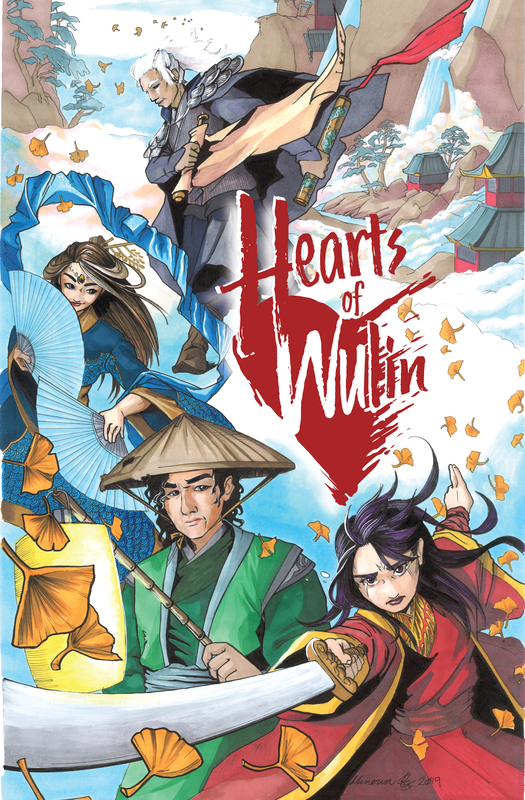
Hearts of Wulin is Gauntlet Publishing’s PBTA game of wuxia melodrama – swords, romance, and, crucially, inner conflict. A lot of the APs available (and there are loads on the Gauntlet’s YouTube channel) focus on campaign play – so I sketched out a one-shot and ran it twice. Once face-to-face, at Revelation, and once online at Virtual Grogmeet 2022.

While you’re reading this, I should tell you about my Patreon. Patrons get access to content 7 days before they hit this site, the chance to request articles or content, and the chance to play in one-shot games, for a very reasonable backer level of £2 per month. If you like what you read, want to support the blog, and have the funds for it, please consider supporting here. Telling people about the blog, and sharing links/retweeting is much appreciated also – thanks!

Revelation is a PBTA con (report here), so I was assuming some relative knowledge of these kind of games – so we did character generation at the table, exactly as in the book. The notes below assume this. For Virtual Grogmeet, I couldn’t be as sure (and indeed, I had one player entirely new to PBTA) – so, inspired by the Avatar: Legends adventure book, sketched out some pregens.

Entanglements are the Bonds / Hx / whatever of Hearts of Wulin, and they’re absolutely key to getting the sorts of games it generates – in play I think the plot was about 40% external forces, and 60% players pursuing them. They’re really cleverly designed – you get a few to pick from for each playbook, and everyone gets one “general” and one “romantic” one. Each one has one PC and one NPC in it. They took a bit of time at Revelation, so for the second play-through, I sketched them out – picking the NPC but allowing the players to choose which PC they wanted in it.

For example, one of the PCs, Eagle Sentinel, an Aware (Travelling Teacher), had the following Entanglements:

  • I love Wu Chao (Aunti Wu’s ward), who I have overlooked too long; now they love [PC]
  • I suspect my friend [PC]’s parent is the villain White Fang Chu

They could, of course, swap the PC and NPC positions in these. This worked really well to get everyone on the same page quickly, and they always lead to excellent play. One tip if you’ve only got 3 players (which I had for both games) is to read the familial ties loosely – siblings need not be related, parents need be parents in name only – since you’ll have quite a tight web of romance. For Virtual Grogmeet, I used the Gauntlet’s excellent Character Keeper, and just let them roll their own dice.

So, below are my prep notes – I hope these are useful if you want to run it yourselves, or at least it helps for those “how exactly do you prep PBTA?” questions.

Auntie Wu’s Tea House

A One-Shot for Hearts of Wulin

Nestled in an isolated pass, the only route through the World’s Edge Mountains for miles, Auntie Wu’s has been a staple of the Wulin world. Warriors come to meet, drink tea, and … occasionally… to fight. But now, with the Army of the North massing behind the World’s Edge, you’ve been sent to persuade Auntie Wu and her household to withdraw – for surely the Army will overrun her. Will she listen to her? Will you obey your orders? Who among the encroaching army do you know already, and why did you not expect to fall in love with them again?

PCs & Setup

Follow the usual procedure after creation (no extra moves yet)

  • Go round and introduce their PC’s look and style
  • Go round and do Entanglements 1 each. Make a note of any new NPCs – the others can be on the table with their descriptions. Note that each Entanglement must involve 1 PC and 1 NPC
  • Choose a Bond with 1 of the characters in each Entanglement

In the opening scenes, get any extra NPCs on screen ASAP.

TWO PCs (A and B) have been sent from Magistrate Chen with a message for Auntie Wu – the army is already engaged on the Eastern Front, and they should fall back. Auntie Wu should evacuate her tea house and flee.

A – Why have you been trusted with this mission, and B – why are you reluctant to carry it through?

TWO PCs (C and D) have just escaped from capture in the Army of the North, and have been creeping up to safety

A – How did you escape from this mighty army, and B – what is their greatest weakness?

Opening Scenes 

In both of these make sure to bring in any additional NPCs from Entanglements as soon as possible – 

We begin with A and B as they settle in at the tea house and are brought soup. They can see the tea house shift into the evening, as baiju and beer is brought out, and Stone Ox Wu approaches them

Will you share your mission immediately, or wait and enjoy the hospitality of the evening?

Stone Ox Wu approaches them and asks their business – he then asks them to drink with him! This could well be an Impress move, or perhaps a Hearts and Minds if they stake their mission straightaway

Meanwhile, C and D are approaching from the North, climbing through the mountains. As they move through the quiet village towards Auntie Wu’s, they are not alone – there are soldiers here, carrying weapons and fire sticks. It seems that they are interrupting an ambush!

Do you alert the inhabitants or take out the ambushers yourself

As the ambush strikes, the tea house roof is (probably) set on fire – an Overcome move to tackle. Hordes of soldiers provide more than enough for some PCs to Deal with Troops, and they are led by Peerless Falcon and/or Sergeant Cheng and any other NPCs who could conceivably be with the Army of the North

Middle Scenes

After a period of respite,

  • The PCs could get aid from the Bandits, led by Number One Sword – could he help to protect, or shelter the villagers
  • They may want to seek help – or wisdom – from Harmonious Jade in his monastery
  • Both of these could provide allies 
  • They could investigate and try and sabotage the advancing army. The outer camps are run by Sergeant Cheng who has them in good order but could be convinced
  • Encourage them to also pursue their Entanglements, and remember to trigger Inner Conflict when appropriate

Possible additional “bangs” for these scenes include

  • Auntie Wu / another NPC has fallen ill! She needs herbs from the gardens at the foothills – near the army’s camps… or maybe Harmonious Jade can help her
  • Constable Cheng arrives, angry at A and B for failing to carry out their orders – why has the village not been evacuated?
  • Betrayal is discovered! A guest left an army seal, and a map of the grounds has been found on a messenger. Should they be punished or sent as a message?

Finale

The likely end point is a pitched battle – try and pair PCs off with potential scenes individually, including rallying the peasant army (Impress would be the move for this), fighting various NPCs or Troops, or dealing with betrayal

Possible Finale Bangs include

  • An ally (Number One Sword / Wu Chao / Stone Ox Wu) switches sides – for reasons established in previous narrative – can they be convinced of their error or punished?
  • Fire sticks! The houses around the Tea House are on fire! Villagers panic and rush to save their belongings instead of defending against the army
  • Any remaining Entanglement NPCs show up and cause trouble

NPCs

Auntie Wu, middle aged proprietor – wants only for things to stay the same, her tea house to be safe, and her daughters to be happily married off

Hunchbacked, carries a tray of tea or a walking stick

Sensory: The smell of jasmine, a calming influence

Schtick – crouch low and hunchbacked and nestle your hands around an imaginary cup of tea

Wu Chao, Auntie Wu’s neice – wants to escape her Aunt’s clutches and seek adventure – which probably doesn’t involve being married

Beautiful, porcelain-skinned, fights with flowing robes

Sensory: Serene and quiet, with a twinkle in her eye

Schtick: Winks conspiratorially at anyone (e.g. the PCs) who might be fun

Number One Sword – chief of the World’s Edge bandits, wants his tribe to be safe and money and riches

Bearded, powerful, wields a curved blade with symbols down its length

Sensory: Shouts orders as he appears suddenly, smells of sweat and booze

Schtick: Sit up straight and shout slightly at all times

Peerless Falcon – Captain of the Army of the North, charged with capturing the pass

SCALE 2 FIGHTER

Slender, armored, glowing – wields a pair of curved knives which he also throws

Schtick: Pauses for thought before replying slowly

Sergeant Cheng – a junior officer in the Army of the North

Stout, careful, taciturn. Wields a curved halberd. Is not entirely convinced of the Army’s cause.

Schtick: Looks worried and plays with his moustache

Stone Ox Wu, Auntie Wu’s son- wants to protect the Tea House at all costs

Huge, bald-headed, angry – wields a massive hammer

Schtick: Bellows and drinks Baiju from a glass whenever he can

Harmonious Jade – monk who lives in the World’s Edge mountains, whose monastery is famously neutral

SCALE 2 FIGHTER

Tall, portly, laughing – quick to smile. Fights unarmed

Schtick: Laughs and giggles at all times

Constable Cheng – imperious busybody constable who just likes to check on order

Fights with a staff

Schtick: Looks down on everyone and everything

If It All Goes Quiet…

Use these options at any time when it looks like there’s nothing going on, or if the PCs are reluctant to engage

Men with Knives!

  • A group of bandits/audacious soldiers have snuck into the camp to steal what they can before the serious looters arrive – have a PC discover them and them be offered a share of the loot

Big Blade Huang

  • A warrior of audacious skill visits the tea house; he has no interest in defending it, seeing beating an army as beneath him
  • Trigger the Deal With Misunderstanding move on p110 of the book (nb this is also where the Deal With Grief move is, which you’ll need if someone wanders off)

Avalanche!

  • The army’s explosives have triggered an avalanche to crush the tea house – can they get the villagers to safety?

The Sixth Revelation – Hearts of Wulin, Masks, City of Mist

Conventions are great. A chance to play games with like-minded people, and to spend time with too much drink, too much food, and not enough sleep. Back in the day, “Con Reports” used to be a thing – forums would fill up with people’s reports of the games they’d played, the fun they’d had, what they had for lunch and how much it cost (the lunch, not the convention – I kid you not). You don’t see them much anymore, but after going to Revelation – the sixth annual(ish) Powered by the Apocalypse convention in Sheffield, I thought I’d write down some thoughts.

While you’re reading this, I should tell you about my Patreon. Patrons get access to content 7 days before they hit this site, the chance to request articles or content, and the chance to play in one-shot games, for a very reasonable backer level. If you like what you read, want to support the blog, and have the funds for it, please consider supporting here. Telling people about the blog, and sharing links/retweeting is much appreciated also – thanks!

Revelation is a weekend event where all the games are Powered by the Apocalypse (PBTA), Forged in the Dark (FITD), or related derivations. After some pushing the organisers, I got confirmation that e.g. Spire, Heart, Belonging Outside Belonging and similar games would work fine – basically, if it’s been informed by the sort of gameplay that PBTA engenders, it’s good to go. Which means, you get a tight range of games, and a group of players that dig shared narrative. Running PBTA at Revelation is less of a risk than at some other cons – less of a risk that the players will plan or turtle, or not want to just play to find out. Of course, after making a fuss about what games were allowed, I ran two ‘classic’ PBTA systems.

This year was about 25-30 punters, five slots, and a mixture of single-session and multiple-slot games. I’m not usually a fan of multi-slot con games as it reduces the choice for everyone, but I can grudgingly agree that at Revelation it makes sense so you can see PBTA/FITD games over a longer period. And I can’t talk, since I’ve run double-slotters a few times at them. Like all the Garrison cons, it’s all about the games – there are no seminars or other events, so the norm is to play in every slot – I like this, play is the centre of the hobby and the most important thing we do. We should be going to conventions to play, and conventions should be putting play at the centre of everything.

I ran a double-slot two-table cross-universe game of Masks with my co-MC Neil, and a single-slot game of Hearts of Wulin. I also played  City of Mist in a single-slot game. I’ve split my thoughts into con practicalities (no lunch prices, sorry) and games thoughts, so here goes:

Practicalities

  • Cons are great, and venue matters. The Garrison hotel is almost the perfect place for an RPG convention, such that a few minor changes were noticed – no standing lights in the cells, for instance, and some confusion over the Saturday finish times. That said, I still love running in the cells, and I’m sure at other venues I’ll notice how much better the acoustics are in your own little nook (even if what you gain in audio is sometimes sacrificed in visual in the dim lighting).
  • Sharing a room at a con is great. I’ve become a bit of a solo con-goer in recent years, but I shared a room, which made a much more convivial (although perhaps more boozy and less sleep-filled) weekend. I might have convinced myself back towards it. It was also handy for Masks prep as we could sketch out plans over breakfast.
  • See comment re lighting above – the print on some PBTA playbook sheets is tiny! Print them out A3 in future for a convention, or make your own simplified ones. Similarly, I should have folded my Masks sheets before distributing – if you don’t the booklet for moves starts with the Adult Moves, which you aren’t going to be using.

Games

  • PBTA is varied and diverse! Even disregarding FITD and the other splits, I played three very different games over the course of the weekend in terms of structure of play and player experience, what’s expected of players, etc. City of Mist is, as far as I can tell, pretty close to a trad game – with just enough flexibility in the tags for different approaches and player-driven spontaneity. Hearts of Wulin is entirely at-the-table; my prep was only a backdrop to the melodrama that unfolded. Masks sat somewhere in the middle, but some of that was the necessary structure for us to run parallel games across universes.
  • Multi-table games work, and are a lot of fun. They do rely on the two GMs being comfortable with about the same amount of prep work though, and luckily we were (both of us have also run ‘vanilla’ Masks quite a bit too). We had two parallel universes being combined (the All Star Society and the All Star League) and the teenage heroes (All Star Juniors/Juniorz) having to save the day. At the midpoint – the end of the first session, a failed merge of the universes meant two players swapped tables – and there was more player exchanging to come. The villains of one universe were the hero mentors of the other – it all sounds complicated until you realise we just ripped off Crisis on Infinite Earths. All great fun, and good to push the boat out for a showcase game.
  • Fewer players isn’t always best. Because of a drop-out I had 3 players for Hearts of Wulin, and I think it would have been cleaner with 4 – certainly, the Entanglements were head-scratchy as everyone had to be linked to everyone else. Everyone filling them out at the table was harder than I thought, too – I’m tweaking my prep to run it again at Virtual Grogmeet, and I’ll pre-populate some of them with NPCs to help.

So, there are my Revelation thoughts. Why did con reports fade away? If you’ve got any ideas, let me know below – and if you’d like to hear more about any of the games let me know in the comments.

Review: Are You Thirsty? – Thirsty Sword Lesbians

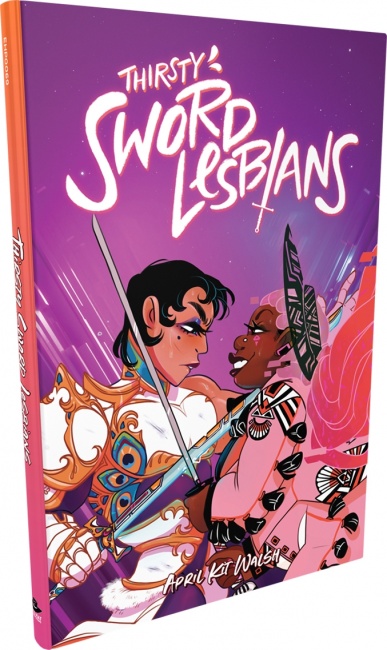
Thirsty Sword Lesbians (TSL) is a Powered By The Apocalypse (PBTA) game from Evil Hat, designed by April Kit Walsh, of swordplay, queer action hijinx and romance. While this genre might sound weirdly specific, it actually covers a really wide range of genres, while staying really consistent in the kind of adventures you can have in those genres.

While you’re reading this, I should tell you about my Patreon. Patrons get access to content 7 days before they hit this site, the chance to request articles or content, and the chance to play in one-shot games, for a very reasonable backer level. If you like what you read, want to support the blog, and have the funds for it, please consider supporting here.

PBTA games really sing when the Moves and Playbooks can tightly support the genre they emulate – I don’t think there’s a better game for teenage superheroes than Masks, for instance, nor slice-of-life Coronation Street petty crime than The ‘Hood. TSL manages to tightly support the play style it shoots for, while still offering a wide range of options. This does potentially make it trickier to one-shot successfully – but I’ve offered some suggestions in the relevant section below about how to make it work.

The Fluff

The link above takes you to .pdf – but it is in print as well at retailers such as Bonhomie (UK)

Within the general style of “sword-fighting romance-seeking lesbians,” everything else is pretty flexible. There are six campaign settings ready-made in the book, from steampunk freedom-fighters to cyberpunk revolutionaries, and six scenarios – shorter-form, more “plotted” games. There’s also a guide to drawing up your own settings and ensuring they match the play style of the game.

Continue reading →