I’ve been grooving on Fabula Ultima, a JRPG-style system with simple, flexible rules, since it released. As well as a nifty set of rules, it also has hands down the best quickstart I’ve ever seen, which takes players and GM through the rules, setting, and play culture of the game hand in hand and step by step.
Continue reading →Tag / one-shot
Diceless Doom – Review: HUNT
From Spencer Campbell’s GILA RPG’s, home of the LUMEN system, comes HUNT – a diceless one-shot system of doomed beast-hunting knights. It’s a flavourful mix of shared narration and tactical combat, and well worth checking out if you want a one-shot narrative system to use at a convention or game night.
Continue reading →Guiding the Ironlands – how to run Ironsworn as a One-Shot
Ironsworn, Shawn Tomkin’s RPG of dark fantasy with solo, guided, and GMless modes, is one of the most exciting releases to the hobby in recent years. With its sci fi sequel, Starforged, now established it’s beginning to get some decent play on the convention circuit – and it plays really well with a GM (in ‘guided’ mode) as well. So here are some tips if you want to get it to the table.
Continue reading →The Fire In Men’s Hearts – a mystery for Vaesen
Vaesen: Spirits and Monsters of Mythic Ukraine is a fantastic, pay what you want, supplement for Vaesen that brings a wide range of Vaesen from Ukraine to the game. Illustrated by a selection of artists, it’s a good old fashioned bestiary. Each Vaesen has several plot hooks and ideas, and there’s a real range here.
After meeting Tasha and Oleg from Idea Roll over at The Kraken, at Unconventional GMs we recorded a mystery based on one of the Vaesen from the book, and here’s my (largely unedited) prep notes to run the mystery. The recording is over on the channel here – it comes in at just over 2 hours of play, although it could easily be a 3-4 hour game with a bit less pushing and pace. Over on the channel we’re trying to demonstrate how much you can pack into 2 hours – at your own table you may want to luxuriate a bit.
Continue reading →Chang’an Critter Carnival – a Ready-to-Run Feng Shui 2 One-Shot
Apologies for the slight delay in posts – in short, I got covid just as I started a new job. But normal service resumes! Here, a one-shot set in the Ancient juncture for Feng Shui 2 that was originally prepped to run for Robin Laws himself! (Sadly, his attendance at Kraken was prevented)
As before, I’ve presented this pretty much as-prepped – feedback earlier was that this sort of rough-and-ready style wasn’t a problem, and gave some insight into what prep notes could actually look like – so enjoy and let me know if you’d like more ‘official’ stuff instead.
Continue reading →Into the Wasps Nest – a 13th Age Glorantha One-Shot
I’ve just got back from The Kraken, the best 5 days in gaming, in Germany. I ran two 13th Age Glorantha games, and this is one I didn’t run but took along with me. I ran it first five years ago at the Furnace convention, and it’s a great way to use one of 13th Age’s ‘signature monsters,’ the Goblin Bat Cavalry, in a Glorantha game. So here it is!
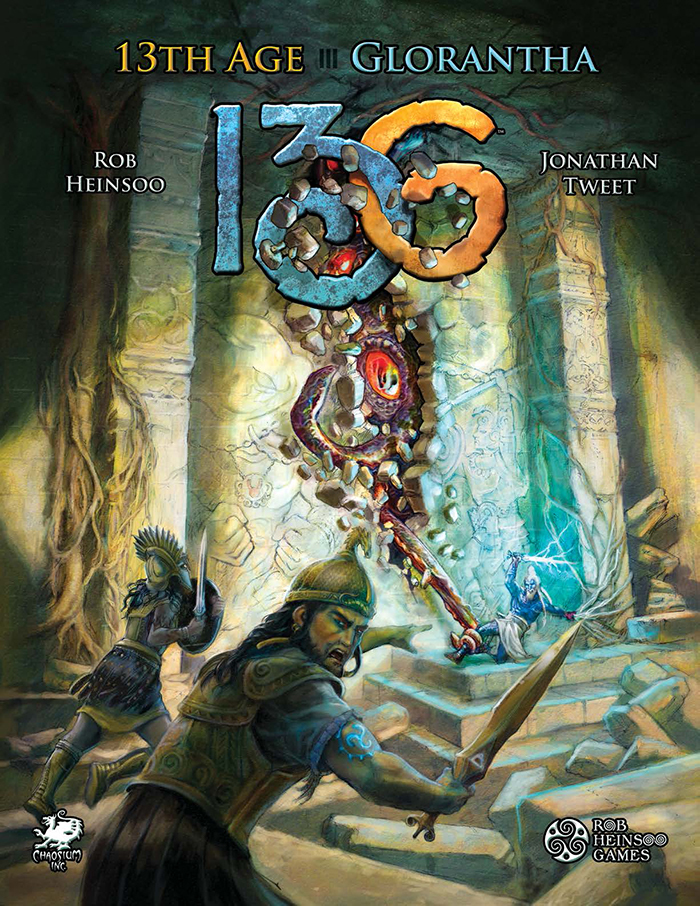
It’s balanced for 5 2nd level adventurers; Patrons have access to a set of pregens for this, which makes it truly ‘ready-to-run’.
Patrons get access to content 7 days before they hit this site, the chance to request articles or content, and the chance to play in one-shot games, for a very reasonable backer level of £2 per month. If you like what you read, want to support the blog, and have the funds for it, please consider supporting here. Telling people about the blog, and sharing links/retweeting is much appreciated also – thanks!
Into the Wasps’ Nest
A 13th Age in Glorantha Adventure for 5 2nd-level PCs
first played at Furnace 2018
Introduction
Deep into the siege of Whitewall, your Sartarite comrades hold strong against the coming hordes outside. But rumours of the Crimson Bat awakening mean they are in dire need of air support, and so the heroes are dispatched to find out what happened to the Wasp Riders, pygmy riders of giant wasps. The last person to deal with them, you realise, is the hero Crontas – but he was last seen heading towards Troll Woods to broker a peace with the trolls there. Can you rescue Crontas and escort him to negotiate with the Wasp Riders?
Dramatis Personae
Orana is the current leader of the Sartarites in Whitewall. A tall, stout woman, she smokes a pipe filled with pungent tobacco and, while determined to never surrender to the Lunars, is a pragmatist – which is why she favours sending the heroes to negotiate instead of her soldiers
Crontas is a ‘legendary’ duck hero. He talks a bit like Peter Falk in Columbo, and is incredibly cowardly until he is persuaded or flattered into action. He’s a lovable goof, but a little older and calmer (if not wiser) than he has been in other adventures.
Gruk is the leader of a band of Kitori trolls in the Troll Woods. He has adopted Crontas as a jester, and doesn’t want him to leave.
Essa and Iva are the rightful leaders of the wasp riders. They are currently under the sway of their older, and angrier, brother Yani. They are friendly with Crontas, but have been captured by their brother
Yani is an exceptionally short, even for a pygmy, wasp rider who was insulted by Crontas when he last visited Wasp Nest. He has taken over leadership of the tribe and wants nothing to do with the Sartarites.
Scene One – In Whitewall, The Heroes
Whitewall is a near-impregnable fortress that is currently surrounded by a half-hearted Lunar army legion. The Lunars are just about able to maintain the siege, but it is certain that Whitewall has enough defences and supplies to hold out for years if needed. Orana summons the heroes to her war chambers, filled with tobacco smoke, and explains the circumstances.
She needs to be able to call on the wasp riders for aerial support, and they are currently refusing and contact. The last ‘diplomat’ she sent was most recently sent into Troll Woods, so she wants them to make contact with him, persuade him to accompany them to Wasp Nest, and negotiate with the wasp riders.
She begins by asking the heroes of their previous heroics – each player should recount a tale of their band, in which they made a heroic act, finishing off each others tales. With this, they are sent on their way.
Scene Two – Lunar breakout
If needed, and if time allows, the heroes encounter Lunar resistance as they exit Whitewall through the tunnels. At 2nd level, this is six Dara Happan Legionaires and a Dara Happan Veteran (p310-311 of the 13G book)
Scene Three – Into Troll Woods
The heroes must now venture into the Troll Woods. These woods are full of Kitori trolls, humans that transform into trolls. Ask for a relevant DC 15 background check – success means they are able to creep up on Crontas, failure means they are ambushed and taken by the trolls to their leader, Gruk.
At Gruk’s cave, they see Crontas – an energetic Duck armed with a wooden broadsword – demonstrating his heroics to a group of onlooking Trolls, who chortle and applaud every time they hear a good bit. A DC 15 background check will reveal that they are much more laughing at him than with him.
Crontas is keen that his roll as ambassador to the Kitori trolls is vital – he is educating him in the ways of the world, just like Lhankor Mhy would. He even shows them a ridiculous beard he has fashioned for himself. He must be persuaded to accompany them – the trolls are much more fun than the serious wasp riders – even though he has been there before and will speak of Essa and Iva, and his great friend Yan, from his time with them.
It’s possible that they will have to break Crontas out if they manage to offend the trolls; if that’s the case, here’s a troll squad ready to fight. It’s 3 dark troll warriors and a troll spirit priestess (13G p295-296). These could also be an encounter on the way out of the forest, if time allows or the players look like they need it.
Scene Four – The Approach to Wasps Nest
Crontas tells them that a frontal approach to Wasp Nest is suicide – the wasp riders defend their borders forcefully, and he isn’t sure that they’ll recognise him even though the are of course great friends. He instead suggests skirting round the foothills near Dragonrise; there have been increased chaos incursions there, which mean both the Kitori and the Wasp Riders are probably steering clear.
Run this scene as a montage as in the GM’s kit. They start in the midst of thick forest with warring troll tribes all around them; they will hit the foothills soon. Any and all chaos beasts – even dragonewts – are fair game, but there will be no skill checks made.
Scene Five – Ziggurat of the Wasp Riders
As the players approach Wasp Nest, they are greeted and warned by a pygmy who approaches them – she is Essa, living out in exile. She tells them that Yan has taken control of the throne and has forbidden the wasp riders from having any contact with humans – or especially Ducks. Crontas is confident that him and Yan were great friends, but he does admit that he was sometimes the butt of his jokes. Essa pleads with them to defeat Yan and free her sister Iva, who is being held captive after she stood up to him.
They can confront Yan at the throne room. As they challenge him, Wasps Swarm around and they must face his elite guard.
The fight is with 5 wasp-riders and 1 wasp rider shaman – this could be a tough battle, so be prepared to adjust on the fly if needed. Wasp-rider stats are from the 13th Age Bestiary – p235-6 have the monster list with references for them.
Scene Six – Return to Whitewall
With Essa and Iva restored as the leaders of Wasp Nest, they are happy to lend their aid to Whitewall – the heroes can return atop the giant wasps as they see another huge red bat appear in the distance!
“I hit it with my axe” – fostering better player narration in TTRPGs
Player narration lies at the heart of top-class game sessions. As the Bakers say in Apocalypse World, roleplaying is a conversation, and when only one side (or neither side) are contributing much, it can feel flat. Even in the most trad game, when players describe their characters actions, it lands better if they add some flavour to it. Compare:
- I pick the lock to the door with the demon face #rollsd20
- We see Cherbol pressed against the door, his face to the carved demon, as he carefully rotates the picks in his hands, elf-ears pricked up to hear the click #rollsd20
Deeper player narration, or even action description, leads to a more engaging and exciting table. So what techniques can we use to foster it?
While you’re reading this, I should tell you about my Patreon. Patrons get access to content 7 days before they hit this site, the chance to request articles or content, and the chance to play in one-shot games, for a very reasonable backer level of £2 per month. If you like what you read, want to support the blog, and have the funds for it, please consider supporting here. Telling people about the blog, and sharing links/retweeting is much appreciated also – thanks!
Start Simple
I’m going to try for some definitions here. I’ve written previously about giving players more narrative weight in games, and some of these techniques foster a different kind of player narration.
Action Narration is where a player describes what they’re doing – it can be as simple as the first example above, or developed further.
- I step towards the door and, mindful of the demon face, slip my greased lockpicks into the lock and begin to turn.
Scene Narration is where the player sets the scene as well. The second example above is a possibly over-flowery example of this.
Some players, tables, and GMs don’t like scene narration from players. That’s fine, to a point; although if you’re playing a game like Feng Shui or FATE some scene narration is embedded in the game mechanics so I’d strongly advise you to use it – but some people prefer a harder distinction between player and GM. Occasionally people talk about “Immersion” and say that scene narration is ruining gaming, and they take issue with other people using it – these people are idiots, so back away slowly and ignore them.
If your table doesn’t want to push towards scene narration, start them out with action narration – and use some of the techniques below to encourage it. If they’re brand new, and/or you’re happy with it, go straight for scene narration – even completely new players will often find it just as easy to work with
Techniques to Use
There’s no one fix for this, but there are a few you can try to encourage this. I’m not at all a fan of
Ask For It – any time a player wants to half-ass some action description, you can always ask for a bit more from them. I use this particularly if they’ve given almost no description at all, or if they’ve stated a game action instead of fiction
- Can I roll Acrobatics?
- Of course you can! What are you doing when you roll it?
Ask for a Bit More – particularly in open-skill challenges or extended tasks, asking for more flavour is also allowed – particularly if there’s a stretch to it
- I’ll try and find a cure for the virus
- Great, it’s probaly Reason+Science – can you give me a bit of flavour about what we see your PC doing?
Describe Locations Loosely – make the setting of scenes you describe flexible and open to player input. This includes using theatre of the mind whenever you can – there are some GMs online who’ll put out gridded maps all the time, even for non-combat encounters, and it’s really hard to not take the details on those maps as immutable fact (hey, there’s three barrels to the north- what’s in them?)
- You’re in the back of the warehouse. You can see the goons are about to unload. There’s teetering piles of boxes, shelves, an idle forklift truck, and a workbench with some tools on it. You look like you’ve got the drop on them – what do want to do?
Give Permissions Generously – if a players asks if they can do something, with any sort of narrative justification, default to YES unless you think it’ll grate with the rest of the table. Want to use Command to inspire the science team to help defeat the virus? Of course you can. Want to Force open the door instead of picking it? Yeah, that works – a skill roll’s a skill roll.
If you’re worried this will lead to players using their best skills all the time, the fix for that is that unusual approaches usually only work once – and sometimes I’ll even (with players with particular penchants for stretching) say they can only do it once per session. I also have some hard limits on what can be done. When I’m running Star Trek Adventures, you can pretty much use whatever on an Extended Task if you can narrate it in – but when you fire a phaser in combat, it’ll always be Control+Security.
What To Avoid
There’s some other approaches I’ve found less successful, and in particular one very common one. Don’t give bonuses for extra description or exciting narration. Your mileage may vary, but my experience is that player rewards for “good roleplay/narration” just reinforce a GM-in-charge attitude that undermines the other approaches. It’s not a good-roleplaying doggy biscuit. Cool player narration should be the standard, not some unusual extra effort they’ve made so they get an extra dice.
An exception to the above is where games come with some sort of ‘fan mail’ mechanic where the whole table has a resource they can use to reward – this can really work, and gets everyone engaged in the process.
Similarly, where possible default to the same difficulty and approach as if they’d made the roll normally. If they want to get past the guards by causing a distraction by spooking the horses with Animal Friendship, cool – it’s the same difficulty as the Stealth check they’d make to sneak past, or the Deception check to lie to them. You’ve got to apply a reasonableness test at times, of course, but if you’re defaulting to yes and being generous, your players will realise this is only a one-off ruling and it won’t put them off being more inventive in future.
So, some ideas for encouraging player narration. What do you do at your table? Let me know any that I’ve missed.
Bad Player Habits – And How To Avoid Them (Part Two)
A while back on twitter I posted about one of my gaming bugbears (not the furry kind) – players avoiding risk when the rest of the group is embracing it. This led to part one of this post, where I looked at Risk Avoidance, probably the biggest – and most frustrating – Bad Player Habit (BPH). Now it’s time to look at the other two big BPHs – Revisiting and Un-Roleplaying.
While you’re reading this, I should tell you about my Patreon. Patrons get access to content 7 days before they hit this site, the chance to request articles or content, and the chance to play in one-shot games, for a very reasonable backer level of £2 per month. If you like what you read, want to support the blog, and have the funds for it, please consider supporting here. Telling people about the blog, and sharing links/retweeting is much appreciated also – thanks!
Remember, this isn’t me dicking on noobs – in my experience these are always done by players who should know better – experienced roleplayers who probably do this every single game. And, again, whenever I’ve seen this it’s been one player not realising the effect they’re having on the rest of the group – maybe spotting these is something players should think about too.
Revisiting
GM: Right, so you’ve discovered the Ruby is in the Caves across the Desert of Ja’darr – and secured a guide who thinks he can trick a roc to get there. So as you creep across the mountain to the rocs nest….
Player: Wait, before we set off I want to talk to the merchant again. What does he know about rocs?
GM:….
Player: And does he have any more clues about the Caves?
GM:….
Player: Also, I want to buy a new sword.
This is the enemy of pace, and it can be frustrating for everyone at the table. It’s not hard to see how it develops – some types of games reward methodical analysis, and risk missing important pieces of information if every room is searched and every possible witness interrogated. These types of games are rubbish, by the way – avoid them.
How To Avoid It
One way you can mitigate this is by being clear when all the information is extracted – “so, the merchant has told you everything,” and even add in whatever in-game reason to prevent further investigation “well, the sun is nearly down, I’d better pack up for the day – I cannot talk any more!” Do this in-character first, and then move to direct, in-game if the hint isn’t taken. It’s also fine to say no if the player wants to go back in time – if everyone else at the table, including you, wants to move to the next scene, you can certainly go to the next scene.
The passage of time also helps – I think having a pace in investigative games of each location, clue, or witness taking at least half a day is a good pace to start with. Prep your clues sufficiently far apart to support this, and any investigation game needs a looming countdown or other pace-setter to help investigation be done at speed.
Un-Roleplaying
GM: The merchant eyes you across the table… “Aye, I could tell you how to cross the desert, but I promised to never speak of it to outsiders again…”
Player: We knew he’d say this. Can we bribe him?
GM: …
Player: Why doesn’t he want to speak to us? I’ll Intimidate him (rolls dice)
GM: “Outsiders must never discover the secrets of Ja’darr…”
Player: Is 16 enough? Will he tell us now?
Look, I get it. There are some players who do not want to talk in character. I have a particular balance of tastes about the amount of in-character talk at a table, and I’m left cold by the lengthy in-character discussions that some streamed games have (it’s an audience/player distinction, though – I get why they do it). But you can get players who will actively resist any kind of character interaction, including just saying what their player
But if you get just one player who actively resists talking in character, it can mean nobody at the table does. And while we all might have different tastes, I’d like more than zero of it in a session. If they really don’t want to, narrating what they say is fine (“I ask him what his problem with outsiders is” is a way round that doesn’t interrupt the rhythm of the game).
How To Avoid It
So how can we encourage a bit of in-character talk? Well the first thing is by baking in some character relations in our pregens or session zero process. If they’ve got some stuff to talk to each other about, they might actually do it. The other is by having some NPCs to start the conversations, who can ask in character for players to respond to. Having some sort of feckless ally travelling with them into the dungeon is a great way to make sure there’s some in-character chat even in the most barren of RP landscapes, and they can provide a helpful Greek chorus-echo of what’s going on.
The amount of in-character chat is a good thing to handle at the start of a one-shot or in a session zero, too – getting this element of play culture aligned is really crucial.
So, there’s the top three BPHs covered. Do you have others? Or are some of these acceptable at your table (let me know, I can pass some players your way at the next convention we’re both at!) Let me know in the comments below.
Prep Techniques: Dilemmas
Credit for this technique goes to the game in which it is most explicitly modelled, John Harper and Sean Nittner’s Agon – a game of Greek heroes travelling home by way of a series of perilous islands – and each island begins something like this:
- Will you command Meletia to use the island’s gold to restore the ruined temple of Hera and receive divine protections? Arts & Oration vs. Meletia.
- Or will you command Ionestes to cease speaking false promises of divine aid and instead support the construction of practical defenses? Arts & Oration vs. Ionestes
(Agon, Isle of Kryos)
Each choice offers a chance at resolving the conflict introduced, and taking sides in an ongoing dispute – the following scenes will differ depending on which approach they take (and whether or not they are successful). These happen right at the start of the adventure, as the players arrive in the isle, and thrust them directly into the action. But there’s no reason we shouldn’t use these with other games, and they’re a really effective way of launching a session.
While you’re reading this, I should tell you about my Patreon. Patrons get access to content 7 days before they hit this site, the chance to request articles or content, and the chance to play in one-shot games, for a very reasonable backer level of £2 per month. If you like what you read, want to support the blog, and have the funds for it, please consider supporting here. Telling people about the blog, and sharing links/retweeting is much appreciated also – thanks!
Why They Work

They give players clear options and genuine choices and let them engage with the adventure immediately. Particularly for one-shots, it can be easy to start with a fight that is just thrust upon the players, and they can feel like they’re just setting off on a railroad – this gives them a choice right at the start. There’s also no need for them to be limited to the options you’ve suggested – they can come up with their own approach, but you’ve given examples to help them make that decision.
By choosing one option, they also cut off the other, and there will be NPCs on each side that will want to engage with them to resolve the choice. Ultimately, either choice might lead in similar directions, but how that direction appears will be coloured by their choice – and whether or not they are successful.
How To Prep Them
Begin with your initial scene and think of a couple of ways they can be resolved. This doesn’t have to be amazingly original – your players may come up with other choices, too, when you’ve shown them two, and that’s fine. Have an immediate call to action inherent – either a threat to something the PCs care about, an ongoing mission that will take them directly into this conflict, or a personal link to the issue.
Then, give some thought to how each option could be resolved. Try to make them equally exciting – you might balance a combat with a skill challenge of some sort, or a series of skill rolls with accompanying risk. They don’t have to be equally difficult, of course – but try to avoid offering an obvious answer to the dilemma.
Examples
Let’s say you’re prepping the most vanilla D&D plot ever, of a village in danger because of raiding goblins in the forest. You’ve, correctly, thought to start with an encounter with bandits on the way to the village – who are desperate because of the goblin displacement and could even be useful to find the goblin camp later – and had originally planned for them to leap out and attack the caravan they are guarding.
Instead, let’s have the PCs come across a robbery in progress. Around the corner, they see a merchant being turned over, with crossbow-wielding bandits in the trees above trained on them as they try to bargain with them. The merchant in front is clearly having none of it, and it looks like it could turn nasty – he hasn’t seen the robbers in the trees.
Do you charge in and intercede on his behalf, and try to cow the bandits with your force of arms and courage?
Or do you sneak around and dispose of the bandits in the trees to even the odds?
Or perhaps try and tackle the leader by surprise before his archers have a chance to react?
We’ve got a trilemma there, and although most of them probably lead to combat, it’s a much more vibrant and interesting initial scene. We’re assuming that heading into the forest to avoid the bandits isn’t an option – if it is, there’s always goblins to tackle them.
In cases where the PCs have a clear mission, your dilemmas can be more like options for them to pursue. For instance, if your PCs have arrived at a party to steal a crown from the host, we should add a bit more action. So begin with them seeing a drunken guest causing trouble, about to challenge another noble to a duel.
Do you attempt to sneak behind the scenes straight away, looking for a route upstairs while the guards are distracted?
Or do you intercede on either nobleman’s behalf, trying to create more chaos and maybe win some allies here who might know about the crown?
It’s an interesting challenge to try and add this to a session you’ve already prepped – particularly in the initial scene, where it will have the most impact. As I said, for more examples, look at Agon or the Paragon family of games, who all model this excellently. Have you used dilemmas in your games during the starting situation? Let me know in the comments.
Trindie Goes Mainstream – Review: Candela Obscura Quickstart
You’ve heard of Critical Role, right? In the wake of the OGL fiasco, they’ve started diversifying – leading to Darrington Press, their publishing arm, putting out Candela Obscura, an occulty trindie-ish narrative game with some interesting DNA. It’s got a fantasy steampunk setting, mechanics that are a drift from Forged in the Dark (FITD), an adventure structure that tips a hat to Vaesen, and a free, high-production value, quickstart you can get here.
There was a flurry of commentary about it on release, about how they’d failed to acknowledge their FITD base (now addressed in a later release), about how loose some of the rules were (I mean, it is a quickstart), and how this will either alienate CR fans or open up a great doorway to more narrative games for them.
While you’re reading this, I should tell you about my Patreon. Patrons get access to content 7 days before they hit this site, the chance to request articles or content, and the chance to play in one-shot games, for a very reasonable backer level of £2 per month. If you like what you read, want to support the blog, and have the funds for it, please consider supporting here. Telling people about the blog, and sharing links/retweeting is much appreciated also – thanks!
But to really judge a game, you’ve got to play it – so I did. And you can watch it soon, on Unconventional GMs – so keep an eye out for that. I ran the quickstart in just over 2 hours with 4 players, and it was – I think I’d speak for everyone – more fun than we expected. So here’s my play-informed review of the quickstart.
The Setting Is Great
Fantasy steampunk stuff, in the shadow of a recent war, gives plenty of scope for exciting occult stuff to investigate. The titular organisation you work for deals with occult threats, so you’ll be sent to resolve them, and there are a couple of rival/enemy organisations that fit together nicely. There’s a big city on top of the monster-infested ruins of the previous civilisation, some other locales to investigate with towns and villages and stuff, and a good mixture of detail and speculation.
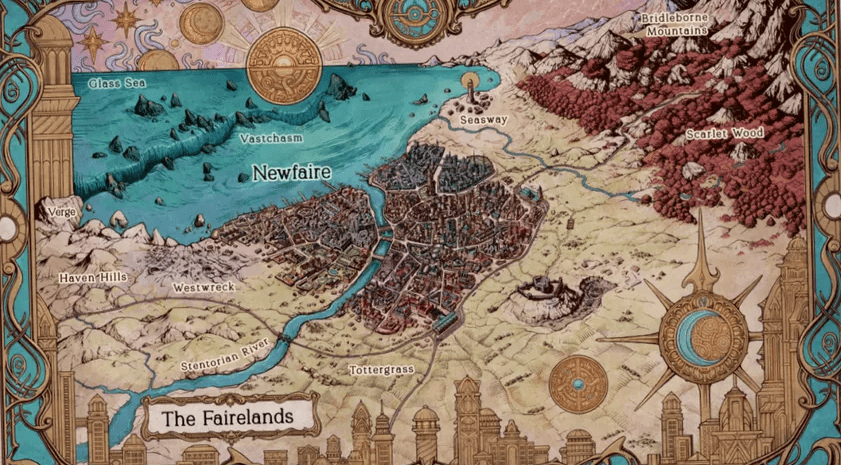
There’s also an edge of oppression, with the church, the state, and in particular the police force – the Periphery – very much cast as enemies of the people. I like this, and to be honest even if all it does it put off the “keep politics out of games” mob, that’s a win for me. All in all, there’s loads going on in the setting, and it’s got loads of “PCs do this” ideas in it to make it easy to think up adventures for.
The System is Decent – and Feels Different to FITD
There’s quite a few tweaks and drifts from classic Blades to keep you on your toes – my concern running it was defaulting to rules from Blades (particularly as my group had all played and run a lot of Blades). You have Gilded Dice, Resistances, and Drives which can all be spent to boost – this felt like it might be one too many extra resources, but in play it worked fine.
The damage system felt good – Marks accumulate in different areas and turn into Scars on the fourth Mark – although it didn’t give as much peril as I’d like – maybe I was a bit soft on them in not doing more than one Mark at a time. Maybe this’ll be revisited in the full rules.
All in all, it felt like it might be better for a short run or one-shot (it’s probably, whisper it, better than standard FITD for a one-shot) – although, again, we’re playing with the quickstart so there may be many more options in the full book.
The Adventure Presentation is Terrible
We played through Dressed to Kill, the quickstart adventure, and this was the strangest part of the game. Its presentation has a really strange approach that makes running it significantly harder than it needs to be. The adventure itself is great in terms of concept, plot and structure – and leads to a satisfying showdown, but it often came up short in terms of what it supplies to GM to help actually run it.
The adventure is presented as a sequence of broad, open scenes, with a “Reveal” in each one they need to find to progress to the next one. While the overall sequence is linear, the scenes are open-ended and offer a lot of player choice as to how to pursue them – I’m all for this kind of structure in a one-shot, and each scene has a good combination of hook-riddled NPCs to get some juicy roleplay going.
However, in this flexible presentation, they don’t make it easy. When you arrive at the village of Mordant Springs, the investigation is very much like a Vaesen setting – there’s multiple places they can visit, and several clues they can find in multiple places. Because this is presented as paragraphs of text, though, it’s quite hard to parse what these options are without making your own notes, or where each one could lead. GM guidance is often quite passive, “use a clue below or make up your own…” or offering “opportunities” for them to meet NPCs without a clear idea of what those NPCs might do or offer. And don’t get me started on the NPC (one they’re likely to interact with) with no name. Telling the GM they say “you don’t need to know my name” is insufficient, adventure writers – what is their name? Why won’t they tell them? What’s their deal anyway?
It’s all workable, and I made a few notes (Patrons let me know if you want a copy and I’ll send it out to you) – but for a quickstart that presumably will have CR fans new to running more narrative games reading it, it’s not terribly helpful. A more structured approach would have been easier to grab I think, or alternatively a wholly looser kind of thing where the mystery is presented much more like it would be in a FITD game.
I think it stands up because the overall quality of the adventure shines through, but I do worry this is how they plan to present all their adventures, and they’re designed to be read, not GMed. We’ll see, I guess – if Darrington Press are reading this, please reconsider!
Overall I’m really excited to see Candela come out, and like I said, it played well. Merging some of the narrative / trad approaches is something I’m really into, and I’m excited to see more games embrace this. If you want to see it in action, there’ll be a link here when Unconventional GMs goes live with it. In the meantime, what do you make of it? And are there any other trindie classics you’d like to hear about here?
 Burn After Running: RPG One-Shots