In a week’s time, I’ll be at North Star – a science fiction TTRPG convention. It fills an excellent role in the con calendar, because sci-fi is underrepresented in convention gaming – and it’s easy to see why. It’s got some issues that you just don’t get with fantasy, or even horror, gaming – and the lack of a clear industry leader to hang your expectations around (like D&D or Call of Cthulhu) is just one of them. Sci-fi one shots can be hard to get prepped – and hard to sell to players – here’s why, and what to do about it.
While you’re reading this, I should tell you about my Patreon. Patrons get access to content 7 days before they hit this site, the chance to request articles or content, and the chance to play in one-shot games, for a very reasonable backer level of £2 per month. If you like what you read, want to support the blog, and have the funds for it, please consider supporting here. Telling people about the blog, and sharing links/retweeting is much appreciated also – thanks!
What in the universe is the setting?
In fantasy, you’ve got an easily-referenced source material that everyone understands – a mixed group of ne’er do wells exploring underground areas for treasure. Even when a fantasy setting is quite different to this (e.g. Glorantha) it is easily explained by listing the differences between it and D&Desque fantasy (e.g. talking ducks, lots more cows).
Sci-fi doesn’t have this central reference point. It can be pulpy or gritty, lethal or safe – and it can literally mean anything. Communicating setting and tone is really important – if you’re running a sci-fi genre that isn’t well-known, you should be really explicit about this both in your con pitch and your prep. Go over it at the start of the session as well (briefly!) and cut it to the basic details. Players need to know if they can charge into a group of stormtroopers like in Star Wars, or if they’ll be shot to pieces, like in Traveller.
An alternative, of course, is to run in an established universe that you can expect players to relate to. If you do this, though, remember that not everyone will know all the references you do. At a con, I’d say you can rely on players knowing the broad brush strokes of Star Trek, Star Wars, Warhammer 40K, and maybe Doctor Who as key sci-fi tropes. Any more than that, you’d better be prepared to be explicit. I’ve had people try to explain Blake’s Seven to me more times than I care to remember, and I’m still none the wiser.
One approach is to use an IP you’d hope players are familiar with
Build Your Sandbox with Walls
The other challenge is the sheer scope of sci-fi play. In a one-shot, you want to decide early on in your prep what the geographical scope of play is – a single city, a single planet, a system, a cluster? This, again, needs to be really explicit – while you might want a picaresque jaunt across a few fantastic locations, consider how much depth you can provide to each of them. I’ve run effective one-shots on a single planet (although if you do this, stick some stuff in for the pilot PC to do), as well as in a single city. You might not need all the setting you have – just pick the good bits.
Plot is Still Plot
Similarly, the wide open nature of sci-fi themes can be daunting. Look back to your first step, and consider what kind of game your one-shot is, and how you can promote this. Daydreaming cool scenes and sticking them together works well – for example, for Snowblind, I knew I wanted a Wampa fight and a Tauntaun chase – so I fitted the rest of the plot around them. They also don’t need to be that complicated – exploring a “derelict” orbital structure that turns out to have a deadly alien / rogue AI in it is popular because it’s a good one-shot format – remember the adage (from I think Robin Laws) that in RPGs, cliché is a goodthing.
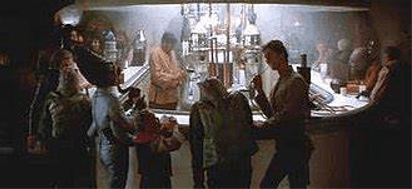
Adding NPCs to give background to the universe helps
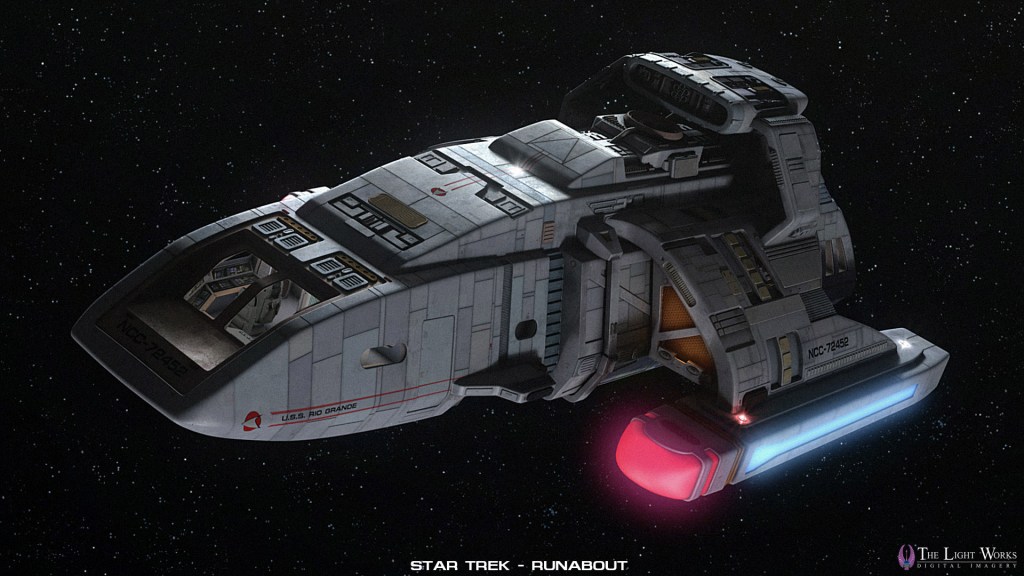
In terms of structuring your adventure, point-crawls are often great ways to build sci-fi one-shots – 5 Room Non-Dungeons and Three Places are also good approaches. Remember to have engaging NPCs – and a good trick is to have the NPCs hint at the broader scope of the game. Your Star Trek one-shot might be all about the Neutral Zone and tangling with Romulans, so having a subplot NPC who’s an Orion pirate or a Klingon captain shows that there’s lots more going on in the universe.
So, three things that are hard about science fiction one-shots; if you’re reading this on the blog, I’ll just be setting off back from Sheffield after North Star – there’s a fair crack I’ll have more to say about this. What successes (or challenges) have you had with science fiction gaming? Be sure to let me know in the comments.
Our heroes are at a remote location, filled with cheerful and innocent NPCs. An army approaches, sure to overrun said location – unless our heroes can stop them! From Seven Samurai to Zulu, it’s a classic plot for fiction – and a great plot for a one-shot. The mixture of fight scenes, roleplaying opportunities, and player agency make it a winner. Here’s how to prep it.
While you’re reading this, I should tell you about my Patreon. Patrons get access to content 7 days before they hit this site, the chance to request articles or content, and the chance to play in one-shot games, for a very reasonable backer level of £2 per month. If you like what you read, want to support the blog, and have the funds for it, please consider supporting here. Telling people about the blog, and sharing links/retweeting is much appreciated also – thanks!
The Place
The place needs to be remote enough that defending it falls to the heroes, not any conventional militia or army. Or, there is an army, but it won’t arrive for several days – if the PCs can hold off the attack until then, the place will be saved. Alternatively, perhaps help won’t come even if it could – the local lord has rebelled against the tyrannical king, or the planet is in a neutral zone stopping a fleet from arriving.
It needs to have enough NPCs to give it a face – make them sympathetic, and as always – three is a good number. Making one of them a sympathiser or a coward is a good move, as this will create complications later – try not to make it the obvious one.
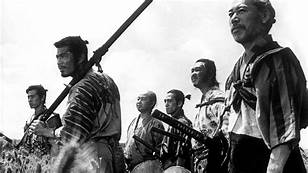
Seven Samurai – well, six of them at least
The Enemy
Although the enemy should be implacable and overwhelming for the place, try and give it a human face that the PCs can interact with – even if it’s a sinister necromancer leading the army of zombies! Be specific about why they want to overrun this Place in particular – do they have a history here, or is it strategically important – why?
Alternatively, make your enemy leader have beef with one or more of the PCs; a past enemy, or an ally of a past enemy, will add some drama to the situation. Look at Auntie Wu’s Tea House, a one-shot for Hearts of Wulin, for some examples of upping the melodrama in a wuxia setting.
Initial Scene – The Threat is Revealed
You want to start your game with an exciting scene where the threat, and the timeline, is revealed. Maybe an encounter with a wounded villager, or an attack by scouts of the enemy, happens – generally, I’d make this lead into a simple fight for a one-shot, particularly for a con game – you need the ‘training combat’ for players who haven’t played the system before so they get an idea of how the system works without too much jeopardy, so you can go harder later on.
Zulu is another classic model in film. Bonus points if you get your players to sing.
After this scene, they should know that the advancing force is coming – and they have a short period of time to prepare or retreat. Establish that the force is overwhelming, even if this combat is itself easy, and that retreat should not be an option.
Middle Scenes – Training Montages etc
Once the threat is revealed, the adventure can open out for the players – present them with a number of options to prepare for the attack, and be open to other suggestions.
They can attempt to negotiate allies or additional reinforcements. Having one or more neutral, and difficult-to-please factions around in the area helps with this – and the players can always split up to negotiate separately with them. Some might ask for a simple favour, while some might need some roleplaying to convince them to help – try to keep these short mini-quests, resolved with a few skill rolls, to keep things moving. Allies that refuse to help might join the opposition forces!
They can prepare defences. The usual problem solving advice of “any reasonable plan” applies here – a successful check can give a one-off bonus in the battle is how I’d play it unless you’ve got a system with a better approach embedded.
They can spy on the enemy. Sneaking into the enemy camp is totally a thing they can do – to find their attack plans or even disrupt their preparations. Again, this can be resolved by zooming out or using some infiltration system, especially if the whole party isn’t doing this.
They can rally the defenders. This includes training montages for the villagers, and can be handled as above. If you’ve planned a betrayal or retreat, they could try and win that NPC round as well, or you can use this scene to foreshadow their betrayal.
They can deal with the opposition doing any of the above! To keep the pace going and add to the sense of peril, the enemy may send a scout to attack – a mid-preparation combat can keep things interesting. Maybe they send goblins in with fire-pots to set some houses on fire. Or enrage a bear to storm the walls through magic. Or bribe some pirates to blockade the starport. Either way, this provides a good prelude for the final scene.
Final Scene – The Big Fight
Once the preparations are done – or not – and the enemy’s attack has been dealt with, it’s time for the big finale. You need to give some thought to how you’ll resolve this. While some games have excellent mass battle rules (Savage Worlds for instance has one that’s really good for this), you may also want to look at another meta-resolution method from here or here.
You can make this more epic by pacing sequences of challenges with individual challenges for the PCs – prep a few of these that you can throw in, and maybe they can influence the overall battle as well. Don’t shy away from having a relatively involved challenge here – this is meant to be the big finale – and equally have lots of stuff ready to throw into the mix to keep things moving.
If the betrayal hasn’t happened already, after the first round of fighting is a good time for it to kick in – zoom in on individual PCs and allow them to deal with this (or not) before it turns the tide. Make sure the interaction with the enemy’s human face is there as well – have him spit words at the PCs as he’s fighting to encourage some roleplay in the course of this.
There you have it. Have you used a similar structure in your one-shot games? Are there any published adventures you’ve seen that do this well? Let me know in the comments.
I’ve just picked up (from kickstarter) Rowan Rook and Deckard’s SIN – a fantastic supplement for the SPIRE RPG, where every page seems to have plot hooks and gameable material leaping off it. It got me thinking about what a really good RPG supplement looks like. For these purposes, I think a supplement should have a bit of everything – some player-facing stuff, maybe new rules, new setting material and background – but most importantly, tons of stuff that can be dropped into an ongoing campaign or inspire a one-shot.
While you’re reading this, I should tell you about my Patreon. Patrons get access to content 7 days before they hit this site, the chance to request articles or content, and the chance to play in one-shot games, for a very reasonable backer level of £2 per month. If you like what you read, want to support the blog, and have the funds for it, please consider supporting here. Telling people about the blog, and sharing links/retweeting is much appreciated also – thanks!
SIN hits the jackpot on all of these – but I won’t be talking about it yet, in accordance with my review policy, because I haven’t actually used it in play yet. So instead, here are 4 supplements – I’ve tried to restrict myself to things nominally in print at least (although getting physical copies of one of these might be a challenge!) – that are top-drawer and have seen action at my table recently.
Strongholds of Resistance (for FFG’s Star Wars: Age of Rebellion)
This is the one you might struggle to find in print. It’s worth it though – a selection of planets, a selection of rebel bases (including, of course, Echo Base on Hoth), three new player species (including the squid-faced Quarren as featured in the Mandalorian) and some equipment and options. What makes this stand out are the planets and bases – they are all dripping with gameable content, and even include a “what if this base is discovered / falls” section. The bases all have maps which can be used here, or even transplanted to another setting or system.
This book entirely inspired Snowblind, a one-shot around Echo Base, which is linked here.
This is absolute gold. It kicks off with the Demonologist class, which has three very different options (if you’re familiar with the 13th Age Druid, it’s similar to that in that the role in the party can be anything depending on what you pick). There’s a great section on gamemastering demons, and then “Six Hell Holes” – adventure locations at different levels of challenge full of demons. Explicitly designed to be dropped into the game anywhere, this would be useful for any kind of fantasy game. 13th Age products somehow manage to make even their fluff easily usable in other games, and this doesn’t disappoint.
I’ve thrown stuff from this into 13th Age one-shots (although not for a while – I haven’t run 13th Age for too long!), including adding a melee-focussed demonologist as a pregen.
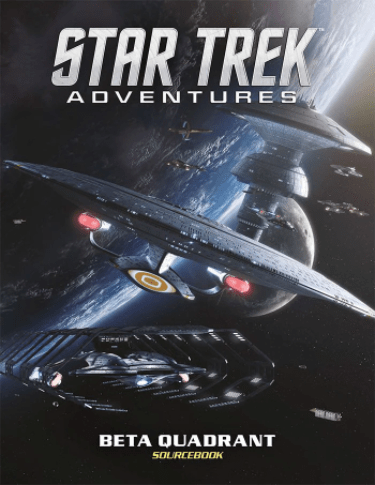
For those with limited Star Trek knowledge, the Beta Quadrant is probably what you’re expecting if you think Trek – the baddies are Romulans and (depending on the era) Klingons, you’ve got Orions and (my favourite) Gorn rolling around – it’s a wild frontier region of space, ripe for exploration yet still bucking up against other civilisations in the form of the Romulan Neutral Zone. Apart from details of each of these civilisations and some new player species, there’s some extra starships, and some adventure locations. The Briar Patch and the Shackleton Expanse (although for the latter you might want to get the bigger – and more adventure-led – book of the same name) are full of danger and peril.
Overall it’s just a great starter region for Star Trek, where the core book is a bit limited by offering any era of play. If you’re running Original Series or Next Generation, this is your essential next purchase.
I used this a lot in the first season of my ongoing Star Trek Adventures campaign, where they tussled along the Neutral Zone with a recurring Romulan Captain.
Starter Set (for Warhammer Fantasy Roleplay 4th edition)
Is it cheating to put a starter set in here? Not in this case. Apart from the usual pregens, dice and an excellent adventure (Doing the Rounds), the 64-page Guide to Ubersreik is what sets this apart. Full details of the city, with adventure hooks in every location, both dripping in flavour and instantly gameable. Add to this that fully half of the Adventure Book is given over to single-page short adventures, this is the perfect primer for both what WFRP is all about, and how to make a city breathe and sing.
My WFRP one-shots have all been set in and around Ubersreik – there’s just enough material in here to expand one or more of them into a satisfying game.
So, what fantastic supplements can you recommend? Link them in the comments.
“Don’t split the party!” is a classic refrain from the early days of D&D that still holds a surprising amount of traction. It’s also absolute rubbish; your games will be much more fun if the group separates and gets back together during the course of an adventure. This is especially true in investigative games like Vaesen or Call of Cthulhu – but even in your classic F20 game it can lead to much richer play. Here’s why.
While you’re reading this, I should tell you about my Patreon. Patrons get access to content 7 days before they hit this site, the chance to request articles or content, and the chance to play in one-shot games, for a very reasonable backer level of £2 per month. If you like what you read, want to support the blog, and have the funds for it, please consider supporting here. Telling people about the blog, and sharing links/retweeting is much appreciated also – thanks!
More Content!
If you’ve got two potential leads out from a scene, why go to each in turn? Send a couple of PCs to talk to the old woman, while the others poke around in the merchants’ quarter. By cutting between them, you get a nice contrast, and it’s easier to be an audience for the other pair when things are being resolved by the others. Things move quicker with fewer PCs on the scene, too.
In-party roleplaying in action
More (In-Party) Roleplaying!
Four PCs in the same place, talking to someone – they might talk to each other, but the focus of their investigation is going to get more of their time. Two PCs in the same place, it’s much more natural for them to talk to one another – and it will happen more. This is especially true online, where a conversation between more than two people needs structural help to avoid talking over each other.
Mix up the pairings a few times, and you’ll soon get some neat character interactions going. If you’re doing this in a very trad game, or as a one-shot, you might want to lay the groundwork for this with some in-party setup questions.
More Verisimilitude!
Another cliche from the early days of roleplaying is the Cthulhu investigator team – six men with shotguns showing up in the suburban street to talk to the little old lady about her neighbours. In genre fiction, it’s very rare that the whole ensemble cast go together to resolve a problem – this is reserved for the finale (and maybe the start of the episode).
If you’re looking at a one-shot structure like the Ur-Plot, it could be as simple as the middle bits are with the party separate – you’ll end up with a grabbier plot, that’ll move faster and cover more in-party chat – all for the good!
How To Make It Happen
First, let’s make sure we’ve got the conditions for this to happen. You need to banish any sort of adversarial “the-GM-is-out-to-get-us” mentality from your players – which means, try and not give them the obvious potential risks from splitting up. Eventually, you probably want to throw that ambush – and the subsequent rescue – but to start with you probably just want peril to be the consequences, not actual character death.
Keeping the PCs in contact – with cell phones or the fantasy equivalent – should also make them more comfortable splitting up. Eventually, you want to remove these and cut them off, but that will only be effective as a change from the norm, so keep that in reserve for the first couple of times.
You can also put a timer on it – if there’s only 3 hours until the next killing has been foretold, and there’s two temples to search for the anti-ritual, there’s a big incentive to split up and cover both places.
Getting Into Trouble
I’m certainly not advocating that when the party is split up it should be peril-free; the scenes should be exciting and dangerous, or what’s the point of them. But the peril doesn’t have to be combat. Skill checks or challenges (even longer-term ones) work just as well with 2 players as with 5, so plan some of these for big payoffs.
There’s a knack to getting spotlight right with this – you don’t want one group making a single Persuade check while the other has some multi-layered challenge to resolve their scene – but you can always give the successful Persuaders something else to do.
And, combat doesn’t have to be off the table. Balance it carefully, and make sure there’s an objective behind it – one group getting ambushed or captured and having to be rescued makes for great drama. In games with tight combat design (like D&D), 2-PC combat does some really interesting/weird things sometimes, which can make it exciting and dangerous even if you adjust the opposition’s level challenge.
For any action-based challenges while the PCs are split up, and even for investigative scenes, smash cut between the two groups frequently – try to aim for cliffhangers, even if minor ones. Techniques like this keep the momentum going, and help players be good audiences for their other group – which spares you having to do an awkward roleplaying scene later where they tell each other what they’ve just found out. It’s unnecessary – they already know – so encourage them to cut to the analysis of their discoveries, not the reporting.
Even in the Dungeon…
A lot of this advice has been focussed on investigative games, but I should say it all applies just as much to more traditional fantasy games. How often do parties in F20 games send the rogue first to scout out the next room, and how often do they actually get separated? Take that as the consequence of a failed perception or find traps roll, and you’ve got an extra layer to your dungeoneering.
Have you ever split the party? Are your players reluctant to do so, or do they just need a bit of a push? Let me know in the comments.
I’ve got another 1st level D&D adventure for you here, ready-to-run, and this one is even playtested – at Go Play Leeds last year. It’s pretty rough-and-ready, and contains a collapsible set of scenes in the middle so you can expand or contract to fill the available time. I’d be generous with any alternative plans that the PCs make to get to the dryad’s grove – but all paths will eventually lead to the druid.
While you’re reading this, I should tell you about my Patreon. Patrons get access to content 7 days before they hit this site, the chance to request articles or content, and the chance to play in one-shot games, for a very reasonable backer level of £2 per month. If you like what you read, want to support the blog, and have the funds for it, please consider supporting here. Telling people about the blog, and sharing links/retweeting is much appreciated also – thanks!
If you want to toughen up the fight, add a few twigblights into the mix – although the big bad Garrett, designed using Matt Collville’s villain actions, is pretty effective as a solo boss. Villain Actions take place out of initiative order after a player’s action – usually one per round in the first three rounds, although feel free to tweak this if they’re needed in order to survive. He also has a Bonus Action and a Reaction that make him a bit more survivable – I’d recommend a watch of Matt’s youtube video for some good examples of building boss monsters with Villain Actions.
In terms of NPCs, I got a lot of mileage from making Prince Kyle a feckless loser convinced of his own heroism, and Mayor Goodbarrow as a somewhat sinister leader. I used regular 1st level characters, using my simplified character sheets, for this.
Background
Twenty years ago, Green Goodbarrow, mayor of Clearview, struck a deal with the fey of Clearview Forest. In return for Clearview’s continued prosperity and protection, he offered the services of his son to the dryad Qualan – confident that he would be well looked after, and his wife would bear more children for him.
A difficult birth followed, and Gwen Goodbarrow gave birth to twins. Rushing both dying mother and twins to Qualan’s glade, he begged for the deal to be cancelled – but he had already been elected mayor, and bargains with fey cannot be undone. The mayor’s son, Garrett, was taken by the dryad into the Feywild, to serve her as an apprentice and guardian of the forests. The daughter, Gynnie, was left to grow up with her father.
Time passed and Clearview prospered – the bandits and goblins that had troubled the other villages of the forest never troubled Clearview, and it became wealthy and prosperous. Garrett was comfortable enough serving the fey, and his druidic magics grew, even as he wished to return to his own, human world.
Clearview’s prosperity will be sealed now – for the great beauty of Gynnie Goodbarrow has attracted the attention of Prince Kyle, who has courted her and arranged a marriage. As he and his love walked in the forest, the talking trees of the forest saw them steal a kiss – and reported it back to the fey court – where Garrett heard of it.
Enraged to be reminded of all he has missed, and the life he could have lived, he turned on his former wards, capturing the dryad in a feywild prison and breaking the vows that protected Clearview. Even now, though, Prince Kyle and his Kingsguard yomp through the forest for their wedding, unaware of what has happened – with Garrett no longer serving them, the forest will demand the other child…
Prelude – The Forest Path
There is a wedding in Clearview, where Gynnie Goodbarrow, daughter of the town Mayor, is to be wed to Prince Kyle – youngest and least impressive of the King’s son, but a Prince nonetheless! You are making your way there…
Ask each player:
Why have you got an invite to, or are attending, this wedding?
As they round a turn in the road, they come across quite a scene. A mean, one-eyed bandit brandishes a crossbow from the trees at a well-dressed travelling group – surely the Prince and his Kingsguard. In a plummy, high-pitched voice, the Prince speaks –
You would challenge me? Fair know it, that I am a master with the sword, and in fact I insist that my guards stand down and allow me to slay you single-handedly!
A crossbow bolt flies from the woods and slays a Kingsguard, and combat ensues.
It is assumed the PCs will join in. They will face 5 bandits (AC 12, hp 11, +3 club for 1d4 or +3 crossbow for 1d8+1) plus One-Eyed Isaac (same but hp 18) – the bandits will engage the dangerous-looking Kingsguard first until they have been attacked.
The Kingsguard are utterly useless, and the Prince is worse.
Once they are vanquished, the Prince introduces himself – and tells you how lucky that his two Kingsguard, Erlin and Harlin, were there to save them – despite them doing almost nothing.
They can then proceed to the wedding – allow them a long rest as they are fed and watered at Clearview.
Scene One – The Wedding Party
Before the wedding, there is a great, drunken, feast, around the Clearview Oak, a huge tree in the centre of the village. During the festivities, they can attempt to find out about the wedding
Clearview is richer than it has ever been – it is said the forest is blessed, and even bandits don’t dare to interfere with Clearview’s prosperity
Green Goodbarrow is a good mayor, but he’s been more and more melancholy as the wedding day has approached – maybe memories of his late wife – who died giving birth to Gynnie – have been bothering him
The mayor has been taking many long walks in the woods of late – last time he returned looking like he’d seen a ghost!
Clearview is blessed by the forest – even the beer is the best in the forest! (as she says this, she takes a big swig, frowns a little as if it’s not as she expected it, and then returns to pretending it is good)
At the height of festivities – from the Clearview Oak burst 1 Needle Blight and 8 Twig Blights. A pair of Twig Blights grab Gynnie and pull her into the oak – immediately she is in the Feywild and captured again. As they do, the wise woman Ernestine shouts out
They come to take their prize! What is owed to them?! Where is the other child?!
Once they are defeated, Green Goodbarrow is extremely upset. He demands that people go after and rescue his daughter – of course, the Prince and his Kingsguard immediately volunteer. He also eyes up the heroes and asks them to go, but the Prince will have no truck with it – nevertheless, he promises at least 200gp of his considerable wealth if they can ensure the wedding goes smoothly. He suggests they travel to the dryad Qualan, the guardian of the forest – maybe something has happened to her that means the forest’s blessing may be ended.
Scene Two – Forest Exploration
Clearview’s forest paths are dim and oppressive.
There are a number of encounters the players can have, depending on time available, until they find the dryad’s grove – if you are short of time, feel free to skip ahead to that.
Talking Trees
The Trees used to be a source of wisdom, but are grumpy and angered now the curse has landed. They must be entertained – with a joke, a dance, or similar – a DC 13 Performance or similar check – from all the PCs (group check, needs half successes) to talk to them.
They can tell the whole legend of a boy taken as a price for the prosperity of Clearview, and that there was another child – a beautiful girl – and a dying mother.
The Pool
You come across a tranquil pool, with lilies floating on it and an idyllic bridge tripping over it beyond thick, impassible forest. As you take the first steps over it, though, strange bubbles emerge from the pool, and a thick mist begins to cloud your vision.
The PCs must all make Con saves to remain awake, and then succeed on a group check (half successes needed) of Athletics or similar to cross the bridge – further failed Con saves inflict 1d4 hp damage. If all PCs fall asleep, they awaken in the dryad’s grove in the Feywild, and are awoken by the dryad by it’s dying breath after Garrett soliloquises the reason for his anger.
The Webs
They hear weak shouting ahead – from the Kingsguard, trapped in spider’s webs – a proper chance to save them! Luckily the Giant Spider who snared them is out hunting, but his three children – stats as Giant Wolf Spiders – stalk and will attack. After three rounds, their mother arrives – hope they have saved the Kingsguard by then!
Scene Three – The Dryad’s Pool
The Dryad’s Pool is clearly in trouble. The water is stagnant and stinking, and the tree looks to be dying on it. Arcane symbols scratched around it indicate a passage to the Feywild, recently used.
A DC 10 Arcana or Religion check will allow them to enter the Feywild and confront Garrett – they emerge on a scene of Qualan tied to a tree, and Garrett will tell them the history and why he feels aggrieved. Qualan tells them he is right – that for the blessing to continue Gynnie must be taken by the forest instead. Either way, Garrett attacks – Qualan using her last energy to Long Rest the PCs, if needed. If it looks sketchy, one of the Kingsguard tosses a PC a healing potion – they are much too terrified to join in the actual fight.
AC 11 or 16 (assume Barkskin), hp 52 (40 if just 4 PCs) Speed 30ft Multiattack 2 of – – make one shillelagh attack (+4 reach 5ft. damage 1d8) – make a sling attack (+4 range 30ft, damage 1d4) – cast a spell (Entangle, Thunder Wave, or Dust Devil) Spells – Thunderwave (15ft cube, Con save or 2d8 damage and pushed 10 ft away – save for half and no push) – Entangle is a 20ft cube – Dust Devil is a movable 5ft square Bonus action – get an additional save vs. an effect Reaction – when struck by an attack, cast Barkskin to raise AC to 16 Villain Action Round 1 – Cast Entangle on all opponents within 50ft, Str save or restrained Villain Action Round 2 – Immediately cast Longstrider on himself and move (no attacks of opp) up to 40 feet Villain Action Round 3 – Summon a Dust Devil (Str save or 1d8 damage and pushed 10 feet away) against all opponents engaged with him
Scene Four – Return
The wedding is back on – or is it? Will the PCs tell the village the truth, or will they keep their counsel. Prince Kyle, in a rare show of bravery, is determined to marry Gynnie no matter what – and can be persuaded to reveal the secret or not by the PCs.
End with a montage of the next scenes in the PCs’ lives, showing how they move on from these heroics.
As I’ve blogged about before, my gaming is so deeply infested with indie/narrative approaches that I find it quite jarring to go back to a more traditional style of play – even when playing, say, D&D. One aspect of this approach is players describing more about their setting and actions – becoming more like directors of the scene than actors. It can add a lot to everyone’s enjoyment at the table, so here are a few techniques to get started on sharing player narration.
While you’re reading this, I should tell you about my Patreon. Patrons get access to content 7 days before they hit this site, the chance to request articles or content, and the chance to play in one-shot games, for a very reasonable backer level of £2 per month. If you like what you read, want to support the blog, and have the funds for it, please consider supporting here. Telling people about the blog, and sharing links/retweeting is much appreciated also – thanks!
I guess the first question is, why bother? What are the advantages? Well, I hope we’ve moved a long way from the GM-responsible-for-fun model of RPG delivery – everyone at the table needs to help. These structures let some of the description of the shared imagined space come from players, without jarring too much with the normal GM/player conversation. These techniques allow players to add awesomeness in really interesting ways, and for most of them there’s a sliding scale of how much invention they need to do.
It’s more engaging – for everyone, since the GM isn’t always describing stuff, and adds ownership to the ongoing plot from your players too. Also, I wouldn’t save it up for experienced players – I’ve used all of these with folks new to the game, and they’ve not met with any resistance. If anything, it’s been more experienced grognards who’ve struggled with them sometimes. So, in a rough order of complexity from simplest to most advanced, here are four techniques to share narration around a bit.
Tell Me How The Orc Dies
Player: I swing my axe… and 18, and… 10 damage!
GM: Great, that’s the bugbear down – what does it look like?
Player: He lunges forward, but I duck to one side and stove the back of his head in!
The first step is to get players to narrate their successful final blows in combat. This lets us zoom in on the awesome shot of their victory like a slo-mo death move in a video game, and happens only occasionally enough to make it a non-onerous task. It also lets your players own their success, and takes away any nerves they may have about introducing complications – there’s no expectation that they do, just that they describe how their axe shatters the skull of their opponent.
If this technique has a down side, it’s that if used in isolation you can end up asking players for a lot of the same sort of narration. Players might start thinking they need a list of finishing blows ready, and feel put on the spot in an already high-adrenaline environment. Still, it’s an obvious way to get players to describe more awesome shizzle.
Why Didn’t You Cross the Chasm?
Player: Now, I’ll pick the lock on that door – and… a 12
GM: It’s DC 15, I’m afraid, you’re not going to get it open in time – why couldn’t you get it open, you’re a master thief, right?
Player: Ah… it’s been down this tomb so long, all the mechanisms are rusty – I’d need heavy-duty picks for that, and I lost mine down that chasm two weeks ago…
An alternative is to hand over the narrative reins when players fail their rolls. When they miss, or fail an important skill check, ask them how they failed – were they distracted, did they underestimate their foe, or did they succeed a bit too well so that it might as well be a failure?
This has the advantage that you’re giving something back – although they’ve failed the roll, they get a chance to control the manner of their failure still. I’ve used this and it’s led to some great background moments – in a recent WFRP game, their escape from the Guildmasters House was delayed by the halfling’s failed Stealth roll – he found the contents of the kitchen just too tempting to stop and raid the larder. Of such momentary flavour details, great sessions are made, and this certainly helps them.
This requires a bit more buy-in, particularly from more experienced trad players, since they may be wary to describe anything that might put them at a disadvantage later – and there’s often an expectation that, if you miss, that just happens and we move on – spotlighting moments of failure takes practice too.
Tell Me About The Elves…
GM: There’s a huge forge at the end of this chamber, although it’s not been lit in years – covered in offerings for Grundelin, the All-Smith.
Player 1: What sort of offerings?
GM: Ah – well, Darak Deathspeaker’s a dwarf, he might know about Grundelin – what kind of offerings?
Player 2: It’s mining and smithing tools, hammers and anvils – but they all have to be well-used, so broken or worn.
Player 1: I was hoping for piles of gold…
Another technique is to give players some ownership of their own PC backgrounds. If someone’s playing a dwarf and dwarvish customs or lore comes up, hand the question over to them – why do dwarves all drink beer then, Branwyn Fire-Druid? This has the benefit of taking place (usually) outside of pace-driven action encounters, so players may feel more comfortable taking time with descriptions and being given the spotlight, and it can add richness to cultures that (apart from said PC) may not be given much spotlight time in the world.
As a GM, of course, listen and reincorporate where you can down the line – plot hooks derived from these will be extra special for your players. This can be a tricky technique in lore-heavy games (or any game where “what year is it?” is a relevant question) – and be prepared to shoot down the adjacent player who pipes up with a canon answer. “Well actually, in the Forgotten Realms, Moon Elves wouldn’t eat meat….” “How would you know, you’re not a Moon Elf – continue”
Some Kind of Skill Check
GM: So, as you disrupt the ritual, the goblins flee in all directions as the roof caves in – you’ve got moments to get out of the cavern before you’re buried alive! How do you escape?
Player 1: I’ll leap between the falling rocks, dodging this way and that to the exit
Player 2: I’ll estimate where the safest route is – where the cavern looks most stable, using stonecunning.
Player 3: The goblins had Wargs, right? I’ll leap onto one of them and ride it out as it flees.
GM: Okay, that looks like Athletics and Animal Handling for sure. Stonecunning normally goes off Knowledge (History), sounds a bit weird but let’s go with it. DC 15 for each of you.
To use this, rather than having set skills or abilities in mind to tackle obstacles, give the players free rein as to how they tackle it. This requires some flexibility in obstacle design, but don’t overthink it – and don’t worry about making it too challenging. Combining this with a good method for perilous tribulations (see part 2 here) allows everyone a skill roll, and so democratises it a bit. It can work in published adventures too – in a recent D&D game in Icewind Dale (using the published Rime of the Frostmaiden adventure) the PCs escaped a frost giant skeleton-infested cave by slingshotting a cauldron over the ice.
A potential disadvantage of this is that, while you want to keep the difficulties low enough that their clever plans succeed more than they fail, players may only want to use their good skills. To mitigate this, have some other skill rolls in the adventure that use set rolls, and don’t be flexible all the time – make them roll that Stealth check sometimes.
So there you have it, four techniques to bring player narration into your games. Have you any other approaches? Let me know in the comments.
Often in one-shots, you see two broad types of trad TTRPG game – an investigation-heavy game, and an action- (or combat-) heavy game. Both have their pros and cons – in an investigation game you often get to interact with the setting a lot, have more roleplaying opportunities with NPCs, and have the satisfaction of solving a puzzle – but pace can slow as the most cautious player tries to leverage as much information as possible before proceeding. Likewise, a combat-heavy game rarely suffers from too little pace – but the breakneck speed can leave players wondering what the purpose was of rolling all those dice.
While you’re reading this, I should tell you about my Patreon. Patrons get access to content 7 days before they hit this site, the chance to request articles or content, and the chance to play in one-shot games, for a very reasonable backer level of £2 per month. If you like what you read, want to support the blog, and have the funds for it, please consider supporting here. Telling people about the blog, and sharing links/retweeting is much appreciated also – thanks!
A solution to both sides of this problem is to incorporate Combat Clues into your one-shots. They are clues that are discovered during a combat, skill challenge, extended task, or other perilous encounter – and they don’t replace the clues you have in the game, but they add to them.
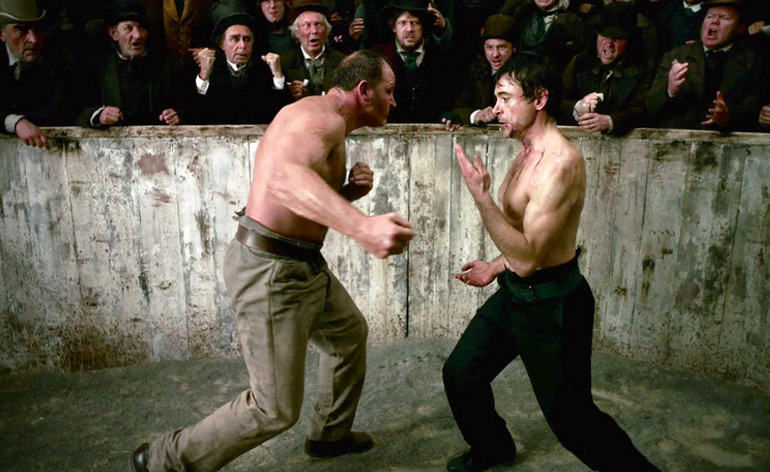
RDJ’s Sherlock Holmes is the kind of investigative game I like to run – here he’s definitely finding out some combat clues
Why Combat Clues?
For reasons that are probably apparent to regular readers, I’m a fan of the action-heavy one-shot – I cut my teeth at conventions running 13th Age, which has only the lightest suggestion of an out-of-combat game system, and often use the Feng Shui 2 “Three Fights” adventure structure. But the issues suggested above are real problems – often a trail of clues is needed to make the session have narrative sense, and you’re faced with the option of interspersing combat with slower investigative scenes, or just making them find things out straight away.
I also don’t like the post-fight interrogation scene – it never really plays out satisfactorily, and you end up with your ‘heroic’ PCs threatening the goblin with torture or worse as you frantically work out a reason why they won’t tell the entire plot to them at this point.
The other issue is that combat takes a long time in most games. If you’ve a 3-hour session of 13th Age, you’ll get two, maybe three fights in it – and maybe a montage – but you’re not going to have time for a lengthy roleplaying scene as well. Likewise, if you’ve got a murder mystery with 4 suspects, after the PCs talk to / encounter each one you’ll be struggling for time to get the action in to keep the player at the table who came for that (that’s usually me, by the way) to get it.
They also give fights a reason. I’ve written before about adding a ‘why’ to fights, and how effective this is – it’ll turn your combat-heavy tactical game into an epic exploration and mystery with multiple (well, more than one) layers of plot.
How To Prep Them?
The first step – and fair credit to Sly Flourish’s excellent Lazy DM’s Guide for this – is to dissociate your clues from locations and places. Just write a big list of what the players need to find out in the session. Ones where they need to find them to move the plot along, underline or put in a different colour or something – they’ll definitely find these, so you want to make these easy to find. We’ll call these Plot Clues – they can find these out in locations around the fight, or (if they don’t discover them through roleplay or skill checks) in combat.
Think too about clues that, while not necessary to advance the plot, will make the adventure more survivable, or give the PCs an edge in combat or a similar action scene. For example, the Living Statues are vulnerable to bludgeoning damage and resistant to slashing and piercing, to pick a fairly dull D&D-style one. Or that there are murder holes above the main chamber where goblins lair to drop oil on attackers (that can be avoided by canny PCs). Or that there’s a secret door to the crypt that bypasses the aforementioned statues.
We’ll call these Boost Clues, and they make ideal combat clues – you can discover them in fights, in action scenes, or along the way as regular clues. Make a note next to each of them how they can be discovered; maybe the statues have dents and depressions on their armour, but no signs of stabbing or slashing wounds; maybe they can notice the ground-floor goblins glancing upwards and cackling as they raise their shields to advance, and that they avoid certain positions in the chamber. Or they may notice something in an earlier fight that benefits them later – the goblin sergeant has a sketch map that shows where the secret door is, or when he runs away he seems to vanish into thin air when he gets to the guard chamber.
Don’t push these – some just won’t work to find out in combat. You need a balance of combat clues and regular clues anyway. But just adding a few will make your combats deeper and more interesting, and add depth to your one-shots without adding extra time (or, conversely, make your investigative scenario more action-packed).
How To Use Them
At the table, armed with my list of clues and a few ideas about how to reveal them, I’ll try to be liberal in throwing them out there. Usually, this will happen at the end of the round – it’s an easy marker of time, and a good way to remember to do it (and, in 13th Age, to advance the Escalation Die – something I also always forget to do).
If Boost Clues aren’t revealed, or aren’t interpreted correctly, it doesn’t matter – they can just hang about in limbo. Plot Clues, though, probably need to be thrown at players if they miss them during combat. Don’t worry about being obvious with these, although allow the players to feel like they discover them due to their actions – that is, it’s better for them to find a map or a note than to have an NPC appear and tell them the answer. It’s always better to do this.
So, Combat Clues – how have you used them in your game? Have they been successful, or do your group prefer a clean break between investigation and action? Let me know in the comments.
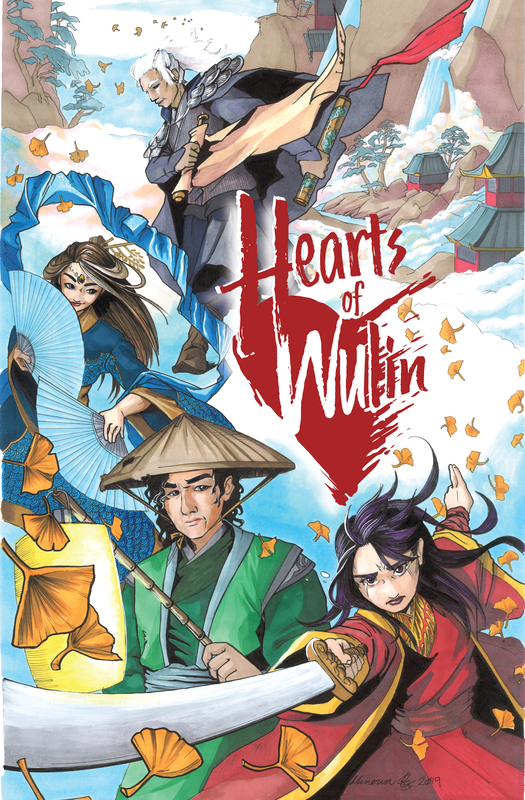
Hearts of Wulin is Gauntlet Publishing’s PBTA game of wuxia melodrama – swords, romance, and, crucially, inner conflict. A lot of the APs available (and there are loads on the Gauntlet’s YouTube channel) focus on campaign play – so I sketched out a one-shot and ran it twice. Once face-to-face, at Revelation, and once online at Virtual Grogmeet 2022.
While you’re reading this, I should tell you about my Patreon. Patrons get access to content 7 days before they hit this site, the chance to request articles or content, and the chance to play in one-shot games, for a very reasonable backer level of £2 per month. If you like what you read, want to support the blog, and have the funds for it, please consider supporting here. Telling people about the blog, and sharing links/retweeting is much appreciated also – thanks!
Revelation is a PBTA con (report here), so I was assuming some relative knowledge of these kind of games – so we did character generation at the table, exactly as in the book. The notes below assume this. For Virtual Grogmeet, I couldn’t be as sure (and indeed, I had one player entirely new to PBTA) – so, inspired by the Avatar: Legends adventure book, sketched out some pregens.
Entanglements are the Bonds / Hx / whatever of Hearts of Wulin, and they’re absolutely key to getting the sorts of games it generates – in play I think the plot was about 40% external forces, and 60% players pursuing them. They’re really cleverly designed – you get a few to pick from for each playbook, and everyone gets one “general” and one “romantic” one. Each one has one PC and one NPC in it. They took a bit of time at Revelation, so for the second play-through, I sketched them out – picking the NPC but allowing the players to choose which PC they wanted in it.
For example, one of the PCs, Eagle Sentinel, an Aware (Travelling Teacher), had the following Entanglements:
I love Wu Chao (Aunti Wu’s ward), who I have overlooked too long; now they love [PC]
I suspect my friend [PC]’s parent is the villain White Fang Chu
They could, of course, swap the PC and NPC positions in these. This worked really well to get everyone on the same page quickly, and they always lead to excellent play. One tip if you’ve only got 3 players (which I had for both games) is to read the familial ties loosely – siblings need not be related, parents need be parents in name only – since you’ll have quite a tight web of romance. For Virtual Grogmeet, I used the Gauntlet’s excellent Character Keeper, and just let them roll their own dice.
So, below are my prep notes – I hope these are useful if you want to run it yourselves, or at least it helps for those “how exactly do you prep PBTA?” questions.
Auntie Wu’s Tea House
A One-Shot for Hearts of Wulin
Nestled in an isolated pass, the only route through the World’s Edge Mountains for miles, Auntie Wu’s has been a staple of the Wulin world. Warriors come to meet, drink tea, and … occasionally… to fight. But now, with the Army of the North massing behind the World’s Edge, you’ve been sent to persuade Auntie Wu and her household to withdraw – for surely the Army will overrun her. Will she listen to her? Will you obey your orders? Who among the encroaching army do you know already, and why did you not expect to fall in love with them again?
PCs & Setup
Follow the usual procedure after creation (no extra moves yet)
Go round and introduce their PC’s look and style
Go round and do Entanglements 1 each. Make a note of any new NPCs – the others can be on the table with their descriptions. Note that each Entanglement must involve 1 PC and 1 NPC
Choose a Bond with 1 of the characters in each Entanglement
In the opening scenes, get any extra NPCs on screen ASAP.
TWO PCs (A and B) have been sent from Magistrate Chen with a message for Auntie Wu – the army is already engaged on the Eastern Front, and they should fall back. Auntie Wu should evacuate her tea house and flee.
A – Why have you been trusted with this mission, and B – why are you reluctant to carry it through?
TWO PCs (C and D) have just escaped from capture in the Army of the North, and have been creeping up to safety
A – How did you escape from this mighty army, and B – what is their greatest weakness?
Opening Scenes
In both of these make sure to bring in any additional NPCs from Entanglements as soon as possible –
We begin with A and B as they settle in at the tea house and are brought soup. They can see the tea house shift into the evening, as baiju and beer is brought out, and Stone Ox Wu approaches them
Will you share your mission immediately, or wait and enjoy the hospitality of the evening?
Stone Ox Wu approaches them and asks their business – he then asks them to drink with him! This could well be an Impress move, or perhaps a Hearts and Minds if they stake their mission straightaway
Meanwhile, C and D are approaching from the North, climbing through the mountains. As they move through the quiet village towards Auntie Wu’s, they are not alone – there are soldiers here, carrying weapons and fire sticks. It seems that they are interrupting an ambush!
Do you alert the inhabitants or take out the ambushers yourself
As the ambush strikes, the tea house roof is (probably) set on fire – an Overcome move to tackle. Hordes of soldiers provide more than enough for some PCs to Deal with Troops, and they are led by Peerless Falcon and/or Sergeant Cheng and any other NPCs who could conceivably be with the Army of the North
Middle Scenes
After a period of respite,
The PCs could get aid from the Bandits, led by Number One Sword – could he help to protect, or shelter the villagers
They may want to seek help – or wisdom – from Harmonious Jade in his monastery
Both of these could provide allies
They could investigate and try and sabotage the advancing army. The outer camps are run by Sergeant Cheng who has them in good order but could be convinced
Encourage them to also pursue their Entanglements, and remember to trigger Inner Conflict when appropriate
Possible additional “bangs” for these scenes include
Auntie Wu / another NPC has fallen ill! She needs herbs from the gardens at the foothills – near the army’s camps… or maybe Harmonious Jade can help her
Constable Cheng arrives, angry at A and B for failing to carry out their orders – why has the village not been evacuated?
Betrayal is discovered! A guest left an army seal, and a map of the grounds has been found on a messenger. Should they be punished or sent as a message?
Finale
The likely end point is a pitched battle – try and pair PCs off with potential scenes individually, including rallying the peasant army (Impress would be the move for this), fighting various NPCs or Troops, or dealing with betrayal
Possible Finale Bangs include
An ally (Number One Sword / Wu Chao / Stone Ox Wu) switches sides – for reasons established in previous narrative – can they be convinced of their error or punished?
Fire sticks! The houses around the Tea House are on fire! Villagers panic and rush to save their belongings instead of defending against the army
Any remaining Entanglement NPCs show up and cause trouble
NPCs
Auntie Wu, middle aged proprietor – wants only for things to stay the same, her tea house to be safe, and her daughters to be happily married off
Hunchbacked, carries a tray of tea or a walking stick
Sensory: The smell of jasmine, a calming influence
Schtick – crouch low and hunchbacked and nestle your hands around an imaginary cup of tea
Wu Chao, Auntie Wu’s neice – wants to escape her Aunt’s clutches and seek adventure – which probably doesn’t involve being married
Beautiful, porcelain-skinned, fights with flowing robes
Sensory: Serene and quiet, with a twinkle in her eye
Schtick: Winks conspiratorially at anyone (e.g. the PCs) who might be fun
Number One Sword – chief of the World’s Edge bandits, wants his tribe to be safe and money and riches
Bearded, powerful, wields a curved blade with symbols down its length
Sensory: Shouts orders as he appears suddenly, smells of sweat and booze
Schtick: Sit up straight and shout slightly at all times
Peerless Falcon – Captain of the Army of the North, charged with capturing the pass
SCALE 2 FIGHTER
Slender, armored, glowing – wields a pair of curved knives which he also throws
Schtick: Pauses for thought before replying slowly
Sergeant Cheng – a junior officer in the Army of the North
Stout, careful, taciturn. Wields a curved halberd. Is not entirely convinced of the Army’s cause.
Schtick: Looks worried and plays with his moustache
Stone Ox Wu, Auntie Wu’s son- wants to protect the Tea House at all costs
Huge, bald-headed, angry – wields a massive hammer
Schtick: Bellows and drinks Baiju from a glass whenever he can
Harmonious Jade – monk who lives in the World’s Edge mountains, whose monastery is famously neutral
SCALE 2 FIGHTER
Tall, portly, laughing – quick to smile. Fights unarmed
Schtick: Laughs and giggles at all times
Constable Cheng – imperious busybody constable who just likes to check on order
Fights with a staff
Schtick: Looks down on everyone and everything
If It All Goes Quiet…
Use these options at any time when it looks like there’s nothing going on, or if the PCs are reluctant to engage
Men with Knives!
A group of bandits/audacious soldiers have snuck into the camp to steal what they can before the serious looters arrive – have a PC discover them and them be offered a share of the loot
Big Blade Huang
A warrior of audacious skill visits the tea house; he has no interest in defending it, seeing beating an army as beneath him
Trigger the Deal With Misunderstanding move on p110 of the book (nb this is also where the Deal With Grief move is, which you’ll need if someone wanders off)
Avalanche!
The army’s explosives have triggered an avalanche to crush the tea house – can they get the villagers to safety?
As I talked about here, I’m committing to only reviewing RPG products I’ve actually used – so, run or played – and in Part 1 I talked about how I ran and adapted the first part of the classic WFRP Enemy Within campaign. In this part, I’m going to more generally review the adventure, and see what gems we can steal for our own games from it. It’s in Enemy in Shadows, and is available from Cubicle 7 here.
While you’re reading this, I should tell you about my Patreon. Patrons get access to content 7 days before they hit this site, the chance to request articles or content, and the chance to play in one-shot games, for a very reasonable backer level of £2 per month. If you like what you read, want to support the blog, and have the funds for it, please consider supporting here. Telling people about the blog, and sharing links/retweeting is much appreciated also – thanks!
As with Part 1, below is full of spoilers – if you’re still wanting to play it “fresh,” 35+ years after it was first published, you might want to look away now!
Overall, I think this is an excellent adventure, with a few quirks which come from (a) its being written in another age, and (b) being designed to be the opening act of an enormous campaign. It pulls the PCs together well, with an quirky hook that gets them to travel to Altdorf, and then to Bogenhafen, and leave them at a loose end with a reason to stick together and a lot of potential threads to pick up.
Poor old Rolf Hurtsiss has seen better days
The art is consistently fantastic, and the writing manages to tread a tightrope and be both evocative and laugh-out-loud funny at times. In particular, the NPCs are sketched really well, and the character of the places you visit – from the Coach and Horses Inn, to Altdorf, to Weissbruck – really comes across.
Everyone has a name
The first ‘monster’ you meet on the road – the mutant Rolf Hurtsis – is an old acquaintance of one of the characters; but even after this, every character is drawn with a past, and every one is named. The rest of the mutant band – led by Knud – all have names (I made them call out to one another as the PCs – as expected – slaughtered them). Nobody appears on the scene without having a richer and fuller life outside the story they are in, and the world is richer for it; the road warden is tracking down his sister on the road to Altdorf, for example. And, even more so…
Everyone has character
The NPCs are so well drawn in here, it’s worth taking the time to give them some character at the table. I jotted down some of the 7-3-1 technique for each one, although that sometimes led me to “now what does Josef talk like again?” moments, it made their interactions – which are at the centre of this adventure – more interesting.
Playing online, there are a few tricks to make characters stand out. The first is to show their picture (and every NPC in the adventure has great art) when you talk as them – I used “Show to Players” with Handouts on Roll20, but there are lower tech versions like sharing a screen if you’re running without VTT. The second is to overact terribly. I exhausted my limited repertoire of accents after two sessions, but it does help to have Josef talk like a pirate king (Hans Pflaster, the aforementioned roadwarden – was Jason Isaac’s Marshall Zhukov from Death of Stalin, and just as short-tempered) to get a sense of versimilitude. That said…
It can be a bit Carry On
There’s an element of farce to the central conceit – and several of the key scenes – that might take some careful running. There are times when your players might be tempted to back out – when they follow Josef to the pub in Bogenhafen, and it’s quickly obvious they’re in a very dangerous place – so I think setting the tone is important.
There’s a lot of Long Game Foreshadowing
I’ve never run a game before where I dropped a rumour in the first session that foreshadows Empire in Ruins, the fifth instalment of the campaign that sits maybe 40-50 sessions away. I’ll deal with if they remember the (false as it turns out) rumour then if and when it occurs. I took the approach of, whenever the book gave me a page of rumours, liberally spreading them out to my players, without showing them which were immediately relevant and which were flavour. This seemed to work well, and they’ve not led to too many red herrings yet.
It’s a bit Bait and Switch
Your group may vary with this – but I’d like to think that my players were under no illusions, when they found their lookalike body, that they weren’t actually going to collect 10,000 Crowns. By the time they get to Bogenhafen, and almost everyone they’ve ever associated with has turned up dead, more cautious players might be forgiven for being wary about heading to collect the inheritance. I presented this as if there weren’t many options – and in any case, it couldn’t be more dangerous than that dockside pub in Altdorf, right?
In Summary
It’s great. It’s not really like anything I’ve run before in a fantasy setting, and indeed it stands alone in terms of where its encounters come from. There’s no monsters to fight, or wilderness areas – it’s an entirely urban adventure, really – with a few interludes on canals or roads, but still well within reach of the Roadwardens. Given that it manages to still be terrifying even when in the midst of supposed safety, I’d recommend it to anyone – although tell your GM you’ve read this first so they can switch it up with the Grognard Boxes!
Have you played or run Mistaken Identity? What did you think of it? Let me know in the comments!
Mistaken Identity is the initial adventure from the Enemy Within campaign for Warhammer Fantasy Roleplay, and acts as a prelude to Shadows Over Bogenhafen, the first adventure proper. In the latest iteration of the campaign, the two are folded together as Enemy In Shadows. Enemy Within has a reputation as one of the “great” RPG campaigns, so I played it through with my Tuesday group – you can get hold of it from Cubicle 7 here.
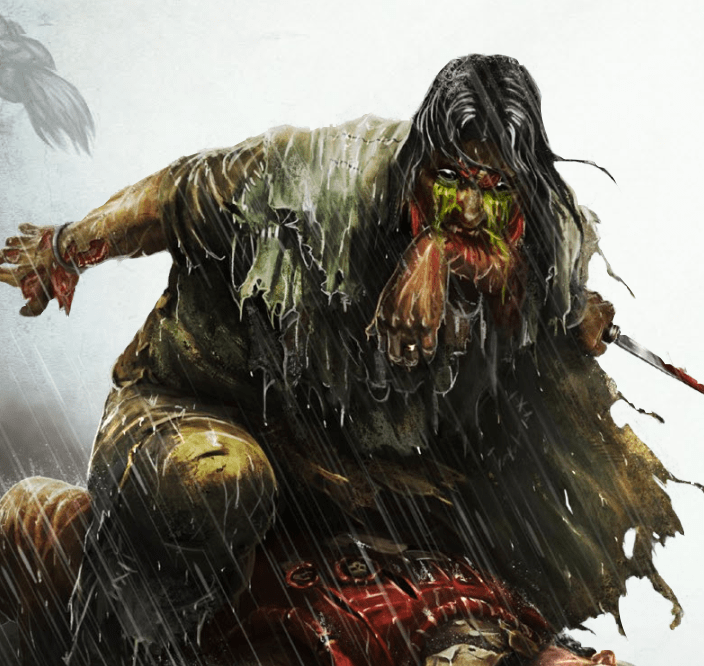
The first of many mutants in this adventure / campaign, and a former associate of our thief.
While you’re reading this, I should tell you about my Patreon. Patrons get access to content 7 days before they hit this site, the chance to request articles or content, and the chance to play in one-shot games, for a very reasonable backer level of £2 per month. If you like what you read, want to support the blog, and have the funds for it, please consider supporting here. Telling people about the blog, and sharing links/retweeting is much appreciated also – thanks!
In this first part I’ll give you a session-by-session breakdown of how I ran it, including what I changed from the published adventure. In Part Two, I’ll summarise what worked well, and what worked less well – and suggest what can be taken from it for other games. There are, of course, a huge number of spoilers below – if you’re still wanting to play it “fresh,” 35+ years after it was first published, you might want to look away now!
Synopsis
I ran Mistaken Identity over 5 online sessions of between 2 and 3 hours for 4 PCs, with the first session including character generation. The adventure as written has some very useful “Grognard Boxes,” ways to alter the adventure if your players are familiar with it already. I used them to just pick from if it looked more interesting – especially in the first session.
The adventure as written has chapters that are roughly one session long (if you play with a fair lick of pace) – and I’ve written them up below, along with the names I gave each session as part of my prep notes. If Patrons would like sight of my actual prep notes, feel free to get in touch – although I find the writing up of them is more useful to me than reading them, if that makes sense – the process of creating them revises and solidifies the game in my head. I used Roll20 (which has a bit of a fiddly WFRP interface for improving PCs, but it’s too late now for us to switch) and Google Meet for A/V, if people are interested in those things.
You’ll note as you read this that I have a crew of absolutely top-drawer players. In this, my regular Tuesday group, plots are aggressively pursued and roleplay opportunities are harvested from even the least interesting scenes. Situations like one PC not knowing a secret the other three are keeping from them (the player knows, obviously) are handled maturely and leaned into for maximum roleplaying fun – your mileage may vary, obviously – but it’s worth invested in play culture at the table if you want to be able to engage with an adventure like this that’s full of unresolved secrets and bait-and-switches.
Session 1 – The Coach and Horses
After character generation and session zero stuff, they montaged talking to some NPCs at the Coach and Horses and then fought a daemon summoned by one of the patrons.
I completely ditched the structure of the first session in the adventure, which is the coldest of cold opens – some gambling (out of budget for almost all starting characters as written), some meeting strangers who don’t like them – the only action is if and when they catch the gambler cheating. Oh, and we did chargen by the rules – and ended up with human nun, smuggler, and wizard’s apprentice, and a halfling thief.
I quite liked the NPC Phillipe Descartes, so didn’t want him to be an enemy, so had him merely regale them with tales in his outrageous Brettonian accent. Each PC got a single short scene where they made a skill check (usually Gossip) to impress an NPC, and then received 1 or 2 of the rumours supplied. We cut from PC to PC as they did this, before I triggered “The Rival Magus” from the Grognard Box and had a daemon appear.
After they’d fought the demon, of course, they were basically an adventuring party, and we’d got to know the interface and basic rules in session 1. All this took maybe an hour of play after characters were done – it’s my favoured approach for a session zero to get a bit of play in at the end to whet everyone’s appetite.
Session 2 – The Road to Altdorf
They fought a mutant, went further down the road, fought some more mutants, and discovered the adventure’s hook – a body looking identical to one of the PCs, with a will to collect from Bogenhafen and a signed affidavit that the bearer is indeed the long lost nobleman, and instructions to claim his inheritance in Bogenhafen.
I pretty much ran this as described – the players made it more interesting by three of them being in on the identity theft, but keeping it quiet from the fourth – a nun of Myrmidia – as they expected she’d not be in favour. Instead, they told her that Othelbert the apprentice actually was Kastor Leiberung, just travelling undercover to Bogenhafen – and swore her to secrecy.
Session 3 – Welcome to Altdorf
After a confusing encounter with some strangers, and surviving a theft attempt, they caught up with Josef – a boatman and old acquaintance who just happened to be going to Bogenhafen – and went with him on a very dangerous bar crawl. It becomes very obvious that everyone they meet at the moment seems to end up dead very quickly – and they see a shadowy figure tracking them.
I added in a quick chase scene at the start with some pickpockets for two reasons – firstly, to start with some action, and secondly to give a big of the ‘dangerous big city’ vibe. This happened at the same time as the Emperor’s procession, which the module stressed is important later. As they’d all been travelling to Altdorf, they each had a scene where they resolved that – the nun resolved to continue travelling in Myrmidia’s name, the halfling went to his uncle’s pie shop and made contact, the wizard’s apprentice tried to enrol at the university. These gave a bit more verisimilitude and allowed the players to drop their previous lives a bit as they seemed committed to be adventurers now.
The bar crawl I ran as written, with the halfling thief enthusiastically joining in with Brandy Bounce and them using their wits to navigate the situation. The whole bar scene is a great set piece – as they realised just how much danger they were in – and balanced off nicely by several of their NPCs being found dead the next morning.
Session 4 – Come Drown With Me
We were a player down, so with the finale approaching, I ran a fill-in session of Come Drown With Me from One Shots of the Reikland – the three remaining players survived a zombie attack and re-sealed the tomb of Kurgon Three-Eyes while they travelled down the Weissbruck Canal. Testament to how dangerous Altdorf felt that a potential zombie apocalypse was a welcome light relief.
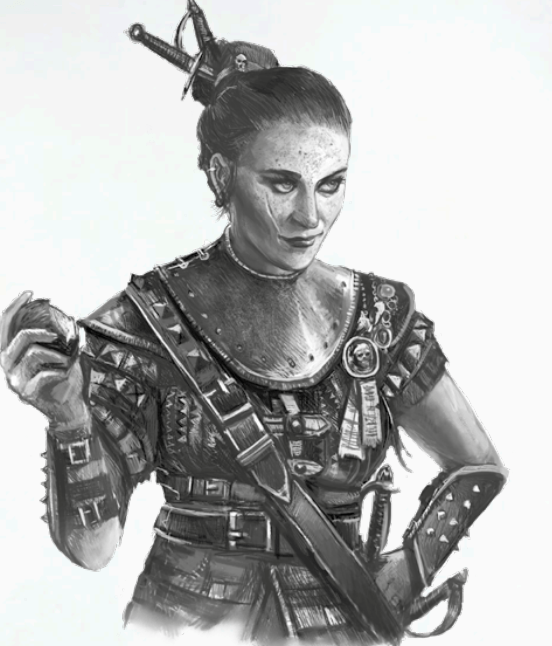
The character art in the adventure is brilliantly evocative – e.g. this portrait of Maria Braund, the highwaywoman who I used as an extra link to the follow-up adventure
Session 5 – No Mister Lieberung, I Expect You To Die
After meeting a highwaywoman and agreeing to do her a favour on the canal, they went onwards to Weissbruck, where they tangled with their pursuer. Evading him, they went on to Bogenhafen – where they realised they’d inherited a setup meant to catch a cultist, and neither the inheritance nor the title were true. As a horrific beast appeared to ‘save’ them in the nick of time, they were left pondering what to do next – luckily, the Schaffenfest is in Bogenhafen, and they had an assortment of plot hooks leading them there!
Maria Braund, the highwaywoman, is from the Enemy in Shadows Companion, and I added her in to give a hanging plot hook to the Schaffenfest for when they arrived – the start of the session also had them avoid a robbery from their fellow riverfolk, who’d heard one of them was a nobleman in disguise. I had Adolfus smoke some distinctive cigarettes so they could tell he’d been around the pubs with them, and he fled when they confronted him and they fought his heavies.
The final scene, while a bit deus ex machina (daemonium ex machina?) is another great set piece – as they watch through the windows the splashes of blood, before finding the body of their pursuer ripped apart.
In Part Two, I’ll summarise what stood out about the adventure, what didn’t work as well, and what tricks and components of it we can steal for future one-shot (or campaign) play. Questions or feedback as always are welcome to @milnermaths on twitter.





 Burn After Running: RPG One-Shots