Random Adventures : Tome of Adventure Design, 1st edition

I’m going to start my ‘reviews’ of random generators here, with the Tome of Adventure Design. After using this, I discovered a recently-released 2nd edition, but I’d already done the leg work with this one, so I guess a disclaimer is that I’ve done this using the 1st edition. On a quick glance at the 2nd edition they’ve tidied it up and added loads of extra bits to make it easier, so I’ll give that a go soon too; but this used the 1st edition.

As mentioned in the previous post, I’m interested in broad-brush strokes randomness; I don’t need individual detail (I’ll be using a tried and tested structure for that) but I do want some ideas to get me going. We’ve got a game of Shadow of the Weird Wizard, Rob Schwalb’s new-ish high fantasy game, booked in in a few weeks – so I thought I’d see what this threw up.

While you’re reading this, I should tell you about my Patreon. Patrons get access to content 7 days before they hit this site, the chance to request articles or content, and the chance to play in one-shot games, for a very reasonable backer level of £2 per month. If you like what you read, want to support the blog, and have the funds for it, please consider supporting here. Telling people about the blog, and sharing links/retweeting is much appreciated also – thanks!

Continue reading →
Enter the Animus: Lessons from Assassin’s Creed

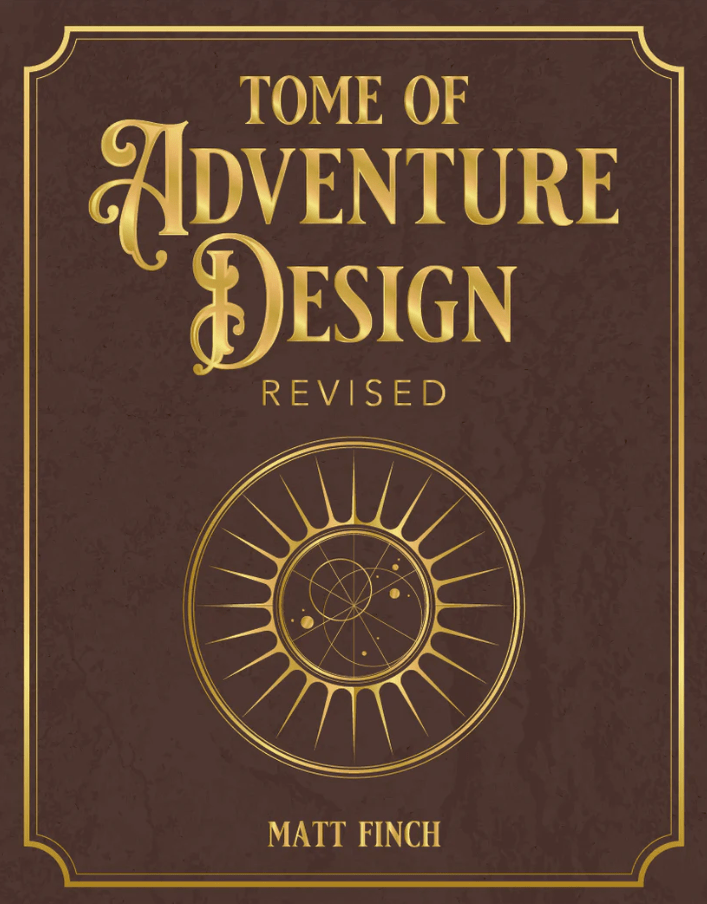
I’ve just finished a run through of the videogame Assassin’s Creed: Mirage, having a great time running, jumping, and stabbing through 9th century Baghdad as I uncovered a sinister conspiracy of “Templars” and, mostly, stabbed them all. It’s a great series of games that I’ve loved since it started – and it’s got loads of juicy stuff in it for TTRPG GMs to steal.

So, here’s a few things we can borrow from the Assassin’s Creed games. For this, I’m sticking to the more action-oriented ones, which Mirage harks back to – think Black Flag, Syndicate, and Unity – rather than Shadows, Origins, Odyssey, or Valhalla – which are much closer to actual RPGs.

While you’re reading this, I should tell you about my Patreon. Patrons get access to content 7 days before they hit this site, the chance to request articles or content, and the chance to play in one-shot games, for a very reasonable backer level of £2/$3 per month. If you like what you read, want to support the blog, and have the funds for it, please consider supporting here. Telling people about the blog, and sharing links/retweeting is much appreciated also – thanks!

Continue reading →
2d6 × 100 Random Words – Getting the Most out of Random Generators

I’ve been thinking a lot about the early stages of adventure prep recently. Planning for Unconventional GMs one-shots often ends up with us agreeing on a system we want to showcase – but, then what? Sometimes I’ll scout around for a usable one-shot, but (1) running your own stuff is always smoother, and (2) our channel’s agreed parameters – <2 hour one-shots – sometimes makes this extra difficult.

Quite a few times I’ve been left staring into space at, for example, the Index Card RPG, or Star Trek Adventures 2nd edition. With a concept and an idea I can run with it to pull a structure together, but a blank slate is hard.

So I’ve been looking a lot at random generators. Whether it’s ones for specific systems, or generic “create an adventure” ones, I’ve started to use these much more. And, really, they work. I prepped Ghost Mountain for ICRPG entirely off a set of Plotlib’s random tables. Ironsworn was almost entirely procedurally generated from the book (a rare case where some zoomed in stuff was random, too, using their Delve supplement).

While you’re reading this, I should tell you about my Patreon. Patrons get access to content 7 days before they hit this site, the chance to request articles or content, and the chance to play in one-shot games, for a very reasonable backer level of £2 per month. If you like what you read, want to support the blog, and have the funds for it, please consider supporting here. Telling people about the blog, and sharing links/retweeting is much appreciated also – thanks!

Continue reading →
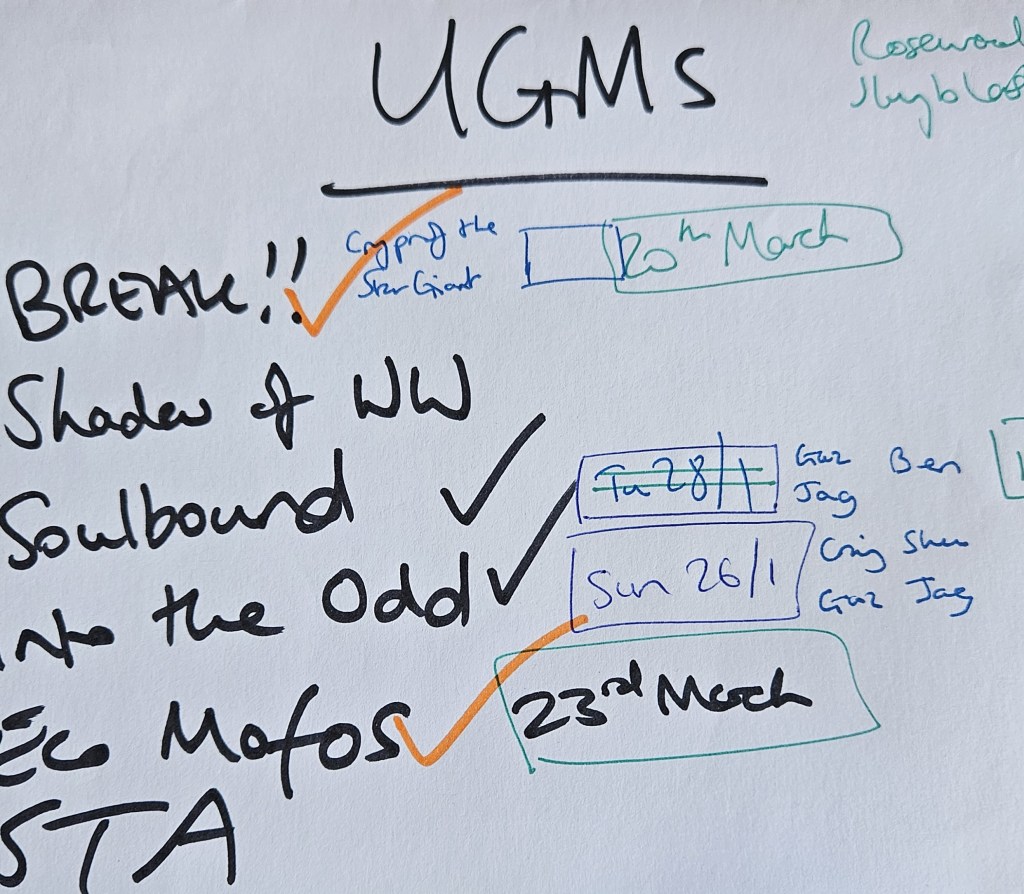
Setting, Hillfolk, no-SR, and Adventures

I’ve been deep in game prep this week, ready for a double dose of Seven Hills and then Kraken over the Easter break. And so while I’m trying to get my head down and prep, I find myself getting pleasantly distracted by game stuff. Here’s what I’m thinking about at the moment.

While you’re reading this, I should tell you about my Patreon. Patrons get access to content 7 days before they hit this site, the chance to request articles or content, and the chance to play in one-shot games, for a very reasonable backer level of £2 per month. If you like what you read, want to support the blog, and have the funds for it, please consider supporting here. Telling people about the blog, and sharing links/retweeting is much appreciated also – thanks!

Continue reading →
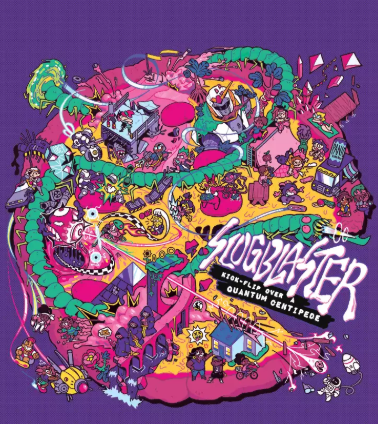
Golden Jungle Run – a One-Shot for Slugblaster

After posting about the FITD one-shot structure, I thought i’d give an example of it in practice – with this one-shot for the Slugblaster RPG. Slugblaster is a lot of fun – and firmly in my bag of convention one-shot games. So let me know if you want more ready-to-play prep notes – I’ve got another (from our Unconventional GMs recording) ready to post!

While you’re reading this, I should tell you about my Patreon. Patrons get access to content 7 days before they hit this site, the chance to request articles or content, and the chance to play in one-shot games, for a very reasonable backer level of £2 per month. If you like what you read, want to support the blog, and have the funds for it, please consider supporting here. Telling people about the blog, and sharing links/retweeting is much appreciated also – thanks!

Continue reading →

The Downtime Sandwich – a one-shot structure for Forged in the Dark games

There’s a number of games, we’re often told, that really don’t do one-shots well. Often this is because of complexity, or a detailed (and unnecessary) background setting, all things that a skilled one-shot GM can work around. But with Blades in the Dark and other Forged in the Dark (FITD) games, where there’s a structure of play that involves player-led downtime that’s essential to the system – well, you might have a point.

I’ve been thinking about this for a while. I’ve run plenty of FITD one-shots, usually just ignoring the downtime rules – and they’ve worked perfectly fine. I’ve even hacked downtime to try and do two full-length scores in a single session. It’s tight – and it comes from a time when convention sessions were a little longer. I’ve been left with the nagging feeling that I’m not offering a proper showcase of what the game is about. 

While you’re reading this, I should tell you about my Patreon. Patrons get access to content 7 days before they hit this site, the chance to request articles or content, and the chance to play in one-shot games, for a very reasonable backer level of £2 per month. If you like what you read, want to support the blog, and have the funds for it, please consider supporting here. Telling people about the blog, and sharing links/retweeting is much appreciated also – thanks!

Continue reading →

An Abbey, a Village, some Monks – Review: Rosewood Abbey

Scope used to be a big deal in TTRPGs. The Generic Universal Roleplay system (GURPS) proudly boasts “with GURPS, you can be anything you want,” and there’s still plenty of energy for 5e-based products trying to ride high on mastery of a known system. But I’m much more interested these days in the opposite. Games where the scope is so tight that the game provides a clear consistent experience. Games where everyone is likely to play the same kind of character, and do the same sort of thing.

It’s a tidy looking book, with neat layout and design

Even D&D has gone this way – big hardback campaigns like Curse of Strahd and Rime of the Frostmaiden provide cultural reference points among groups – how did you defeat Strahd? What did you do in Bryn Shander? Did you help the gnome mind flayers in their spelljamming vessel? (Possible spoilers there, I guess). And smaller, indie games have also tended to be successful when they’ve limited their scope to one approach, and hew closely to it.

Rosewood Abbey, from Kalum from the Rolistes podcast, is very tight in scope, and very good. You can’t be anything you want. You can be a friar, at a specific abbey, at the foot of the Alps between the 12th and 13th centuries. You can explore the abbey, you can go into the village nearby – you won’t be going any further. You’ll investigate mysteries that, despite their potential for supernatural origins – and other NPCs being sure that they are – have mundane solutions.

While you’re reading this, I should tell you about my Patreon. Patrons get access to content 7 days before they hit this site, the chance to request articles or content, and the chance to play in one-shot games, for a very reasonable backer level of £2 per month. If you like what you read, want to support the blog, and have the funds for it, please consider supporting here. Telling people about the blog, and sharing links/retweeting is much appreciated also – thanks!

Continue reading →

Five Room Dungeon Hacks, Part Two – Twisters

I’ve blogged before about the 5-Room Dungeon here, and why its structure needs a bit of help sometimes to make it really shine in one-shots. I’ve been thinking about it more lately – inspired by this post which talks about 5RDs being scene sequences instead of locations. That post was talking about location-based design… but I’m interested in scene-based design as well. So what can we do to hack 5RDs a bit more flexible and epic? We started by introducing Multiples – but now, we’re going to talk Twisters.

Not like this…

While you’re reading this, I should tell you about my Patreon. Patrons get access to content 7 days before they hit this site, the chance to request articles or content, and the chance to play in one-shot games, for a very reasonable backer level of £2 per month. If you like what you read, want to support the blog, and have the funds for it, please consider supporting here. Telling people about the blog, and sharing links/retweeting is much appreciated also – thanks!

Continue reading →

The Owls Are Not What They Seem – Three Gaming Things from Twin Peaks

Following David Lynch’s passing, I’ve started rewatching the first season of Twin Peaks. It’s excellent, and I’d recommend it to everyone (I mean, watch the first ep – it’s possible you’ll hate it, in which case don’t watch any more). And, as you’d expect from something that casts such a long shadow in media, there’s a lot of stuff in there that made me think about gaming, and lessons we can learn from it. If you like this, I’ve done this before with the 1931 Todd Browning Dracula film – check that out as well.

Kyle MacLachlan as Dale Cooper – solving the murder isn’t actually what it’s about

While you’re reading this, I should tell you about my Patreon. Patrons get access to content 7 days before they hit this site, the chance to request articles or content, and the chance to play in one-shot games, for a very reasonable backer level of £2 per month. If you like what you read, want to support the blog, and have the funds for it, please consider supporting here. Telling people about the blog, and sharing links/retweeting is much appreciated also – thanks!

Continue reading →

A Break Is As Good As a Rest, or Something

It’s a hobby, really, not a craft. But sometimes it helps to think of it like one. I remember reading a book about writing years ago – when I was just starting writing fiction – quoting darts player Jocky Wilson, “If the team you’re in isn’t getting promoted every year, you might need to find a new team.” It was talking about writing groups. It could have been talking about gaming groups. While we’re all in this for fun, ultimately, it’s also fun to get better at things; to stretch yourself and do difficult things, and get to that top of the trajectory and surpass it.

Darts legend Jocky Wilson

Or, to put it another way, sometimes it pays to be reflective and serious about your fun. For the last few years, I’ve tracked my RPG gaming on a spreadsheet for each year – it’s the source of posts like this, where I look back on what I’ve played, and also helps to seal in some great memories of what I’ve played and when.

And, as of the time of writing, it’s blank. 20 days into 2025 and I haven’t played a single session of any TTRPG.

While you’re reading this, I should tell you about my Patreon. Patrons get access to content 7 days before they hit this site, the chance to request articles or content, and the chance to play in one-shot games, for a very reasonable backer level of £2 per month. If you like what you read, want to support the blog, and have the funds for it, please consider supporting here. Telling people about the blog, and sharing links/retweeting is much appreciated also – thanks!

Continue reading →