The Edges of Sessions – Starting and Ending Sessions Well

In this post, I’m going to talk about starting and ending sessions, both for one-shots and ongoing games. While between them is where the play happens, a good start and end really help to make sure that the session hangs together – especially if you’re playing online. When you get together to game, you want everyone to focus on the game, and having a solid start gets everyone to focus on the game at hand, and engage fully with what’s happening in the session. Similarly, a good ending is useful to ensure that players leave the session engaged and enthused.

While you’re reading this, I should tell you about my Patreon. Patrons get access to content 7 days before they hit this site, the chance to request articles or content, and the chance to play in one-shot games, for a very reasonable backer level. If you like what you read, want to support the blog, and have the funds for it, please consider supporting here.

Starting a One-Shot

If you’re at a convention, start with the obvious social stuff – introduce everyone, make sure the players know the length of the session, when you’ll have breaks, anything else they need to know about the physical game. Check people are comfortable where they’re sat / their online tech is working, and adjust if necessary.

At this stage you want to give an overview of the game. CATS is a great tool from the Gauntlet for this, but just an overview of the game and genre is helpful – don’t assume everyone has read the sign-up sheet. Key things to address include how deadly the game is, and how heroic you’re expecting the players to be. Some games have obvious genre confusions that can come up – for Vaesen, for instance, I like to stress that the PCs are on the side of industrialisation and humanity against the mythical beasts, and in a Glorantha game I make sure I usually cover why you hate the Lunars so much.

At this stage, cover your safety tools. An X-Card is a your baseline minimum – explain it, check everyone understands, and give examples of its use. Allow players to identify any lines and veils, there and then or privately to you, and check that everyone is on board with them.

Choosing pregens can be tricky – I find at cons players are likely to be super-polite about picking them – saying unhelpfully “I don’t mind who I play” and hoping shyer players come forwards. Things you can do to make this less awkward:

  • Have the pregens out as everyone is arriving and encourage players to look through them. Spot if anyone is particularly keen on one and suggest they take them
  • Be explicit about system mastery required – e.g. in 13th  Age, Fighters and Wizards require a bit more engagement with the system than Rangers or Clerics – say this to help players make an informed choice
  • Deal the pregens out randomly, one to each player, and then encourage players to swap if they want.

Then, get the game going – a brief opening scene, and then I like to get the players to describe the opening titles for the game – each showing their PC doing something awesome, with as much – or as little – description as they like. Sometimes, players naturally join these scenes together, which is awesome. Sit back, listen, be an audience, and help everyone get their describing chops warmed up, ready for your opening scene – which will of course be pacy and actiony and exciting.

Starting an Ongoing Game

Obviously, a lot of the above doesn’t apply to an ongoing game. Often, the best way to begin is with a recap. This can be tricky – I’ve tried a few methods, with varying results

  • Just recap yourself. This can help you signpost threads or key moments that might be relevant in this session, but does mean you have to remember the last session just at the time  when your brain is probably full of the next one
  • Get a player to recap. This can be awkward, if it isn’t clear who is doing it, as other players chip in – I’ve tried rolling a d4 to decide who has to recap, which was fun but not as focussed a start as I’d always like
  • Do an opening montage just as above – get each player to describe their key scene from, e.g. “Previously on Vaesen” that they’d show at the start of the episode.

With all of these, I think the key message is to have a routine that works for your game and your players. After this, it helps to tie up any loose ends, and do any “start of session” system stuff that needs to be done – e.g. Star Wars/Genesys rolling Force Points, any start of session moves in PBTA. Again, a routine for these helps, as they are easy to forget.

Another start of game ritual is asking players what their PCs have done since the last session. More and more games have downtime systems, but it can be as simple as asking them what they’ve spent their XP on, or what new spells and abilities their new level grants them.

Ending a Session

Firstly, better to end early than late. Especially in a con slot, but even in an ongoing game – finish after a big challenge or scene, rather than adding an extra half hour of less interesting stuff. As above, a cut scene can be a good way to foreshadow the next session.

In an ongoing game, after the end of the session’s play, I like to check in what I think the next session might look like – in some cases this is up to the PCs (are you going to go after the bounty on Tatooine or try and find the missing droids on Cloud City?), sometimes the players (do you want a more low-key investigation session next week, after fighting all those giants?), and sometimes it comes from the GM (I think next session Gringle is finally going to come after you, and you’ll spend the session dealing with the fallout from that – how does that sound?).

At the end of any session, it’s really good to get feedback – especially online, where you miss the post-game social element out completely. A good structure is to ask for stars and wishes from the session – and if that sounds a bit corny, or a bit like marking your homework, just roll with it. It’s become part of my standard approach and it really helps to both improve future sessions and celebrate awesomeness. It also establishes a balance where everyone at the table is responsible for enjoyment, not just whoever is facilitating the game.

The first few times, you might have to lead or model this discussion, and expect to encourage everyone to chip in. I’d recommend persisting with it – this can be both a really powerful tool to improve your group’s play culture, and also a safety net for anything that was tricky or just annoying in the session. It’s especially good for online one-shots; often, at the end of a session you can feel a bit drained as a GM, as the session just ends – having a quick discussion about it helps to sign it off and appreciate it for the future.

So, lots of ideas for starts and ends of sessions routines. What do you do to begin or finish sessions? Let me know in the comments or on twitter.

Review: Brindlewood Bay

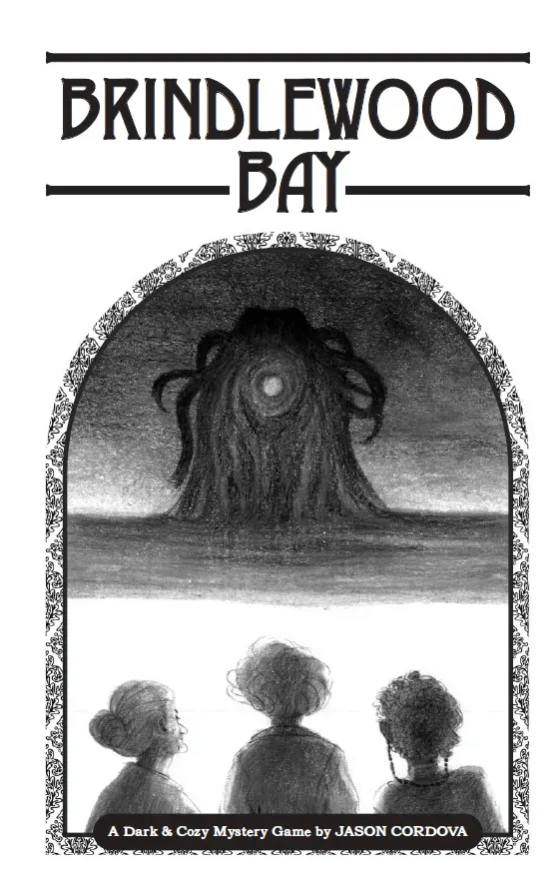
Brindlewood Bay is a Powered By The Apocalypse (PBTA) game of cozy mysteries written by Jason Cordova and published by The Gauntlet. In it, you play elderly widows investigating murders in a quiet New England coastal town, while gradually revealing the dark mysteries of an ancient cult. It’s also a fantastic game for one-shot play, with an innovative mystery system that makes investigations improvisational and fun. I’ve run two one-shots of it so far, and will definitely be adding it to my one-shot repertoire.

While you’re reading this, I should tell you about my Patreon. Patrons get access to content 7 days before they hit this site, the chance to request articles or content, and the chance to play in one-shot games, for a very reasonable backer level. If you like what you read, want to support the blog, and have the funds for it, please consider supporting here.

The Fluff

You play elderly widows, members of a book club, solving crimes. The game’s sources are are Agatha Christie murder mysteries, 1970s-1990s TV series, very much in the ‘cozy’ tradition. In chargen, you broadly define your PC and their cozy activity (knitting, gardening, cooking, etc.) – and then, as a group, you all add items related to each others’ activities. In play, these offer a bonus to rolls, and it’s great to see players find opportunities to use, for instance, their late husband’s tiki set, in order to help their investigations.

This is not a common genre in RPGs, but it’s very recognizable from popular culture; my players had no trouble feeling the setting and tropes of the game, especially after the cozy places group activity at the start. Characters are both broadly competent and physically vulnerable – while Brindlewood Bay is a generally safe environment, shadowy figures stalk around and the suspect is still at large.

The setting is well painted in broad brush strokes, and the mysteries that are provided (with more available in a supplement, Nephews in Peril) add further details and locations to the town. Implicit in longer-term play is a metaplot about discovering the sinister cult in the town – which is perhaps the reason for there being so many murders – but this doesn’t come into play in a one-shot.

The Crunch

This is a really streamlined evolution of the PBTA engine that keeps what’s important front and centre. There are two ‘action’ moves – Day and Night, which being rolled determined by the time of day, and a Meddling Move, which is the main vector to gather clues. There are a few additional moves, but these three form the bulk of play. While MCing, I really appreciated the simplicity of this – I never had the “uhh, this seems like you’re trying to… go aggro?” moments that I often get when running PBTA games with a broader selection.

Mysteries get solved by you gathering Clues, usually by using the Meddling Move, which are snippets of information, deliberately left loose – a note writing somebody out of a will, a missing dog, signs of a struggle on the victim’s body. After some investigating, the PCs get together, decide which suspect they think was the murderer, and make a Theorize Move, adding the number of Clues gathered and subtracting the Mystery’s complexity – on a Hit, they can catch them – on other results, they may have got the wrong person, leaving the murderer free. In my two games, in one case they apprehended the butler in time – the second, with a 7-9 result, led to a car chase and the eventual escape of the killer when a PC’s cat ran out in front of their car!

The Clue / Theorize economy is amazingly elegant. I have my own issues with investigative games, and the tension between finding the right answer and playing an entertaining game irks me, and in more player-led / story-now games even more so. I discussed it during our after action report of Vaesen with the Smart Party – at a point in the session, you click from “playing my character / making a fun scene” to “solving a puzzle.” Brindlewood Bay avoids this by not needing to join the dots until the Theorize move – up until then, players can just go poking around wherever they want, and clues – if they’ve got the dice for it – will keep showing up. As MC I still felt involved in building the mystery, by choosing which clues made sense to place, and seeing the players have license to freewheel and solve the mystery themselves gave it a satisfying feeling of collaboration.

The One Shot

Although clearly ideally built – like most PBTA games – for short-run campaign play, Brindlewood Bay has so much to recommend it as a one-shot. A setting and genre that is both instantly recognisable and a fresh break from standard RPG genres, an easy-to-MC PBTA framework and a structure that genuinely supports collaborative storytelling made it a hit in both games that I ran. Indeed, although the TV series source material was often long seasons of shows, in practice before media-on-demand we watched them in snippets of individual shows out of order, so it doesn’t feel out of genre to be looking at a murder-of-the-week with protagonists who already have a past together.

I’d recommend for a one-shot not cutting down the ‘cozy place’ prep step at all – as I’ve written about previously, spending up to an hour at the start of a PBTA one-shot is always worth it to get a great setup and have the players able to really get into their characters for the rest of the session. I used Dad Overboard, one of the Mysteries included in the game, and it was a great solid plot structure for a satisfying conclusion in one session.

One thing that I’d also recommend is being really open about the collaborative nature of the mystery – on the sign up description (if you’re running at a con), at the start of the session, even a reminder during the game if you see a player start to cut out investigative channels. For some fans of investigative games, this collaborative stuff, and the MC not even knowing who did the murder, requires a real shift in approach that you need to make sure they’re up for.

In summary, this is a brilliant game, and one of my highlights of 2020 – I’m not sure if I’ve ever found MCing a PBTA game as relaxing and flat-out enjoyable as Brindlewood Bay in a long time. The simplicity – elegance even – of the moves, the wealth of pre-made Mysteries available, and the easily-grokked genre make it an absolute one-shot hit. One of my players went straight from my game to download and read the rules himself – so intrigued was he by the system – you can’t say fairer than that.

Prep Techniques: The 5-Room Non-Dungeon

In this series, I’m going to be looking at ways to get started when prepping a one-shot – although, as I talk about here, I use pretty much the same techniques for prepping sessions of ongoing games. Some of these will be my own ideas, some of these are references to other people’s stuff, and some are reviews of products.

Since you’re here, I should point out that you could have read this a week earlier if you were one of my Patreons – you can subscribe here, and for a trifling fee of £2 a month you get access to blog posts a week before they appear on the blog, the option to request topics for posts, the chance to play in one-shots online with me, and the warm glow of satisfaction of helping keep this blog alive.

To start with, we’re going to look at the 5-Room Dungeon. Created by Johnn Four at roleplayingtips, you can find an overview and some great examples of it here. To summarise, your ‘dungeon’ has 5 rooms – in sequence, as below

  • Room One: Entrance and Guardian
  • Room Two: Puzzle or Roleplaying Challenge
  • Room Three: Trick or Setback
  • Room Four: Climax, Big Battle or Conflict
  • Room Five: Reward, Revelation or Plot Twist

I don’t intend to spend any time talking about each of these stages here – the link above goes into detail far better than I could. Instead I’m going to discuss the pros and cons of the structure, and my own hack of it that I often use prepping sessions.

Pros and Cons

The 5 Room Dungeon is about the exact right length for a single session; it keeps your prep focussed and compact and helps you to avoid throwing in additional time-wasting encounters or scenes. It’s also easy to translate into lots of other settings apart from the dungeon – more on that later. It gives a good balance of combat and role-playing. And it’s a great starting point – using this as a basic structure, it’s easy to add bits to it (even optional bits to give you flexibility with pacing) or move things around; between Room 1 and Room 4 you can kind of do what you want.It does have some limitations for me. I’m not a huge fan of the “Trick or Setback” room without giving PCs a chance to avoid or overcome it, and I don’t think Room Five really needs its own room – certainly, in a one-shot, an end-of-game Plot Twist is a bit weak. And, I don’t think it works very well for dungeons. Anything else, it’s a solid structure, but I think dungeon design is its own thing (I’ve blogged in the past about it briefly) and deserves more than this linear-ish structure. So, I’ve hacked it a bit to the structure below

The Five-Room Non-Dungeon

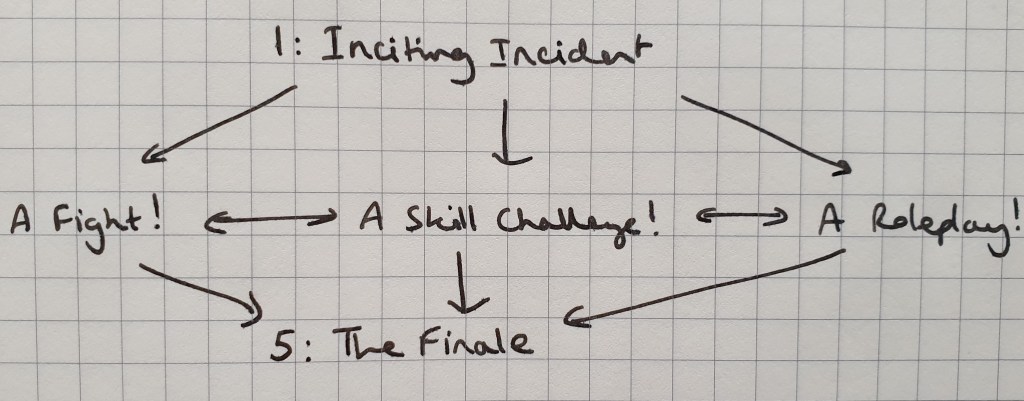
Scene One: Inciting Incident or Action (skill checks, challenges, or combat)

Scenes Two – Four

– A Combat scene

– A Roleplaying scene

– A Skills-based scene

Scene Five: The Finale

Scenes two-four can happen in a pre-determined order, have options for the players to pursue in whatever order they want, or can be left for you to decide the order during play based on what it looks like the players need.

The 5-Room Non-Dungeon In “Flowchart” Form

In more detail

In scene one, you start the session off with action. Even if later on they’ll be asked to save the  village / explore the caves / hunt the werewolf, you want to begin the game with the dice rolling and players getting to grips with the rules. A bandit attack is the go-to old fantasy trope, but it’s a good way to start – give the bandits some clues as to the looming threat, or at least some link to the rest of the adventure, and it’s a great way to hook the players into the plot.Scenes Two-Four should show a range of challenges as your setting or system supports. The roleplaying scene is the only one that might be system-free – and is contrasted with the “Roleplaying Challenge” from above – it might be a friendly character you discover, or a monster that can be charmed or talked into helping them.

To really make these scenes sing, think about an alternative approach for each of them – and be flexible for the players taking this approach. Maybe the thieves’ guild ambush, that you’d imagined as a combat scene, could be tricked into leaving them alone (maybe some good roleplaying ideas with or without a skill roll), or maybe they can bypass the corridor of traps (planned as a skills scene) by getting the goblins to help disarm them.

Scene Five is probably a fight. Have stuff going on in the environment and a good mix of big bads, lieutenants, and mook opponents to make it a satisfying scene, and make it as challenging as your group’s tastes are. For my D&D5e preferences, this is a touch above what it says in the DMG for “Hard” – although if you’re running a one-shot and the players clearly know what they’re doing in terms of system mastery you could go higher.

Examples

If you want an example of the 5-Room Dungeon, apart from those on the roleplayingtips website, there’s Tower of the Stirge on this blog. This is a bit between the two approaches – and ‘cleverly’ disguises its linear plot by setting it in a tower. I’ve got another post lined up with a couple of examples of this structure – but as I haven’t run them yet, I’ll have to keep them behind the wall in case my player’s see them!Have you used the 5-Room Dungeon format successfully? Anything you’ve found that works well or poorly about it? Feel free to comment below – or suggest any prep problems or techniques you’d like to see explored in future.

Low Fantasy RPGs – Part Two

In the last post, we looked at some of the options for Low Fantasy gaming – here are three more if you want some one-shots where magic is awful and terrifying, and the players are rooted in mud.

While you’re reading this, I ought to tell you that I have a Patreon which you can subscribe to to discuss anything raised here, support the blog, and request articles. Patreons also get access to posts a week earlier than regular blog-readers, as well as my enduring gratitude.

Wolves of God

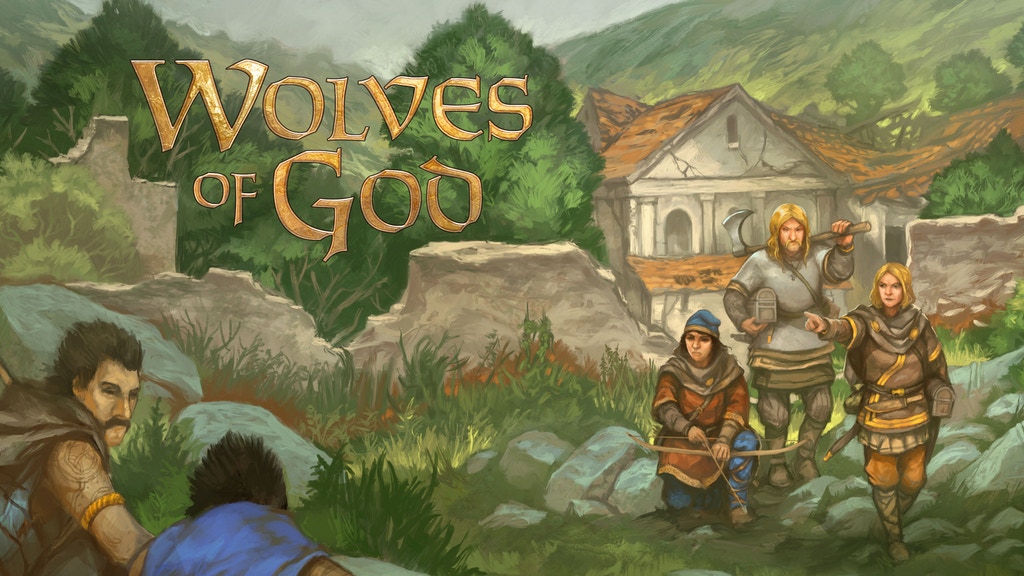
Cleanse yourself of any lingering anti-Saxon sentiment from Pendragon with this Sine Nomine game from Kevin Crawford where you play brave Saxons exploring Roman ruins and skirmishing with the Welsh in England. With a system that’s sort of OSR-based, with some heavy shifting, it’s well grounded in the setting and you can feel the mud seep off it.

Pros: It’s a straightforward system, and the game comes with loads of tables and guidance for populating a low fantasy sandbox – applicable to any of the games we’ve talked about.

Cons: For the one-shot, Sandboxing is tricky – you want to add some structure and plan to the exploration to prevent any turtling or getting stuck in a rut. Get them rescue a lost herdsman from the Roman ruins, or parlay with the Wealh to defend your common lands from the undead. Kevin Crawford’s stuff deserves a future post about this, after I’ve run some one-shots with his system.

Warhammer Fantasy Roleplay

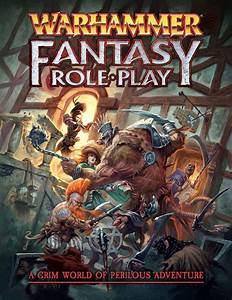
This is one of the originals, and a heavy touchstone for TTRPG gaming for any (especially British) gamers of a certain generation. With 4th ed, there’s a system that works well for one-shot play, and it’s a brilliantly realised world that manages to be quasi-European without being awful. There’s even a review of 4th edition on this very blog.

Pros: There’s loads for this – including loads of one-shots already done, some of which are awesome. Night of Blood is great, there’s a .pdf of One-Shots (soon to be reviewed here), and lots of resources even for previous editions that are easily adapted. Tons of art, rich lore and a rich history are all there to help you.

Cons: It’s greatest strength is also its greatest weakness – it can be difficult to make a WFRP game feel new, when there are so many already out there. It can get a bit Monty Python, as well – such a commonly referenced touchstone can be hard to make serious. Personally, I’m not a fan of comedy *orcs or chaos cultist conspiracies, either (largely due to them being overdone in WFRP) – there’s plenty more to use here, so look a bit further away from the “classic” antagonists.

Wolf’s Head

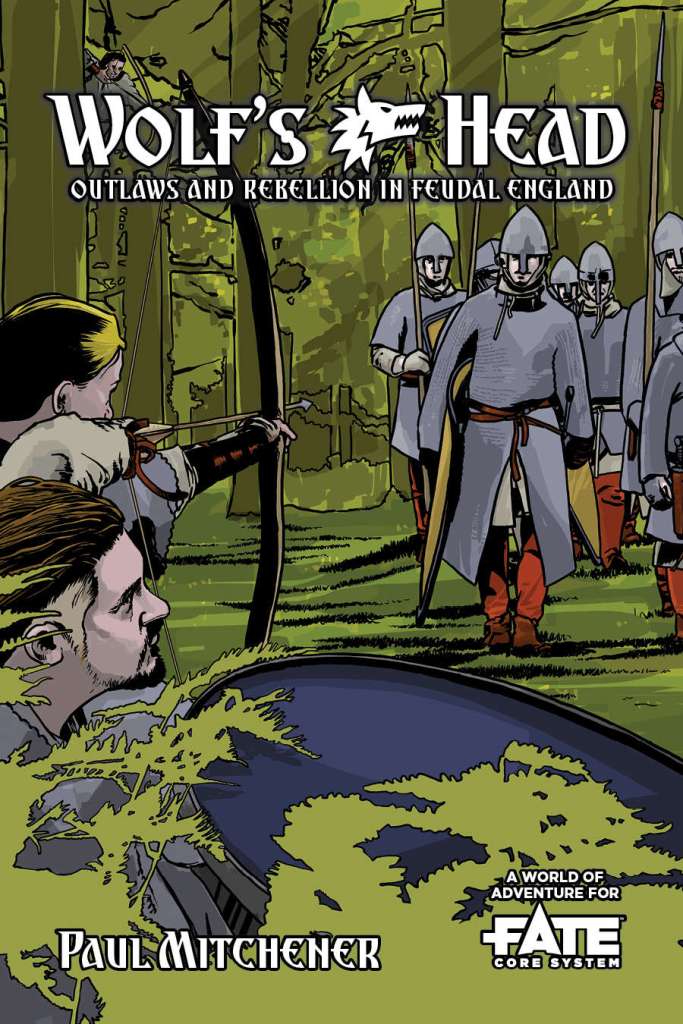
This is a FATE World, set in feudal Britain with no magic in it as written – but it’s super easy (it’s FATE, after all) to add evil sorcerers and savage beasts roaming through Norman England alongside the oppressive authority the game is based around. Lean into this by making the Baron have all the cards where magic and weirdness is concerned, thus keeping to the theme of it being a terrifying and inaccessible practice.

Pros: It’s heroic and easily modded. I see this as a basis for a wide range of semi-Historical low fantasy games, and FATE is a great ruleset for mixing it up (see advice for running it as a one-shot here).

Cons: Alone, there’s not as much fluff as you might want – you’ll have to use other sources (or other games on this list) as sources if you run out of inspiration.

So, a selection of six RPGs you can use to bring the mud and guts into your games. Next week, we’ll look at low fantasy-ing a more traditional fantasy RPG, to bring some of the feel for this into a more high fantasy game, and the advantages that gives a one-shot. What have I missed off? Message me on Patreon, or on twitter @milnermaths, to make your suggestions!

Low Fantasy RPGs – Part One

In this previous post, I gave some general tips for making low-fantasy one-shots memorable and exciting. I’m going to begin some reviewing of the systems you can use for this sort of play now, beginning with a mixture of big hitters and lesser-known systems.

I’m sure that some of the ideas here will provoke cries of “that’s not low fantasy!” from commentators – I’m using a broad definition that basically just limits the PC access to fireball spells. For each game I’ve given a brief overview of how I think it’ll work for a one-shot, long with some pros and cons.

Pendragon

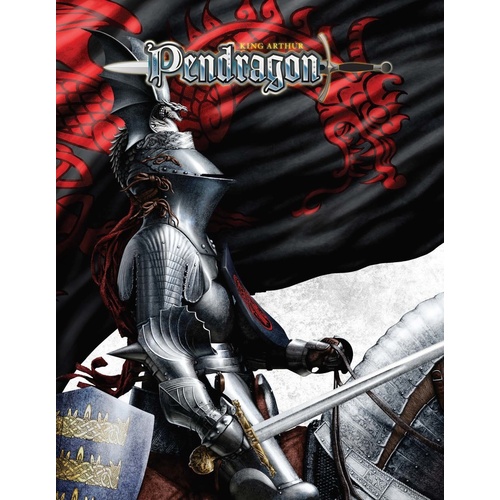
See my post on historical gaming here – in Pendragon, a game from the days of the grognards that has aged amazingly well, you’re Cymric knights gallivanting around England solving problems.

Pros – it’s a big touchstone, not just as a genre but as a game, and there are easy hooks to get the players involved (e.g. your Lord tells you to do it). Everyone playing knights is less of a problem than you might think, and there’s a funky Passions system that lets you do emotive stuff as well

Cons – a lot of the depth of Pendragon is in ongoing play, watching your Passions etc go up and down. While there’s a huge library of published material for it, most will take some solid adapting to make them really sing as a one-shot.

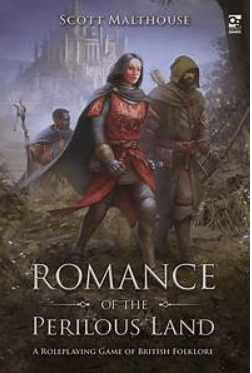
Romance of the Perilous Lands

A Black Hack-inspired romantic fantasy game, while there are playable wizards they’re much more embedded in the setting than in traditional D&D, and the quasi-historical setting means you’ll be getting muddier than you might expect.

Pros – simple, quick system that gives players plenty of options while remaining easy to grasp in a one-shot. Nice range of character options give some niche protection.

Cons – it might end up being a bit too heroic if you’re heart is set on full-on low fantasy.

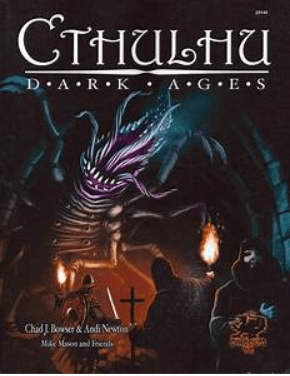
Cthulhu: Dark Ages

A supplement for the classic horror game that takes you into the 12th Century, with all kinds of scary cultists, goat-headed hermits and stuff

Pros – a really straightforward system that still gives enough depth in resolution – the book also comes with great setting material and sample adventures that would be brilliant one-shots right out of the box.

Cons – I mean, really, it’s a horror game. Pick the right archetypes and I think you’ll have a lot of fun with this though, and there’s only a tentacle-width between grim fantasy and apocalyptic horror after all.

Next time, another 3 systems for low fantasy gaming – and after that, guidance on hacking D&D5e to make it a grim and gritty low fantasy system. Easier than you might think, I’d imagine.

What are your go-to systems for low fantasy gaming? Any you’d like to see my thoughts on? Let me know in comments.

If you like this post, you could have read it a week earlier by supporting my Patreon – you’ll help to pay for hosting costs, as well as making BAR get even more awesome. Follow the link for early access and the chance to request articles.

Burn After Running has a Patreon

Just a short blog post today to let you know –

I’ve got a Patreon. There’s currently one level of funding, £2 a month, and for that you get

  • Early access to all Burn After Running posts (you’ll get them a week prior to them landing on the actual blog)
  • The option to request articles (I’ve got a pile of topics to cover still, but nothing will go unconsidered)
  • The warm sense of accomplishment from supporting something you find interesting or useful

Why am I doing this? Well, at the moment BAR is entirely self-funded; I’d like to be able to recoup hosting costs, and get some logos and art to make it look a bit nicer – I sometimes feel like the content is let down by the presentation. At the moment, any playable materials are just thrown into the blog, with a .pdf made on word and whatever art I can scrounge up – this will give me some options to produce slightly more professional output.

In the future, I’d like to offer some online one-shots to Patreons as well – but that will depend on interest and online requests. There will be the occasional Patreon exclusive, but it’s not my intention to make anything too exclusive – the vast majority of posts will appear here as well as the Patreon.

So, if you like what I’m doing, would like to see it continue, and have a few spare copper pieces after your last expedition, please consider joining the horde of Patreon supporters here. The first post is already up – continuing the Low Fantasy One-Shots series – a week before it’ll hit this blog. As always, any feedback is welcome – are there any other special Patreon rewards you’d like to see offered? Let me know here or at @milnermaths – or, of course, on Patreon.

Mud, Blood, and Saxons – Low Fantasy One-Shots

If, like me, you’re an Assassin’s Creed fan, it’s likely you’ve been spending at least some time interfering in Mercia’s fortunes in AC: Valhalla over the past few months. With this in mind, and playing in a Pendragon campaign run by @the_smart_party, I’ve been hankering for some down-and-dirty low fantasy, with rare, dangerous magic that’s a long way away from the PC’s understanding.

There are lots of systems that support this – and soon, I’ll give you a run down of some of them – but there are some principles which I think are useful when running low fantasy games, no matter what rules you have. Without the constant threat of magic and monsters, and the comforting embrace of the D&D-style dungeon, you need a few different approaches to get the genre right…

Make Humanity Distinct

In D&D, you can get away with “the generic bandit” – there are orcs, goblins, and other beasts to be distinct enemies for you. In a low fantasy setting, you will end up with an awful lot of bandits, corrupt noblemen, aggressive Norsemen, and renegade constables. Make them distinct and interesting, so they can be recognised and different – maybe the Misty Woods Bandits have white runes painted on their faces, or the corrupt Lord’s marshalls all wear brilliant blue tunics, perfectly laundered. Brand your NPC groups, so they are distinct and interesting.

Make Humanity Horrible

“Start with the baddie” is good advice in any one-shot prep, but no more so than in low fantasy where the antagonist is likely to be another human just like the PCs. The seven deadly sins are a good starting point – maybe the Lord is determined to crush the peasants because of pure greed, or maybe it’s vengeance for when that farm boy disrespected him as a child. Make their motivations understandable (and, as always, prep them so the PCs can find out about them) and then make them prepared to do anything for it. Give your NPCs history, too – every village should have a dark secret, with consequences that come out in play, and difficult decisions to make.

Present Normality

In low fantasy games, life is often cheap, and so to make it meaningful, make sure that the general NPC populace have distinct personalities. When the Lord kills generic peasant #1 it doesn’t mean much, but if it’s Old Eckhert who gave you that healing potion the one time, it hits different. There’s a lot of day-to-day toil and strife in a low fantasy life, and so giving the common people some hobbies, interests, and quirks makes them feel a lot more real. The honest working man, oppressed by the corrupt noble class, is a good trope because it reflects life well, so use it.

Make Monsters Unknowable – and Possibly Unkillable

If you are going to have monsters, and you should, they need to be very much not human. There’s a few different ways to do this – have contradictory rumours about them show up, have their habits seem terrifying, and show the genuine terror they cause. One approach may be to simply make them unkillable unless certain conditions are met – the PCs must find these conditions, and achieve them, in order to defeat them.

The wyvern that’s stealing cattle cannot be harmed by mortal blades – so they need to find out from the wise woman how to craft a blade that can pierce its hide, and then trick it into emerging from its lair to be defeated. In general, “pacing” encounters along the way should be human – monsters should only be the boss fight of a one-shot, and indeed might be the focus of the entire one-shot.

Use Wilderness as an Enemy

The other unknowable about low fantasy that I like to use is the actual wilderness as an enemy. Long journeys may be challenges in themselves, and a storm or heavy snow can be in itself an enemy. You can use a skill challenge for these, or another subsystem your game has. Also, don’t neglect animals and beasts as challenges. An angry bear, hungry due to the wyvern taking its territory, can be a great challenge for the party.

So, five ways to look at low fantasy games, and keep them grim, bloody, but still heroic. I’ll review a few of these games next week, but in the meantime – what have you found to work well in low fantast settings?

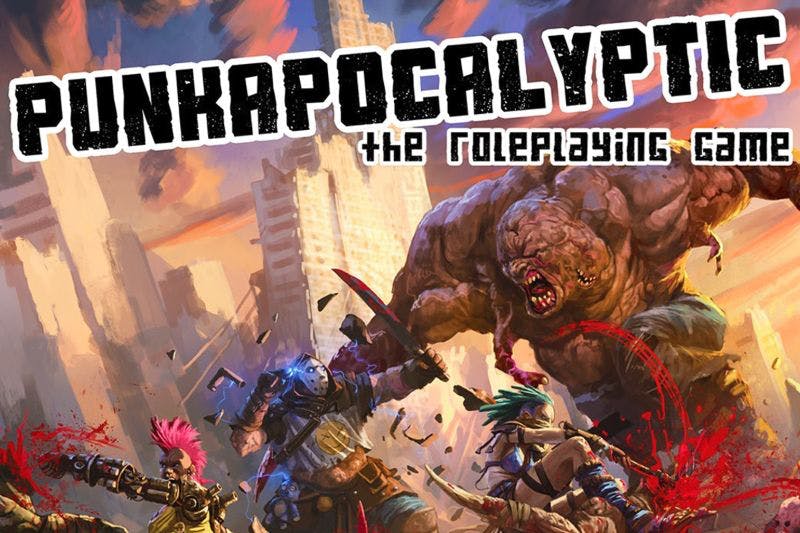
Bad Luck in Luckyland – A Punkapocalyptic One-Shot

As a follow-up to my previous post about running Shadow of the Demon Lord one-shots, I thought I’d give you an example for SOTDL’s sister game of gonzo post-apoc mayhem that uses the same system. I ran this at Furnace 2020 online, and it was a lot of fun.

It’s presented here pretty raw, and isn’t in as much detail as some of my other ready-to-run one-shots; I found the system and setting was light enough to let players roll with ideas on the fly. I ran it for 2-Mission pregens, but I’ve given stats for Starting or 1-Mission characters too – I think starting at 2-Missions is a good move for one-shot survivability. Let me know if you run it – or if you get anything from it!

Cast

Landslide, elder of Scrapbridge. Looks about 112 years old but acts like a little kid. Hidebound, cowardly, quick to anger. Hates gangers, hates mutants, hates anything that might be dangerous for Scrapbridge

Owl Man, gifted cook. Depressed, filled with ennui, brilliant, dangerous. Left after he realised his mutation meant they would kill him.

Four-eyes, a mutant with six eyes. He got the name when he had four. Angry, stupid, sees everything

Gary, leader of the White Reavers. Thick glasses, white lab coat, cowardly and chews. Surprisingly chill that his gang is currently without a base of operations – hoping to find some mercs who can help him get Luckyland back.

Weeper, leader of the Blue Vegans. Mostly naked, skinny but powerful. Has some mental powers, but is currently too embarrassed by their disastrous Luckyland venture to use them effectively. Frightened, covered up by aggression.

The Horn-People, a mutant band with no fixed leader. Most of them have horns – goat, rhino, bull – as a mutation, and those that don’t wear clumsily-attached headpieces to show their loyalty. Speak about themselves as a collective in the third person “The Horn-People desire you to leave us alone,” in an attempt to show unity.

Scene 1 – The Beanz-Off

We begin in The Great American Beanz-Off, a cookery competition held every year in Scrapbridge, a dry-river-bed of a town most famous for its fighting pits.

The PCs have all competed –each player should describe their beans-based dish, make an appropriate test (Brains for an inventive dish, or Hands for one requiring dexterity – add an Asset for an appropriate speciality) – to see who has created the best dish. The winner is crowned by Landslide, but as they settled down for the beans-based feast, , something is troubling the assembled diners.

Owl Man, the best bean chef in Scrapbridge, is missing. Four-eyes, a mutant with six eyes, will volunteer that he was scouting out some new pantry staples in Luckyland last week – Luckyland is usually good hunting grounds, but come to think of it nobody has come back from there for the last few weeks.

Landslide quickly seizes control of the situation and offers the PCs free beans for life if they can find and return Owl Man to Scrapbridge.

To find out, or recall, facts around Luckyland, PCs can make an attribute roll with an attribute appropriate to their approach (Brains to remember something, or Mouth to ask around)

1 – it’s an old amusement park, long since ruined. There’s always one gang or another trying to get control over it – last thing it was the Blue Vegans, then the White Reapers. Who knows who controls it now?

2 – The White Reapers used to be in control around there, and there’s been lots of gang activity around the roads to it recently – maybe they are expanding their turf, or maybe someone kicked them out.

3 – The prizest prizes in Luckytown are hidden in the Runaway Mine Cart trail – if you can get a cart into the caves below there you are sure to find riches

4 – Luckytown’s main dangers are the animatronic guardians – some of their programming has degraded over time

5 – Owl Man did seem a bit distant recently, complaining that Landslide didn’t let him express himself as much as he could – and that he wished he had more spices

6 – The roads around Luckyland are usually crawling with mutants – these are best avoided by sneaking past

Scene 2 – Road to Luckyland

“Sorry about ambushing you again, man, we’ve just had bad vibes since those vegans came along. Can I get you a sandwich?” Gary, White Reavers leader

The road to Luckyland is rough and ready, and crosses detritus of civilisation – a huge caved-in elephant head, the ruins of a long-raided supermarket, a crumbling motel sign with no motel beneath it.

The roar of motorcycles comes up from in front, and a bike and a sidecar approaches – and several figures dressed in white roar up on a motorcycle with a sidecar. This White Reaver patrol attacks immediately, hoping to gather whatever salvage they can from the PCs here.

Starting – 3 scumbags (p163)
1-Mission – 4 scumbags (p163)
2-Missions – 3 scumbags and 1 ganger (p164)

They can tell, if questioned, their shame – they’ve been kicked out of Luckyland by the Horn-People, a band of mutants. They tried to convince the Blue Vegans to help them by joining forces, but then Gary – their leader – started eating a bacon sandwich and the BVs attacked. The Horn-People are strong and powerful, and have barricaded themselves in the D&D ride – good luck getting in there!

It’s possible that the PCs see the opportunity to enlist the White Reaver’s aid in recapturing Lucklyand, in which case they are taken to meet Gary, who quickly agrees to help.

Scene 3 – Exploring Luckyland

“Luckyland – gateway to the worlds of adventure. Come for the fun, stay for the food!” – Luckyland Animatronic Duck

Exploring Luckyland – the PCs arrive at a ruined, rough-shod amusement park. There’s a Critical Role/D&D section, an Indiana Jones section, a Samurai section, a twisted Disney section – plus whatever the players decide to make up.

They sneak around, trying to gain access and avoid the attentions of the animatronics – to cover this, they should complete a 13th-Age style Montage; have each player describe challenges and approaches in turn. For full details on using Montages, see this article from Pelgrane Press.

After such an exploration, they begin to be afflicted by Luckyland’s radiation. They gain 1 mutagen – remember to roll 1d6, and if it is equal or less than their new score they gain a new mutation (p87)

Scene 4 – The Blue Vegans

“You should leave, NOW – any minute now our plans will coalesce into action and I don’t even know what’s going to happen” Weeper, leader of the Blue Vegans

As they sneak up (or perhaps as a result of their activities in the montage) they come across a group of bearded, half-naked gangers reading and smoking around the staff area – the remains of the Blue Vegans.

There are a total of 8 Scumbags (p163), although they can call for help if needed. They are scouting out to try and regain Luckyland, but are on the point of giving up. The Horn-People come at night and patrol, and the smells they can smell of their cooking seem to be delicious. They will need to be convinced to help reconquer their territory – and they won’t be happy about any alliance with their old enemies the White Reavers.

They tell the players that the Horn-People have stripped Luckyland of most of its best assets and are hiding out in the D&D section below the old mine cart trail – and they certainly seem to be cooking beans a lot now!

Scene 5 – Showdown

“I just wanted to cook my beans, man. It was good at first – then they started getting me to feed the big guy.” – Owl-Man

Although the D&D section is well fortified, they could burst in using the old rollercoaster – a decent Brains roll could jury-rig it to build up enough speed to smash into the Horn-People camp, especially if they have the Blue Vegans or the White Reavers with them.

When they burst in, they will get the drop on a group of Mutants.

Starting: 4 Mutants (p168)
1-Mission: 6 Mutants (p168)
2-Missions: 8 Mutants (p168)

After a couple of rounds, however the combat is going, Owl Man appears and tells them his story. He can’t go back – he reveals his long, sinuous, taste-sensitive tongue. He’s a mutant! Will they take him back and try to persuade Landslide to let him be, or should they just take his secret recipe?

Either way, he tells them they’ve got him working on a secret recipe – they keep feeding his beans to just one mutant, a huge bearlike creature they named after him and are breeding for war they call the Owl-Man-Bear. He’s now a huge, semi-feral creature; whatever negotiations they are able to do with the rest of the Horn-People, the Owl-Man-Bear will not take kindly to his source of food being “rescued.”

Starting: The Owl-Man-Bear (stats as Mongrelmorph, p170) – in this scenario, I’d suggest they only need to survive 3 rounds against it before they escape, maybe with a break-neck race back across Luckyland laden with beans.
1-Mission: The Owl-Man-Bear (stats as Mongrelmorph, p170), 3 Mutants (p168)
2-Missions: The Owl-Man-Bear (stats as Mongrelmorph, p170), 3 Mutants (p168), 3 Addlers (p168)

Epilogue

With Owl-Man rescued, or left with his fellow mutants, the PCs can return to Scrapbridge and tell their tales to Landslide. If Owl-Man’s mutation is revealed, Landslide is initially disgusted, but can be persuaded with the aroma of one of Owl-Man’s delicious bean-pots.

Have each PC narrate a scene of them celebrating their victory (or otherwise) in scrapbridge to bring the one-shot to a satisfying close.

Shadow of the Demon Lord One-Shots

Rob Schwalb’s Shadow the Demon Lord (SOTDL) is an excellent system, and a great one for con games and one-shots. A grimdark fantasy world of demons and apocalypse a shade or two more gonzo than Warhammer and the like, it’s also the system for a post-apocalypse game, Punkapocalyptic. I’ve run several games of both of them as one-shots, and a full campaign of SODTL, and there’s a lot to recommend it.

It’s d20-adjacent with a Boon/Bane dice system that reduces the spread of numbers and keeps everything quick and easy, and has some really neat system tweaks that come into play. On a read through, you might think it’s a drifted d20 system game, but in play it feels very different – in a good way – and it’s built for pace. There’s plenty of examples of Rob running it on his podcast, and they are a great example of a fast-paced game. Here are five recommendations I’d made if you want to bring it to a con.

Start at the right level

Shadow has a great advancement system, where you start out at 0-level, then add a core class at 1st level, an expert class at 3rd, and a master class at 7th – making your character get gradually more defined and niched as you advance. For a one-shot, I’d start somewhere between 2nd and 4th level – 3rd level gives the Expert class, which creates some nice wedge issues between PCs, and will give players a few options in combat without being overwhelming.

In campaign play, PCs have a lot of options past 7th level, which would be a bit overwhelming in a one-shot, including options that break initiative order and allow them to make their allies make immediate attacks – I’d steer away from those as this will slow down a system that works best played at pace.

Watch balance

It would be easy to read the guidance on building encounters as gospel, and follow it rigorously for your players. But in truth, this isn’t a tightly-balanced game like D&D or Pathfinder – not all the classes are necessarily equally good in combat, for instance, and some of the monsters at a certain Threat Level can vary a lot in lethality. Use the guidance as a starting point (and, for one-shots, in all systems, you should have no medium-difficulty fights – it’s easy to let the players show off, or hard to make them sweat) and then have a careful read of the opponents powers. You might need to adjust up or down. I found running published adventures I quite often had to adjust, and often adjust up, the opposition, but that may have been informed by my group’s “play hard” approach to character building.

Reskin, reskin, reskin

The bestiary in SOTDL is generous – you have lots of easily adaptable monsters and NPCs that, as in any game, are easy to reskin to whatever you want. I made my Punkapocalyptic players fight an animatronic Owlbear that was just another stat block, and in SOTDL “Large Monster” stood in for an awful lot of opponents in my campaign. The system is sufficiently fast and loose that your players won’t know.

Fast Turns and Slow Turns

SODTL’s initiative system is weird, and took me a while to get used to. PCs take a Fast Turn or a Slow Turn; on a Slow Turn you can do two (different) actions, but Fast turns (from both the PCs and the opponents) go first. It took me a while to get this right, but in play, just shout “Fast Turns” – whichever player shouts first, they go first; then all the other player fast turns, then the opponents, then player Slow Turns, then opponent Slow Turns. If somebody takes too long to respond and doesn’t shout up for the Fast Turn, they must be taking a Slow Turn. Giving it this degree of pace really helps combat to flow fast.

I added a ‘house rule’ that I think is an actual rule in Punkapocalyptic that you could use an action to assist an ally, granting them a Boon on their next role. This worked really well and made Slow Turns worth taking, and the players narrated what they did to give their ally a bonus in the next round which was all good action scene stuff.

Steady with the dick jokes

The gonzo-ness of SOTDL, and especially Punkapocalyptic, does contain some references that you might want to shade over in convention play or in a one-shot with people that you don’t know. A PC starting the game with a gym bag full of sex toys, or a wizard losing his genitals due to Corruption, is all good clean fun if everyone at the table is up for that, but – even with safety tools in play – I’d suggest isn’t necessarily as fun for strangers.

As with every safety discussion, it’s not just how you react to it – it’s how all the players react to it that might make it an awkward situation. So in a one-shot, I’d reign in some of the more scatological aspects of the settings – it’s not as if there isn’t enough flavour there already – just to avoid any risk of this.

To conclude, SOTDL is a great one-shot, and deserves to be run more at conventions, either online or face to face. The Roll20 character sheet is a good implementation as well, and fairly straightforward for the players to use, although the system is such you could easily just use an A/V setup and have all the players roll their own dice. There’s an absolute pile of published material for it, as well, from adventures to entire campaigns and short supplements on parts of the setting – you’ll never run out of stuff for it. What have your experiences been with SOTDL / Punkapocalyptic? Let me know in the comments, or on twitter @milnermaths

“The Chest Appears to Not Be Trapped” – Fixing Perception, Part Two

In my previous post I talked about how Perception (or whatever your skill is called) is often disappointing, and made some suggestions to fix it. Since then, I’ve been very self-conscious of using perception in my own games, as you might imagine, and so have come up with a few more ideas to make perception less rubbish than it generally is.

You All Notice Different Things

I’ve found this a surprisingly decent way to fix everyone making a Perception check, which can’t always be avoided – if one player wants to make one, it’s expected all of them can make one. Just make every successful PC notice something different, ideally tied to their own specialism. You might want to plan these ahead of time, but once you know your players it’s fairly easy to just busk these as long as you’re happy to give out exposition this way.

“I inspect the battlefield” says the wizard, while the orc army charges

As an example, in a recent Shadow of the Demon Lord game, the players were accosted by Boneguards on the way up a cursed mountain. I’d reskinned them a bit to foreshadow the rest of the adventure, making them quartz-eyed and sleepwalking, as the next scene involved facing a nightmare monster that would invade their dreams.

Perception checks ensued as they rushed to battle them, and the wizard determined that, despite their quartz-for-eyes and non-decayed appearance, these were definitely undead, and likely vulnerable and immune to the regular undead stuff. The fighter noted that they appeared to be sleepwalking chaotically, making them possible to trick or evade, and the rogue noticed that their clothes were just like those of the pirates they’d seen earlier in Float Town. By spreading the information around, it made everyone’s roll feel important – and gave a mechanic to share exposition in a more interesting way than just doling it out (or, worse, the after-combat interrogation, which always bores me).

Let Perception Deliver Resolution

“I search the chest for traps” – rolls – success

“There’s a poison needle trap here, a good one, but you deftly reach in and disarm it, draining the poison reservoir and clicking the lock open.”

Consider why we have to roll to find, and then roll to disarm, a trap? Sometimes there’s even a roll to evade it in the middle as well. Fold it into one roll – the trap-disarmer is likely to be good at all the elements of it, so just roll once. Similarly, for an ambush, let the players roll to spot their ambushers, but have the consequences solid – either they’ve got a knife at their throat (or an arrow in their back) or they’ve got the drop on their attackers – with possibly different outcomes for different PCs. Make Perception lead directly into resolution, rather than being a separate information gathering check.

Perception in the Action Economy

Consider adding “assessing the battlefield” as a combat action. On a successful check, you can liberally dole out clues as to what’s going on in the scenario, along with something that will offer a mechanical benefit as well – which could be how to make a called shot to get through armour, or just something abstract like granting Advantage to the next attack.

There’s a whole other discussion about exposition through action scenes, and how much of the plot / investigation can be folded into a mid-combat revelation, but this is a good way to make your players appreciate the value of the skill – make sure it’s a generous benefit each time though – if it needs a skill check it should be more effective than, say, aiming for a round, if that grants an automatic bonus.

So, there are three more suggestions to try and “fix” Perception. I’m still moving towards just removing the skill, but these at least offer more options to make it interesting. If you’ve got other suggestions, or would like to suggest another type of skill check that needs fixing, let me know in the comments.