“I hit it with my axe” – fostering better player narration in TTRPGs

Player narration lies at the heart of top-class game sessions. As the Bakers say in Apocalypse World, roleplaying is a conversation, and when only one side (or neither side) are contributing much, it can feel flat. Even in the most trad game, when players describe their characters actions, it lands better if they add some flavour to it. Compare:

  • I pick the lock to the door with the demon face #rollsd20
  • We see Cherbol pressed against the door, his face to the carved demon, as he carefully rotates the picks in his hands, elf-ears pricked up to hear the click #rollsd20

Deeper player narration, or even action description, leads to a more engaging and exciting table. So what techniques can we use to foster it?

While you’re reading this, I should tell you about my Patreon. Patrons get access to content 7 days before they hit this site, the chance to request articles or content, and the chance to play in one-shot games, for a very reasonable backer level of £2 per month. If you like what you read, want to support the blog, and have the funds for it, please consider supporting here. Telling people about the blog, and sharing links/retweeting is much appreciated also – thanks!

Start Simple

I’m going to try for some definitions here. I’ve written previously about giving players more narrative weight in games, and some of these techniques foster a different kind of player narration.

Action Narration is where a player describes what they’re doing – it can be as simple as the first example above, or developed further. 

  • I step towards the door and, mindful of the demon face, slip my greased lockpicks into the lock and begin to turn.

Scene Narration is where the player sets the scene as well. The second example above is a possibly over-flowery example of this.

Some players, tables, and GMs don’t like scene narration from players. That’s fine, to a point; although if you’re playing a game like Feng Shui or FATE some scene narration is embedded in the game mechanics so I’d strongly advise you to use it – but some people prefer a harder distinction between player and GM. Occasionally people talk about “Immersion” and say that scene narration is ruining gaming, and they take issue with other people using it – these people are idiots, so back away slowly and ignore them.

If your table doesn’t want to push towards scene narration, start them out with action narration – and use some of the techniques below to encourage it. If they’re brand new, and/or you’re happy with it, go straight for scene narration – even completely new players will often find it just as easy to work with

Techniques to Use

There’s no one fix for this, but there are a few you can try to encourage this. I’m not at all a fan of 

Ask For It – any time a player wants to half-ass some action description, you can always ask for a bit more from them. I use this particularly if they’ve given almost no description at all, or if they’ve stated a game action instead of fiction

  • Can I roll Acrobatics?
  • Of course you can! What are you doing when you roll it?

Ask for a Bit More – particularly in open-skill challenges or extended tasks, asking for more flavour is also allowed – particularly if there’s a stretch to it

  • I’ll try and find a cure for the virus
  • Great, it’s probaly Reason+Science – can you give me a bit of flavour about what we see your PC doing?

Describe Locations Loosely – make the setting of scenes you describe flexible and open to player input. This includes using theatre of the mind whenever you can – there are some GMs online who’ll put out gridded maps all the time, even for non-combat encounters, and it’s really hard to not take the details on those maps as immutable fact (hey, there’s three barrels to the north- what’s in them?)

  • You’re in the back of the warehouse. You can see the goons are about to unload. There’s teetering piles of boxes, shelves, an idle forklift truck, and a workbench with some tools on it. You look like you’ve got the drop on them – what do want to do?

Give Permissions Generously – if a players asks if they can do something, with any sort of narrative justification, default to YES unless you think it’ll grate with the rest of the table. Want to use Command to inspire the science team to help defeat the virus? Of course you can. Want to Force open the door instead of picking it? Yeah, that works – a skill roll’s a skill roll. 

If you’re worried this will lead to players using their best skills all the time, the fix for that is that unusual approaches usually only work once – and sometimes I’ll even (with players with particular penchants for stretching) say they can only do it once per session. I also have some hard limits on what can be done. When I’m running Star Trek Adventures, you can pretty much use whatever on an Extended Task if you can narrate it in – but when you fire a phaser in combat, it’ll always be Control+Security.

What To Avoid

There’s some other approaches I’ve found less successful, and in particular one very common one. Don’t give bonuses for extra description or exciting narration. Your mileage may vary, but my experience is that player rewards for “good roleplay/narration” just reinforce a GM-in-charge attitude that undermines the other approaches. It’s not a good-roleplaying doggy biscuit. Cool player narration should be the standard, not some unusual extra effort they’ve made so they get an extra dice.

An exception to the above is where games come with some sort of ‘fan mail’ mechanic where the whole table has a resource they can use to reward – this can really work, and gets everyone engaged in the process.

Similarly, where possible default to the same difficulty and approach as if they’d made the roll normally. If they want to get past the guards by causing a distraction by spooking the horses with Animal Friendship, cool – it’s the same difficulty as the Stealth check they’d make to sneak past, or the Deception check to lie to them. You’ve got to apply a reasonableness test at times, of course, but if you’re defaulting to yes and being generous, your players will realise this is only a one-off ruling and it won’t put them off being more inventive in future.

So, some ideas for encouraging player narration. What do you do at your table? Let me know any that I’ve missed.
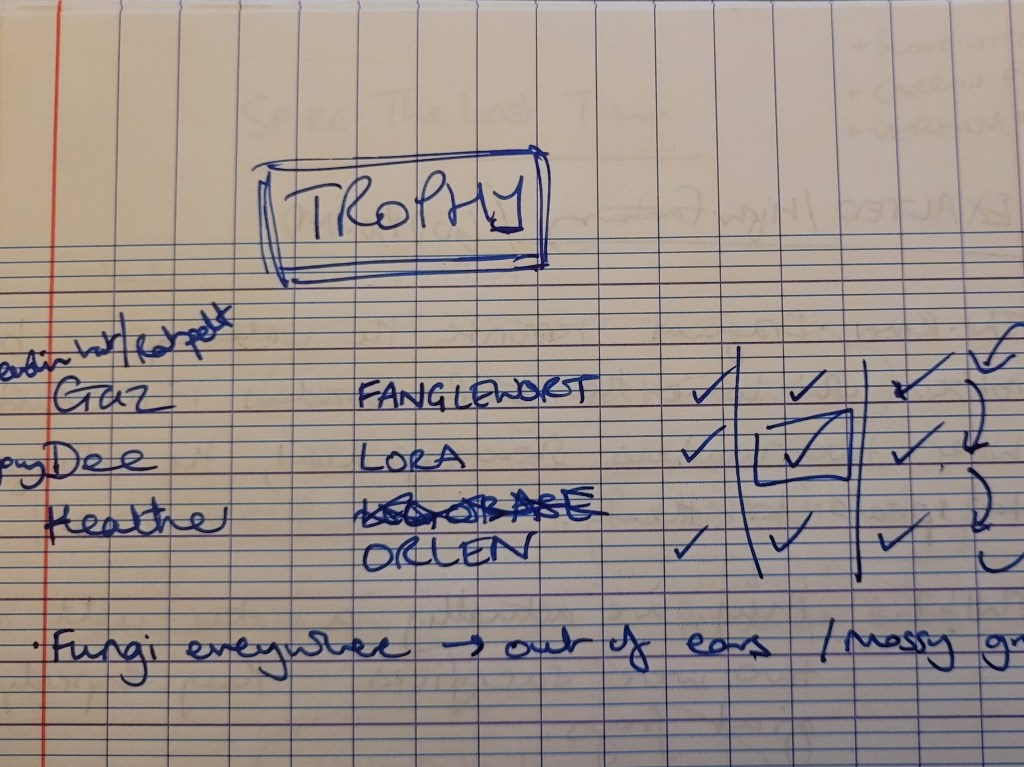
Table Techniques – Spotlighting

Earlier, along with prep techniques, I’ve talked about “table techniques” like reincorporation and sharing narration that you can do during your #TTRPG sessions to make them pop. This one is a bit different to those, in that it’s pretty fundamental. That is, do it well and it’ll have a big positive effect – but doing it competently is essential for an enjoyable session, especially in a one-shot.

Why? Well, the inspiration for this comes from a session I played at a convention recently. It was a fairly trad game, dice driven, and some time was spent explaining and teaching the system. I’m sure many of the other players had a reasonably enjoyable time – but me and another player didn’t roll dice a single time during the session. Did we get memorable roleplaying opportunities? Well, no, not really – we didn’t get to do much at all, and it was ultimately a quite frustrating experience. So, spotlight well – good. Spotlight badly – you’ll have players like me grinding my teeth all game.

What is it?

Simply put, spotlighting just means sharing the screen time that your players get around so everyone has a fair crack of the spotlight. Some players will demand more spotlight, and some will be happy to shrink and spectate – but this is one thing where the vast majority of responsibility falls on the GM – players won’t track their own spotlight. 

Actual tick list for spotlight from a Trophy Dark one-shot

So, you need to manage the amount of time players get, and be prepared to track who’s acted. It sounds like a simple thing, but from running PBTA games (and especially online) I often just have a list of the players, their characters, and a tick list, to check they’ve all had a turn at once. If you don’t do this, maybe try it – I think I’m pretty good at spotlighting, but this gives me a good safety net. But how else can we make help make spotlighting easy?

Have A System

Another way is to get into a habit of going around the table. This has the advantage of players knowing what their turn is, so they can prepare for it. If you’ve got multiple options for the next step (because you’ve designed an awesome scene with a target-rich environment), you can go round the table and get players to declare what they’re doing, and then cut to resolve them in a more logical order – you’ll get to manage what their actions are much  better in this quasi-initiative system.

Another good approach to manage spotlight is to use skill challenges liberally – scenes where everybody has to have a go to resolve the issue at hand. You’ll force yourself to give everyone a fair share of the spotlight if you use these routinely, and they’re a really strong one-shot technique anyway.

Make Fights Fighty

If you’re having a combat in your one-shot, even if it’s a ‘training’ combat to get the hang of the system, make sure everyone is going to get a go. For the initial fight, you might want to dial down (either deliberately, or in picking opposition) the damage that the enemies can do, but keep them fairly robust so that everyone will need to help if they are to be defeated – otherwise you risk some players not getting a go due to bad initiative rolls (or whatever system you’re using – I’m pretty keen on ditching initiative and going round the table in one-shots, and there’s a blog post coming around this soon).

Check In

I like to have a break every hour or so in a one-shot, and this allows a pause to check-in with your players and get some feedback – are they happy with the amount of screen time they’re getting, is there anything (in-character or out-of-character) they’d like more or less of, that sort of thing. This is general good practice, but it also helps if you think you might have players that are happier sat on the sidelines – I tend to ask for a minimum level of engagement in my games, but it’s good to know if people are happier being in a support role or letting other players lead in social situations especially. So ask how they’re going, and if you’ve got any doubts, ask again.

I think spotlighting, while fundamental, is sometimes a quite difficult thing to get right – but it’s absolutely essential to good play, and it’s something we can probably all get better at. So stick with it – and share any advice you’ve got in the comments below!

Table Techniques: Reincoporation

If you want to make your #TTRPG one-shots memorable and feel personal to your players, this is absolutely the most effective technique you can use, and it also works in ongoing campaigns. One of the challenges of one-shot play is getting the PCs connected to your plot and giving them personality, and there are lots of tricks that GMs use for this – art, standees, bonds or inciting incident questions / love letters – but this is a resource-free one that can have impressive results.

While you’re reading this, I should tell you about my Patreon. Patrons get access to content 7 days before they hit this site, the chance to request articles or content, and the chance to play in one-shot games, for a very reasonable backer level of £2 per month. If you like what you read, want to support the blog, and have the funds for it, please consider supporting here. Telling people about the blog, and sharing links/retweeting is much appreciated also – thanks!

It’s what a lot of players miss from convention games – feeling a genuine connection to their character. Reincorporation really helps to make this happen. It also doesn’t require too much thought at the table, which is another thing in its favour.

What Is It?

This is simple as anything – all you have to do is refer back to cool, incidental details that were established earlier in the game. Ideally, these incidental details are provided by the players – whether they realise this or not. A few pointers

  • These can be as incidental as possible. Background details, seemingly unimportant parts of description
  • Make a note of them when they’re introduced – if, like me, you’re liable to forget
  • Sometimes, you might be able to tweak your planned scene to incorporate these details – if the players described themselves all meeting in a cool coffee shop at the start of the game, have the supervillains threaten that coffee shop in the final battle
  • There’s a few ways to seed them – we’ll cover that soon

So, in the first scene of the game, the ranger describes his wolf animal companion licking hungrily at a ham bone. Later in the game, when the wolf misses, you describe a ham bone poking out of the goblin’ sack nearby which distracted him.

Why Does It Work?

It’s a risk-free way to add the shared storytelling that tabletop RPGs offer because of their collaborative effort. And, because it’s incidental to the plot, it’s a lot safer for players to come up with narrative details – because they don’t know that they’re important. It also doesn’t require too much creation from the players – but it makes them feel like their description and colour mattered.

Player-Created

When you start the game, and ask players to describe their characters – listen out for any details you can use later and reincorporate. Fancy hat? That’ll get stolen by the goblins. Heavy clanking armour? That’s what happens when they fail a stealth check. Series of enemies across the galaxy? One of them turns out to be the main opponents’ lieutenant.

This has the advantage that you’ll get some personal connections to their characters that have come straight from the players, and you should be able to get something from everything. It can sometimes lead to players giving you more, or less, depending on how they describe. To address this, if you’re going round the table doing this at the start of the session, start with a player who you think will model how to do it – if they do it well, the rest will follow that model.

Seeded In-Game


Early in the game, you can create some conditions to get this. Usually this is with an open-ended encounter – and it can be the first big scene. In Beard of Lhankhor Mhy, my 13G scenario, the adventure opens when they rescue a Duck adventurer, Crontas, from a band of Broo. How they perform in that first combat determines how Crontas responds to them – and whether they want him to come along with them to rescue his friends or not. 

Having a talkative, even annoying ally, means that the players will come back to supply details, and this gives a bit more control over what emerges to reincorporate. Similarly, if you’re narrating failures and successes with the players, how that goes in the first combat might set the tone for the whole session – as with the ham-bone example earlier. 

In all of these, try and let the details be player-provided – you can add some yourself, but the ones that you come back to should ideally be player-created. Throw lots in though – you can always use more options!

Seeded Out-Of-Game

Some players may be uncomfortable adding narrative details in-game – instead, you can explicitly get them to do this out of the game. Use Bond questions, or pre-game questions / love letters, to establish facts out of character, and then weave these in.

These can be trickier to make throwaway – you’re attaching more importance to them, so don’t be surprised if players come up with big issues and problems to solve – try and focus on some of the details they supply for those rather than the issues themselves, which will come up anyway. A detail like “I’m in love with X PC” isn’t really ripe for reincorporation as-is – but them stealing glances across the table at them, or moving to save them in combat, is – think small for effective reincorporation.

So, lots of ways to develop this. I genuinely believe this is one of the best ways to improve your game – and as an at-table technique there’s not much with more bang for its buck. How have you used reincorporation in your games? Let me know in the comments.