The Ultimate Fantasy Pirate One-Shot? – Review: The Dawn Chasers

It’s been a while since I offered a review of an adventure instead of an entire game. But in truth I’m much more interested in reading and buying adventures – they offer all the usefulness of a supplement, but with everything ready to run. And this, a DMs Guild adventure by M.T. Black and Anthony Lesink for 3rd-4th level PCs designed to take 4-6 hours, is an absolute classic. Not a classic as in a huge original – the piratey tropes are laid on thick here. Just very, very good – and a great one-shot to showcase what D&D is good at, or indeed any other TTRPG you care to run it with.

While you’re reading this, I should tell you about my Patreon. Patrons get access to content 7 days before they hit this site, the chance to request articles or content, and the chance to play in one-shot games, for a very reasonable backer level of £2 per month. If you like what you read, want to support the blog, and have the funds for it, please consider supporting here. Telling people about the blog, and sharing links/retweeting is much appreciated also – thanks!

Continue reading →

First Look : Dragon Delves Adventure Anthology

Dragon Delves is the first official “adventure book” for the 2024 D&D rules, and it’s got some interesting stuff in it – interesting enough that it bears sharing, even if you’re not a D&D player. This isn’t a review; I haven’t actually used any of it at the table – but I’m running one of the adventures tonight, so I’ll report back on that. Nevertheless, there’s some useful structural things in how it’s presented which I think make it really useful.

Continue reading →

Culture Clash

We’ve all got our own tastes and foibles when it comes to TTRPGs. But more than that, we’ve got established play cultures in our groups that we not only evolved to suit our own tastes, but that we assume everyone else enjoys. Recently I’ve encountered two quite different play cultures to mine, and I wanted to examine them here, and why I found them tricky.

While you’re reading this, I should tell you about my Patreon. Patrons get access to content 7 days before they hit this site, the chance to request articles or content, and the chance to play in one-shot games, for a very reasonable backer level of £2 per month. If you like what you read, want to support the blog, and have the funds for it, please consider supporting here. Telling people about the blog, and sharing links/retweeting is much appreciated also – thanks!

Continue reading →

Five Room Dungeon Hacks, Part Two – Twisters

I’ve blogged before about the 5-Room Dungeon here, and why its structure needs a bit of help sometimes to make it really shine in one-shots. I’ve been thinking about it more lately – inspired by this post which talks about 5RDs being scene sequences instead of locations. That post was talking about location-based design… but I’m interested in scene-based design as well. So what can we do to hack 5RDs a bit more flexible and epic? We started by introducing Multiples – but now, we’re going to talk Twisters.

Not like this…

While you’re reading this, I should tell you about my Patreon. Patrons get access to content 7 days before they hit this site, the chance to request articles or content, and the chance to play in one-shot games, for a very reasonable backer level of £2 per month. If you like what you read, want to support the blog, and have the funds for it, please consider supporting here. Telling people about the blog, and sharing links/retweeting is much appreciated also – thanks!

Continue reading →

Supercharge your One-Shot, Part 1: Sidekicks

In this series, I’m going to be showcasing some techniques you can drop into almost any one-shot TTRPG session to improve it – even if the adventure you’re running is already published, these will make it better. Each one is minimum-prep, and guaranteed to be well worth it at the table.

While you’re reading this, I should tell you about my Patreon. Patrons get access to content 7 days before they hit this site, the chance to request articles or content, and the chance to play in one-shot games, for a very reasonable backer level of £2 per month. If you like what you read, want to support the blog, and have the funds for it, please consider supporting here. Telling people about the blog, and sharing links/retweeting is much appreciated also – thanks!

So here goes, with part 1 – 

Give the Party Sidekicks

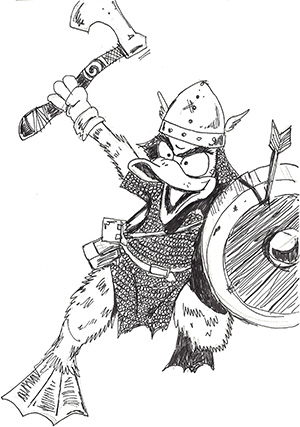
A good sidekick is great roleplaying fodder, even if they’re a hapless Duck adventurer. Image of Crontas by John Ossoway
Continue reading →

Into the Wasps Nest – a 13th Age Glorantha One-Shot

I’ve just got back from The Kraken, the best 5 days in gaming, in Germany. I ran two 13th Age Glorantha games, and this is one I didn’t run but took along with me. I ran it first five years ago at the Furnace convention, and it’s a great way to use one of 13th Age’s ‘signature monsters,’ the Goblin Bat Cavalry, in a Glorantha game. So here it is!

It’s balanced for 5 2nd level adventurers; Patrons have access to a set of pregens for this, which makes it truly ‘ready-to-run’.

Patrons get access to content 7 days before they hit this site, the chance to request articles or content, and the chance to play in one-shot games, for a very reasonable backer level of £2 per month. If you like what you read, want to support the blog, and have the funds for it, please consider supporting here. Telling people about the blog, and sharing links/retweeting is much appreciated also – thanks!

Into the Wasps’ Nest

A 13th Age in Glorantha Adventure for 5 2nd-level PCs

first played at Furnace 2018

Introduction

Deep into the siege of Whitewall, your Sartarite comrades hold strong against the coming hordes outside. But rumours of the Crimson Bat awakening mean they are in dire need of air support, and so the heroes are dispatched to find out what happened to the Wasp Riders, pygmy riders of giant wasps. The last person to deal with them, you realise, is the hero Crontas – but he was last seen heading towards Troll Woods to broker a peace with the trolls there. Can you rescue Crontas and escort him to negotiate with the Wasp Riders?

Dramatis Personae

Orana is the current leader of the Sartarites in Whitewall. A tall, stout woman, she smokes a pipe filled with pungent tobacco and, while determined to never surrender to the Lunars, is a pragmatist – which is why she favours sending the heroes to negotiate instead of her soldiers

Crontas is a ‘legendary’ duck hero. He talks a bit like Peter Falk in Columbo, and is incredibly cowardly until he is persuaded or flattered into action. He’s a lovable goof, but a little older and calmer (if not wiser) than he has been in other adventures.

Gruk is the leader of a band of Kitori trolls in the Troll Woods. He has adopted Crontas as a jester, and doesn’t want him to leave.

Essa and Iva are the rightful leaders of the wasp riders. They are currently under the sway of their older, and angrier, brother Yani. They are friendly with Crontas, but have been captured by their brother

Yani is an exceptionally short, even for a pygmy, wasp rider who was insulted by Crontas when he last visited Wasp Nest. He has taken over leadership of the tribe and wants nothing to do with the Sartarites.

Scene One – In Whitewall, The Heroes

Whitewall is a near-impregnable fortress that is currently surrounded by a half-hearted Lunar army legion. The Lunars are just about able to maintain the siege, but it is certain that Whitewall has enough defences and supplies to hold out for years if needed. Orana summons the heroes to her war chambers, filled with tobacco smoke, and explains the circumstances. 

She needs to be able to call on the wasp riders for aerial support, and they are currently refusing and contact. The last ‘diplomat’ she sent was most recently sent into Troll Woods, so she wants them to make contact with him, persuade him to accompany them to Wasp Nest, and negotiate with the wasp riders.

She begins by asking the heroes of their previous heroics – each player should recount a tale of their band, in which they made a heroic act, finishing off each others tales. With this, they are sent on their way.

Scene Two – Lunar breakout

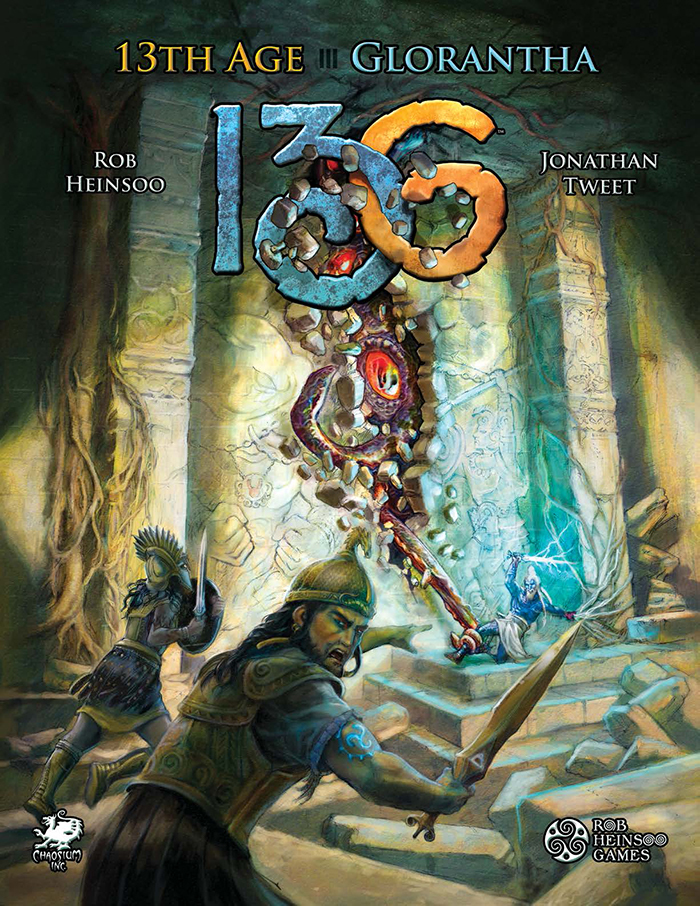
If needed, and if time allows, the heroes encounter Lunar resistance as they exit Whitewall through the tunnels. At 2nd level, this is six Dara Happan Legionaires and a Dara Happan Veteran (p310-311 of the 13G book)

Scene Three – Into Troll Woods

The heroes must now venture into the Troll Woods. These woods are full of Kitori trolls, humans that transform into trolls. Ask for a relevant DC 15 background check – success means they are able to creep up on Crontas, failure means they are ambushed and taken by the trolls to their leader, Gruk.

At Gruk’s cave, they see Crontas – an energetic Duck armed with a wooden broadsword – demonstrating his heroics to a group of onlooking Trolls, who chortle and applaud every time they hear a good bit. A DC 15 background check will reveal that they are much more laughing at him than with him.

Crontas is keen that his roll as ambassador to the Kitori trolls is vital – he is educating him in the ways of the world, just like Lhankor Mhy would. He even shows them a ridiculous beard he has fashioned for himself. He must be persuaded to accompany them – the trolls are much more fun than the serious wasp riders – even though he has been there before and will speak of Essa and Iva, and his great friend Yan, from his time with them.

It’s possible that they will have to break Crontas out if they manage to offend the trolls; if that’s the case, here’s a troll squad ready to fight. It’s 3 dark troll warriors and a troll spirit priestess (13G p295-296). These could also be an encounter on the way out of the forest, if time allows or the players look like they need it.

Scene Four – The Approach to Wasps Nest

Crontas tells them that a frontal approach to Wasp Nest is suicide – the wasp riders defend their borders forcefully, and he isn’t sure that they’ll recognise him even though the are of course great friends. He instead suggests skirting round the foothills near Dragonrise; there have been increased chaos incursions there, which mean both the Kitori and the Wasp Riders are probably steering clear.

Run this scene as a montage as in the GM’s kit. They start in the midst of thick forest with warring troll tribes all around them; they will hit the foothills soon. Any and all chaos beasts – even dragonewts – are fair game, but there will be no skill checks made.

Scene Five – Ziggurat of the Wasp Riders

As the players approach Wasp Nest, they are greeted and warned by a pygmy who approaches them – she is Essa, living out in exile. She tells them that Yan has taken control of the throne and has forbidden the wasp riders from having any contact with humans – or especially Ducks. Crontas is confident that him and Yan were great friends, but he does admit that he was sometimes the butt of his jokes. Essa pleads with them to defeat Yan and free her sister Iva, who is being held captive after she stood up to him.

They can confront Yan at the throne room. As they challenge him, Wasps Swarm around and they must face his elite guard.

The fight is with 5 wasp-riders and 1 wasp rider shaman – this could be a tough battle, so be prepared to adjust on the fly if needed. Wasp-rider stats are from the 13th Age Bestiary – p235-6 have the monster list with references for them.

Scene Six – Return to Whitewall

With Essa and Iva restored as the leaders of Wasp Nest, they are happy to lend their aid to Whitewall – the heroes can return atop the giant wasps as they see another huge red bat appear in the distance!
The 2023 Burnies – ENnies Awards Round-Up

The ENnies have come and gone, with much discussion and reaction to them. Overall, while awards things like this are a matter of fashions, taste, and similar subjective feelings, they’re better than nothing – and I’m sure the impact of them is felt by the winners and nominees. And this year, I think they’re a really great overview of the breadth and variety in the hobby – winners and nominees from a range of play styles, approaches, and sizes.

While you’re reading this, I should tell you about my Patreon. Patrons get access to content 7 days before they hit this site, the chance to request articles or content, and the chance to play in one-shot games, for a very reasonable backer level of £2 per month. If you like what you read, want to support the blog, and have the funds for it, please consider supporting here. Telling people about the blog, and sharing links/retweeting is much appreciated also – thanks!

So, here’s what I think of some of the winners. I’ve restricted myself, as usual, to products I’ve actually used at the table in play, and stuck to winners fo brevity – so here goes:

Journeys Through The Radiant Citadel absolutely deserves it’s Silver Best Adventure – it’s probably the best product I’ve seen for 5e D&D, a selection of adventures with a lightly-sketched setting attached to each one, easily one-shotted, easily adaptable, clever structures but still approachable to run. Each adventure is set on a mini-setting inspired by diverse real-world cultures, and this really showcases how different D&D can be.

Many of the settings make me want to run whole sequences of games in them. All excellent, here’s hoping for more of this, either from Wizards or third parties. I’ve run two of the adventures as one-shots at conventions and they play really well.

It won’t surprise you that I’m a big fan of Brindlewood Bay – I’ve run a few one-shots, reviewed it here and blogged about adapting to a one-shot format here. The Brindlewood mystery system is one of the most innovative developments I’ve seen in the last few years, and it’s set to change a lot of approaches to mysteries in a way that’s really to my tastes.

Similarly, Trophy is well deserving of it’s best game silver – it’s actually two games, and the narrative steps it takes (adding a smattering of extra rules to Cthulhu Dark to make it more of a ‘game’) lead to reliable play at the table. I’ve run a two-session Trophy Gold game and a few one-shots of Trophy Dark. Also, more games, like Trophy Dark, designed for one-shot play with options for ongoing, please. They’re excellent.

Avatar: Legends is an interesting one. I ran a campaign of this, blogged about it here, and while it was fun, I’m not sure if we really clicked with the rules. Or, more specifically, the combat rules. The rest of the game was excellent, values-led PBTA, and each character’s balance track really worked to bring the drama. But the combat system felt a bit too fiddly for what it provided. We might have missed something, and I’d definitely try it again with a few tweaks to my approach, but I felt like I might have missed it – any ideas gratefully received!

I’ve played a few sessions of Wildsea, and the writing is indeed great. It’s a setting that deserves lots of attention, being really interesting and definitely original (I played a beverage specialist, essential on any tree-sailing ship). 

But for me the real winner, and one of the games I’m most excited about overall, is Fabula Ultima. Fantastic that this has won Gold for Best Game, from a relatively small production company who’ve taken a genre and produced an excellent resource. The rules (adapted from Ryuutama) emulate JRPGs like Final Fantasy really well, and play fast and fun. It’s also got the single best quickstart I’ve ever seen, with scenes gradually unlocking bits of the character sheet as it teaches the rules – great work and a model for how to run new games at conventions, too.

So, the ENnies – lots to love in these games, and a really healthy sign for the hobby that we’re so diverse and varied. And while obviously Seth Skorkowsky isn’t a podcast, and Swords of the Serpentine isn’t a supplement, they’re both really good, so who cares? Owlbear plushies all round!

OneD&D: Hot Takes on the Upcoming Non-Edition

The internet and his mother all seem to have an opinion on the latest “D&DNext” iteration – from hoary old grognards comparing it to 2e to players who’ve only ever known 5e reacting angrily at their first encounter with edition wars. And, as with everything on the internet, there seems to be a lot of nonsense being spoken. So, here’s why I think some of those hot takes are going to be, in the words of the Grognards, bobbins. Stay with me while I unpack 5 myths about the latest D&D.

“It’s just a money-making scam!”

Probably not this like this one

Oh my sweet summer child. How do you think Call of Cthulhu got to 6th edition before changing any of the rules? In an industry where it’s pretty tricky to make money, refreshing the product with a new edition is a tale as old as time. Yes, it’s an opportunity for Wizards to make yet more money, but so is everything they do – until the revolution and the socialist TTRPG republic gets formed, selling rules, books, and bumf is what makes the industry exist and bring new shiny product to us.

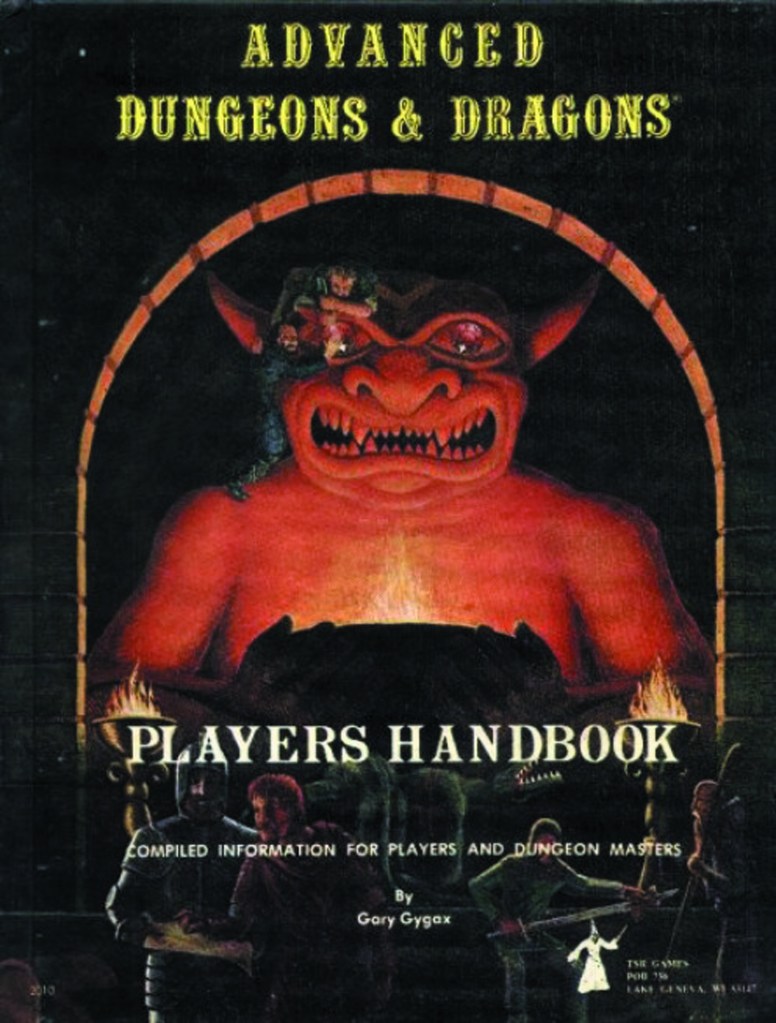
They’ve waited a long time for this too – 5e will last unchanged for 10 years, and 1st ed. AD&D only lasted 12 before 2e came out (and time was different back then in those days of black and white TVs, so I’m told by my elders). Yes, inevitably there is a business model behind this creative decision, but there is with everything.

“D&D Beyond will spell ruin for local game stores / the print medium / other TTRPGs”

A lot of comments from older gamers on the integration of D&D Beyond miss an important fact – D&D Beyond was already super integrated into the hobby before Wizards acquired it. Go down to your local Geek Retreat and you’ll find keeping your PC on D&D Beyond, and using it to level up, is a standard tool used by players. 

I’m with the grognards in that I like to do my own maths and workings out, and prefer a pencil to a spreadsheet for my character sheet – but the additional integration they are promising is nothing new, and will not be an industry-changing development. If you want to run a published D&D adventure on a VTT, you’d be paying for the pack anyway – this will just add extra integration. Which brings us on to…

“The 3D VTT will spell ruin for all other VTTs / online play in general”

Definitely not like this one

My take on the 3D VTT that’s being talked about is that I expect it won’t be very good, but even putting that aside, the VTT market is hardly somewhere where a new competitor is likely to push everyone else aside. From super-simple systems like Owlbear Rodeo, to brain-achingly nerdy options like Foundry (Roll20 sits in the happy middle ground for me), there’s a wide range of options, and new things being added all the time.

I don’t think the new VTT will be a hit, by the way, because I just don’t think there’s the appetite for a 3D image of the game. A lot of play takes place in theatre of the mind, and D&D’s biggest public image representative, Critical Role, aren’t often counting squares and having 4e-style battlefield fights anyway – I expect a significant proportion of D&D play is theatre of the mind, which will have no interest in this.

Now, there is a scenario where support for D&D drops from Roll20 and the other platforms, but that won’t happen, because the OGL stuff will still be there. DMs Guild is too big a part of Wizards offering for them to let it drop, and the ongoing support it offers for some of its books.

“All my old books will be obsolete”

Okay, this is what a new edition does, right? The PHB, DMG, MM will all be replaced (although I think there’s a fair chance that the more recent designs in Monsters of the Multiverse and other publications have been explicitly designed to be fully compatible)… and they’ve said that other sourcebooks will be backwards compatible. Now, I see commenters doubting this, and suggesting a bit of work might still need to be done, but on the other hand…

Every edition of D&D is backwards compatible. Converting a 1st ed adventure to 5e involves replacing the monsters and traps with their new stats, and… that’s it. As I’d always strongly recommend checking and tweaking the monsters and traps in 5e published adventures (as some are very weirdly balanced), this really isn’t a big deal.

“This isn’t my game anymore! They’ve added tieflings with elf ears and pronouns to the core races…”

Oh shut up. Too right it’s not your game anymore – it never was, anyway. Go and cry about Thaco the Clown somewhere else.

So, I hope that clarifies what I confidently predict won’t happen with OneD&D; watch this space as in a couple of years I may well have egg on my face from this, when you’re reading this on an archived .pdf file within D&D Beyond where all TTRPG blogs now have to hosted. What do you think? Personally, everything I’ve read – including the playtest stuff they are releasing gradually – tells me OneD&D will be good. I doubt it’ll become my best version of D&D ever (13th Age is still there), but, like 5e, I expect a decent system that’s sure to be well-supported with some great stuff. So let’s see.

Don’t Just Have Fun – actually useful advice for new DMs/GMs

Over on twitter, there was some discussion recently about advice for people taking their first steps to DMing – on the lines that “just have fun!” is really terrible advice, advocating for an end product without giving any guidance on how to get there. So, putting my money where my mouth is, here are five actually useful tips for running your first game.

Because this post is probably not aimed at my patrons, this is going out to Patreon subscribers and regular blog readers at the same time. Of course the best way to become a better DM is to become a patreon backer – where you’ll instantly become much more skilled at every aspect of TTRPG play. For £2 a month you get access to (most) posts 7 days before release, and get to bask in the warm glow of supporting Burn After Running!

Run What You Know

Pick a system to run that you’ve already experienced as a player. If you’re in a D&D campaign, and think “I’d like to try running Cyberpunk Red” – or another game you haven’t played, then great! It’s good to diversify systems and settings – but run some D&D first. Knowing the rules (or feeling like you have to know them) takes up processing power at the table – if you’ve played before, a lot of these will be internalised already, so you can watch the table and worry about other stuff! So run what you know, at least to start with – whether that’s D&D or whatever system you’ve been introduced to.

Use Published Scenarios

Want to run D&D for the first time? You could do a lot worse than run through one of the Starter Sets or the Essentials Kit – and in any case, you’ll make it easier for a first time to use a published adventure. Both options are good, and there are some great starting short adventures for a few systems out there. Like getting your head around the rules, having the plot worked out for an adventure will give you one less thing to worry about. There are even some on this blog!

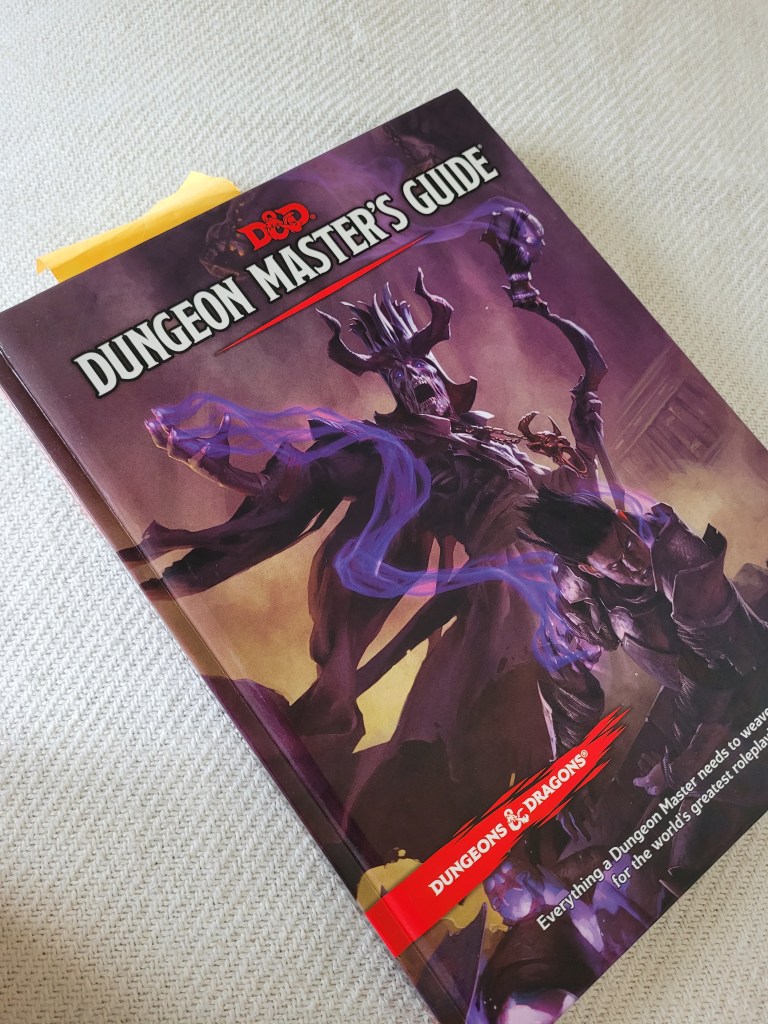
This book does contain some actually useful advice too!

Run for 2-4 sessions

Running one-shots is hard, as is maintaining (or committing) to a long campaign. Take away some of the time pressure by pitching to run for 3 sessions or so – you don’t have to worry as much about pacing, and you can take feedback and do any tweaking you need to between sessions. A lot of published adventures will run to this length anyway, so you can use them – but feel free to cut out stuff if you want to as well – you don’t have to run as the scenario author intended.

Don’t Bother With Character Creation

For a full campaign, you’ll want a session zero where you share expectations and the players create their characters. For your first time, you’ll find it easier at the table if you get some pregens together and just dive in. This means you’ll have a better idea of what the PCs can do, and also means you’ll be actually running the game straightaway. Of course, you still want to have some basic safety tools like an X-Card or trigger warnings for any potentially upsetting stuff at the start – but don’t spend a session making characters, just dive in.

Get Feedback

End each session with a quick stars and wishes session and ask your players what they want more or less of. Having a quick debrief like this will help you to zoom out and see what the session was like, and also allow your player to show you appreciation for running it. It’s easy when DMing to only notice when things go wrong, and your players should be able to help show you how much fun they had! (If your players are mean to you after you’ve just run a session for them, get new players. Seriously.)

So, some actually useful advice for new GMs… I mean, above all, do just have fun, but the above might make it easier to have it! Let me know in the comments if there’s anything I’ve missed!

Alternative Spelunking – Different Ways to Dungeoncrawl

Exploring a dungeon – whether it’s an actual cave filled with goblins, an abandoned space station, or a defunct arcology filled with deathtraps – is a staple of TTRPG games. The usual presentation is a map you can describe to your players, which offers choice  but not much in the way of a narrative arc. 

While you’re reading this, I should tell you about my Patreon. Patrons get access to content 7 days before they hit this site, the chance to request articles or content, and the chance to play in one-shot games, for a very reasonable backer level of £2 per month. If you like what you read, want to support the blog, and have the funds for it, please consider supporting here. Telling people about the blog, and sharing links/retweeting is much appreciated also – thanks!

But are there other ways to cover dungeon crawling? Well, yes, with varying degrees of narrative freedom. Once you start to mush up location- and encounter-based play, you end up with plenty of options to make interesting and engaging one-shot structures. Here are three of them.

Point Crawl

Instead of thinking of your dungeon as a rigidly- defined series of rooms, think of it as set pieces separated by an assortment of corridors and interstitial areas. The Five-Room Dungeon is a good model for this, and it means the place doesn’t literally have five rooms, too. Or, for an even tighter design, draw up Three Places building to a climax.

Make the linking sections interesting by throwing in some optional, but interesting, flavour encounters that supply background or foreshadowing – carvings on the walls showing former inhabitants, wandering monsters or ghosts that can dispense clues, hidden stashes of treasure trapped. For a one-shot this also means you can choose which of these optional bits to include, helping with pacing.

Journey Challenge

Sometimes, we go into a dungeon with a clear goal and set piece to work towards – to disrupt the ritual, to slay the dragon, to rescue the princess. Having half-way set pieces doesn’t really work, and skipping straight to the end doesn’t make the location exciting or allow for any foreshadowing.

So, structure your dungeon like a skill challenge – use some of the variant rules here or here, or work out your own for the system you’re using. It pays to have definitive consequences for failure mapped out in advance, so there are some stakes for the skill rolls – and in a fantasy setting, think about what spells can do (auto-success? Require an Arcana roll? Grant permission to use an alternate skill?). Pace the journey through the dungeon using the skill challenge, and then finish with your big set-piece encounter.

Montage

Sometimes, the journey through the dungeon is even less important, or you want to hand over more narrative control to the players. A 13th Age-style montage is a great way to cover this – you decide on an obstacle facing the players, and the first player describes how it’s overcome and the next obstacle, until everyone has had their turn. This can lead to some truly epic explorations, and it works well with dungeons that have a really clear theme and concept that players can share and develop. 

Some groups are less keen on this player-led narration – although this is my default when I’m running 13th Age. You can build up their comfort level, if you want to, using some of the techniques listed here.

So, three ways to free dungeons from the restrictions of location-based play. Of course, these work just as well for space stations, or steampunk-era cities, or haunted forests – let me know if you use one or more of these techniques in the comments!